All 20 knowledge worlds
Knowledge worlds
All knowledge in one consistent system: world, subcategory, technique, variant, step.
Knowledge worlds with entries

Water
Find, treat, store
Safe drinking water is one of the first priorities. This knowledge world strictly separates clarifying, filtering and disinfecting – because no single method removes everything.

Fire
Light, use, extinguish safely
Fire means warmth, light and boiled water – and at the same time risk of wildfire and injury. Every method is explained with materials, prerequisites and limits.

Shelter and protection
Keep out wind, wet, cold and heat
A shelter protects against heat loss, wet and sun. Site selection and ground insulation are often more important than the structure itself.

Knots and rope work
Tie, attach, secure
Every knot has a job and limits. The Knot Lab shows the rope path step by step – working end in orange, standing part in sandstone.
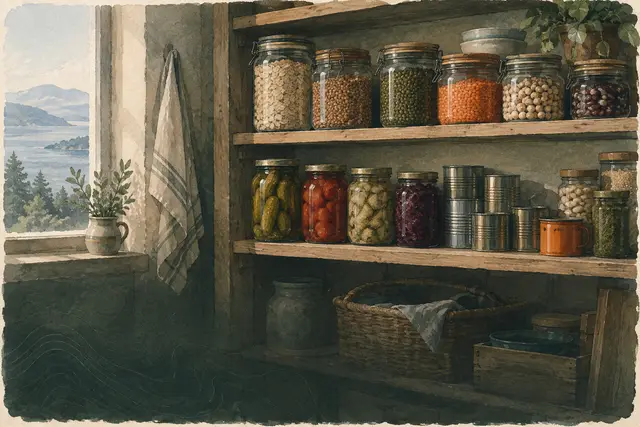
Food and nutrition
Supplies, preparation, plant knowledge with limits
Supplies, shelf life and hygiene come first. Plants and fungi are never declared edible without reliable identification.

Trapping knowledge and tracking
Read tracks, understand principles, respect the law
Historical knowledge, animal behaviour and mechanics – with harmless demonstration models. Practical trapping only within applicable law and animal welfare standards.

Orientation and navigation
Map, compass, GPS and terrain
Knowing where you are and how to arrive safely – even when technology fails.

First aid and health
Only per current guidelines, expert-reviewed
Medical content is published only after review by medical professionals against current guidelines. In an emergency: call emergency services.

Natural disasters
Recognise warnings, act correctly
Preparation and correct behaviour in natural events – always complemented by instructions from the responsible authorities.

Blackout and urban survival
When power, water or networks fail
Practical preparedness for home and neighbourhood: light, heat, water, communication and safety during utility outages.

Bushcraft and craft
Tools, wood, fibres, repair
Traditional skills with natural materials and simple tools – tool safety first.

Self-reliance
Garden, supplies, energy, household
Everyday preparedness: plan ahead, store, grow and repair.
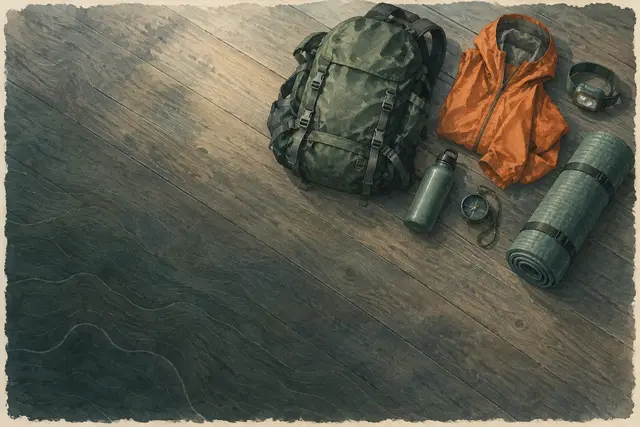
Outdoor gear
Choosing, comparing, maintaining
Objective criteria instead of sales pressure: what matters in gear, how to maintain it and when it is unsuitable.

Climate and extreme environments
What makes each environment different
Mountains, desert, arctic, tropics, coast: the same task needs different solutions in each environment.

Travel and expeditions
Well prepared for remote regions
Preparation, communication and precautions for trips far from infrastructure.

Family and household
Preparedness for everyone at home
Emergency planning that includes children, older relatives, people with disabilities and pets.

Signals and communication
Be found, stay in touch
Emergency systems, signalling and communication planning – so help can reach you.

Psychology and decisions
Thinking clearly under pressure
Stress, panic and exhaustion affect decisions. Knowing the mechanisms helps you prioritise better.

Mechanics and improvisation
Levers, friction, safe temporary fixes
Understanding mechanical principles to improvise and repair safely.

Survival science
Why techniques work
The physics, chemistry and biology behind outdoor techniques – the basis for understanding methods rather than copying them.