Outdoor gear
Choosing, comparing, maintaining
Objective criteria instead of sales pressure: what matters in gear, how to maintain it and when it is unsuitable.
Carry and sleep
Choosing, using and caring for a sleeping bag
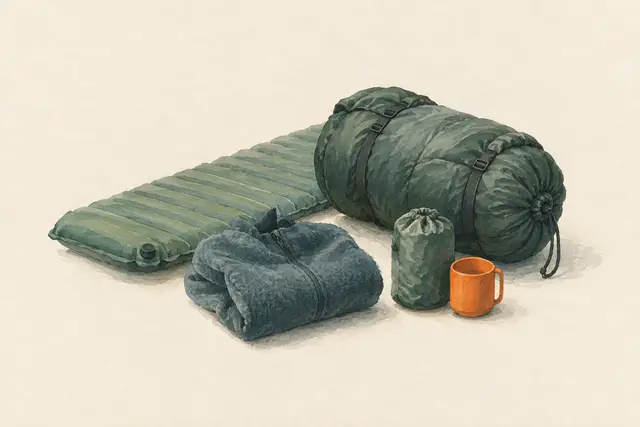
A sleeping bag only keeps you as warm as it suits the temperature, the sleeping pad and the person – and only as long as its fill stays dry and lofty. Standardised temperature ratings help with comparison but are no guarantee. Correct storage (loose, dry) and washing per manufacturer instructions preserve insulation for years.
Packing a day pack
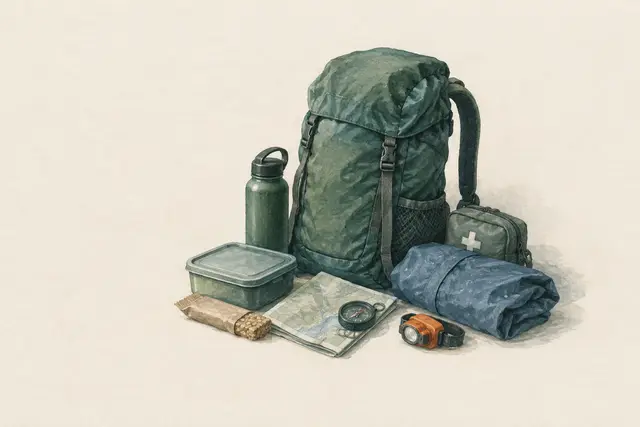
Even a short trip can take longer than planned – through injury, a change in the weather or getting lost. A well-packed day pack therefore contains, alongside food and drink, a small reserve for navigation, light, weather protection, first aid and calling for help. Heavy items sit close to the back, important ones within reach, everything sensitive dry.
Fitting and choosing a backpack
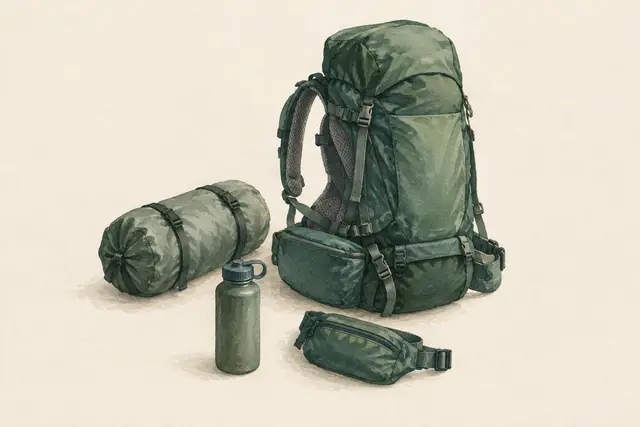
A well-fitting trekking backpack carries most of the load on the hips, not the shoulders. What matters is the right torso length, a hip belt on the hip bones and the right order for adjusting the straps. Volume and weight should match the planned trip – not the other way round.
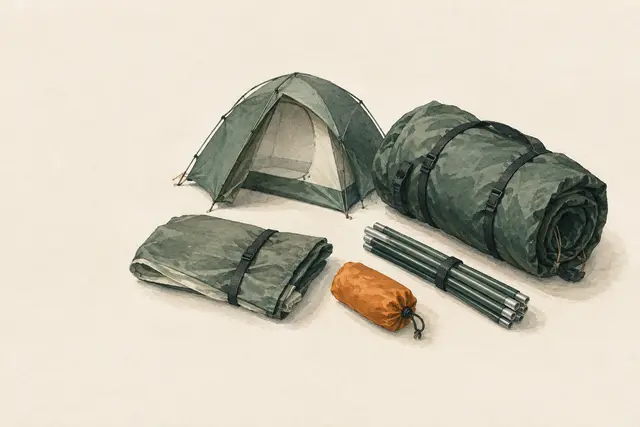
Choosing a tent: design, season, weight
The right tent depends on where, when and with how many people you travel. Dome, tunnel and geodesic tents differ in wind stability, space and pitching. Ventilation against condensation, a pitch that works in rain and a weight you will actually carry also matter.
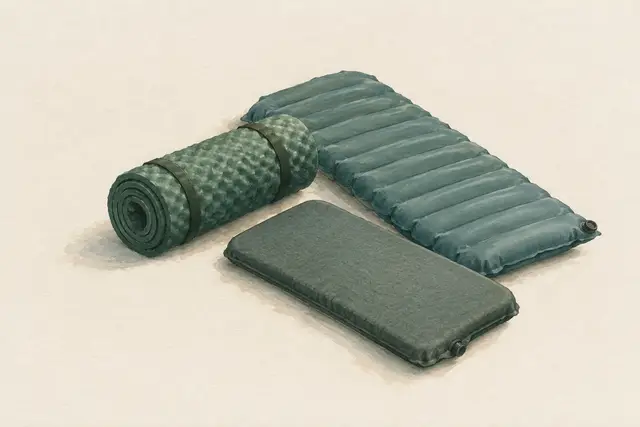
Understanding sleeping pads and R-values
The R-value describes how well a sleeping pad slows heat loss to the ground – higher means better insulated. Values are only comparable when they were measured with the same standardised test method, such as ASTM F3340. Foam, air and self-inflating pads differ in weight, comfort and vulnerability to punctures.
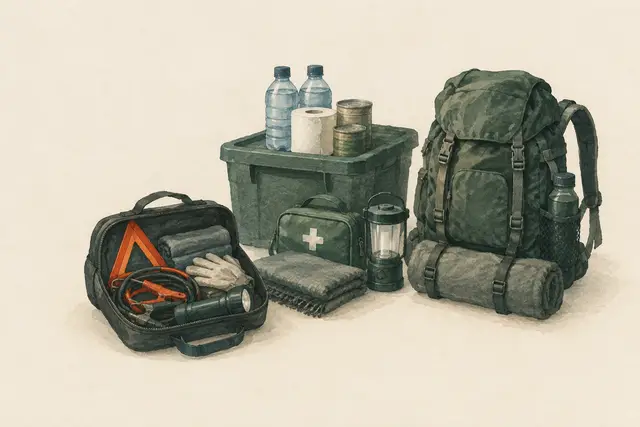
Emergency kits compared: home, car, go bag
The three emergency kits do different jobs: home supplies bridge days without services, the car kit helps with a breakdown or traffic jam, and the go bag accompanies a quick evacuation. Much overlaps – light, water, first aid, communication – but quantity, weight and focus differ.
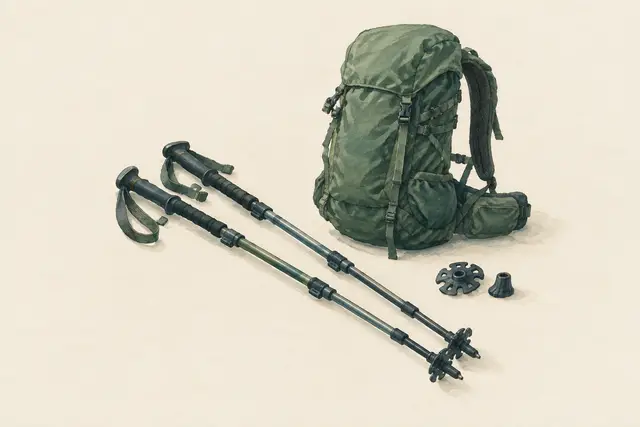
Adjusting and using trekking poles
Trekking poles give support on uneven ground, take load off the knees downhill and help when crossing streams and snowfields. They only work if length and straps are set correctly: roughly a right angle at the elbow on the flat, shorter uphill and longer downhill. On scrambling terrain they belong on the pack.
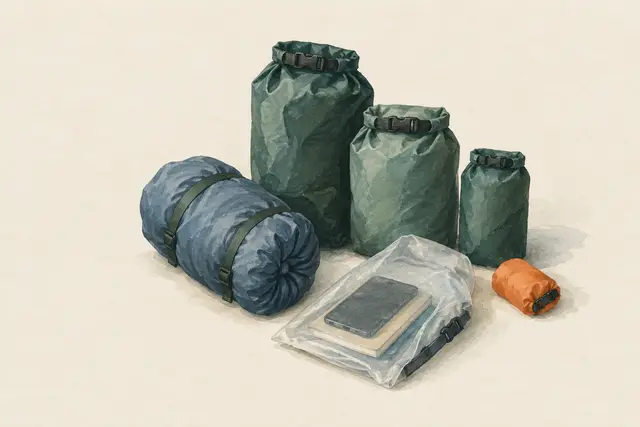
Packing waterproof: dry bags and pack liners
Hardly any backpack stays dry in prolonged rain, and a rain cover does not protect from behind. A waterproof liner or several roll-top dry bags are more reliable. What matters is that the sleeping bag, spare clothes, electronics and documents stay dry – even when crossing a stream or capsizing.
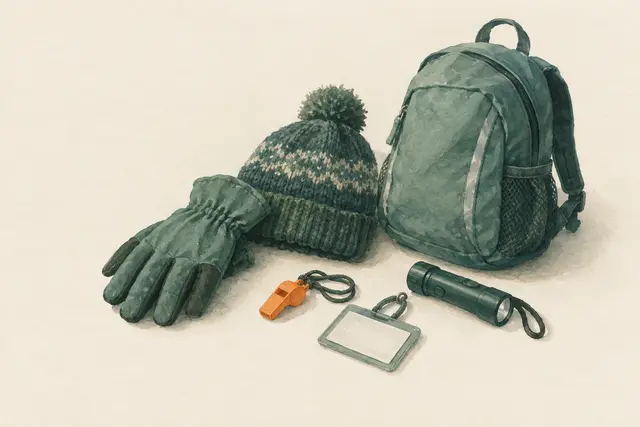
Outdoor gear for children
Children get cold and overheat faster than adults, carry less and lose things more easily. Their gear should fit rather than be bought to grow into, be warm and weatherproof, light and easy to see. A whistle, a light and a card with contact details belong in every child's jacket.
Planned topics (6)
- Backpacks
- Tents
- Tarps
- Sleeping bags
- Sleeping pads
- Emergency bags
Water and cooking
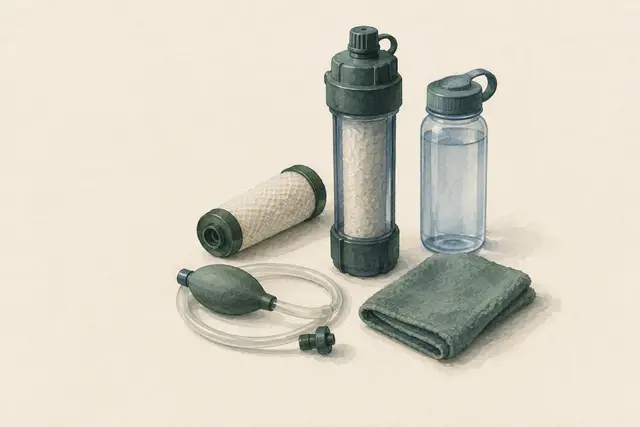
Maintaining and storing a water filter
A water filter only protects as long as it is intact and clean. Backflushing or cleaning per manufacturer instructions, strict separation of the dirty and clean sides, protection from frost and dry storage keep it reliable. A filter that may have frozen, been dropped or reached the end of its life can no longer be trusted.
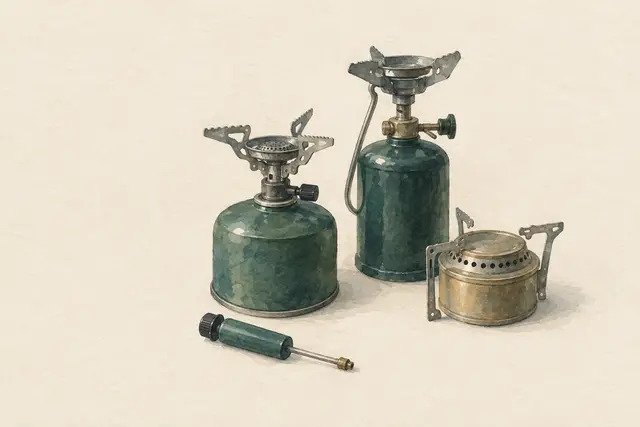
Caring for and safely running stoves: gas, liquid fuel, alcohol
Canister, liquid-fuel and alcohol stoves need different care: check seals, keep jets clean, lubricate pumps, store fuel correctly. What they share: only run them outdoors or well ventilated, set them up stably and never inside a tent.
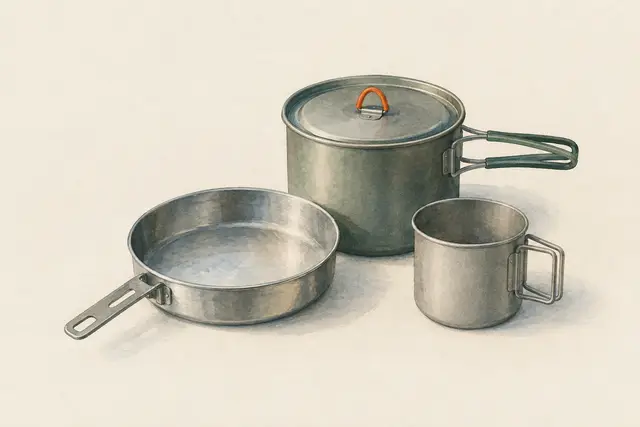
Cookware on the move: material, size, care
Titanium is light, aluminium conducts heat well and stainless steel is robust and affordable. A pot with a lid saves fuel, a handle must sit securely and the size depends on the number of people and the meal. Do not overheat coatings, and store everything clean and dry.
Planned topics (3)
- Water filters
- Bottles
- Stoves
Navigation, light, communication
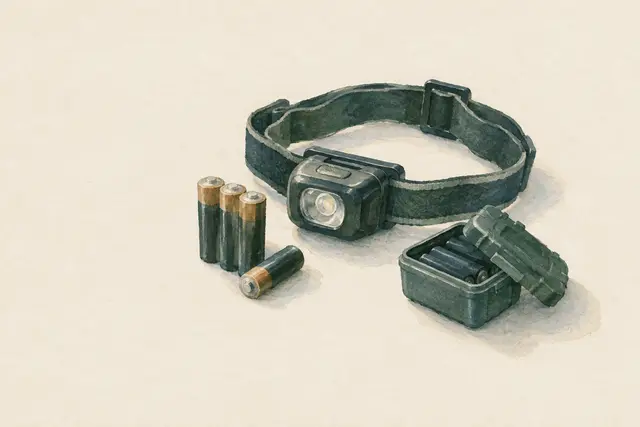
Headlamp and batteries: choosing, storing, using in the cold
A headlamp keeps your hands free and is one of the most important pieces of emergency gear. What matters is not peak figures but reliable run time, a useful low mode, protection against switching on in the pack and suitable batteries. Cold, storage and self-discharge determine whether the light is really there in an emergency.
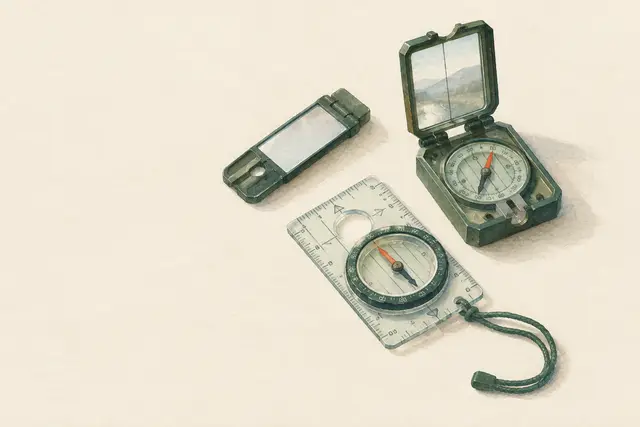
Choosing a compass: baseplate, mirror and sighting compass
For map work a baseplate compass with rotating housing, rulers and a liquid-damped needle is the basic tool. Mirror and sighting compasses allow more precise bearings to distant targets. Important are a scale in degrees, rulers matching your map scales, adjustable declination if needed and a needle balanced for your part of the world.
Planned topics (7)
- Compasses
- GPS devices
- Headlamps
- Radios
- Emergency radios
- Power banks
- Solar chargers
Tools and maintenance
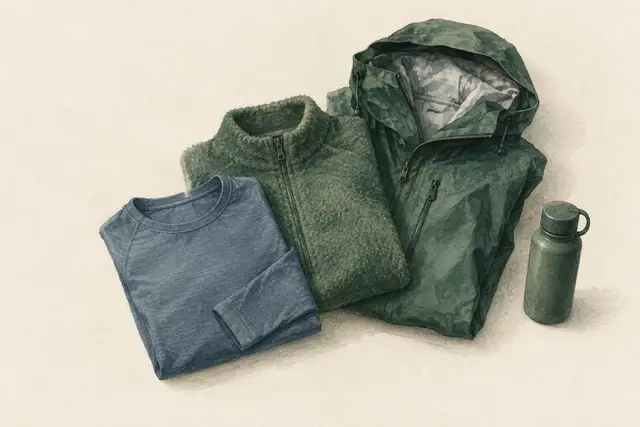
Layering clothing system
Instead of one thick jacket, layering combines several layers with different jobs: a base layer that moves moisture away from the skin, an insulating mid layer and an outer layer against wind and rain. Putting individual layers on and taking them off keeps you warm without sweating – crucial in cold and changeable weather.
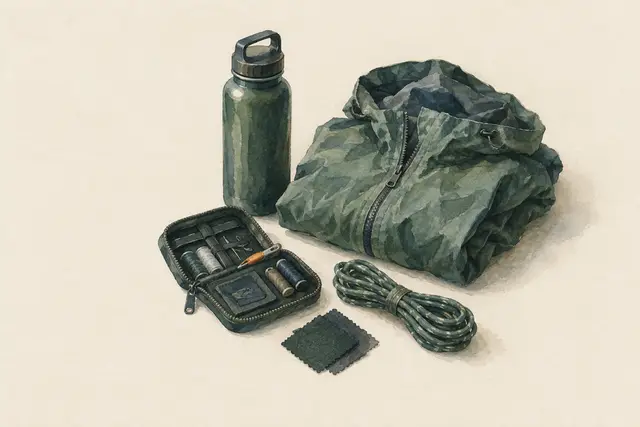
Caring for gear and repairing it on the way
Most gear failures announce themselves: a loose thread, a sticking zip, a frayed line. Cleaning, drying and checking gear after every trip and carrying a small repair kit prevents a small defect from becoming a problem on the way. Manufacturer care and repair instructions take precedence.
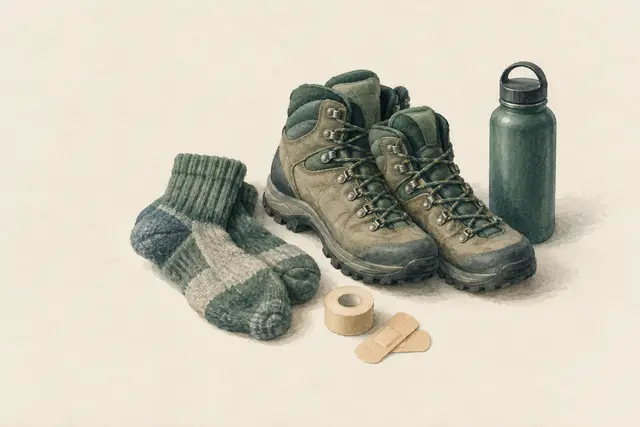
Choosing and breaking in footwear
Good hiking footwear suits the foot, the terrain and the load. Try it on in the afternoon with hiking socks; the toes must not hit the front going downhill. New footwear is broken in gradually before a long trip. Blisters come from friction – react early instead of pushing through.
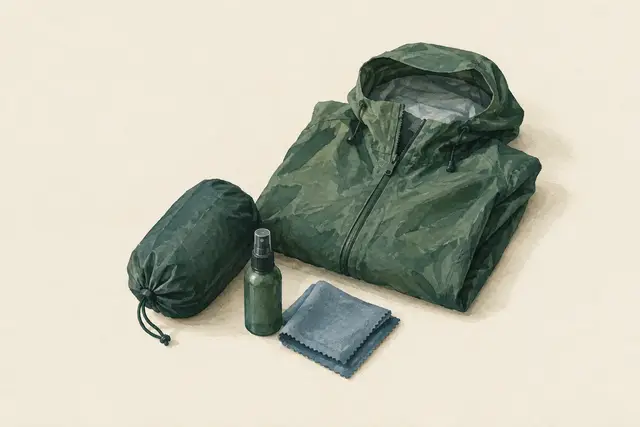
Rain gear: waterproof, breathable, reproofed
Rain jackets keep water out and are meant to let water vapour out from inside. No membrane manages this completely during hard exertion – vents and pace help. An intact outer water-repellent finish (DWR) matters; otherwise the face fabric wets out and breathability collapses.
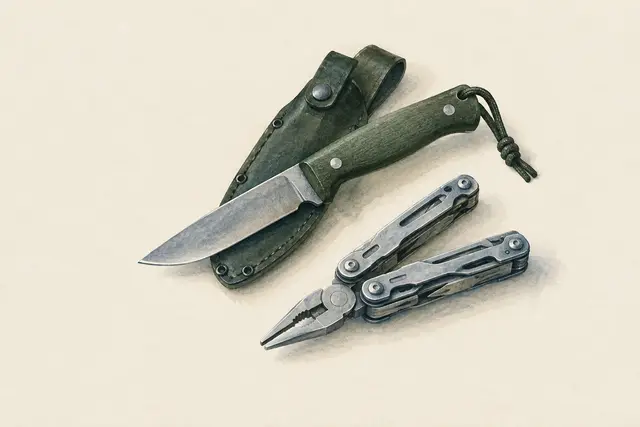
Choosing a knife and multitool by their properties
A knife is a tool: blade shape, steel, handle, locking mechanism and sheath decide what it is good for. For carving and camp work a fixed, medium-length blade is practical; a multitool adds pliers and screwdrivers. Rules on carrying differ greatly between countries – check before buying and before travelling.
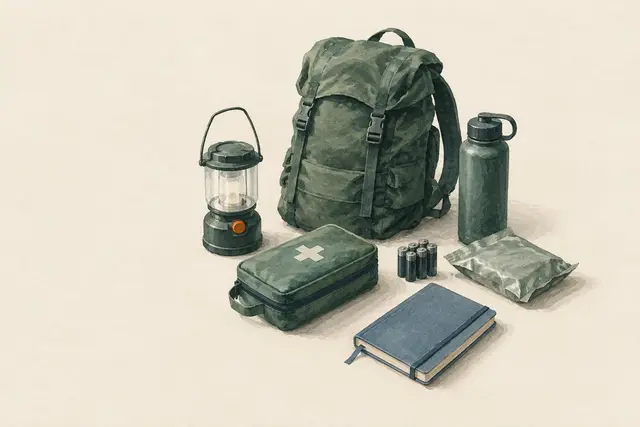
Maintenance schedule for gear and emergency kits
Gear rarely fails suddenly – usually it has not been checked for a long time. A simple plan helps: dry and inspect after every trip, swap batteries, water and food every six months, and check reproofing, seals and first-aid supplies every year. A calendar entry is enough.
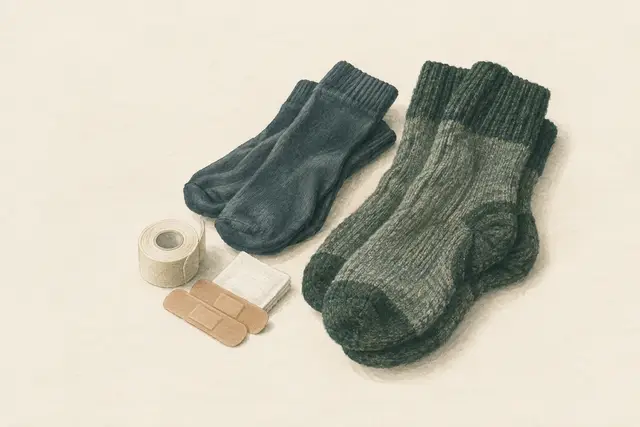
Socks and foot-care gear for trips
Many blisters and cold feet are caused not by the boot alone but by the wrong or wet socks. Well-fitting wool or synthetic socks, a dry spare pair, timely breaks and a small kit of tape and plasters prevent most problems. Cotton socks are unsuitable for longer trips.
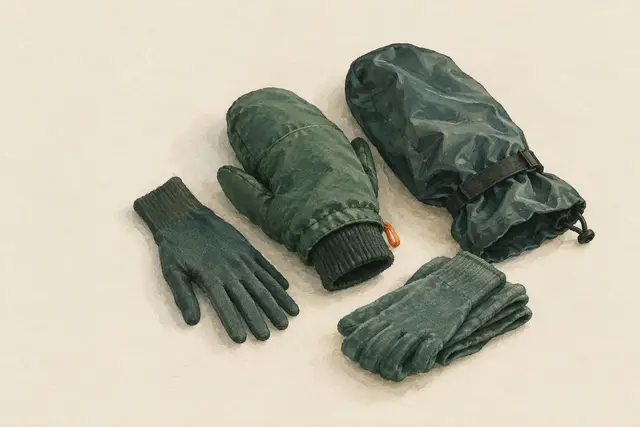
Gloves as a system: gloves, mittens, overmitts
A single thick glove is rarely the best solution. A proven approach is a system of a thin liner glove for fine tasks, a warmer glove or mitten and a windproof, waterproof overmitt. Mittens are warmer than gloves because the fingers warm each other. A dry spare pair is essential in the cold.
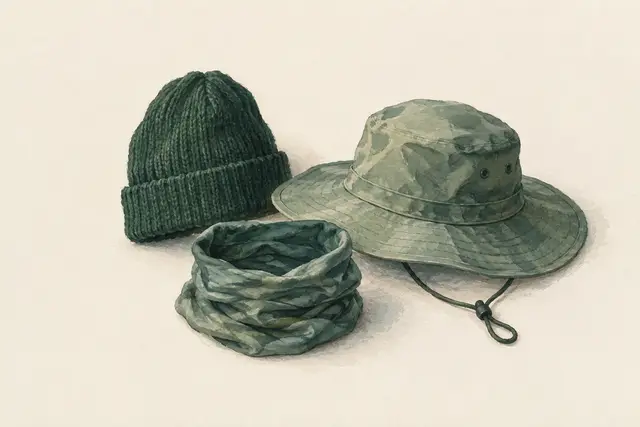
Headwear: warm hat, sun hat, neck gaiter
A warm hat, a wide-brimmed sun hat and a neck gaiter are among the lightest and most versatile pieces of gear. They protect head, ears and neck from cold, wind and sun and can be put on and taken off quickly to regulate body heat.
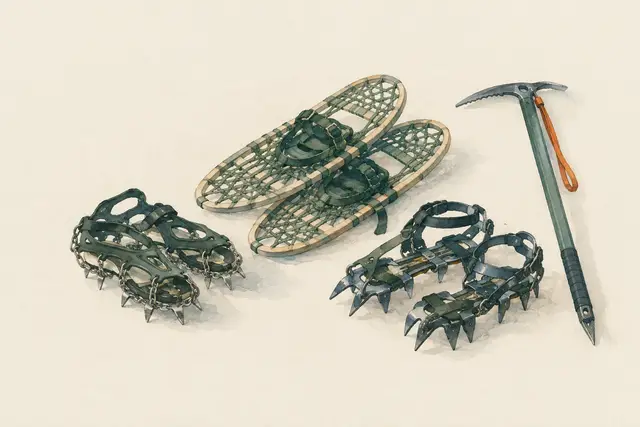
Microspikes, snowshoes, crampons: what for what?
On icy paths microspikes give much more grip than lugged soles. Snowshoes are meant for deep snow, crampons together with an ice axe for steep ice and hard snow – and these require training. Microspikes are no substitute for crampons, and none of this gear protects against avalanches.
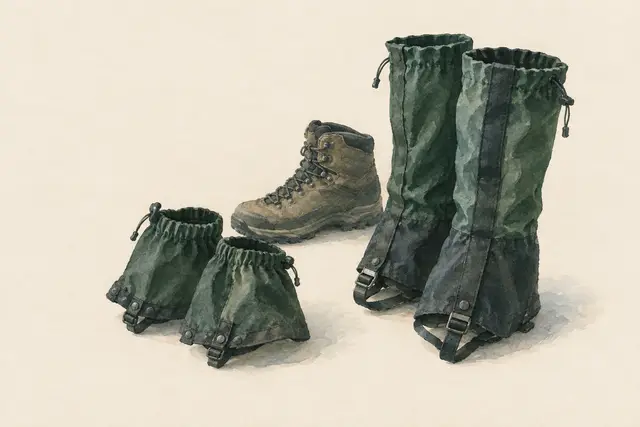
Gaiters: against snow, wet, grit and ticks
Gaiters close the gap between footwear and trousers. High gaiters keep out snow, dew and wet grass; short trail gaiters stop grit and sand getting into the shoe. They are light, quick to put on and protect the trousers from mud and crampon points.
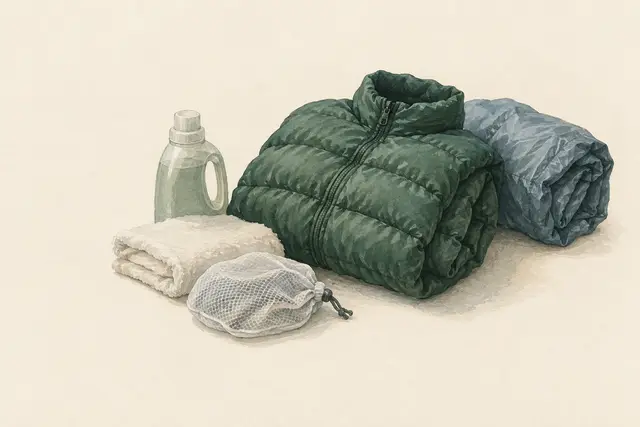
Washing and drying down and synthetic insulation
Dirt and body oils make insulation clump and reduce its loft. Down and synthetic jackets or sleeping bags can usually be washed – gently, with a suitable detergent and according to the care label. Most important is drying completely, which for down often takes many hours with repeated shaking out.
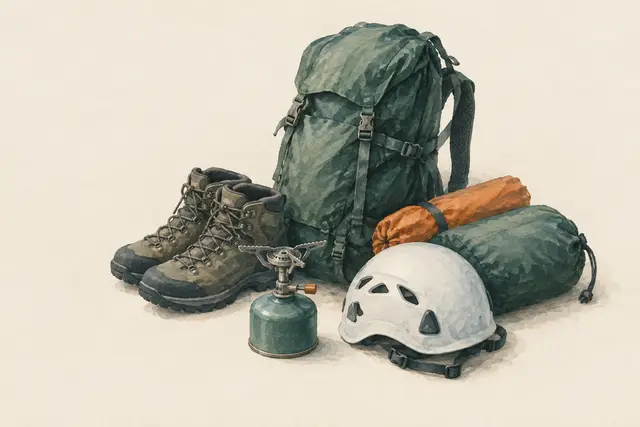
Buying and checking used gear
Many items can be bought used without problems: backpacks, tents, stoves, clothing. What matters is a thorough check for wear, missing parts and damp damage. Safety equipment with an unknown history – ropes, harnesses, helmets, carabiners, avalanche gear – should not be bought used.
Planned topics (8)
- Multitools
- Knives as tools
- Ropes
- First-aid kits
- Repair kits
- Maintenance
- Product safety
- Clothing