SurviveBetter
Ready when it counts.
The knowledge, techniques and tools to navigate the unexpected – clearly explained, illustrated, available offline.
When it happens
What to do when it is real?
Power cut, flooding, lost in fog: every situation is described in depth – what is happening, what matters in the first minutes, what to watch out for and which mistakes to avoid.
 Our power has gone outSuddenly everything goes dark and quiet: lights, fridge, router and often the heating are off – usually only briefly, sometimes longer.
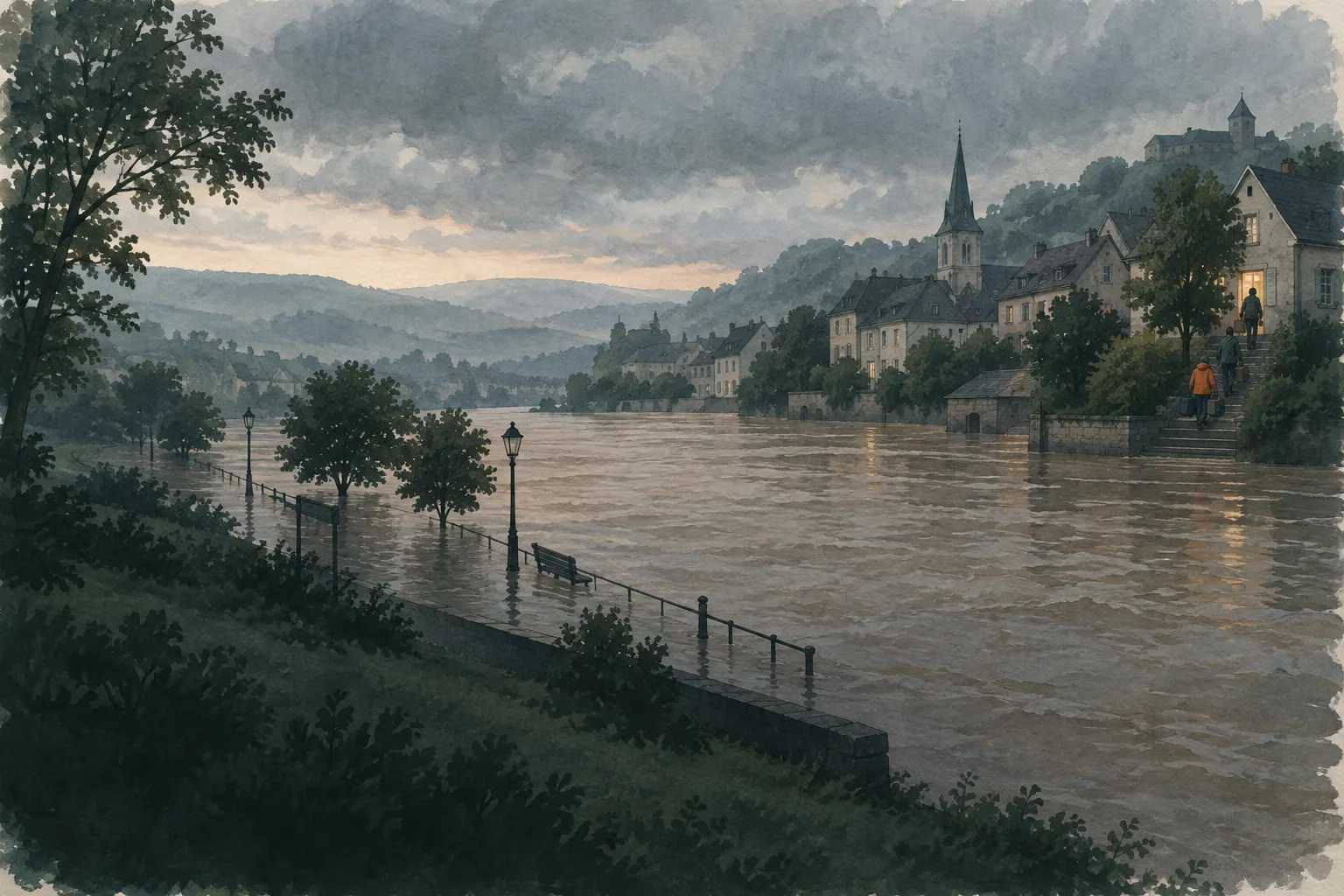 There is a flood warning for our areaRiver levels are rising and the warning app reports a flood – what counts now is the time before the water arrives.
 I am lost while hiking
 There is a heatwave and it is getting very hot at home
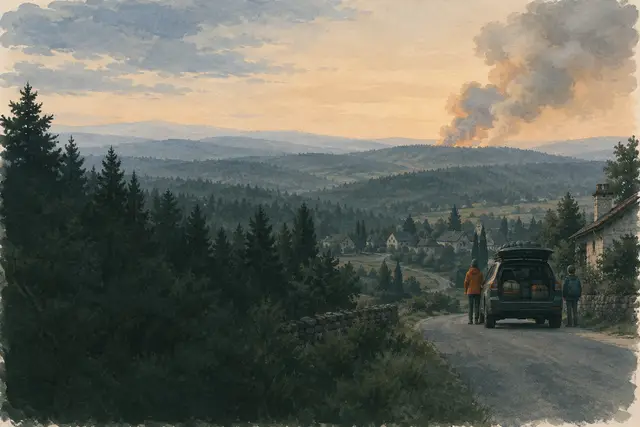 There is a wildfire or wildfire smoke near us
 I am stuck in my car in winter
How SurviveBetter helps
Understand. Compare. Act.
- 01
Understand
Knowledge worlds from water to navigation explain principles, steps, limits and common mistakes – with sources.
Explore knowledge → - 02
Compare
Method comparisons show honestly what each method achieves. No paid ranking.
Method explorer → - 03
Act
Emergency situations guide you step by step through the first minutes, hours and days.
Prepare for a situation →
The knowledge worlds
One connected system of knowledge.
From water, fire and knots to blackouts and psychology: every world links basics, techniques and comparisons.
Water
Find, treat, store
Safe drinking water is one of the first priorities. This knowledge world strictly separates clarifying, filtering and disinfecting – because no single method removes everything.
Shelter and protection
Keep out wind, wet, cold and heat
Knots and rope work
Tie, attach, secure
- FireLight, use, extinguish safely
- Food and nutritionSupplies, preparation, plant knowledge with limits
- Trapping knowledge and trackingRead tracks, understand principles, respect the law
- Orientation and navigationMap, compass, GPS and terrain
- First aid and healthOnly per current guidelines, expert-reviewed
- Natural disastersRecognise warnings, act correctly
- Blackout and urban survivalWhen power, water or networks fail
- Bushcraft and craftTools, wood, fibres, repair
- Self-relianceGarden, supplies, energy, household
- Outdoor gearChoosing, comparing, maintaining
- Climate and extreme environmentsWhat makes each environment different
- Travel and expeditionsWell prepared for remote regions
- Family and householdPreparedness for everyone at home
- Signals and communicationBe found, stay in touch
- Psychology and decisionsThinking clearly under pressure
- Mechanics and improvisationLevers, friction, safe temporary fixes
- Survival scienceWhy techniques work
Method explorer
Every problem has more than one solution.
Pick a starting situation – and see what each method achieves and where its limits are. No fake ranking.
How do I make water from an unsafe source drinkable?
| Turbidity | Bacteria | Viruses | Protozoa (Giardia, Cryptosporidium) | Chemicals | |
|---|---|---|---|---|---|
| Boiling water | |||||
| Disinfection with chlorine | |||||
| Disinfection with chlorine dioxide | |||||
| UV disinfection and solar water disinfection (SODIS) | |||||
| Hollow-fibre and membrane filters | |||||
| Ceramic filters |
The Illustrated Survival Manual
Technical drawings that explain rather than decorate.
Every diagram is generated deterministically from reviewed structured data, so cross-section, steps and labels cannot contradict each other.
Interactive Knot Lab
Follow the rope, step by step.
Working end in orange, standing part in sandstone. Over and under are unambiguous at every crossing.
Knot Lab →Figure-eight knot
Lay out the standing part
Knowledge for every environment
Same task, different conditions.
Offline knowledge
Knowledge that works without a connection.
Install SurviveBetter as an app, save articles offline and use search, checklists and emergency numbers without a connection.
Offline →Gear intelligence
Gear by criteria, not by commission.
What matters in filters, tarps or sleeping pads – explained objectively. Retailer links are added only after review and with clear labelling.
Gear →Discover something useful
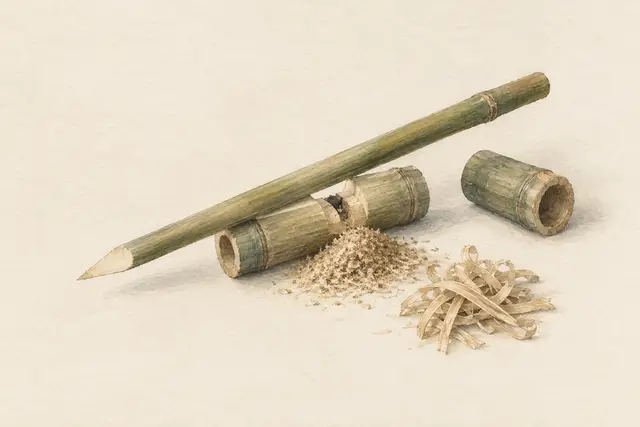
Bamboo fire saw
In the fire saw, the sharp edge of a piece of dry bamboo is sawn across another, notched piece of bamboo. Through the slot, hot bamboo dust falls onto fine bamboo shavings beneath and can form an ember. The method depends on dry bamboo, is strenuous and needs practice.
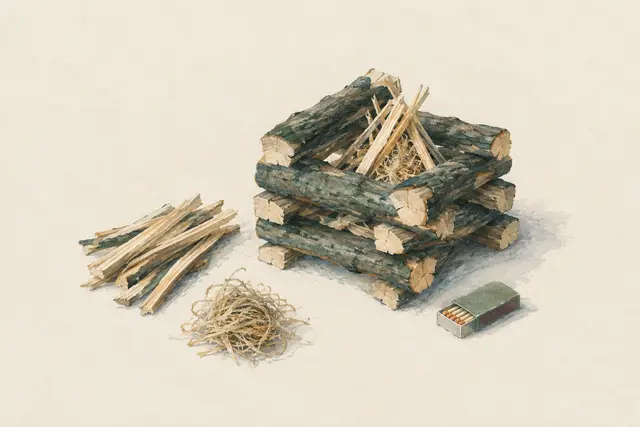
Log cabin fire lay
In the log cabin, sticks are stacked crosswise in layers like a log hut around a small teepee or tinder bundle. The fire burns evenly and stably and builds a good bed of embers – ideal for cooking.
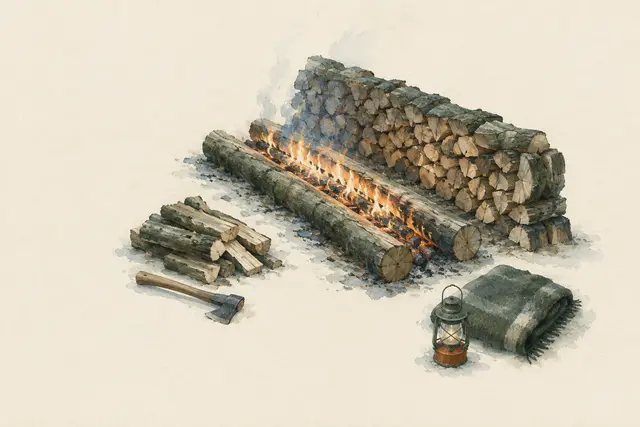
Long fire and reflector wall for warmth
A long fire burns between two parallel logs and is about as long as a person lying down, so the whole body receives radiant heat. A wall of stacked logs or stones on the far side throws some of the heat back and blocks wind. Both need a lot of wood and constant supervision.
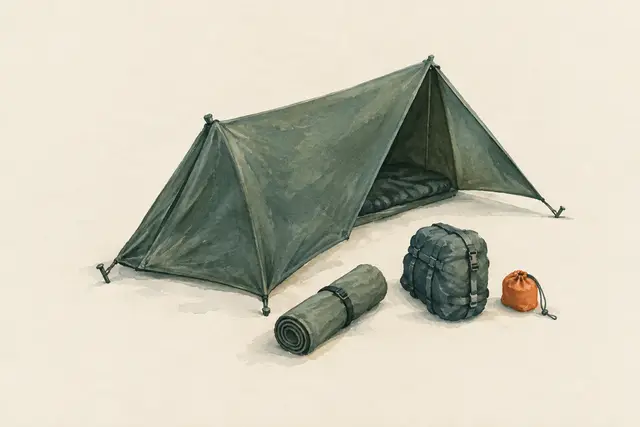
Tarp tent with a closed end
A variation of the A-frame in which one end of the tarp is folded in and staked so that the weather side is closed. The result resembles a small tent with an open entrance on the lee side. The pitch is shorter than a normal A-frame and takes some practice to fold.
Every entry goes through a documented review process. Its status is visible on every page.
No invented sources, experts, test results or ratings.
Medical and safety-critical content requires expert approval.
AI drafts are treated as drafts and never published unreviewed.