Skip to content
In an emergencyAustriaEmergency numbers →
SurviveBetter
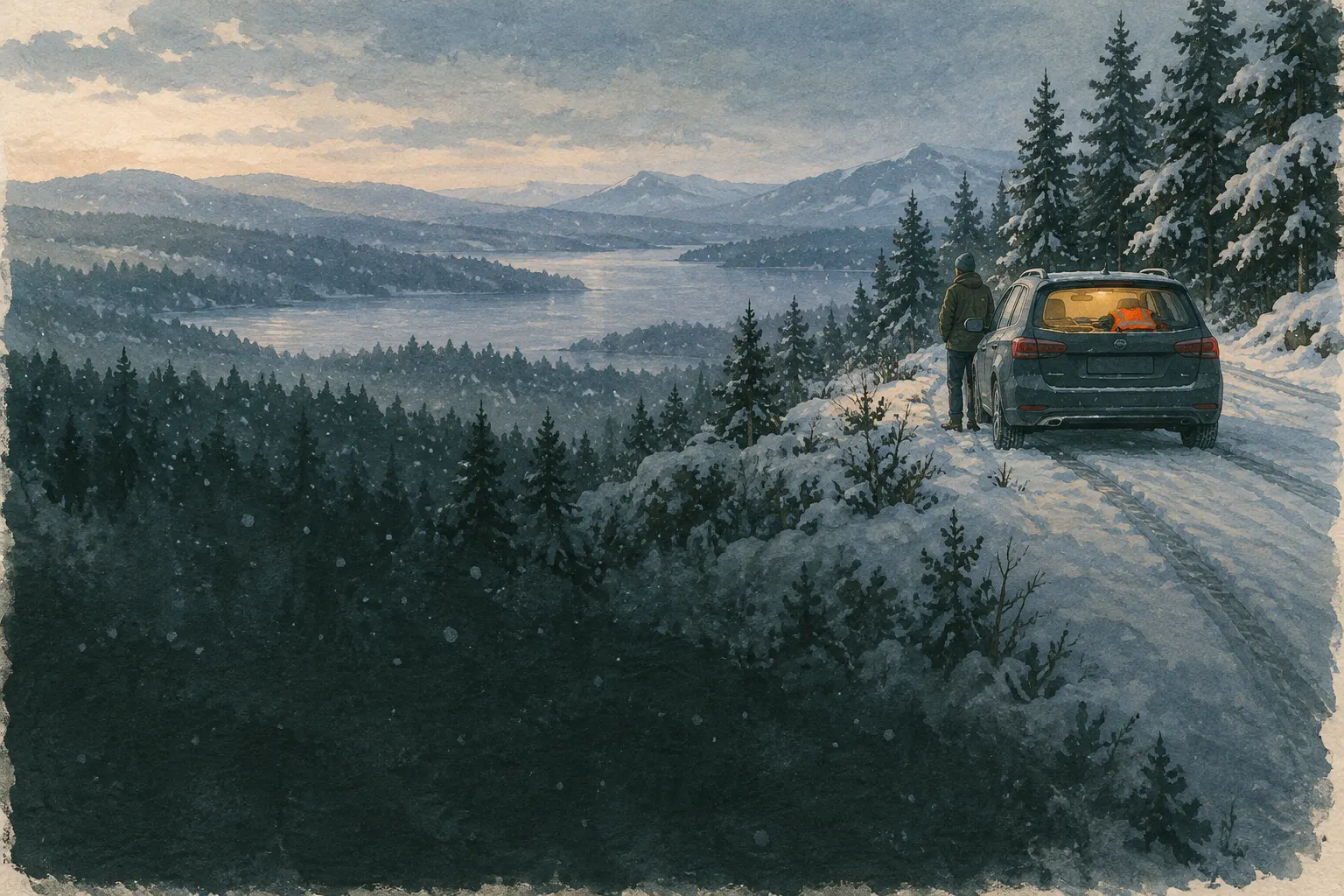
Car stopped on a snowy country road at blue hour

I am stuck in my car in winter

Snow, a traffic jam or a breakdown has trapped you in your car – it is getting dark and cold outside, and help is not coming right away.

First

  1. Switch on the hazard lights; put on a hi-vis vest before getting out and watch for traffic.
  2. As a rule, stay in the vehicle rather than walking for help in a snowstorm.
  3. Keep the exhaust clear of snow; run the engine only intermittently with a window opened a crack.
  4. Call breakdown assistance, or the emergency number if in danger, give your location and save battery.

Call emergency services if

  • Signs of hypothermia (intense shivering, confusion, slurred speech)
  • Suspected carbon monoxide poisoning (headache, dizziness, nausea, drowsiness)
  • Injury after an accident
  • No help in sight and the cold is increasing

What is happening

It usually starts harmlessly: the traffic slows down, then stops. On a mountain pass, a country road or a motorway you get stuck in driving snow because lorries have jack-knifed, the road is closed or your car is stuck in the snow. For the first few minutes it feels like an ordinary jam. It becomes dangerous once it is clear that it may take hours – perhaps the whole night.

A stationary car cools down noticeably fast once the engine is off, because metal and glass insulate very poorly. At the same time snow can block the exhaust, so that fumes containing odourless carbon monoxide get into the cabin as soon as you start the engine for heat. These two dangers – getting cold and carbon monoxide – shape the whole situation.

The most common wrong decision is to set off on foot for help. In a snowstorm people lose their bearings quickly, distances are underestimated, wet clothing chills the body, and drivers often see pedestrians on the road too late. The car is a shelter, and rescuers find it far more easily than a single person.

What really matters: dress warmly early, before you are cold; keep the exhaust clear; run the engine only intermittently; ration battery, fuel and supplies; and tell rescuers your exact location. Handled this way, even long waits are usually survived well.

Step by step

  1. Phase 1

    Straight away

    • Switch on the hazard lights; if you have to get out, put on a hi-vis vest first and watch for traffic.
    • Check that the car is in a safe spot – not on a bend or behind a crest where following drivers see it too late.
    • Assess the situation: switch on traffic radio, check warning apps, talk to other people waiting.
    • Call breakdown assistance – or the local emergency number (112 in the EU) if there is danger, injury or an accident – and give your exact location (road, direction, kilometre marker, exit).
    • Have everyone put on extra clothing right away, while the car is still warm.
  2. Phase 2

    In the first hour

    • Check the exhaust and clear it of snow – before every engine start and repeatedly during continued snowfall.
    • Run the engine only intermittently, with a window on the side away from the wind opened a crack.
    • Save phone battery: lower the brightness, close unneeded apps, keep calls short, text rather than call.
    • Keep an eye on the fuel level and ration it – nobody knows how long this will take.
    • Keep the car visible: clear snow from the roof and lights; in daylight tie a brightly coloured cloth to the aerial or a window.
  3. Phase 3

    If it takes longer

    • Huddle together, cover head, neck, hands and feet; use floor mats, newspapers, bags or emergency blankets as extra insulation.
    • Move arms, legs, fingers and toes regularly to stay warm – but not so hard that you sweat.
    • Drink and eat something if you have it; eating snow cools the body down.
    • If several people are in the car, take turns staying awake so someone watches the exhaust, traffic and announcements.
    • At night, switch the interior light on briefly while the engine runs so rescuers can see the car; otherwise save the battery.
    • Only set off on foot if safe shelter (a house, a service area) is visibly close and visibility and weather allow it.
  4. Phase 4

    Afterwards

    • Anyone who got very cold should warm up gradually: warm (not hot) non-alcoholic drinks, dry clothing.
    • Seek medical help if there are signs of hypothermia or frostbite.
    • Only drive on when the road, the car and you yourself are up to it – fatigue after a long wait is dangerous.
    • Restock the emergency kit in the car and add what was missing.

What to watch out for

  • Carbon monoxide

    Carbon monoxide is invisible and odourless. Headache, dizziness, nausea or unusual drowsiness while the engine runs are warning signs: engine off, fresh air, call the emergency number if symptoms appear.

  • Snow-blocked exhaust

    Even if the exhaust was clear an hour ago, drifting snow can block it again. Check it before every start and watch for traffic while you do.

  • Hypothermia creeps up

    Intense shivering, confusion, slurred speech or marked sleepiness are alarm signs. Someone who stops shivering is not necessarily warm again – it can be a bad sign.

  • Getting out in traffic

    In snow and darkness other drivers see you late and cannot brake well. Only get out wearing a hi-vis vest and do not linger beside the carriageway.

  • Overexertion while digging out

    Shovelling snow in the cold puts heavy strain on the heart and circulation and soaks clothing with sweat. Work in short bouts with breaks, or wait.

  • Electric cars

    An electric car has no exhaust and no carbon monoxide risk from the vehicle itself, but heating drains the battery. Seat and steering-wheel heating usually use less energy than heating the whole cabin.

Common mistakes

  • Walking for help in a snowstorm.
  • Running the engine continuously without checking the exhaust.
  • Only putting on warm clothing once you are already cold.
  • Draining the phone battery with videos and long calls.
  • Driving into a snow warning with an almost empty tank.
  • Drinking alcohol to “warm up” – it increases heat loss.

Prepare in advance

  • In winter keep a blanket or sleeping bag, warm hat, gloves and spare socks in the car.
  • Carry water, long-life snacks, a torch, a power bank with cable, a snow shovel and an ice scraper.
  • Before driving under a snow warning, fill the tank or charge the battery well and check weather and traffic.
  • Keep the hi-vis vest within reach inside the cabin, not in the boot.
  • When a severe weather warning is out, consider whether the trip can be postponed.
  • Tell someone your route and expected arrival time.

Special consideration

Children and babies
Children get cold faster than adults. Dress them warmly early, keep them close to you and remember nappies, drinks and something to do during long waits.
Older people and medication
Older people often notice cold less clearly. On winter trips, important medication belongs in a bag inside the cabin, not in the boot.

Sources

  • Winter Weather · Ready.gov – U.S. Federal Emergency Management Agency (FEMA)
  • Carbon Monoxide Poisoning – Prevention guidance · Centers for Disease Control and Prevention
  • Wilderness Medical Society Clinical Practice Guidelines for the Out-of-Hospital Evaluation and Treatment of Accidental Hypothermia: 2019 Update · Wilderness & Environmental Medicine (Wilderness Medical Society), 2019
  • Ratgeber für Notfallvorsorge und richtiges Handeln in Notsituationen · Bundesamt für Bevölkerungsschutz und Katastrophenhilfe (BBK), Deutschland

Your situation

Situation
In the car
Passengers

Matching entries

0 rules apply

No AI decides here. Every recommendation is based on a visible rule.

Add details about your situation above to get more specific guidance.

Basics for this situation

Why: Always applies to this situation – regardless of your answers.

All rules of this situation (7)
  1. [not active] If Situation = Snowed in / snowstorm

    Carbon monoxide is the hidden danger: clear the exhaust before every start and regularly during continued snowfall.

  2. [not active] If Situation = Traffic jam or closed road

    Follow traffic announcements on the radio and ration fuel, battery and supplies.

  3. [not active] If Situation = Breakdown

    Secure the scene as far as it is safe to do so and call breakdown assistance with an exact location.

  4. [not active] If In the car = Blankets, warm clothing, water

    Put on all layers before you get cold – keeping warmth is easier than regaining it.

  5. [not active] If In the car = Hardly anything

    Insulate with whatever is there (floor mats, paper, bags), huddle together and cover head and neck.

  6. [not active] If Passengers = Children or pets

    Keep children warm, occupied and reassured; do not let everyone sleep at the same time.

  7. [not active] If Passengers = Older or sick people

    Older and sick people cool down faster. Watch for warning signs of hypothermia and call for help early.