Fire
Light, use, extinguish safely
Fire means warmth, light and boiled water – and at the same time risk of wildfire and injury. Every method is explained with materials, prerequisites and limits.
Method explorer
How do I light a fire reliably?
Method explorer
How do I make fire without a lighter or matches?
Method explorer
How do I lay the wood – depending on what I need the fire for?
Method explorer
What will catch my spark or flame – even when everything is damp?
Fundamentals
Fire triangle and fuels
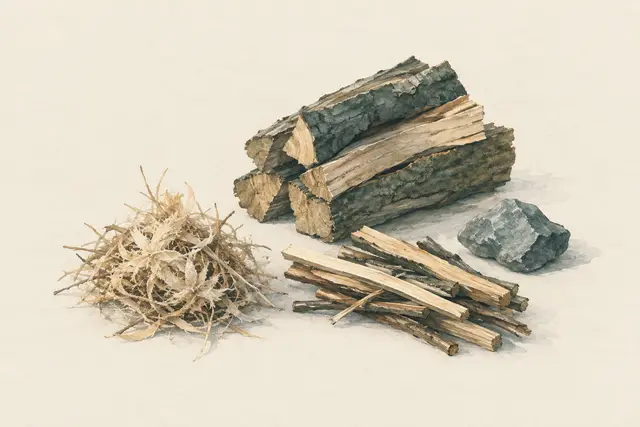
A fire needs three things at the same time: fuel, heat and oxygen. Understanding the fire triangle lets you build a fire deliberately, keep it burning and extinguish it completely. What matters most is fuel in the right order: tinder, kindling, fuel wood – all of it dry.
Preparing tinder, kindling and fuel wood
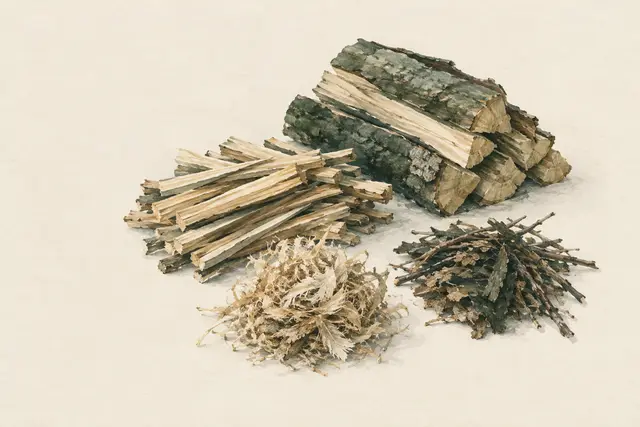
A fire succeeds before it is lit: if you lay out enough tinder, kindling in several thicknesses and fuel wood, sorted, you need only one attempt. Rule of thumb: prepare twice as much as you think you need.
Making char cloth
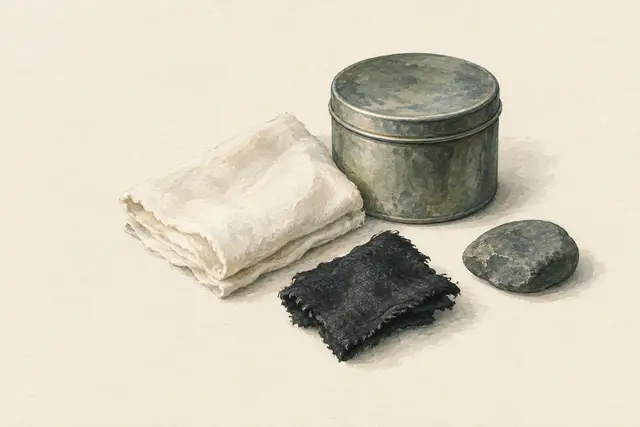
Char cloth is made by charring pure cotton in an almost airtight metal tin in a fire without letting it burn. The black fabric catches even weak sparks or a burning-glass point and then smoulders reliably. Make it only outdoors, on a safe, existing fire.
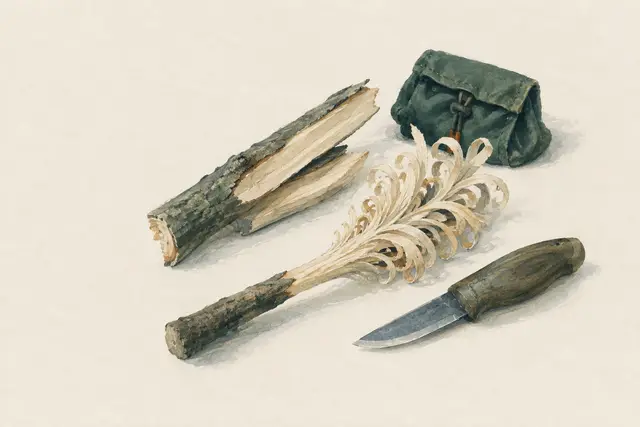
Carving feather sticks
A feather stick is a dry stick with many thin shavings left attached as curls. The curls catch fire quickly and lead seamlessly into the thicker stick. Feather sticks are especially useful in wet weather because they can be carved from the dry inside of split branches.
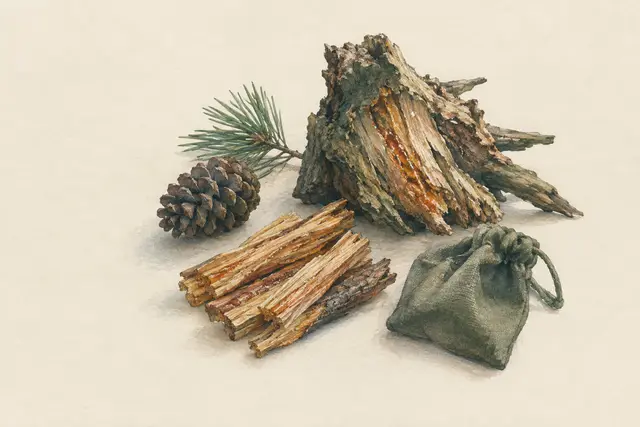
Using fatwood and resinous wood
Fatwood is wood heavily saturated with resin, found mainly in old, dead pine stumps and their root bases. It smells strongly of resin, is heavy and burns with a hot, sooty flame even when slightly damp. Use only dead wood and collect only where permitted.
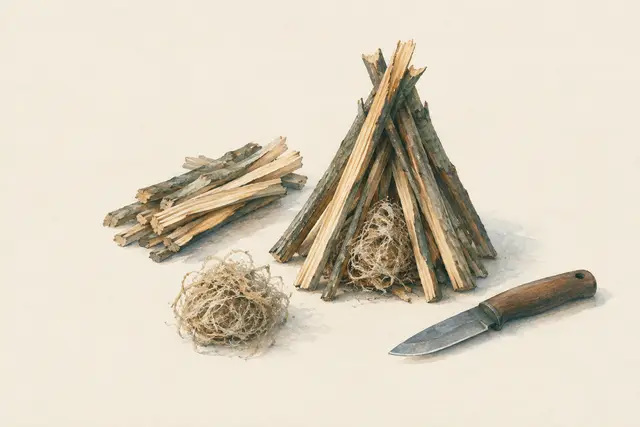
Teepee fire lay
In the teepee, kindling stands in a cone around a tinder bundle. Flames rise inside and quickly catch all the wood. The teepee lights hot and fast and suits lighting and boiling water quickly, but it soon collapses.
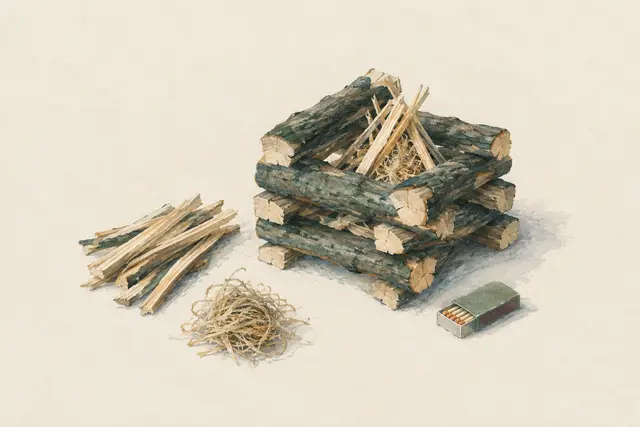
Log cabin fire lay
In the log cabin, sticks are stacked crosswise in layers like a log hut around a small teepee or tinder bundle. The fire burns evenly and stably and builds a good bed of embers – ideal for cooking.
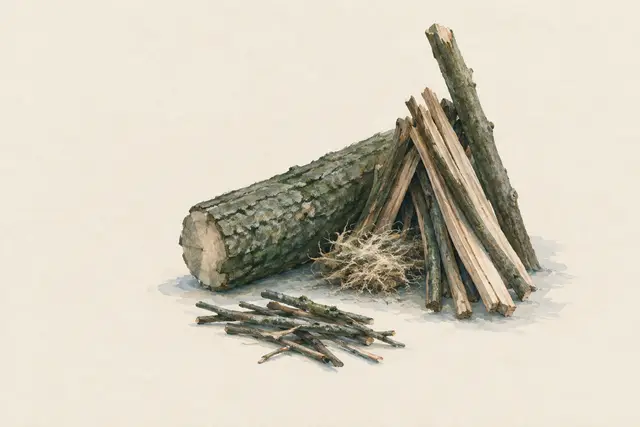
Lean-to fire lay
In the lean-to lay, the tinder bundle lies in the lee of a thick log or under a stick pushed into the ground at an angle, with kindling leaned against it. The lay shelters the young flame from wind.
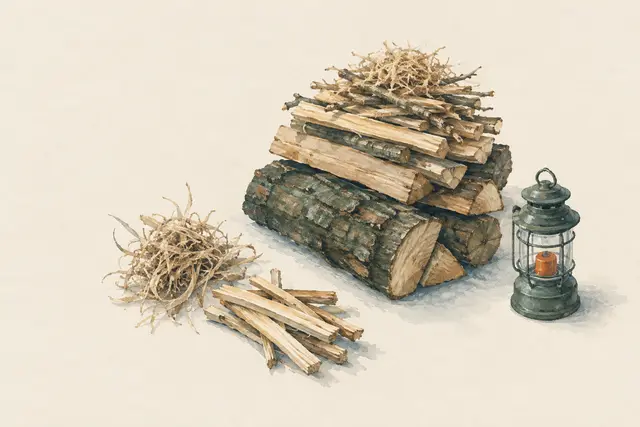
Top-down (upside-down) fire
In the top-down fire, the thickest logs lie at the bottom and the layers get thinner towards the top; tinder and kindling sit right on top. The fire burns slowly downwards, needs little tending and lasts a long time. It does, however, require careful preparation of enough dry wood.

Preparing cotton balls with petroleum jelly as tinder
Cotton balls made of pure cotton and kneaded with petroleum jelly are a cheap, light and fairly weather-resistant tinder. When fluffed up, they catch sparks from a ferro rod and then burn noticeably longer than dry cotton – long enough to help dry out damper kindling. They are prepared at home and carried in waterproof packaging.
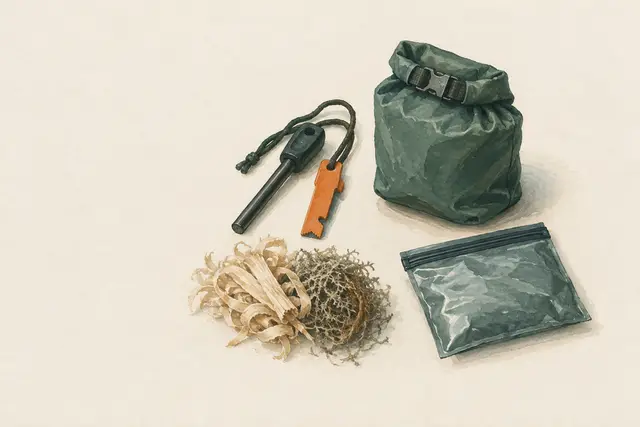
Packing a fire kit: redundant and dry ignition
A good fire kit contains at least two independent ignition sources, prepared tinder and waterproof packaging – and it is checked regularly. The ignition sources are carried in different places so that one loss or soaking does not make everything useless at once.
Planned topics (4)
- Fire triangle
- Fuels
- Types of tinder
- Preparing firewood
Ignition methods
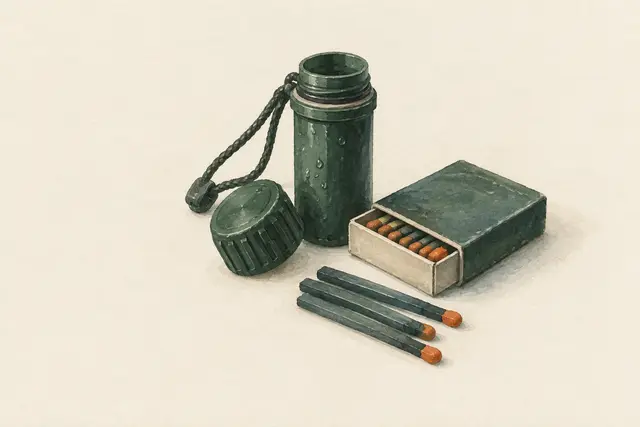
Lighting with matches – including in wind and rain
Matches are simple and give an immediate open flame that can light somewhat coarser tinder. Their weaknesses are moisture, wind and their limited number. Storm matches and a waterproof case partly make up for this.
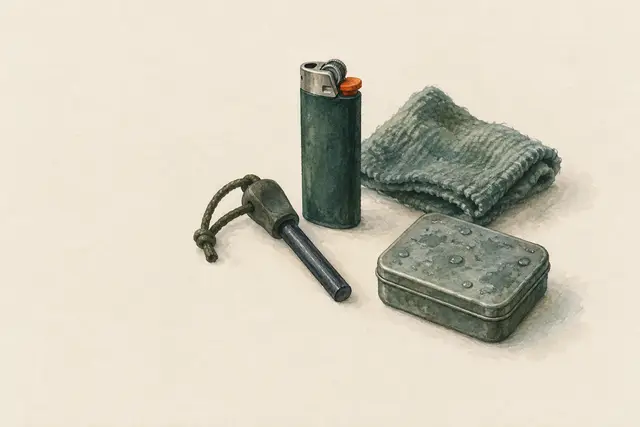
Lighting with a lighter – including in wind, wet and cold
A gas lighter gives many ignitions and an open flame. A wet spark wheel can be dried; cold is the bigger weakness because gas vaporises poorly at low temperatures. Carry it close to your body and have a second ignition method.
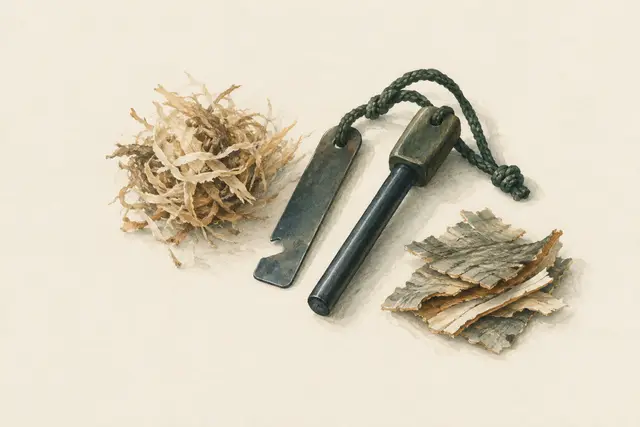
Lighting a fire with a ferro rod
A ferro rod (ferrocerium rod) throws a shower of very hot sparks when scraped with an edge. It works when wet after wiping, in the cold and very many times – but needs especially fine, dry tinder and some practice.
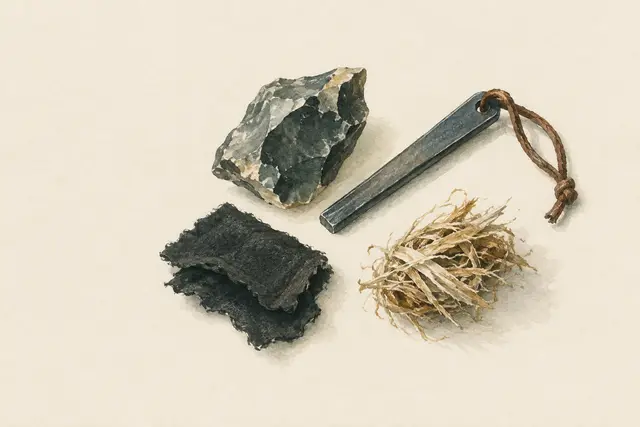
Flint and steel with char cloth
In traditional flint and steel, a hard, sharp stone edge shaves tiny particles off a carbon-steel striker; they glow as sparks. These sparks are much weaker than those of a ferro rod and only catch in very receptive material such as char cloth (charred cotton). The resulting ember is blown to flame in a tinder bundle.
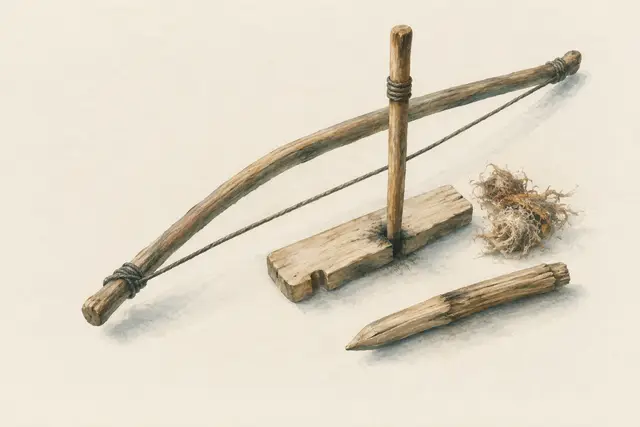
Bow drill friction fire
In the bow drill, a bow with a cord spins a spindle rapidly in a socket in a wooden board. Friction produces hot wood dust that collects in a notch and becomes an ember. The method is well known but demanding: it succeeds only with dry, suitable wood, good technique and a lot of practice – as an emergency plan it is unreliable.
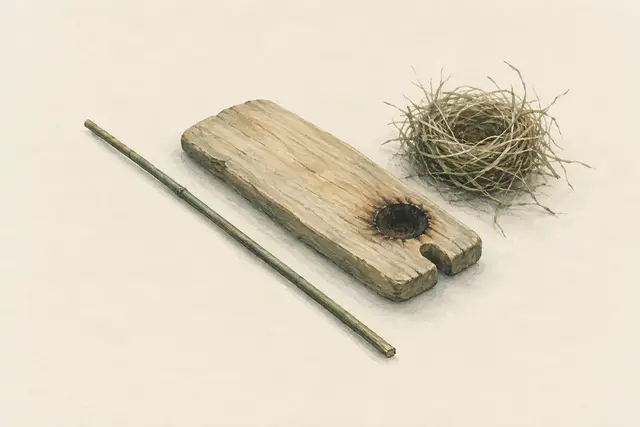
Hand drill friction fire
In the hand drill, a thin, straight shaft is spun rapidly back and forth between flat palms while being pressed into a socket in a board. It is the simplest equipment but one of the hardest friction methods: it demands very suitable, dry materials, stamina and hardened hands.
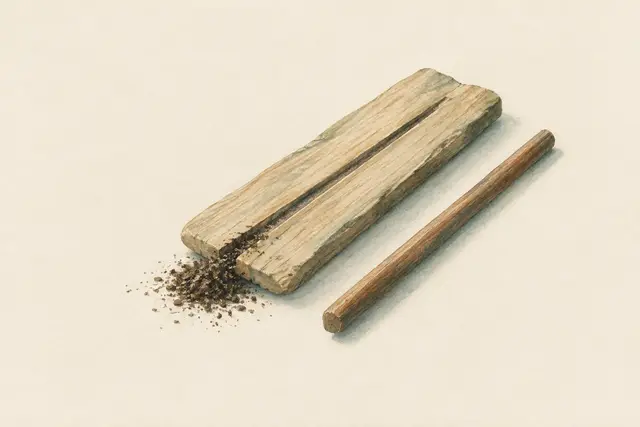
Fire plough
In the fire plough, the tip of a hard stick is rubbed vigorously back and forth in a groove in a softer piece of wood. The abraded dust collects at the end of the groove and can become an ember. The method needs little carving but a lot of strength, very dry wood and practice.
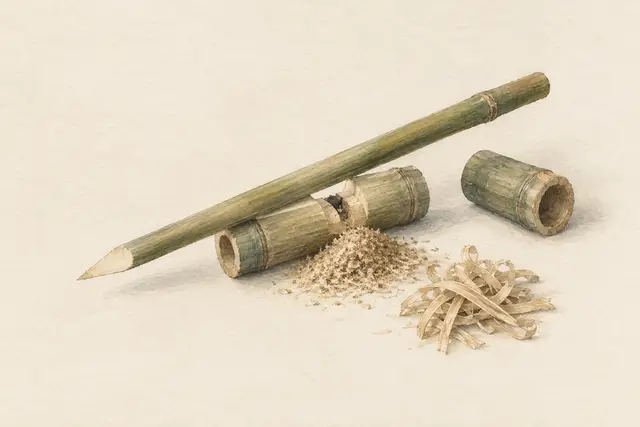
Bamboo fire saw
In the fire saw, the sharp edge of a piece of dry bamboo is sawn across another, notched piece of bamboo. Through the slot, hot bamboo dust falls onto fine bamboo shavings beneath and can form an ember. The method depends on dry bamboo, is strenuous and needs practice.

Burning lens, magnifier and reflector – fire from sunlight
A converging lens (magnifying glass, burning glass, reading glasses for long-sightedness) or a polished concave reflector concentrates sunlight onto a tiny spot that makes dark, very fine tinder smoulder. It needs direct, strong sunshine and a steady hand. It does not work in overcast conditions, at dusk or at night.
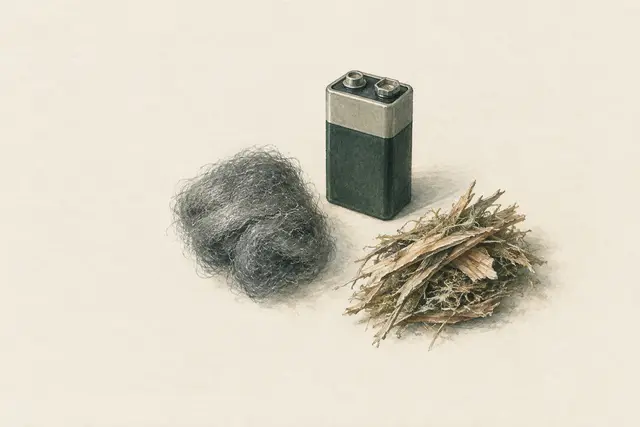
Fire with a battery and steel wool
Very fine steel wool starts to glow and burn when it touches both terminals of a battery (typically a 9-volt block) at the same time. The glowing wool ignites a tinder bundle. The method is simple but carries a fire risk in transport: never carry the battery and steel wool loose together in your pack.
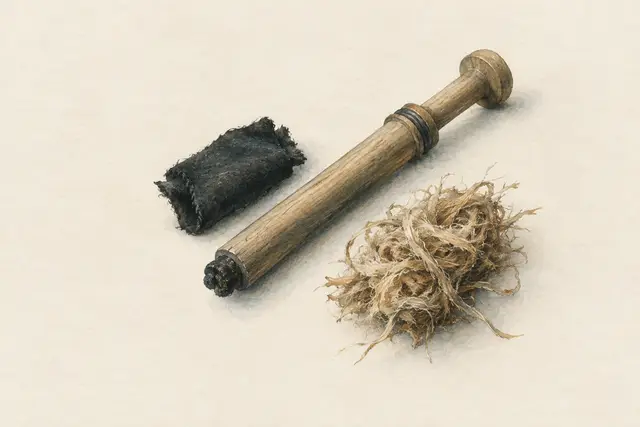
Fire piston (compression fire lighting)
A fire piston is a narrow cylinder closed at one end with a well-sealed piston. When the piston is driven in with a strong, fast push, the trapped air heats up so much that a piece of char cloth in the piston tip begins to smoulder. The ember is then blown to flame in a tinder bundle, as with other ember methods.
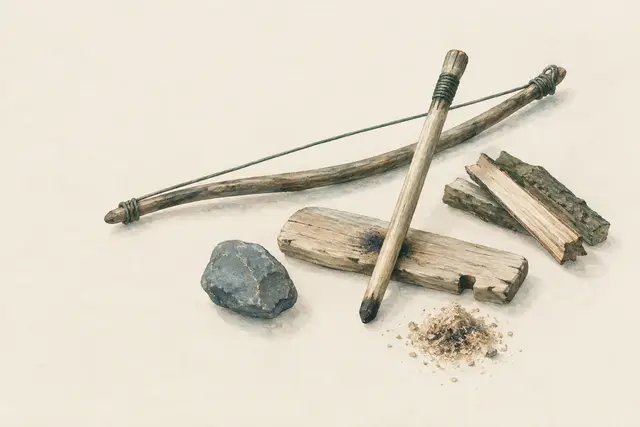
Bow drill troubleshooting: when no ember forms
Most bow drill attempts fail for a few typical reasons: damp or unsuitable wood, polished (glazed) friction surfaces, a notch that is too small, too little pressure or stopping too early. This overview matches signs – smoke but no ember, squeaking, a spindle that pops out, light coarse dust – to likely causes and fixes.
Planned topics (5)
- Ferro rod
- Matches
- Lighter
- Friction fire
- Bow drill
Difficult conditions
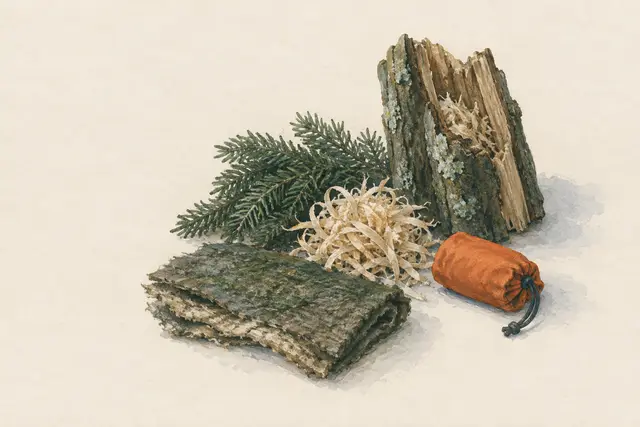
Fire in rain, wet and snow
In wet conditions dry material is usually found inside wood, under conifers and in dead standing wood. Carried tinder, an insulating base against wet ground or snow and more preparation than usual decide success.
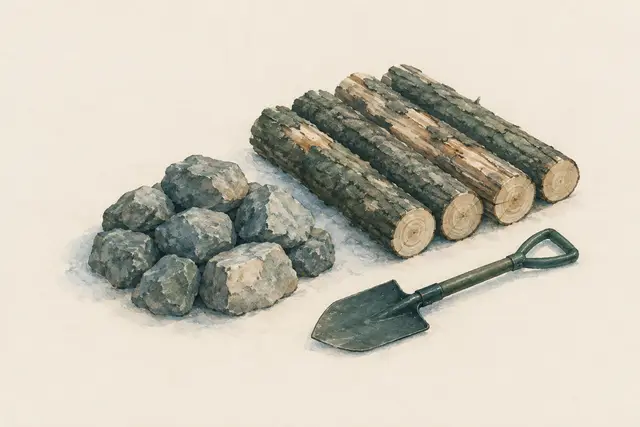
Fire on snow: building a platform
A fire made directly on snow melts into it and drowns in the meltwater. The remedy is a platform of thick logs laid side by side or of dry stones – or, where snow is shallow, digging down to the ground. Do not make a fire under snow-laden branches.
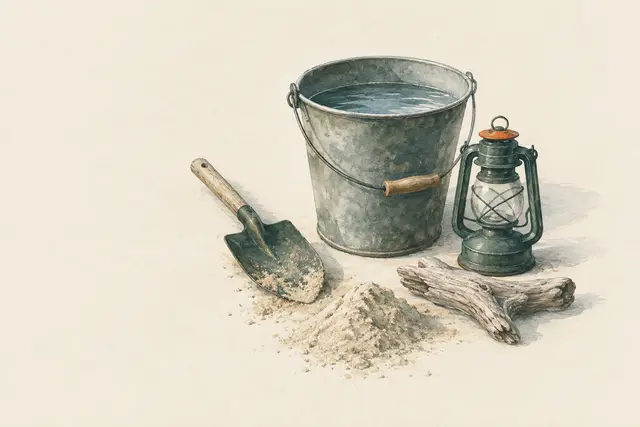
Fire on a beach: rules, tides and hot sand
On many beaches open fires are prohibited or allowed only at designated sites – check local rules first. Where fire is allowed, special hazards apply: sea wind drives sparks into dunes, tides change the site, and embers buried under sand stay invisibly hot for hours and cause severe burns to bare feet. Beach fires are therefore always put out with water, never buried.
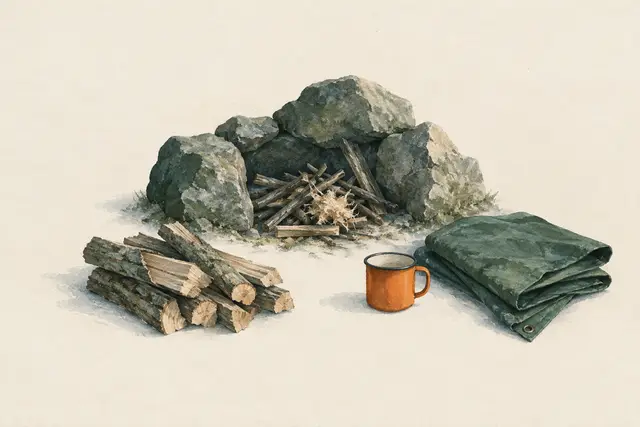
Fire in wind: decide, shelter, keep it small
Wind makes a fire harder to light and at the same time more dangerous: it blows out the first flame, fans a running fire excessively and carries sparks far. The first question is therefore whether a fire is justifiable at all. If so, a sheltered, non-flammable spot, a low, compact lay, a small fire and a large cleared area downwind all help.
Planned topics (3)
- Fire in rain
- Fire on snow
- Fire in wind
Use
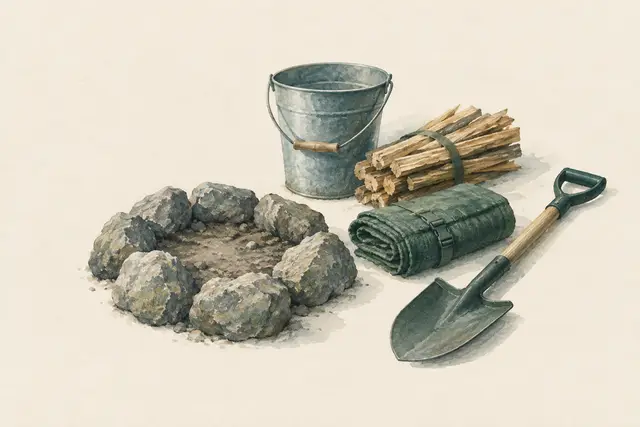
Choosing and preparing a safe fire site
A campfire can start a wildfire through flying sparks, an unsuitable fire site or incomplete extinguishing. First establish whether a fire is allowed at all; then use an existing fire ring or choose a sheltered, open spot on non-flammable ground – well away from tents, trees and dry vegetation.
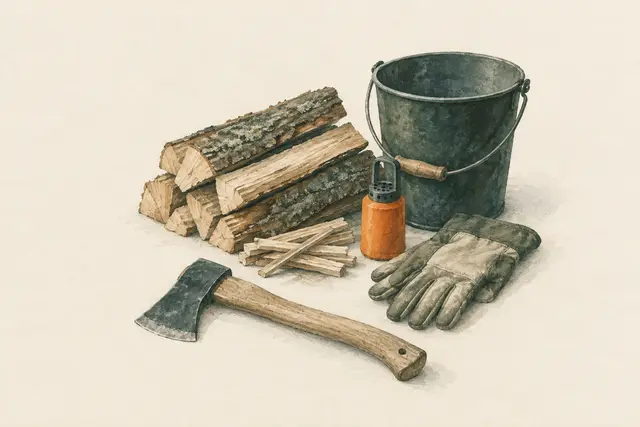
Keeping a fire going and under control
A small, steadily fed fire gives more usable heat and is safer than a large one. Add wood gradually, let air in, watch for sparks – and never leave the fire unattended.
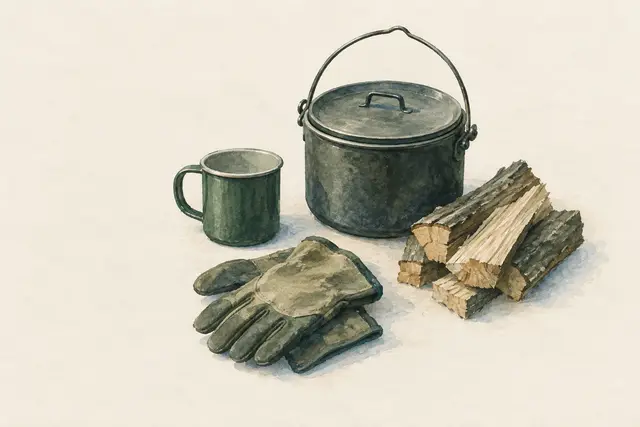
Cooking and boiling water safely over a fire
Cooking works best over embers, not high flames: the heat is more even, the pot gets less sooty and stands more stably. The biggest risks are pots of boiling water tipping over, hot handles and unsuitable containers.
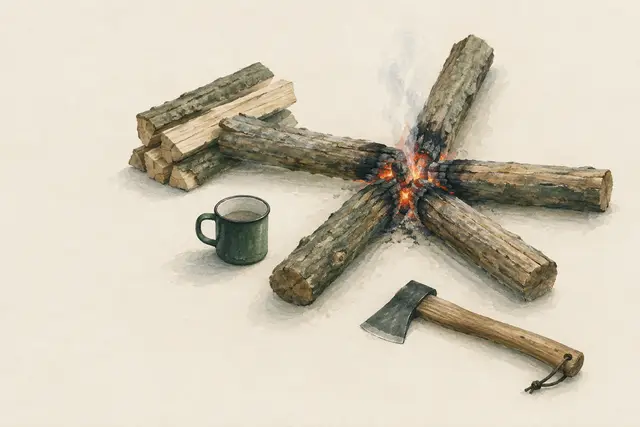
Star fire
In the star fire, several long pieces of wood lie like the spokes of a wheel with their ends in the centre. Only the ends burn; you push the logs inwards as they burn down. This lets you regulate the fire's size finely and save wood without cutting everything up.
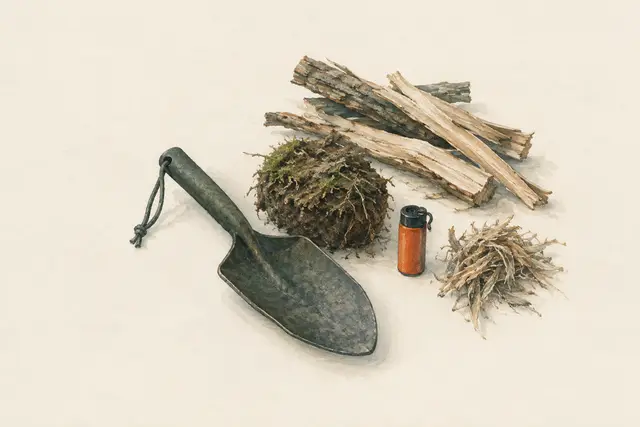
Dakota fire hole
The Dakota fire hole consists of a fire pit and a second air hole on the windward side, connected underground by a tunnel. It burns hot, economically and sheltered from wind, with the flame barely visible. It requires digging, is dangerous on root- or peat-rich ground and is not permitted in many places – check local rules.
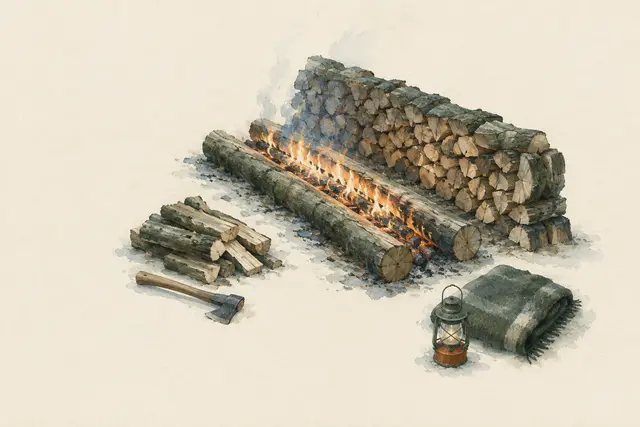
Long fire and reflector wall for warmth
A long fire burns between two parallel logs and is about as long as a person lying down, so the whole body receives radiant heat. A wall of stacked logs or stones on the far side throws some of the heat back and blocks wind. Both need a lot of wood and constant supervision.
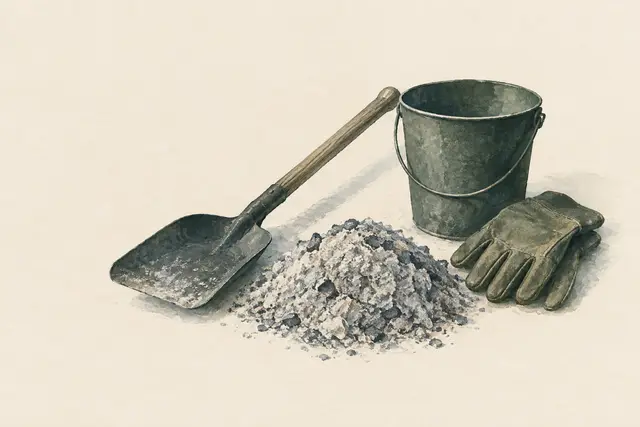
Banking a fire overnight
Banking means raking the embers together and covering them with ash so they smoulder slowly with little oxygen and can be revived in the morning. Outdoors this means an unattended fire – which is dangerous and prohibited in many places. It is safe only in a closed stove or under continuous supervision.
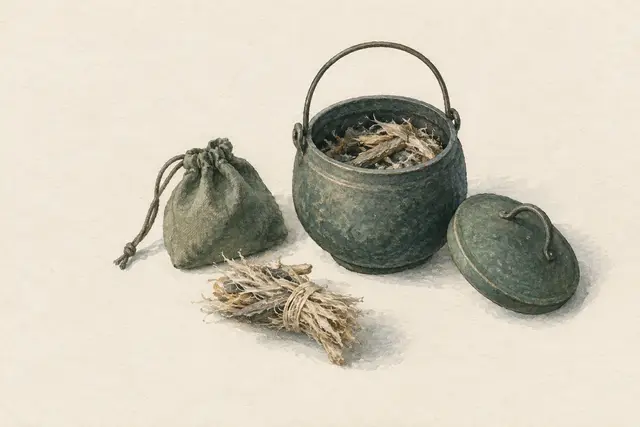
Keeping and carrying embers
Before matches existed, fire was often carried as embers – in containers with slowly smouldering natural material. These traditional methods are interesting historically but risky and unnecessary today: a lighter in your pocket is safer. This entry describes the principle only in general terms.
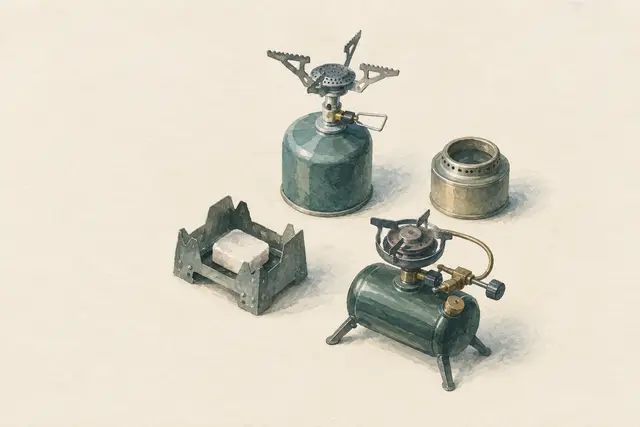
Stoves compared: gas, alcohol, solid fuel, liquid fuel
A stove is often a better choice than a campfire: faster, cleaner and easier to control. Gas canister stoves are the simplest, alcohol stoves quiet and basic, solid fuel light and robust, liquid-fuel stoves good in the cold but more maintenance-heavy. All belong outdoors – never in a tent or enclosed room. Fire bans can also apply to stoves.
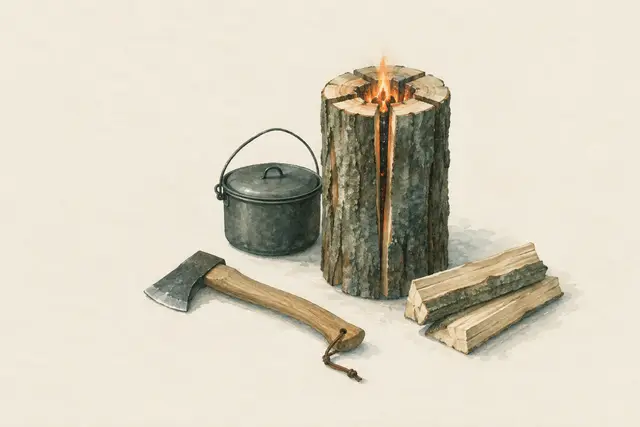
Swedish torch (log candle)
A Swedish torch is an upright, dry log section cut or split lengthwise several times from the top. Lit in the centre, it burns from the top down and offers a small, flat surface for a pot. It is more a fire for permitted fire sites and gardens than for the wilderness, because large logs do not burn completely to ash.
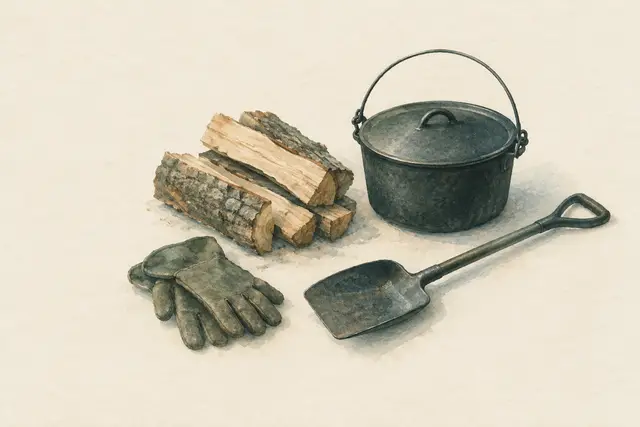
Keyhole fire: separating flames and cooking coals
In a keyhole fire the fire site is shaped like a keyhole: the fire burns in the round part and produces coals, which are raked into the narrow extension for cooking. Wood keeps burning for warmth and light while cooking happens over even coals – with less soot and better heat control.
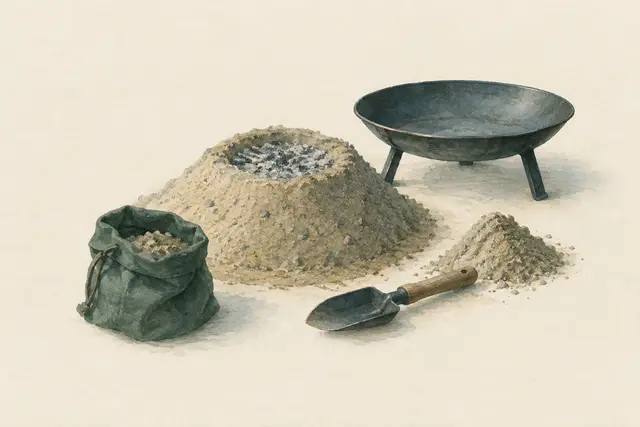
Mound fire and fire pan: fire without burn scars
Where fire is allowed but no fire site exists, burn scars can be avoided: in a mound fire the fire burns on a thick layer of sand or mineral soil heaped onto a base; with a fire pan it burns on a raised metal pan. Afterwards the cold ash is scattered and the soil returned – the ground stays undamaged.
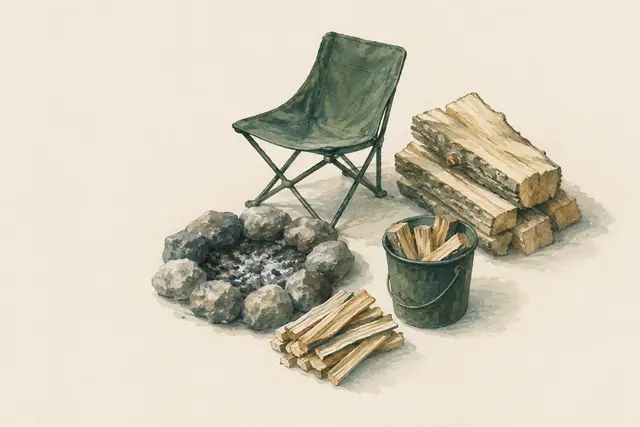
Reducing smoke and where to sit
Smoke is a sign of incomplete combustion and contains fine particles, carbon monoxide and irritants. A fire smokes mainly with damp, fresh or overly thick wood, when air is lacking, and when rubbish is burned. Dry, split wood, a small, hot fire, good airflow and a seat across the wind reduce exposure – for the group and for neighbours.
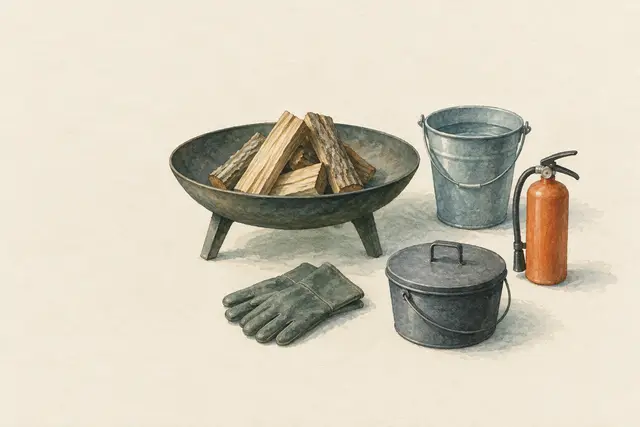
Using a garden fire bowl or fire pit safely
Fire bowls, fire baskets and built fire pits in gardens are popular but not allowed everywhere – rules on open fires, smoke and garden waste vary by municipality, so check local rules. It becomes safe with ample distance from the house, fences, hedges and trees, a stable, non-flammable base, dry untreated wood, extinguishing means within reach and completely cooled ash in a metal container.
Planned topics (4)
- Fire pits
- Using heat
- Cooking over fire
- Smoke
Safety and law
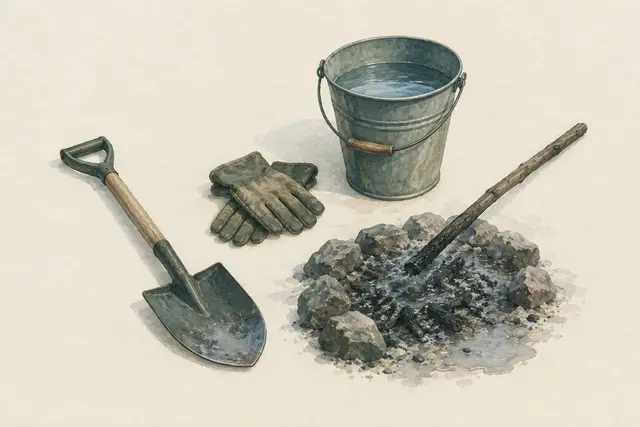
Putting a fire out completely: drown, stir, feel
A fire is only out when the fire site is cold. Drown it with plenty of water, stir embers and ash, water again and check with the back of your hand at a safe distance whether heat is still rising. Too hot to touch means too hot to leave.
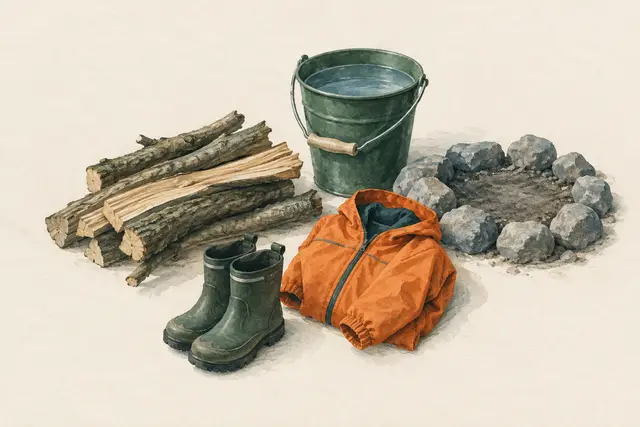
Children at the campfire: rules and tasks
Children love fire but underestimate heat, embers and hot objects. A marked safety circle, fixed seats, no running or rough play near the fire, close-fitting clothing and one adult who is always responsible prevent most accidents. Age-appropriate tasks – collecting wood, keeping extinguishing water ready, helping to put the fire out – make children participants rather than spectators.
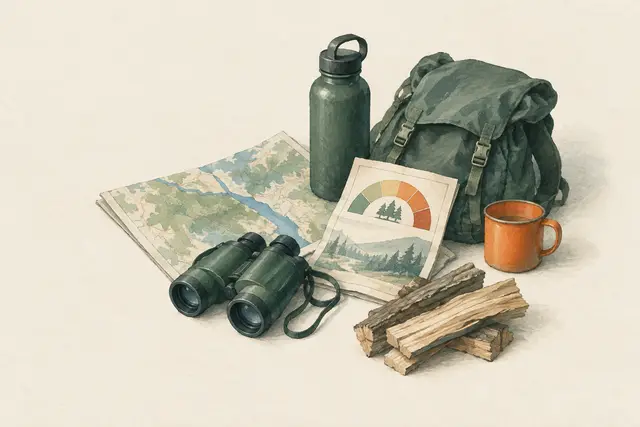
Fire bans, danger ratings and fire etiquette
Whether a fire is allowed depends on location, ownership, season and current wildfire danger – and rules differ greatly between countries and regions. This overview shows where to get information (authorities, forestry services, danger indices, signs), what kinds of restrictions typically exist, and which etiquette applies everywhere: use existing fire sites, stay small, only permitted wood, never unattended, extinguish completely, leave nothing behind.
Planned topics (4)
- Extinguishing safely
- Wildfire prevention
- Avoiding burns
- Fire bans