Survival science
Why techniques work
The physics, chemistry and biology behind outdoor techniques – the basis for understanding methods rather than copying them.
Physics
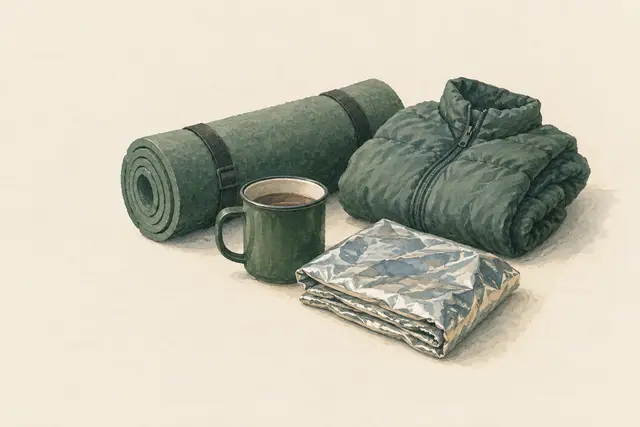
Heat transfer: conduction, convection, radiation, evaporation
Heat always flows from warmer to colder – along four paths: through direct contact (conduction), through moving air or water (convection), as invisible infrared radiation (radiation) and through the evaporation of moisture. Almost every technique for keeping warm, cooling down or cooking affects one or more of these paths. Knowing them explains why sleeping pads, windbreaks, emergency blankets and dry clothing work.
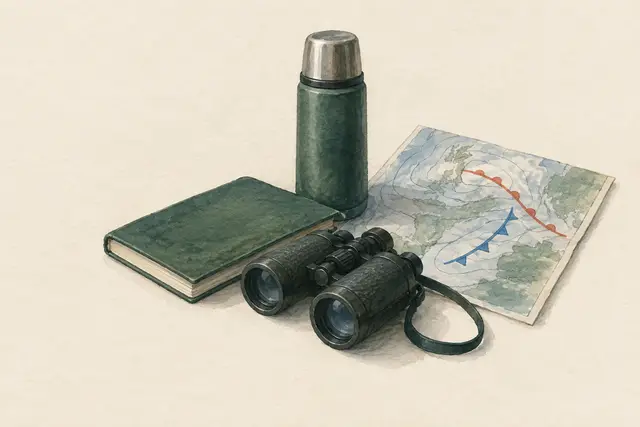
Understanding weather fronts: warm front and cold front
A weather front is the boundary between two air masses of different temperature and humidity. At a warm front, warm air slides slowly over cold air – it often announces itself hours ahead with high, thin clouds and brings long-lasting rain. At a cold front, cold air pushes under warm air – the weather changes quickly, with showers, gusts and sometimes thunderstorms. Knowing the signs helps you understand forecasts better and plan more cautiously.
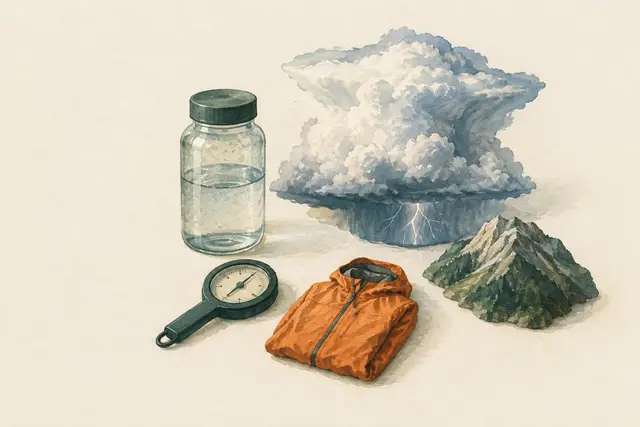
How thunderstorms form
Thunderstorms need three ingredients: moist air, an unstable atmosphere in which rising air keeps rising, and a trigger such as solar heating, mountains or a cold front. In the towering storm cloud, collisions between ice and graupel particles separate electrical charges – lightning equalises them. Understanding this helps you recognise typical thunderstorm situations earlier and explains why shelter must be sought in good time.
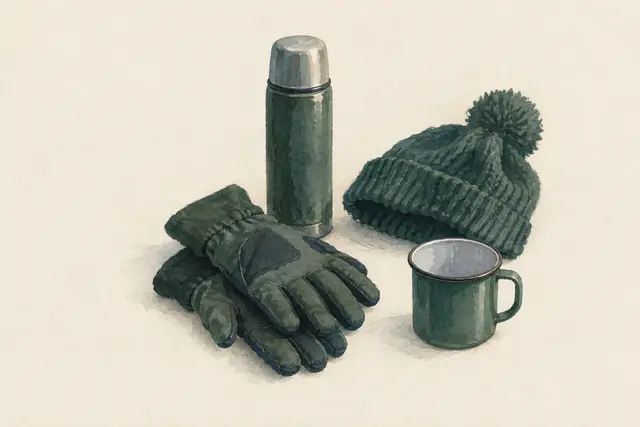
Wind chill: why wind makes it feel colder
Wind constantly strips away the warm layer of air next to the skin, so exposed skin cools faster. The wind chill index translates air temperature and wind speed into a feels-like temperature. It describes heat loss and frostbite risk for skin – but wind does not cool objects, water or engines below the air temperature.
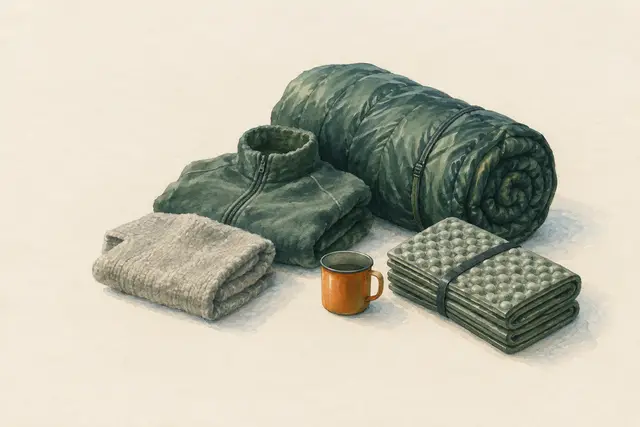
Dead air and why wet clothing chills
Clothing, sleeping bags and pads do not warm by themselves – they trap air. Still air conducts heat poorly and is therefore a good insulator. If the material gets wet, water replaces the air: water conducts heat roughly 20 to 25 times better than air, and as it evaporates it draws extra heat from the body. So: stay dry, adjust layers, avoid cotton in the cold.
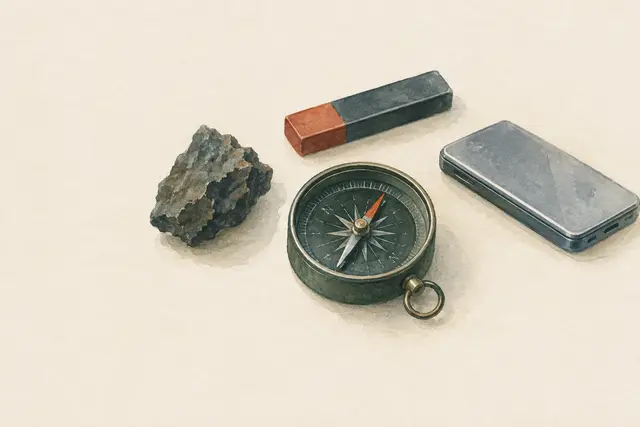
How a compass works: Earth's magnetic field and declination
A compass needle is a small magnet that aligns with the field lines of Earth's magnetic field. It points to magnetic north, not geographic north. The angle between them – declination or variation – depends on location and changes slowly over the years. Iron, magnets and electronics nearby deflect the needle.
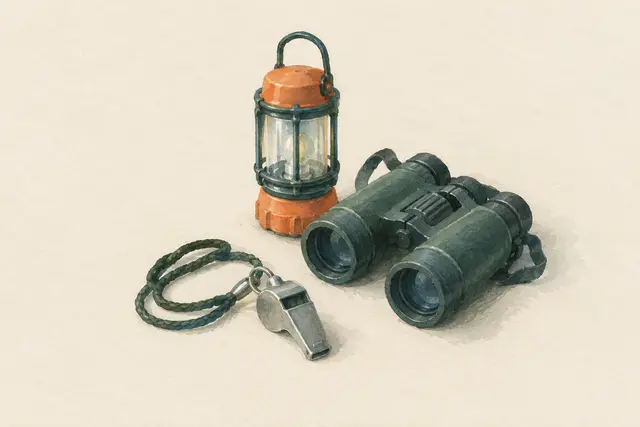
Sound and light in signalling
Signals get weaker with distance because their energy spreads over an ever larger area. A whistle carries further than the voice because it produces a loud, high-pitched tone with little effort, in a range where hearing is particularly sensitive. Light needs a clear line of sight but is visible from far away at night and as a reflection of sunlight. Wind, terrain and vegetation shorten both.
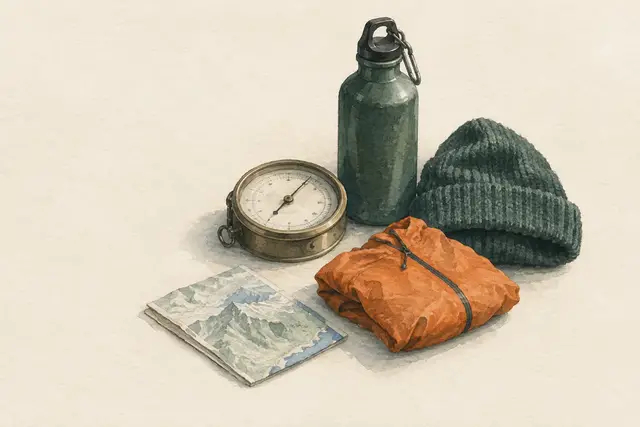
Air pressure and altitude
With every metre of height there is less air above us – air pressure falls, to roughly half the sea-level value at around 5,500 m. This has consequences: less oxygen per breath, a lower boiling point of water, and barometric altimeters react to weather changes. Falling pressure often announces worse weather.
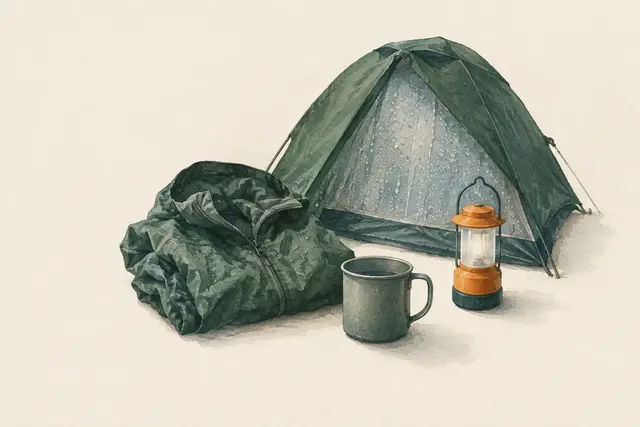
Dew point: why tents get wet inside
Warm air can hold more water vapour than cold air. When humid air cools at a cold surface to its dew point, water condenses – as dew, fogging or frost. In a tent, breath, wet clothing and cooking supply the vapour and the cold tent wall supplies the surface. Ventilating, keeping moisture outside and choosing the site wisely reduce the problem.
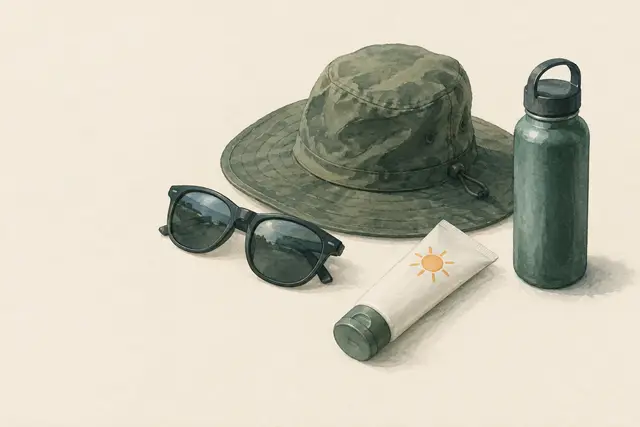
Solar radiation and UV
UV radiation is invisible and cannot be felt, but it causes sunburn, eye damage such as snow blindness and, in the long run, skin cancer. It is strongest around midday, in summer, at altitude and near the equator; snow, water and sand add to it by reflection, and clouds block it only partly. The UV index shows when protection is needed.
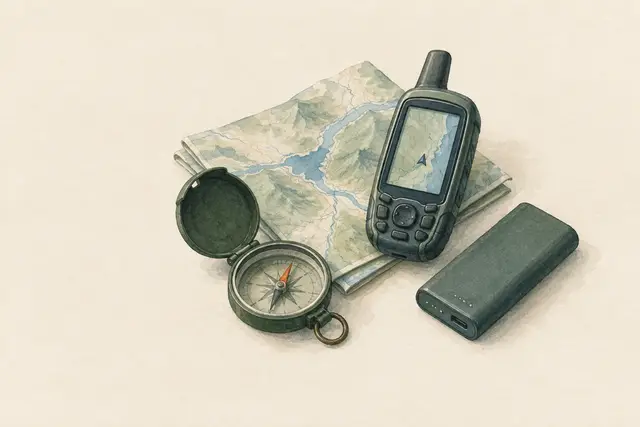
How GPS works – and where it fails
Satellite navigation measures how long radio signals from several satellites take to reach the receiver and calculates the position from that. Under open sky it is accurate to within a few metres. In gorges, between tall buildings, under dense forest and with a flat battery it becomes inaccurate or fails. GPS therefore does not replace a map, compass and battery planning.
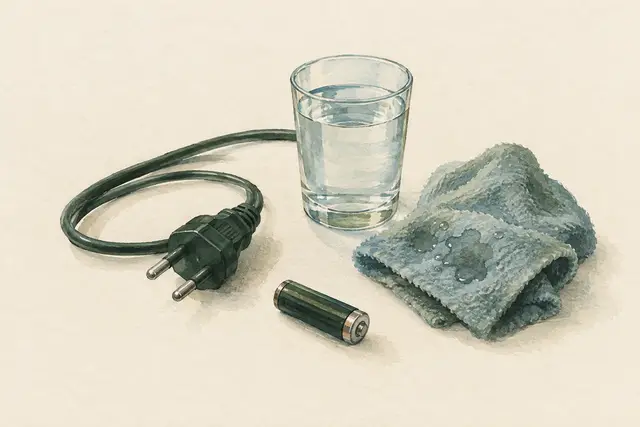
Understanding electricity: voltage, current and why water conducts
What is dangerous is the current that flows through the body. How much flows depends on the voltage and the resistance – and wet skin, water and earth greatly lower the resistance. That is why mains voltage in the home, flooded basements and fallen power lines are deadly, while a torch battery is harmless.
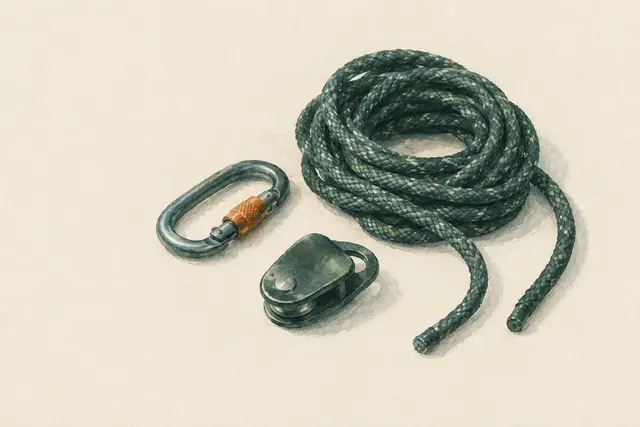
Friction in rope: why knots and friction hitches hold
A knot does not hold by magic but by friction: under load the turns press against each other, and every additional wrap multiplies the holding force. This explains why a round turn holds a load almost on its own, why friction hitches grip under tension and slide when unloaded – and why slippery rope holds knots less well.
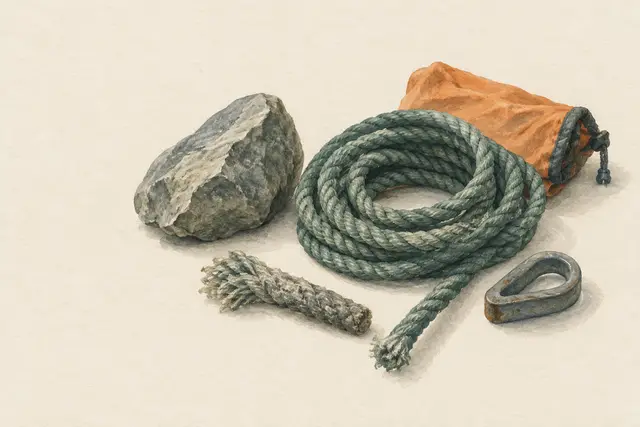
Rope strength: what weakens a rope
The breaking strength on the label applies to a new, straight rope under slow loading. In use, a rope is almost always weaker: knots and sharp bends, edges, abrasion, sunlight, heat, chemicals and age all cost strength, and sudden loads are many times the weight. That is why people work with large safety margins.
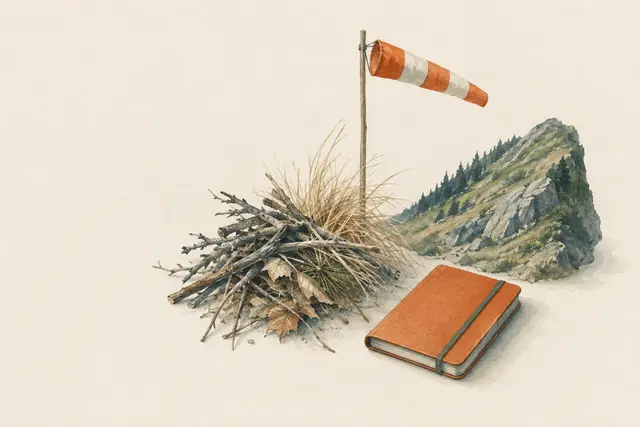
Fire behaviour: wind, slope and fuel
How fast and in which direction a fire spreads is determined by three factors: fuel, weather and terrain. Wind and slope tilt the flames onto unburnt material and preheat it; fine, dry fuels ignite most easily. Understanding this helps you choose fire sites better and recognise why vegetation fires escalate so suddenly.
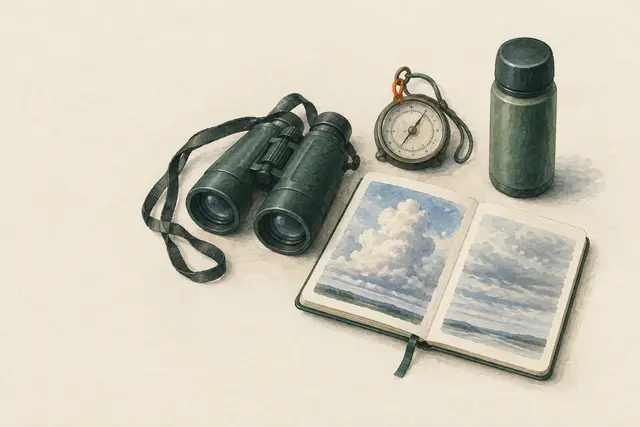
Reading clouds and understanding weather forecasts
Clouds show what is happening in the atmosphere: heap clouds that grow rapidly upwards announce showers and thunderstorms; thickening veil clouds often a front. An official forecast is still the better basis – watching clouds serves as an on-site check of whether the weather is arriving faster than forecast.
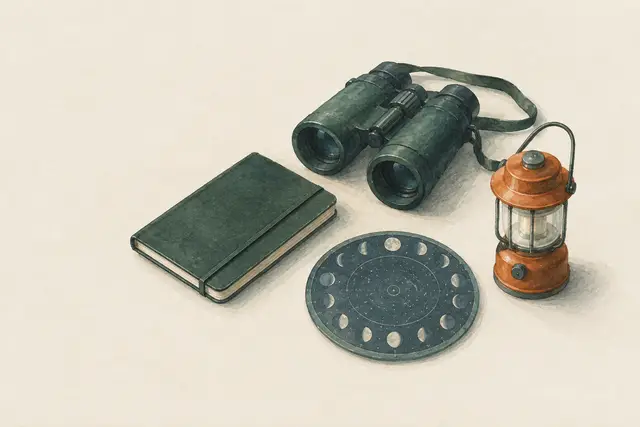
Moon phases and light at night
Whether a night is bright or pitch dark depends greatly on the moon: at full moon it is in the sky all night, at new moon not at all. Knowing the moon phase lets you judge whether anything can be seen without a lamp, when the moon will rise and why a night walk is easy one week and difficult the next.
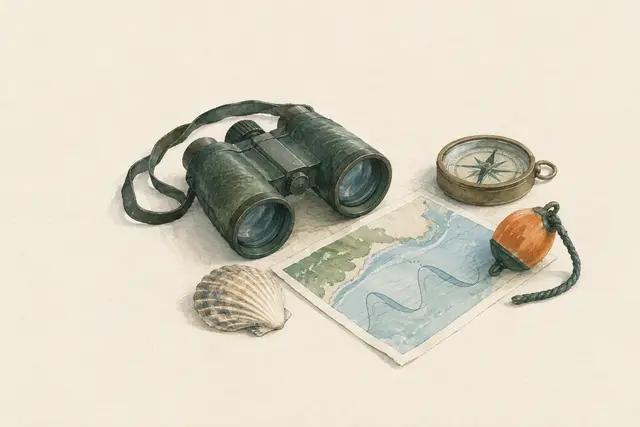
Tides: why the sea rises and falls
The moon and sun pull with different strength on different parts of the Earth. This creates two tidal bulges beneath which the Earth rotates – on many coasts two high and two low waters a day, about 50 minutes later each day. How large the difference is depends heavily on the shape of the coast. Hence the rule: read the tide table for exactly that place.
Planned topics (4)
- Heat transfer
- Materials science
- Navigation fundamentals
- Meteorology
Chemistry and biology
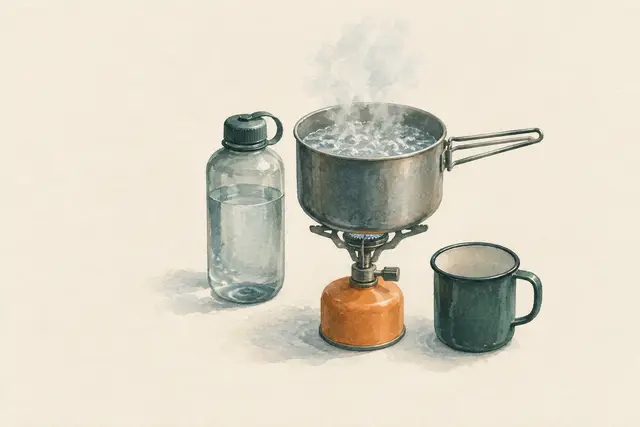
Why boiling disinfects water
Heat damages the proteins, membranes and genetic material of microorganisms so badly that they can no longer multiply or cause disease. How quickly that happens depends on temperature and time. A rolling boil is far above what most waterborne pathogens can survive – which is why it is regarded as very reliable. Heat does not help against chemicals and salt, however.
What happens in combustion
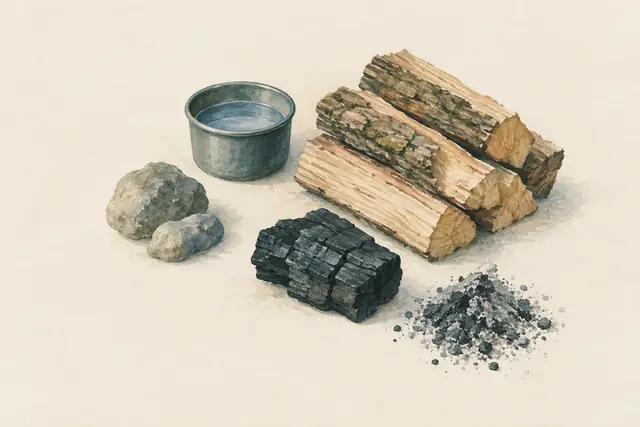
Wood does not burn directly: heat first breaks it down into flammable gases (pyrolysis), and these gases burn in the flame with oxygen from the air. What remains is charcoal, which glows without a flame. If oxygen is lacking or the fire is too cool, combustion is incomplete – producing smoke, soot and carbon monoxide. The fire triangle of fuel, oxygen and heat sums up what a fire needs.
Carbon monoxide: why it is so dangerous
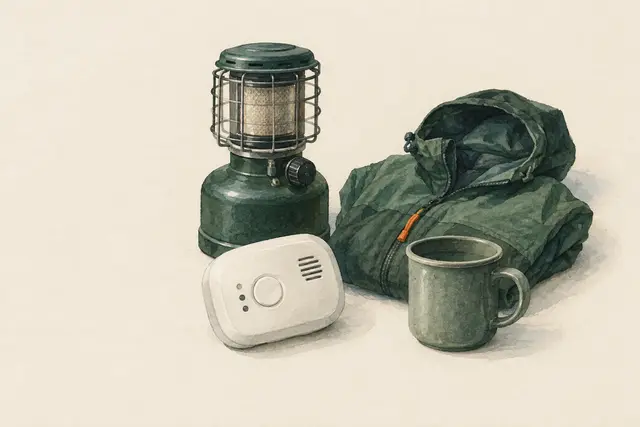
Carbon monoxide (CO) forms when fuel burns incompletely. It is colourless, odourless and tasteless and binds far more strongly to the blood's red pigment than oxygen does. As a result the body suffocates from within, often without the person noticing. Protection: never burn anything in enclosed spaces, use CO alarms, and if you suspect it get into fresh air immediately and call for help.
Batteries in the cold
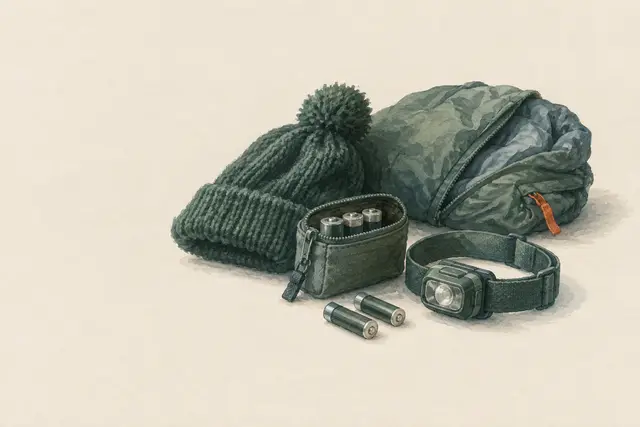
In a battery, chemical reactions supply the current. Cold slows these reactions and raises internal resistance – devices switch off early even though energy is still stored. Once warmed up the battery usually recovers. Lithium-ion batteries should not be charged below freezing. Carry spare batteries close to the body and take devices into the sleeping bag at night.
Microbes in food: spoilage, fermentation and safety
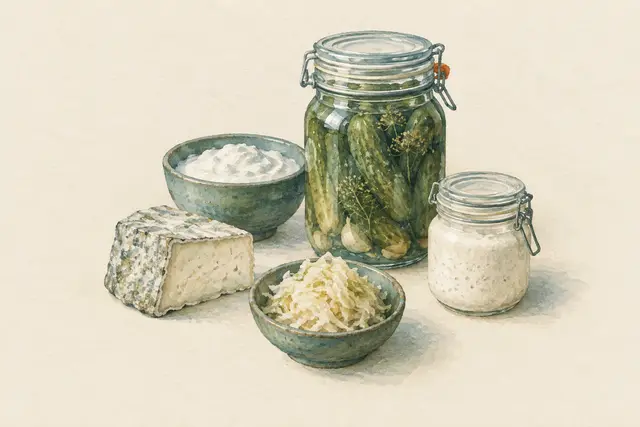
Bacteria, yeasts and moulds need water, nutrients, a suitable temperature and, depending on the type, oxygen or its absence. Preserving food means taking one of these conditions away: cooling, drying, salting, acidifying, heating. Fermentation uses desirable microbes that produce acid and thereby crowd out undesirable ones – it only works reliably with tested recipes.
Planned topics (6)
- Water chemistry
- Food microbiology
- Biology
- Ecology
- Plant physiology
- Geology
The human body
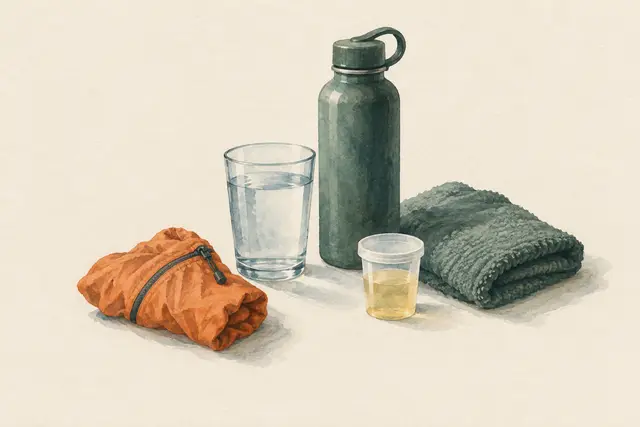
The body's water balance and dehydration
A large part of the body is water, and the body constantly loses water through breathing, skin, sweat and urine. Thirst and concentrated urine are the signals it uses to counteract this. In heat, exertion, cold, altitude, diarrhoea or vomiting, losses can outpace replacement. This entry explains the basics – it is not a treatment guide.
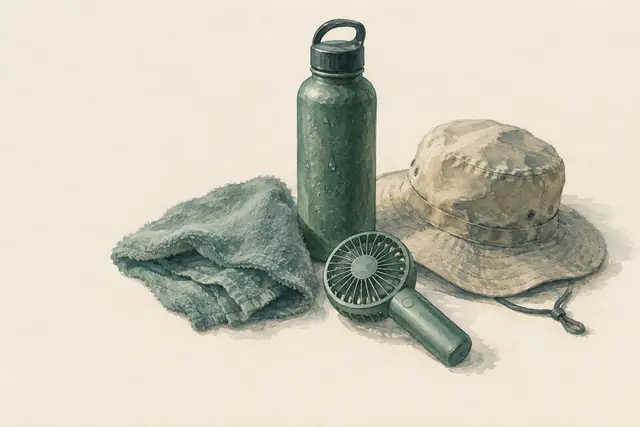
Heat index: humidity and sweating
Sweating only cools when the sweat evaporates. In high humidity it evaporates poorly – which is why muggy heat feels hotter and is more dangerous than dry heat at the same temperature. The heat index combines temperature and humidity into a feels-like temperature.
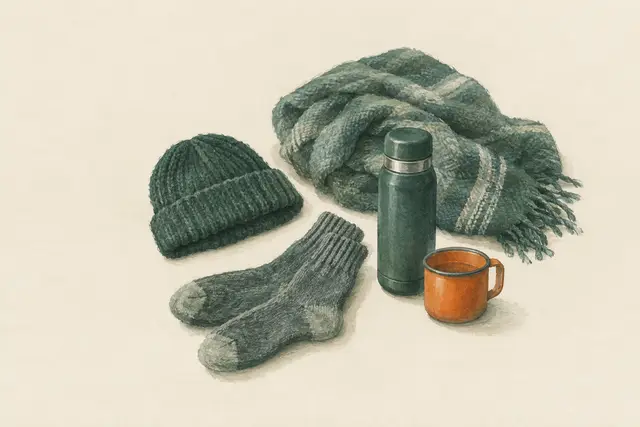
How hypothermia develops
The body keeps its core temperature within a narrow range. If it loses more heat than it produces, it first reduces blood flow to the skin and limbs and starts to shiver. When the core temperature falls below 35 °C, this is called hypothermia: thinking, coordination and eventually consciousness decline. Recognise it early, protect from further heat loss and get help.
Planned topics (2)
- Energy needs
- Thermoregulation