Food and nutrition
Supplies, preparation, plant knowledge with limits
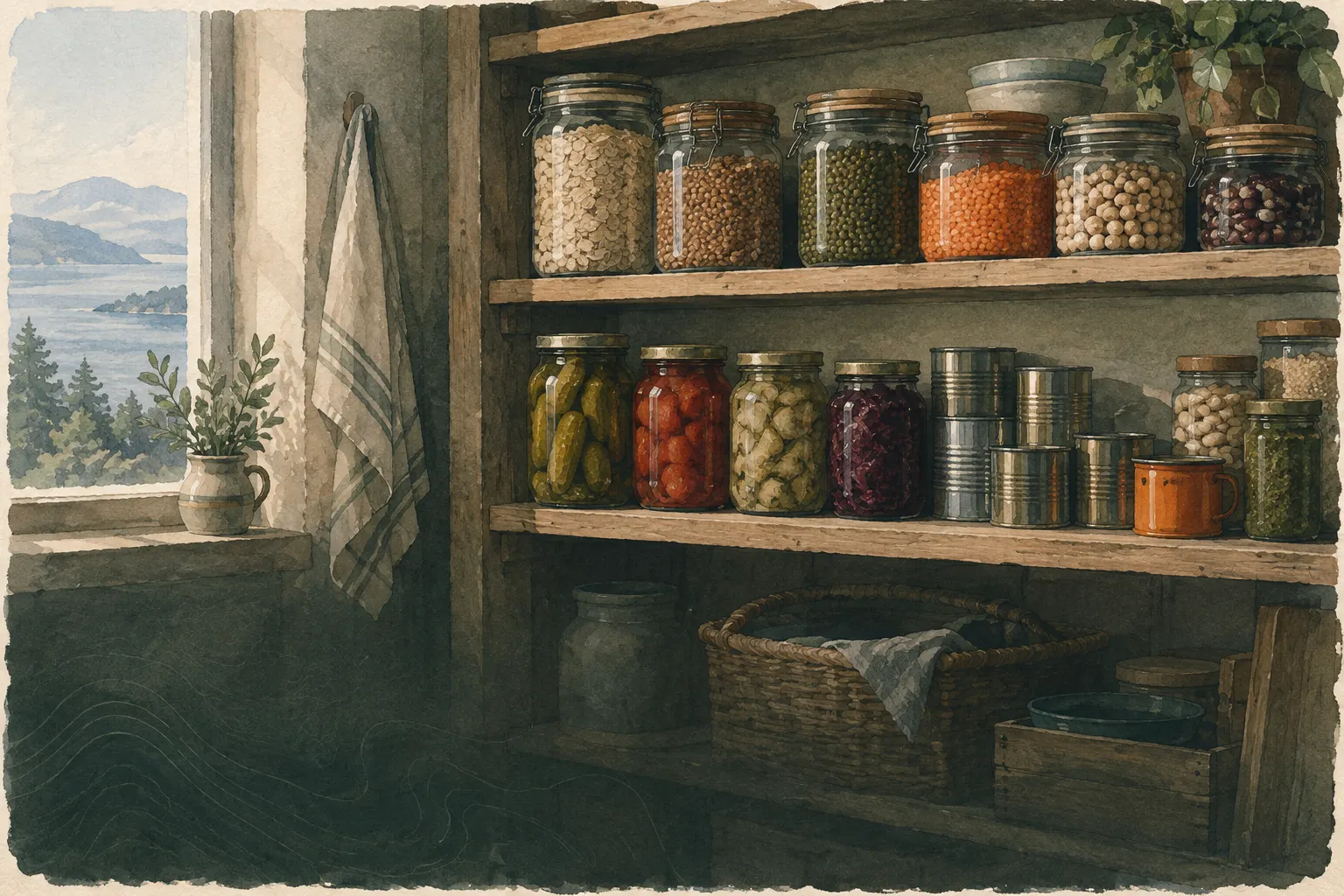
Supplies, shelf life and hygiene come first. Plants and fungi are never declared edible without reliable identification.
Method explorer
How do I prepare meals when the cooker and power fail?
Method explorer
How do I make food keep longer without a fridge?
Supplies and shelf life
Calories and protein in an emergency: the basics
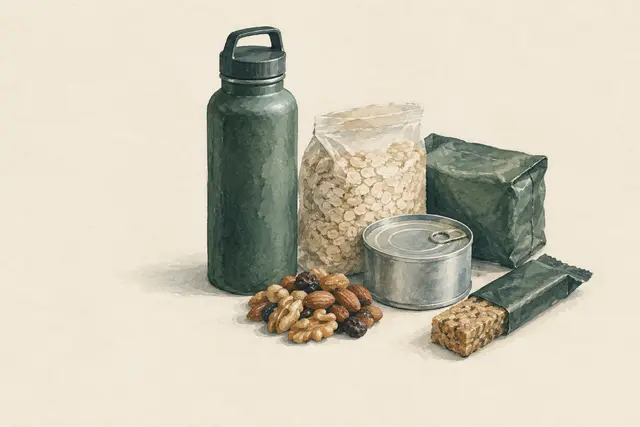
In an emergency water comes first, then enough energy. If you roughly understand where calories come from, how much protein a person needs and why needs depend on age, activity and cold, you can plan a stock sensibly and use scarce food wisely. Exact diet plans are not needed for this.
Rotating and storing an emergency food stock
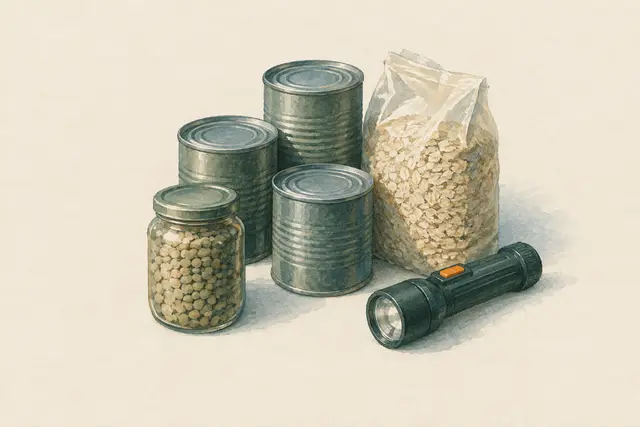
A stock is only as good as its condition. With the "first in, first out" principle, clear labelling and a cool, dry, dark storage place it stays edible instead of becoming waste. Damaged, bulging or leaking cans do not belong in the stock.
Sharing out supplies fairly within a group
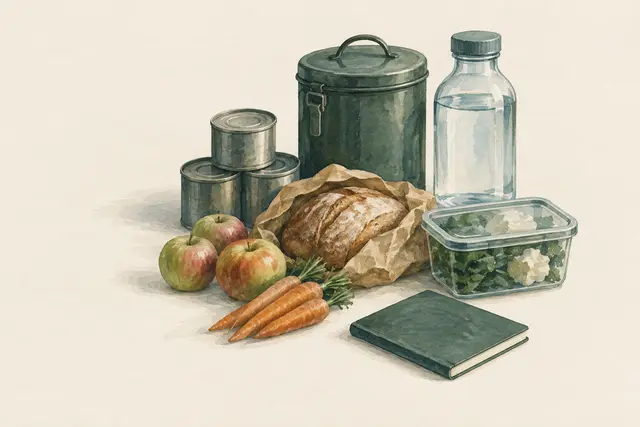
When a family, household or group has to manage on limited supplies for some time, a simple, transparent plan prevents conflict and waste. Take stock, eat perishables first, share by need rather than by who is loudest – and do not ration water below what is needed.
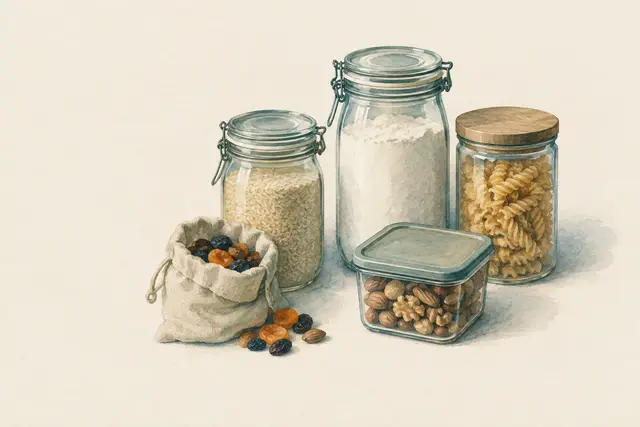
Protecting food stores from pests and moisture
Flour, rice, pasta, nuts and dried fruit are often attacked by food moths, beetles or mice, or absorb moisture and go mouldy. Tight containers, a dry, cool storage place, tidiness and regular checks usually prevent this. Infested or mouldy food is thrown away – not picked over and used anyway.
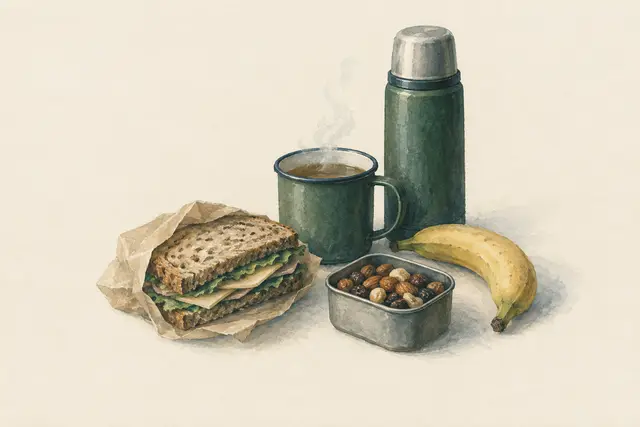
Eating and drinking in the cold
In the cold the body uses more energy – through shivering, heavy clothing and harder walking. Regular meals and snacks, hot drinks and enough fluid help you stay warm and capable. Alcohol does not warm you; it promotes heat loss.
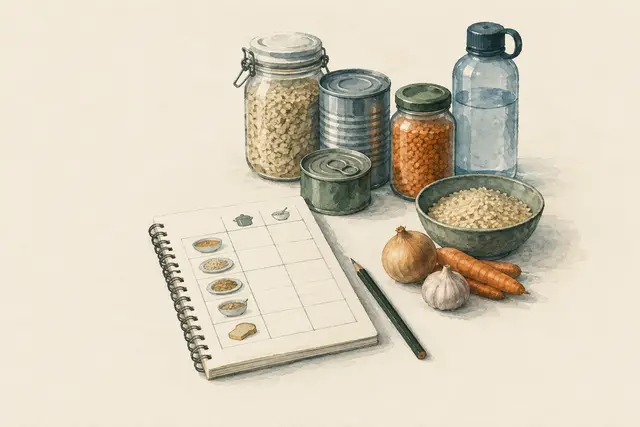
Making a menu plan for the emergency stock
Instead of buying random tins, plan the stock as a concrete menu: what does the household eat on day 1, 2, 3 … – with and without the ability to cook? This creates a stock that suits taste, needs and cooking options and can be rotated in everyday life. National agencies such as the BBK or Ready.gov say how many days make sense.
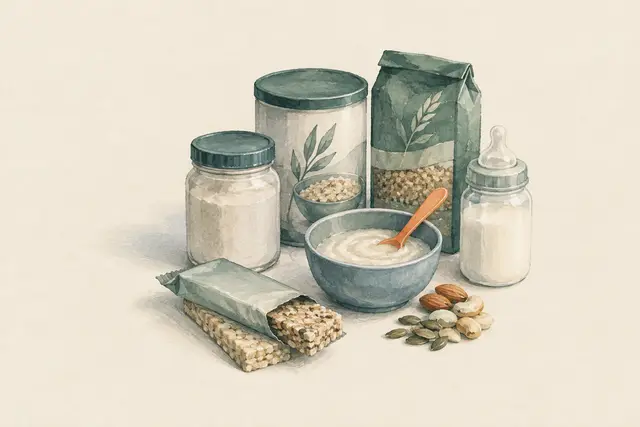
Emergency stock for allergies, special diets and infants
Anyone with a food allergy, coeliac disease, diabetes or another diet-related condition, or caring for an infant, cannot rely on emergency rations or donations in a crisis. A separate, labelled stock, agreement with a doctor or dietitian and a plan for preparation without power and running water are essential.
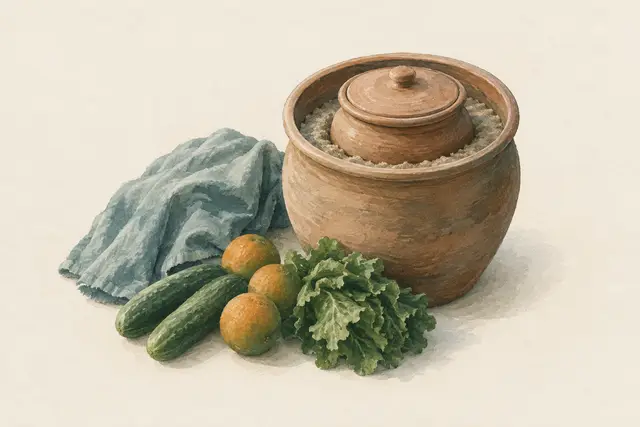
Evaporative cooling: clay pot cooler and wet cloth
Evaporating water removes heat. A clay pot inside a larger clay pot with wet sand in between, or a damp cloth over a basket, keeps fruit and vegetables fresh longer in dry, warm air. It is not a fridge: the temperature is not reliably low enough for meat, fish, dairy or leftovers.
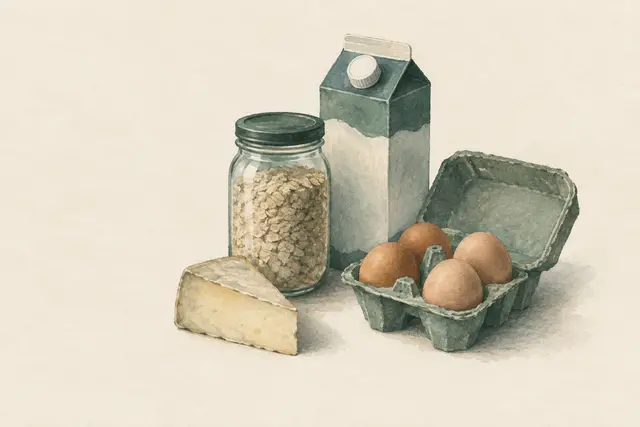
Reading best-before and use-by dates correctly
In the EU there are two different dates: the best-before date is a quality promise – after it a food is often still fine. The use-by date appears on highly perishable foods and is a safety limit – do not eat the food after it. Knowing the difference means less waste and safer eating.
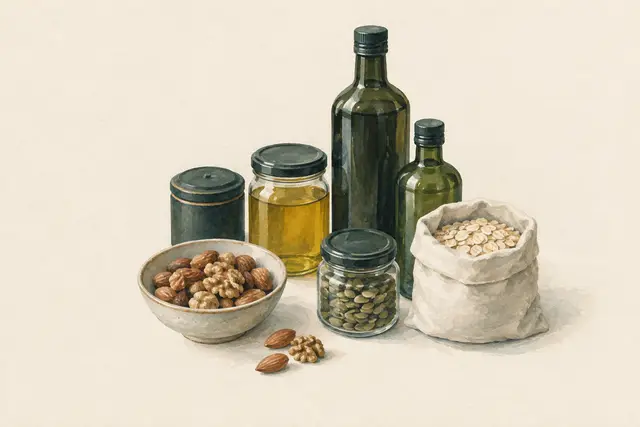
Storing oils and fats: preventing rancidity
Fat is the most energy-dense part of food and valuable in a stock – but oils, nuts, wholemeal flour and rolled oats go rancid over time. Light, heat and air speed this up. Small, dark, well-sealed containers, cool storage and rotation keep fats good for longer. Home-made herb or garlic oils are a separate risk and do not belong in the stock.
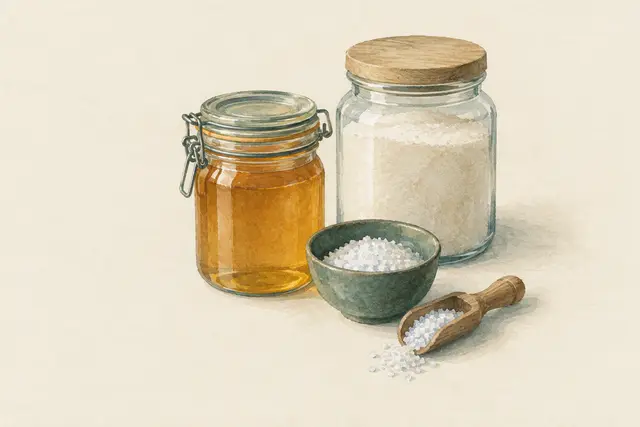
Storing honey, sugar and salt
Honey, sugar and salt are among the longest-lasting stocks as long as they stay dry and tightly sealed. Typical problems are caking, crystallisation and moisture – no reason to throw them away. Important: honey is not suitable for infants under 12 months.
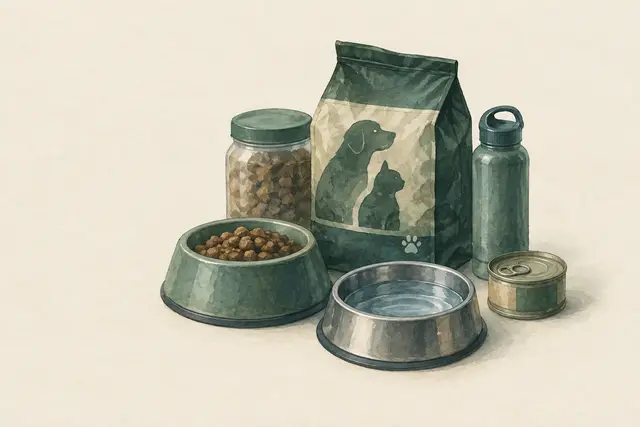
Emergency food stock for pets
Dogs, cats and other pets need a stock too: their usual food, water, bowls and any special diet food. A sudden change of food can cause digestive problems, and many foods for people are unsuitable or toxic for animals. The pet food stock is rotated like the household's own stock.
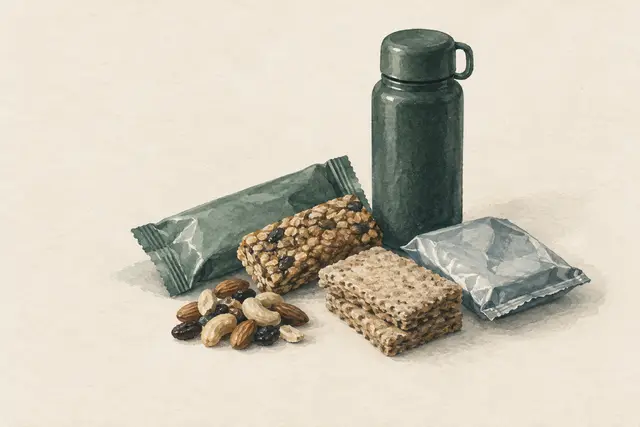
Emergency food for hikes: energy density and packaging
On walks and tours, what counts is food that provides a lot of energy per gram, can be eaten without cooking, tolerates heat and cold and does not get crushed. In addition to the planned food, a reserve belongs in the pack that is only opened in an emergency – for example a delay, a change in the weather or an injury.
Planned topics (4)
- Food supplies
- Shelf life
- Safe storage
- Planning nutrition in a crisis
Preservation
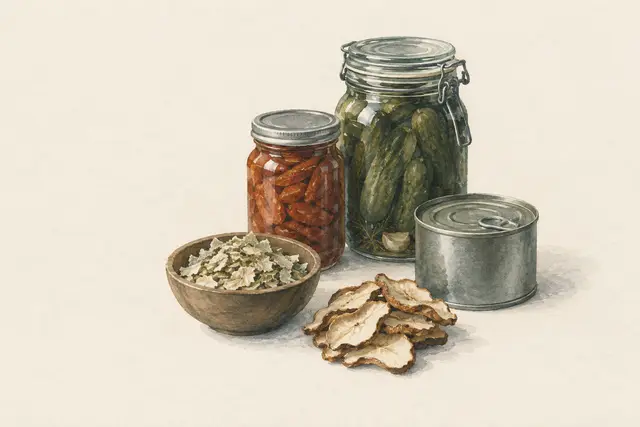
Dried and preserved food: basics and limits
Drying, salting, acidifying and canning make food last by depriving microorganisms of water or favourable conditions. For an emergency stock, commercially produced dried and tinned goods are the safest choice. Home preserving requires tested instructions – especially canning, where mistakes can lead to life-threatening botulism. This entry explains principles and storage, but no canning procedures.
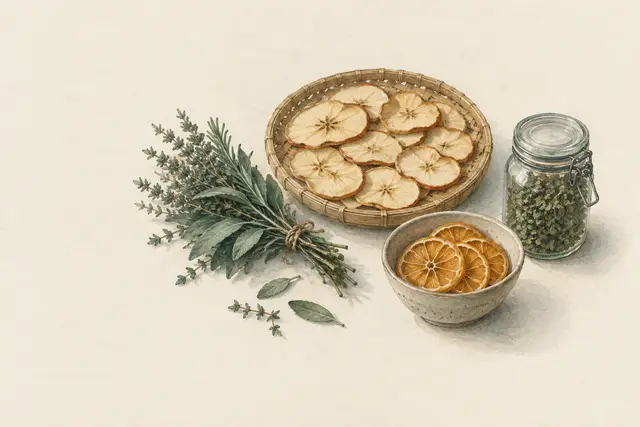
Drying fruit and herbs: air, sun, oven
Thinly sliced fruit and culinary herbs can be dried in the air, in the sun, in an oven or a dehydrator. What matters is cleanliness, thin slices, warm, moving, dry air and drying completely. Meat and fish are explicitly excluded: they need tested instructions with an additional heating step.
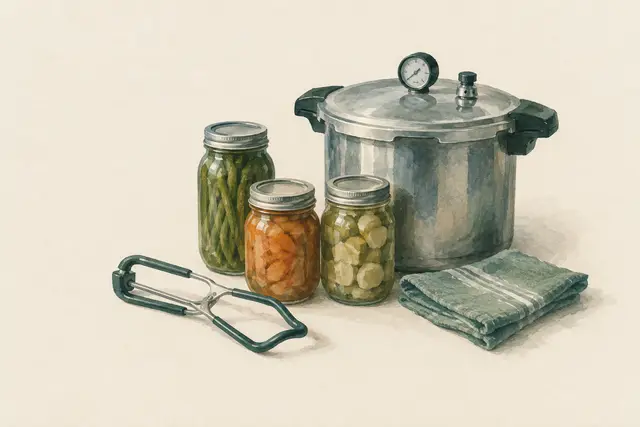
Home canning: tested recipes only
Canning can make food keep for a long time – but mistakes can lead to botulism, a life-threatening poisoning. According to recognised bodies, low-acid foods such as vegetables, meat, beans and soups require pressure canning. Hence the rule: use only current, tested instructions from official bodies and do not improvise. This entry deliberately contains no recipes.
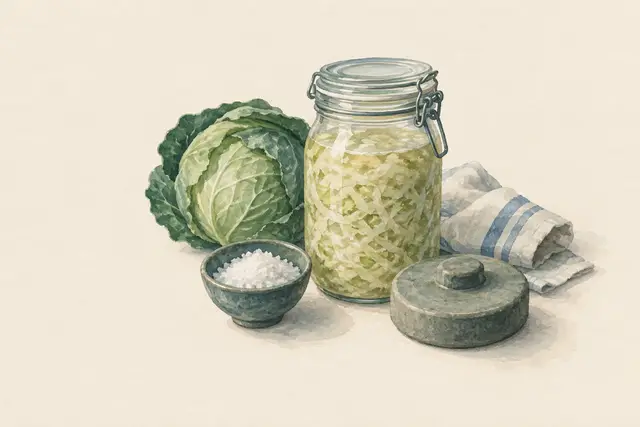
Fermenting vegetables: principle and safety limits
In lactic acid fermentation – for sauerkraut, for example – lactic acid bacteria turn sugars in the vegetables into acid that inhibits spoilage. This requires the right amount of salt, exclusion of air under the brine, cleanliness and a suitable temperature. Working from tested instructions and taking warning signs seriously, you can preserve vegetables this way. Fermented foods do not replace canning by recipe.
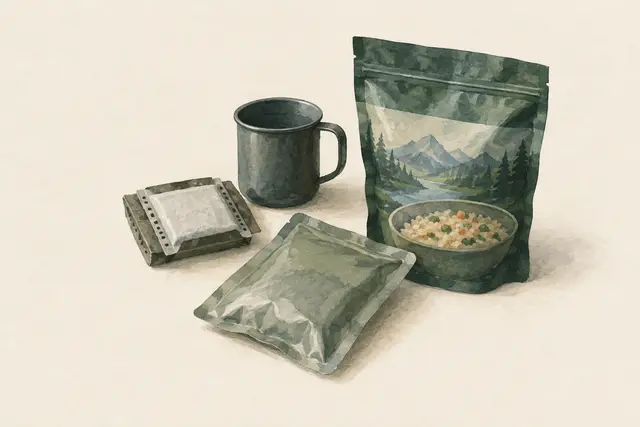
Freeze-dried meals and ration packs: principles
Freeze-dried outdoor meals and military-style ration packs in retort pouches are easy to store and quick to prepare. Freeze-dried food needs water, usually hot water; retort pouches are cooked and can be eaten cold. Flameless heaters release gas and do not belong in enclosed spaces. They supplement a stock but do not replace it.
Planned topics (3)
- Drying
- Freeze-drying
- Fermentation
Preparation
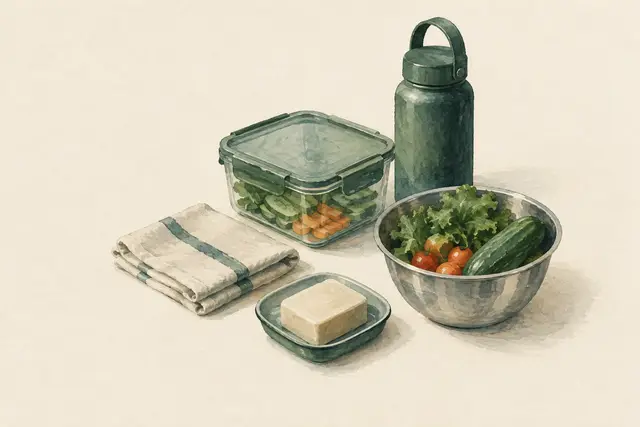
Food hygiene and storage without a fridge
Without refrigeration, bacteria multiply quickly in perishable food – often without any smell or visible sign. Ensuring clean hands and surfaces, separating raw and cooked food, preparing only what will be eaten straight away and not leaving leftovers standing for hours greatly reduces the risk of food poisoning.
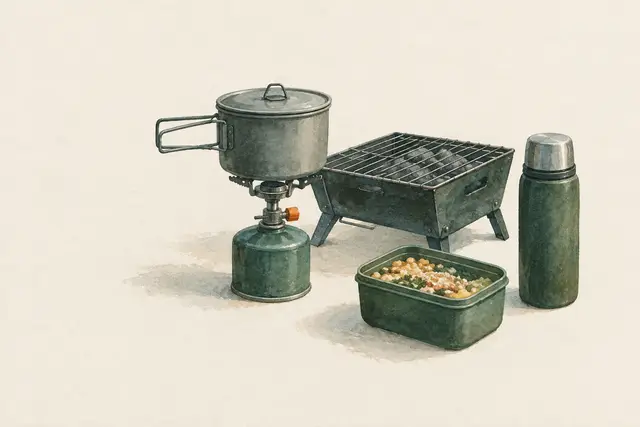
Cooking without power – safely with stove and grill
When the power fails, meals and hot water can be prepared with a camping stove, grill or fire – but only outdoors. Carbon monoxide from stoves, grills and charcoal is invisible, odourless and kills people every year who cook or heat in a home, garage or tent. The safest option is a stock that needs no cooking at all.
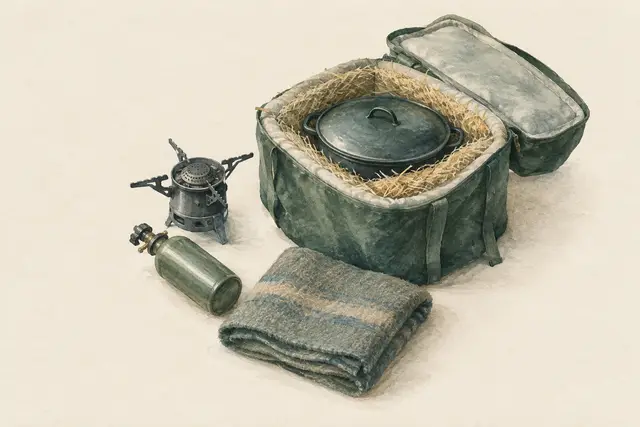
Hay box: cooking with retained heat
With a hay box, a dish is only briefly brought to the boil on the stove and then finishes cooking in the closed pot inside a well-insulated box, blanket or bag. This saves a lot of fuel – important when gas or wood is scarce. To stay safe, the food must stay hot and, if necessary, be brought back to the boil before eating.
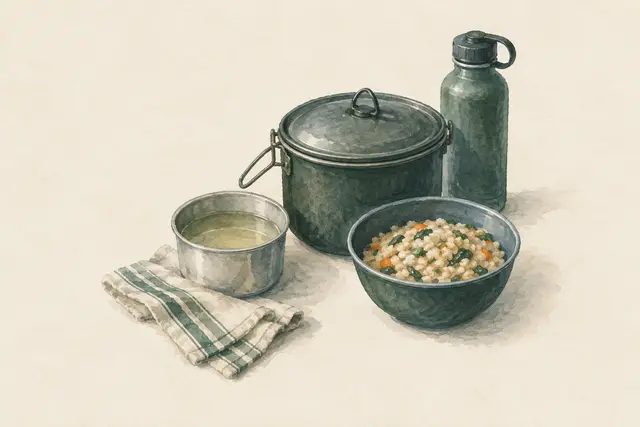
Cooking with little water
When drinking water is scarce, every litre counts. One-pot dishes, foods that absorb all their cooking water, reusing cooking water for soup and clever washing-up save a lot. For everything that is eaten or drunk: use only safe or treated water. Salty liquid from tins does not replace drinking water.
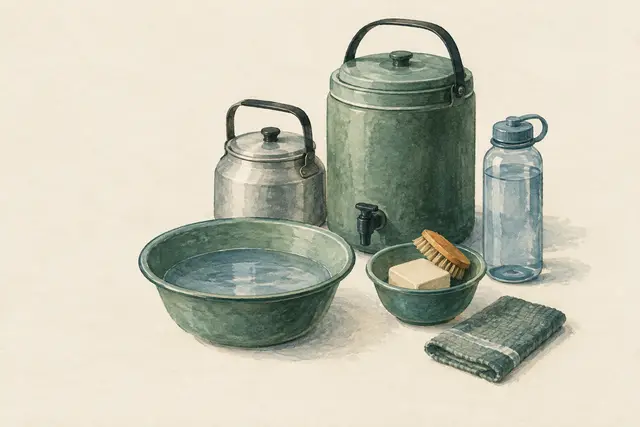
Kitchen hygiene without running water
When tap water fails, the risk of stomach and gut infections rises. A simple washing station with a container and soap, boiled or treated water for anything that touches food, a washing-up system with bowls and clean, separate surfaces keep the kitchen safe – even with little water.
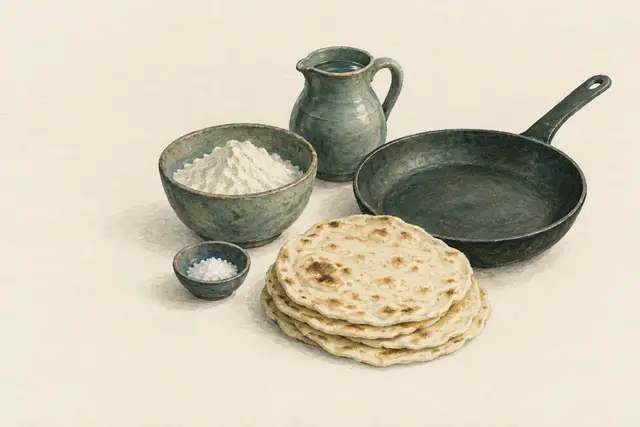
Pan flatbread – bread without an oven
With flour, water and a pinch of salt, a simple flatbread can be cooked in a dry frying pan or on a griddle over a stove. It needs no yeast and no oven and turns flour from the stock into a filling meal. Do not eat raw dough and cook the bread right through.
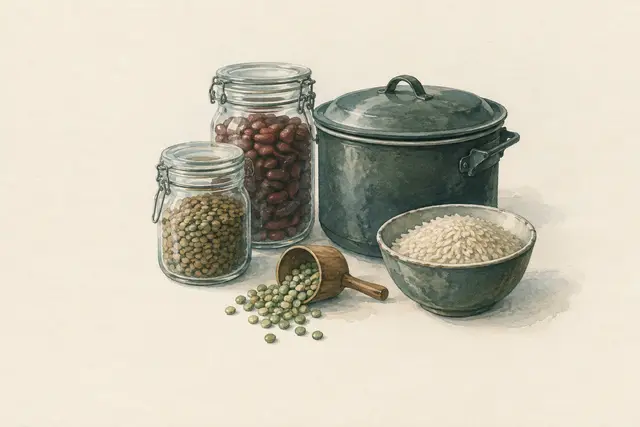
Pulses and grains: storing them and cooking with little fuel
Dried beans, lentils, peas, rice and other grains are cheap, keep for a long time and are nutritious – but they need water and fuel. Soaking, choosing the right type, a lid, retained-heat cooking and small batches save a lot of energy. Red kidney beans and many other beans must be boiled vigorously after soaking; merely letting them soften is not enough.
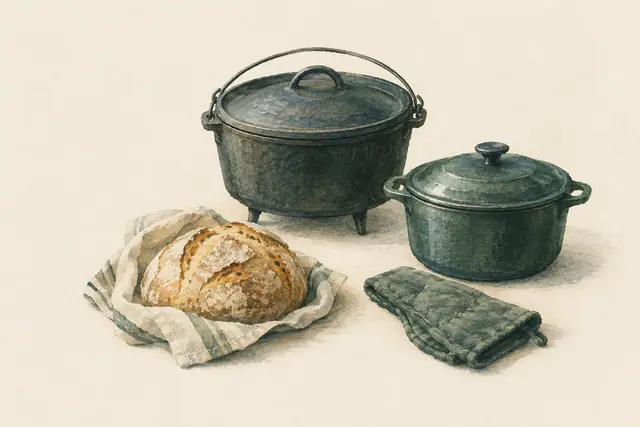
Baking without an oven: in a pot and a Dutch oven
Bread, flatbreads, bakes or simple cakes can be baked without an oven: in a heavy pot with a lid on a stove, or in a cast-iron Dutch oven with embers below and on the lid. What matters is even, moderate heat from all sides, a gap above the pot base and patience. Embers and charcoal belong outdoors only.
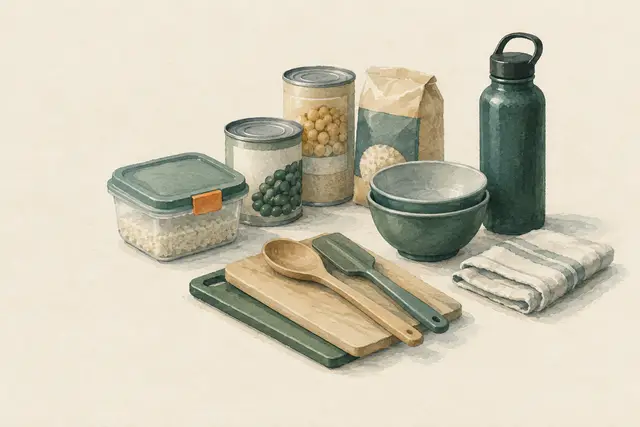
Allergies in shared emergency food: labels and cross-contact
In emergency shelters, neighbourhood help or group camps, many people eat from one kitchen. For people with food allergies it then matters not only what is in the food, but also what can get into it via spoons, boards, hands or oil. Keep packaging, prepare allergen-free food first, use separate utensils and, when in doubt, do not serve it.
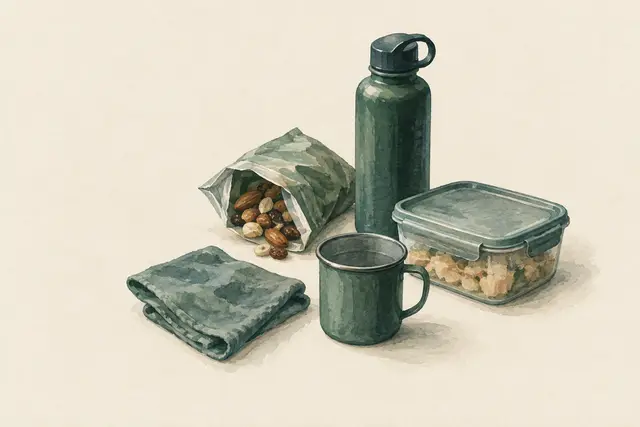
Food hygiene on the trail: hands, leftovers, washing up
Stomach bugs on tours are often caused not by water but by unwashed hands, shared snack bags and lukewarm leftovers. Cleaning hands before eating, pouring snacks instead of reaching in, eating cooked food immediately, packing out leftovers and washing up well away from water – these are the most effective rules.
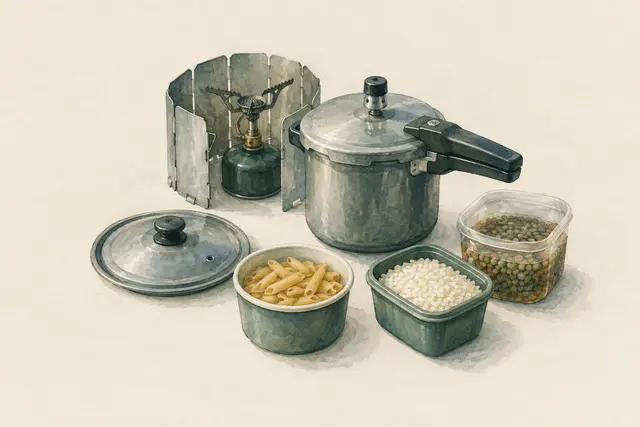
Cooking at altitude: lower boiling point, longer cooking
The higher you are, the lower the air pressure – and the earlier water boils. At about 3,000 m it already boils at around 90 °C. Pasta, rice and pulses therefore need longer, more water and more fuel. A lid, a windscreen, soaking, pre-cooked foods and a pressure cooker help. Longer boiling times apply when boiling drinking water at altitude.
Planned topics (4)
- Cooking without power
- Camp kitchen
- Improvised cooking
- Food hygiene
Plants, fungi, wildlife
Planned topics (5)
- Botany
- Poisonous plants
- Fungi and look-alikes
- Seasonal availability
- Law: fishing and hunting