Cooking without power – safely with stove and grill
When the power fails, meals and hot water can be prepared with a camping stove, grill or fire – but only outdoors. Carbon monoxide from stoves, grills and charcoal is invisible, odourless and kills people every year who cook or heat in a home, garage or tent. The safest option is a stock that needs no cooking at all.
- 5–10 minutes setup, cooking time depending on the dish
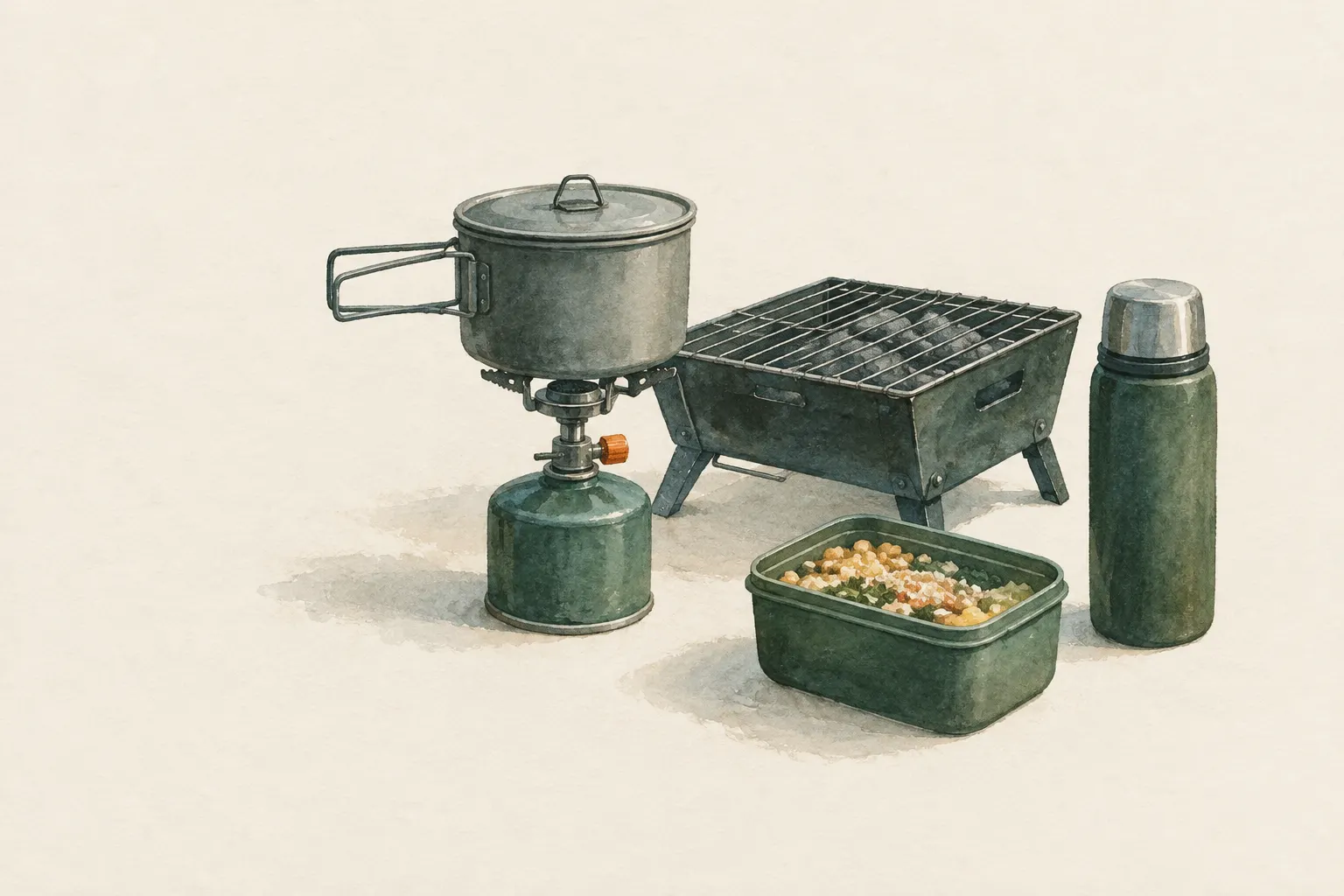
Explained simply
When the power fails, an electric cooker stops working. With a camping stove, a grill or a fire you can still heat water and cook. But there is one rule that must never be broken: these appliances belong outdoors only.
The reason is an invisible gas called carbon monoxide. It is produced when something burns, and you can neither see nor smell it. Outdoors it spreads out in the air. In a home, garage or tent it builds up – like smoke in a room without windows, except that you do not notice it. It can make people unconscious and kill them.
So the easiest approach is to choose part of your stock so that it needs no cooking at all: bread, nuts, tins that also taste fine cold. Then cooking is a bonus rather than a necessity.
How it works
Every flame needs oxygen and produces exhaust gases. If the fuel burns completely, it produces mainly carbon dioxide and water vapour. If the flame gets too little oxygen or is cooled, for example by a cold pot, the fuel burns incompletely – and that produces carbon monoxide. Charcoal gives off particularly large amounts, even when it is only smouldering.
Carbon monoxide is so dangerous because it binds much more firmly to the red pigment in the blood than oxygen does. The blood can then carry less oxygen, and the brain and heart get too little. Because the gas has no colour or smell, you notice nothing until symptoms appear – and by then thinking may already be so impaired that you no longer react properly.
Outdoors the gas is immediately diluted and carried away. Indoors, even with a window or door open, it can build up. This applies equally to homes, basements, garages, caravans and tents.
What really matters
The cooking spot is outdoors, on firm, level and non-flammable ground, away from walls, windows, doors, vents and anything flammable. Whether you may cook or grill on a balcony is governed by house rules and local regulations – check them beforehand. In dry periods there are also often bans on outdoor fires.
Use only appliances you know how to operate, and read the instructions before you need them. Check the stove for damage and leaks before lighting it. A windscreen helps save fuel but must not trap heat around the gas canister. Never leave the pot unattended.
Fuel is limited. Save it with a lid on the pot, with small amounts and with dishes that only need hot water. Soak pulses beforehand. Finishing food in a hay box is especially economical: bring it to the boil briefly, then let it finish cooking well wrapped.
Safety: what to watch out for
Stoves, grills, charcoal and generators are never operated in enclosed or partly enclosed spaces – not even with a window or door open and not even “just briefly”. A charcoal grill is not a heater. Never bring smouldering charcoal into the house, not even to let it cool down.
Headache, dizziness, nausea, weakness or confusion while cooking or heating can be signs of carbon monoxide poisoning. Then get everyone affected into fresh air immediately and call the local emergency number (112 in the EU). A carbon monoxide alarm is a sensible addition at home, but not a licence.
Change gas canisters and refill liquid fuels only according to the manufacturer's instructions, never near a flame or a hot stove. Store fuels cool, well ventilated and out of children's reach. Scalds are a common risk: stove on firm ground, pot handles turned inwards, children kept at a distance.
When it makes sense – and when not
Cooking without power is worthwhile when you need to boil water, when a power cut lasts longer or when hot meals become important for morale and warmth. In bad weather it is uncomfortable outdoors – so plan simple dishes that are ready quickly.
It does not make sense to make cooking a precondition for being fed. A stock that can be eaten cold, in whole or in part, takes the pressure off: if storm, rain or lack of fuel prevent cooking, you still have food. Authorities such as Germany's BBK recommend exactly that.
How to practise it
On a calm day, set up the stove once in the garden, the yard or on an outing and cook a simple dish. This shows you whether all parts are there, roughly how long a canister lasts and how sensitive the appliance is to wind.
Also practise the end: close the valve, let the appliance cool completely, extinguish embers safely and only then put things away. If you have done these steps once in peace, you will do them right under stress.
Step by step
Plan to need no cooking
Build part of the stock so that it can be eaten cold. Then you do not have to cook at all in an emergency.
- 1
Plan to need no cooking
Build part of the stock so that it can be eaten cold. Then you do not have to cook at all in an emergency.
- 2
Choose an outdoor spot
Firm, level, non-flammable ground outdoors, at a distance from walls, windows, doors, vents and anything flammable. Follow house rules and local rules.
Never in a tent, porch, caravan, basement or garage.
- 3
Set up the stove safely
Assemble the stove according to the instructions, check for leaks and damage, use a windscreen only in a way that does not trap heat around the canister.
- 4
Cook economically
Use a lid, heat only the water needed, small portions, soaking or finishing in an insulated wrap. Do not leave the pot unattended.
- 5
Switch off and let cool
After cooking close the valve, let the appliance cool completely and safely extinguish charcoal or embers. Only then put things away – never bring smouldering charcoal indoors.
Common mistakes
- Running a grill or stove in a garage with the door open
- Bringing a charcoal grill indoors for heating
- Changing a gas canister near a flame
- Stove on unstable ground
- No food in stock that can be eaten without cooking
Quick view
Materials
Stove
Only appliances you know how to operate
Never operate inside a tent, shelter or enclosed room – carbon monoxide and fire risk.
Metal pot (stainless steel, aluminium, titanium)
Hot – scalding risk.
Lighter, matches or ferro rod
Observe local fire bans.
Carbon monoxide alarm
Extra protection in the home, not a licence
Does not replace the rule never to run combustion devices indoors. Choose battery-powered or with battery backup.
Water for extinguishing (bucket, canister or pot)
Have several litres ready before lighting.
Suitable for
- Power outages at home
- Camping and emergency shelter
- Boiling water
Not suitable for
- Cooking or heating inside a home, basement, garage, caravan or tent
- Covered balconies or balconies with flammable material, where house rules or local rules prohibit open flames
- Using a charcoal or gas grill as a heater
Prerequisites
- A safe outdoor spot, sheltered from wind and non-flammable
- The stove's instructions read
- The right fuel, stored safely
Safety
- Change gas canisters and refill liquid fuels only according to the manufacturer's instructions – never near a flame or a hot stove. Store fuels cool, outdoors or well ventilated and out of children's reach.
- Place the stove on a firm, level surface; turn pot handles inwards; keep children away. Scalds from pots tipping over are a common risk.
How it works
Every combustion consumes oxygen and produces exhaust gases; incomplete combustion produces carbon monoxide. Outdoors it disperses, indoors it builds up. So the rule has no exceptions: combustion appliances only outdoors. Saving energy helps too – lid on the pot, small amounts, soaking pulses and dishes that only need hot water.
Advantages
- Hot meals and boiled water even without power
- Camping stoves are widespread and easy to use
Disadvantages
- Only safe outdoors – uncomfortable in bad weather
- Fuel is limited and must be stored safely
Deep knowledge
Background
The US public health agency CDC and FEMA/Ready.gov strongly warn against running generators, grills, camping stoves or charcoal indoors, in basements or in garages. Carbon monoxide poisonings typically cluster after severe weather and during power outages, when people improvise.
Germany's BBK also recommends choosing emergency supplies so that they need as little cooking as possible, and using emergency cooking appliances only according to the manufacturer's instructions. A carbon monoxide alarm is a sensible addition at home but does not replace the basic rule.
Variants
- Haybox (retained-heat cooking)
- A pot that has been brought to the boil is wrapped with its lid in blankets, a sleeping bag or an insulated box and continues to cook without more energy. Serve the food hot afterwards or bring it back to the boil, and do not leave it lukewarm for hours.
- Cooking over an open fire
- Where permitted, cook over embers – see the entry on cooking over a fire. Mind wildfire danger and local fire bans.
Common mistakes
- Running a grill or stove in a garage with the door open
- Bringing a charcoal grill indoors for heating
- Changing a gas canister near a flame
- Stove on unstable ground
- No food in stock that can be eaten without cooking
Limits and risks
- No instructions for specific stove models – the manufacturer's instructions apply
- Rules for open fires and grilling on balconies differ – check local rules
Material alternatives
Derived from material properties: a substitute must have all relevant properties. Observe the notes on the substitute.
- Metal pot (stainless steel, aluminium, titanium)
- Single-wall stainless steel bottle (Heat only single-wall bottles without paint/plastic; remove the lid before heating.)
- Lighter, matches or ferro rod
- Ferro rod (Practise before you need it.), Fire striker and hard stone (Carbon steel, not stainless.), Bow drill set (bow, spindle, hearth board, bearing block) (Use only dry wood.), Burning lens / magnifier (Never leave lying in the sun – fire risk.), Fire piston (Maintain the seal.)
Results come exclusively from structured entries. No improvised instructions are generated.
Sources
Centers for Disease Control and Prevention: Carbon Monoxide Poisoning – Prevention guidance
No combustion appliances indoors, symptoms of CO poisoning
Ready.gov – U.S. Federal Emergency Management Agency (FEMA): Power Outages
Cooking and generators during power outages only outdoors
Bundesamt für Bevölkerungsschutz und Katastrophenhilfe (BBK), Deutschland: Ratgeber für Notfallvorsorge und richtiges Handeln in Notsituationen
Supplies edible without cooking; using emergency cooking appliances safely