Putting a fire out completely: drown, stir, feel
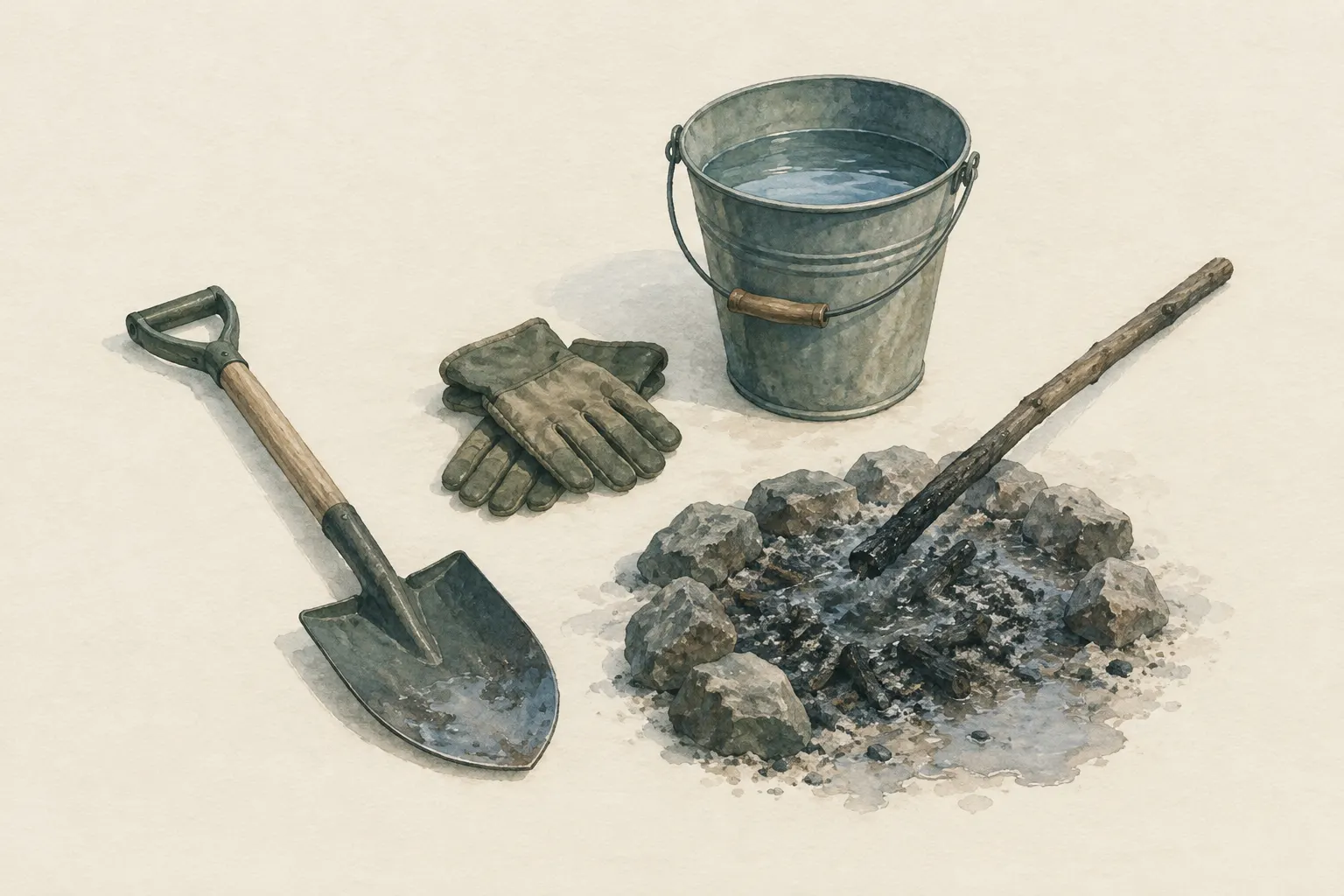
A fire is only out when the fire site is cold. Drown it with plenty of water, stir embers and ash, water again and check with the back of your hand at a safe distance whether heat is still rising. Too hot to touch means too hot to leave.
- 10–20 minutes, more with a large bed of embers
Explained simply
A fire is only really out when the fire site is cold. That matters, because embers can stay hot under the ash for hours – like an oven that stays warm long after it has been switched off. A gust of wind can turn them back into a fire.
Remember three words: drown, stir, feel. First you pour lots of water over all the embers. Then you stir everything with a stick so hidden pockets of embers get wet too. Then you pour water over it again. Finally you carefully hold the back of your hand above it at a distance. If you still feel warmth, keep going.
The saying that goes with it: too hot to touch means too hot to leave. Just shovelling soil on top is not enough, because the embers keep smouldering underneath.
How it works
Water takes heat away from the fire: it evaporates on the embers and carries off a great deal of energy. When the embers cool below the temperature at which they can keep smouldering, the “heat” side of the fire triangle is missing. For that to stay so, really all the embers must be wet and cold.
The problem is hidden pockets of embers. Under a layer of ash or inside a charred piece of wood, the water often does not reach on the first pour. Ash insulates well, so it can stay hot underneath for a long time. Only stirring brings these spots to the surface so they get water too.
Merely piling on soil or sand does separate the embers from the air, but hardly cools them. Underneath they can keep smouldering for hours, flare up again when wind blows the soil away, or spread underground in organic soil.
What really matters
Start in good time. Stop adding wood well before you leave or go to sleep, and let the fire burn down. The fewer embers are left, the faster and with less water the fire can be put out.
Plan enough water – usually more than you think, often several litres. Pour slowly over all the embers and ash, including the edges, until the hissing stops. Then stir everything with a stick or shovel, scrape charred pieces of wood and wet them one by one. Repeat pouring and stirring until everything is soaked.
Finally, the feel test: hold the back of your hand at a safe distance above the fire site and move it closer slowly. If you still feel warmth, keep pouring and stirring. Do not reach straight into ash that could still be hot. Only when everything is cold may you leave.
Safety: what to watch out for
Pouring creates hot steam and stirs up ash. Pour slowly and keep your face and hands out of the steam. Anyone who tips the water in all at once is easily hit by the burst of steam.
If a fire spreads into vegetation and cannot be put out at once, it is no longer a job for a pot of water. Get everyone to safety, move away crosswise to the direction of spread and away from the wind, and call the local emergency number (112 in the EU). This method of extinguishing is only meant for small, controlled fires.
If there is hardly any water, you can mix the embers with sand or mineral soil – not just cover them –, stir thoroughly and keep checking until everything is cold. This takes longer and is less reliable. It is better to bring enough water from the start.
Leaving no trace
Once everything is cold, you can – where allowed and sensible – scatter the cold ash, put stones back and replace lifted turf. That way the spot soon looks as it did before.
In an existing, official fire ring, however, you leave everything in place. It is meant to be used again. But take rubbish and food scraps with you instead of leaving them in the ash.
Good to know
The formula “drown, stir, feel” is used in wildfire prevention campaigns in North America. It sums up a simple experience: fires that were only superficially put out often flare up again.
Letting a fire “burn out” and leaving is not a solution, even when no flames are visible. And ground with a lot of organic material such as peat or thick needle litter is especially treacherous: embers can travel underground there. Such places should be avoided for fires in the first place.
Step by step
Start in good time
Begin extinguishing well before you want to leave or sleep. Stop adding wood and let the fire burn down.
- 1
Start in good time
Begin extinguishing well before you want to leave or sleep. Stop adding wood and let the fire burn down.
- 2
Drown
Slowly pour plenty of water over all embers and ash, including the edges, until the hissing stops.
- 3
Stir
Stir embers, ash and charred pieces of wood with a stick or shovel. Scrape burnt wood and wet each piece.
- 4
Drown again
Add water again and keep stirring. Repeat until everything is soaked.
- 5
Feel
Hold the back of your hand at a safe distance above the fire site and move it closer carefully. If you still feel heat, keep watering and stirring. Leave only when everything is cold.
Do not reach straight into ash that may still be hot.
- 6
Leave no trace
Where allowed and sensible, scatter cold ash, return stones and replace lifted turf. In established fire rings, leave everything in place.
Common mistakes
- Pouring a little water without stirring
- Only burying embers with soil
- Leaving while it still smokes or feels warm
- Planning too little water
- Letting the fire ‘burn out’ and leaving
Quick view
Materials
Water for extinguishing (bucket, canister or pot)
More than you think – several litres
Have several litres ready before lighting.
Small shovel / folding spade
Or a sturdy stick for stirring
Suitable for
- Every campfire, cooking or emergency fire before leaving or sleeping
Not suitable for
- A fire already out of control – call the emergency number instead
Safety
- Pouring water creates hot steam and stirs up ash. Pour slowly and keep your face and hands away.
- Merely covering embers with soil does not reliably extinguish them: they can keep smouldering underneath for hours and flare up later or spread through the ground.
How it works
Water removes heat from the fire. Stirring brings hidden pockets of embers to the surface so they get water too. Only when no more heat is given off is the ‘heat’ side of the fire triangle permanently gone.
Advantages
- Prevents a supposedly extinguished fire from flaring up again
- Simple, no special equipment
Disadvantages
- Needs a lot of water
- Takes time
Deep knowledge
Background
The ‘drown, stir, feel’ formula is used in wildfire prevention campaigns in North America. It sums up the fact that superficially extinguished fires often flare up again.
Ground with a lot of organic material is especially treacherous: embers can travel underground there. Such places should be avoided for fires in the first place.
Variants
- Little water available
- If little water is available, mix embers with sand or mineral soil (do not merely cover them), stir thoroughly and keep checking until everything is cold. This takes longer and is less reliable – plan to carry water.
Common mistakes
- Pouring a little water without stirring
- Only burying embers with soil
- Leaving while it still smokes or feels warm
- Planning too little water
- Letting the fire ‘burn out’ and leaving
Limits and risks
- Only for small, controlled fires – not for firefighting
Sources
USDA Forest Service / Ad Council / National Association of State Foresters: Campfire Safety (Smokey Bear wildfire prevention campaign)
Drown, stir and feel a campfire; do not merely bury it
Leave No Trace Center for Outdoor Ethics: The Seven Principles of Leave No Trace (Principle 5: Minimize Campfire Impacts)
Put fires out completely and scatter cool ashes