Water
Find, treat, store
Safe drinking water is one of the first priorities. This knowledge world strictly separates clarifying, filtering and disinfecting – because no single method removes everything.
Method explorer
How do I make water from an unsafe source drinkable?
Method explorer
Which portable method suits my trip or journey?
Finding water sources
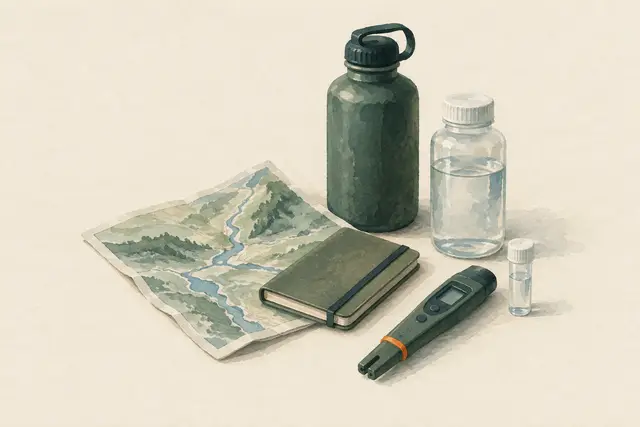
Finding and assessing water sources
Water is found where it collects or emerges: in hollows, valley floors, at springs and as precipitation. Every natural source must be treated as microbiologically contaminated until proven otherwise; assessing the surroundings also decides whether chemical contamination is a concern.
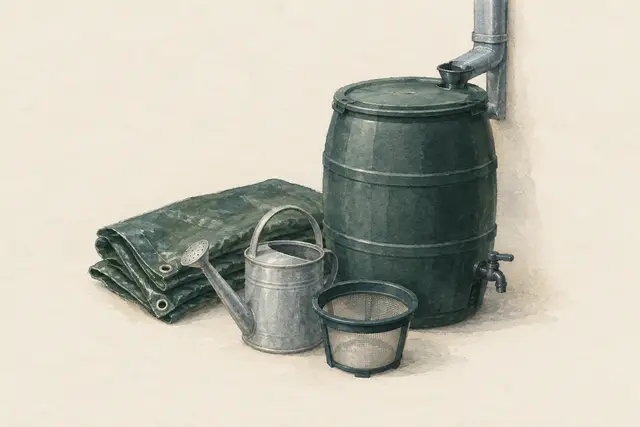
Collecting rainwater
With a tarp, sheet or clean roof surface, a lot of water can be collected quickly during rain. Rainwater is usually low in particles but is contaminated by collecting surfaces, gutters and containers, so it must be treated.
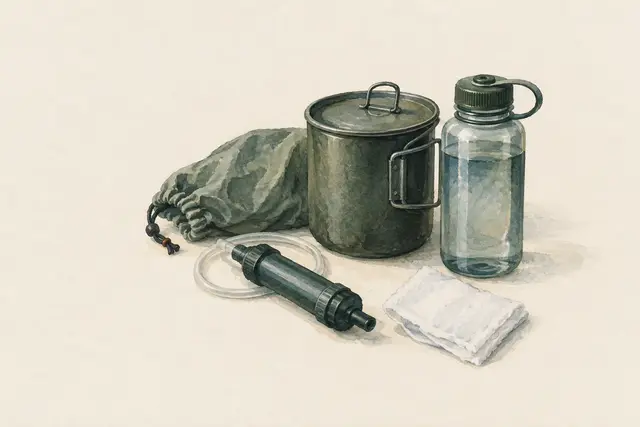
Water from snow and ice
Snow and ice can be melted but cost a lot of fuel and time. Freezing does not reliably kill pathogens – meltwater must be treated like any other natural water.
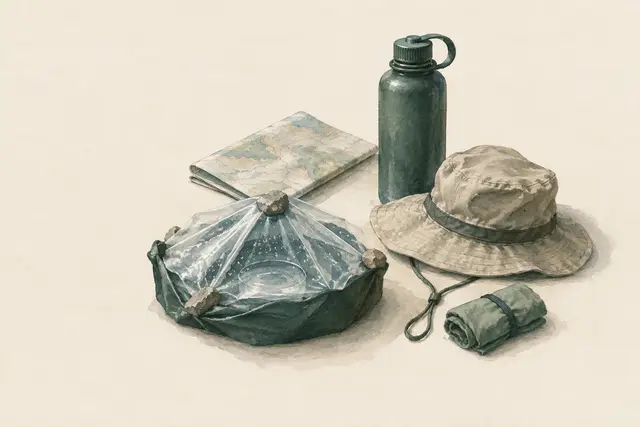
Water in arid regions: planning and limits
In deserts and arid regions, water is above all a matter of planning: anyone hoping to find sources along the way takes a high risk. Improvised methods such as solar stills or plant bags usually yield very little. Limiting water loss is often more effective than finding new water.
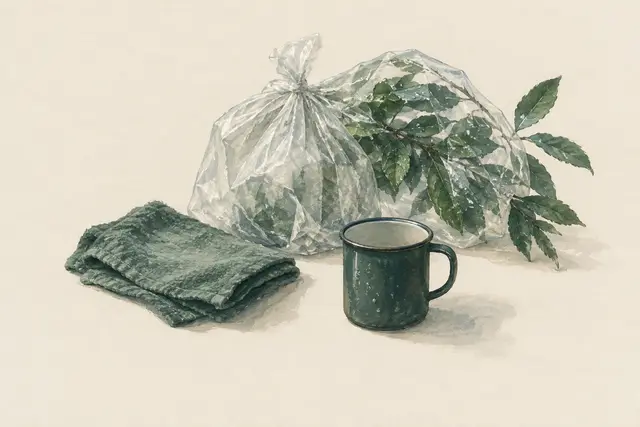
Dew, condensation and plant bags: possibilities and limits
Wiping up dew, collecting condensation or tying a plastic bag over leafy branches – these methods are often recommended but usually yield only small, uncertain amounts. They can supplement an emergency supply but do not replace a real water source, and plants carry their own risks.
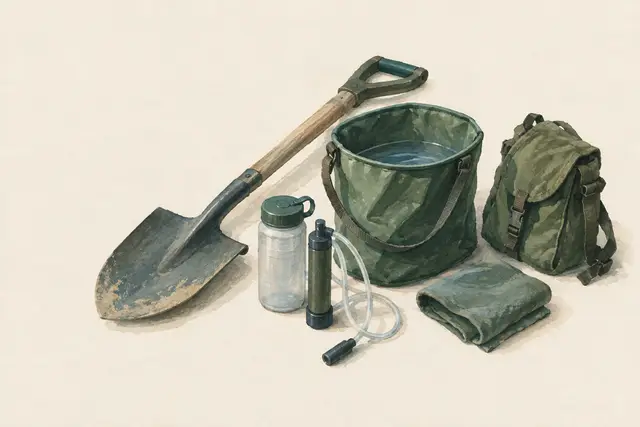
Digging for water in dry riverbeds
In dried-out stream and river beds, water may still stand below the surface in sand or gravel – most likely on the outside of bends and at the lowest points. Digging costs sweat and often yields nothing; any water found is raw water and must be treated. Dry riverbeds are also flash-flood zones.
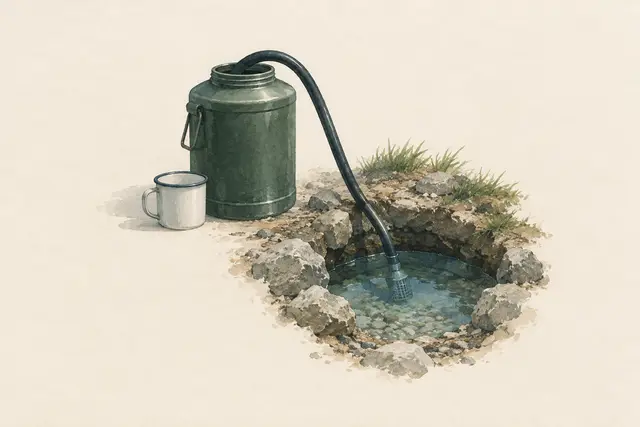
Seep well beside a lake or river (bank filtration)
A hole a few paces beside a muddy pond, lake or river fills with water that has seeped through the soil. It is usually much clearer than the open water – but not germ-free and not chemically cleaned. A seep well is pre-clarification, not treatment.
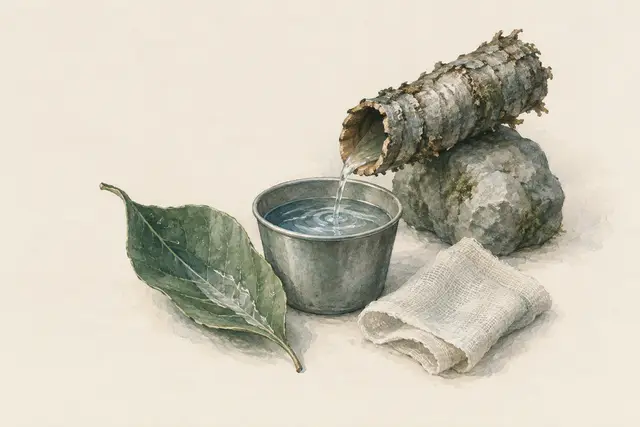
Capturing small springs and trickles cleanly
From a weak spring or trickle, a leaf, a piece of bark or a tube used as a spout lets you fill water cleanly without stirring up mud. Spring water is often clearer than stream water but not automatically safe – it is treated like any raw water.
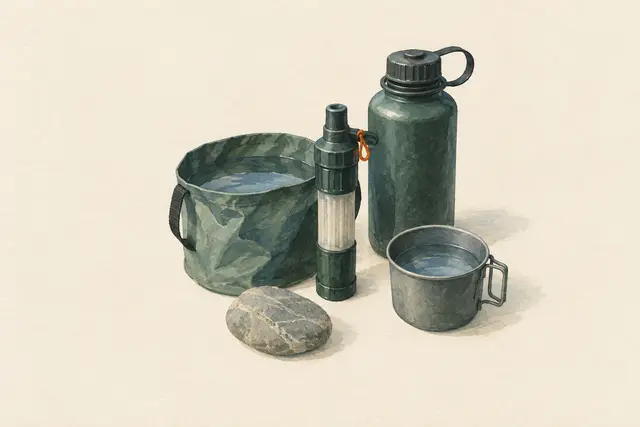
Finding fresh water on the coast
On the coast there is water everywhere – almost none of it drinkable. Seawater must never be drunk. Fresh water here comes from rain, from streams above tidal influence and sometimes from seep holes behind the dunes. Brackish, salty-tasting water stays salty, however it is filtered.
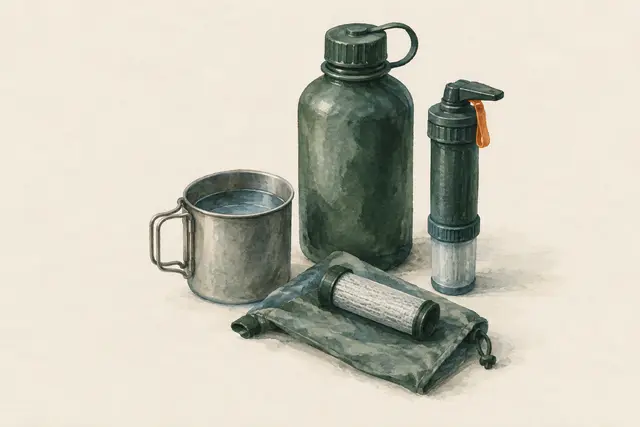
Water in the mountains: streams, meltwater and glacial runoff
In the mountains water often looks pure, but livestock, wildlife, huts and people upstream can contaminate it. Glacial streams carry fine rock flour that clogs filters, and they swell during the day. Collect water at safe spots, pre-clarify and treat it; enter glaciers and stream beds only with suitable experience.
Planned topics (8)
- Surface water
- Collecting rainwater
- Groundwater and springs
- Water in the mountains
- Water in arid regions
- Snow and ice
- Water from plants: possibilities and limits
- Condensation
Water treatment
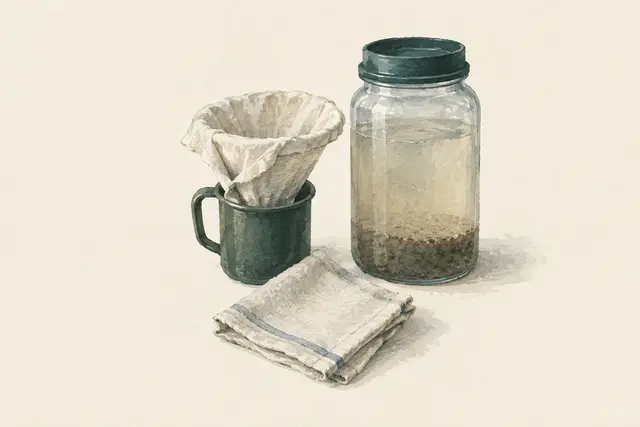
Sedimentation and pre-filtering
Cloudy water is clarified by letting suspended particles settle and pouring the water through a cloth or coffee filter. This is a pre-treatment, not treatment: the water is clearer afterwards but not safe and must then be disinfected.
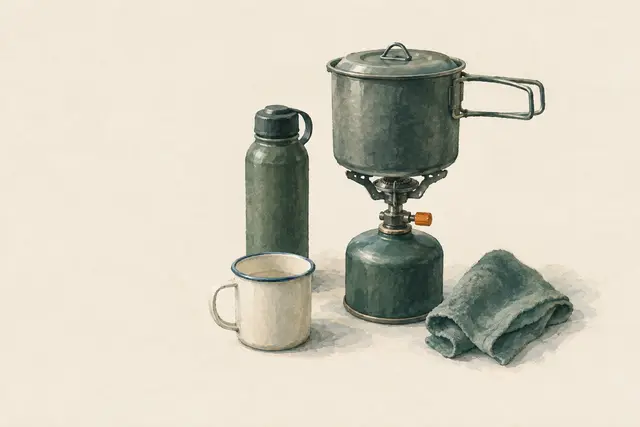
Boiling water
A rolling boil reliably kills bacteria, viruses and protozoa and is regarded as one of the most effective ways to disinfect water. It does not, however, remove chemicals or salt, costs fuel and does not protect against recontamination.
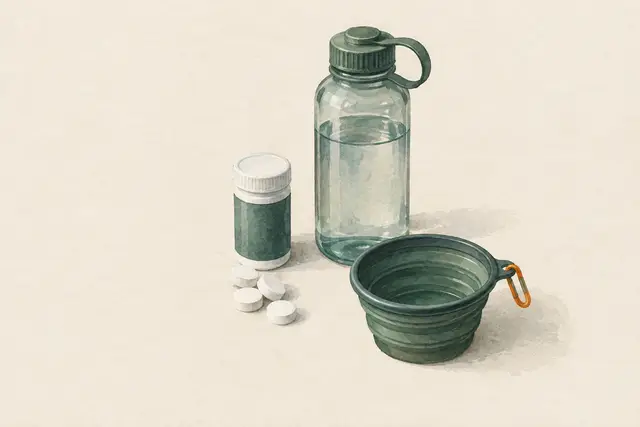
Disinfection with chlorine
Chlorine tablets or suitable unscented household bleach kill bacteria and viruses and leave residual protection against recontamination. At normal doses chlorine is practically ineffective against Cryptosporidium and only partly effective against Giardia; turbidity and cold weaken the effect.
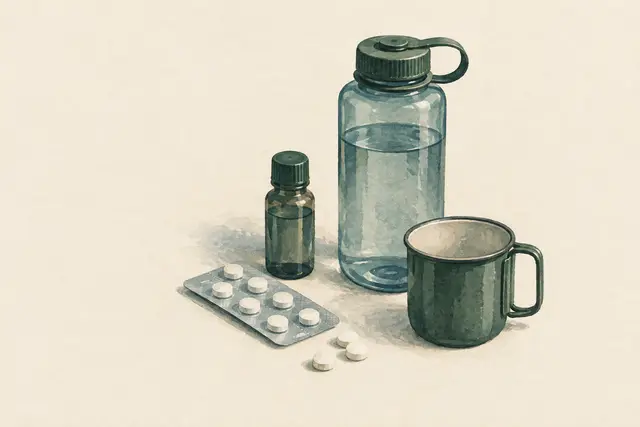
Disinfection with chlorine dioxide
Chlorine dioxide tablets or drops act against bacteria and viruses and – given a long enough contact time – also against Giardia and Cryptosporidium. For Cryptosporidium, manufacturers often state contact times of several hours; cold and turbidity extend them.
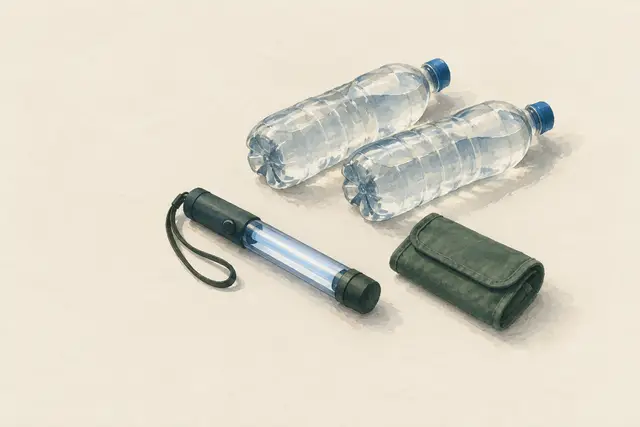
UV disinfection and solar water disinfection (SODIS)
UV radiation damages the genetic material of microorganisms. Battery-powered UV-C devices treat clear water in a short time according to the manufacturer; with SODIS, clear PET bottles lie in the sun for hours. Both methods work only in clear water, remove no chemicals and leave no residual protection.
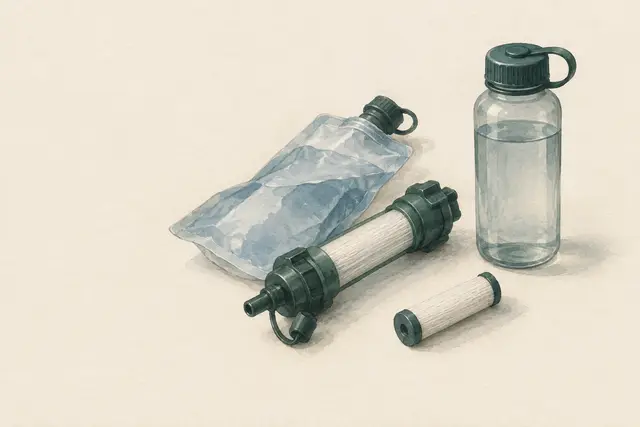
Hollow-fibre and membrane filters
Portable hollow-fibre filters with a typical pore size of 0.1–0.2 µm retain bacteria and protozoa including Giardia and Cryptosporidium. Viruses pass through such filters; chemicals and salt are not removed. Where viruses are expected, follow up with chemical disinfection or boiling.
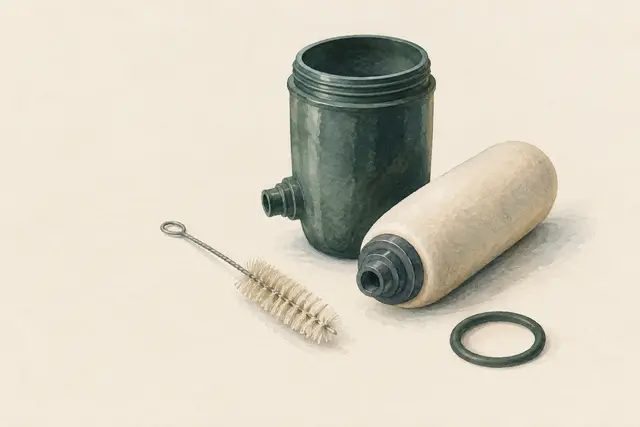
Ceramic filters
Ceramic filters retain protozoa and – depending on pore size and quality – bacteria and can be cleaned by scrubbing. Viruses are not reliably removed, nor are chemicals and salt. Cracks make the filter ineffective without any visible change in the water.
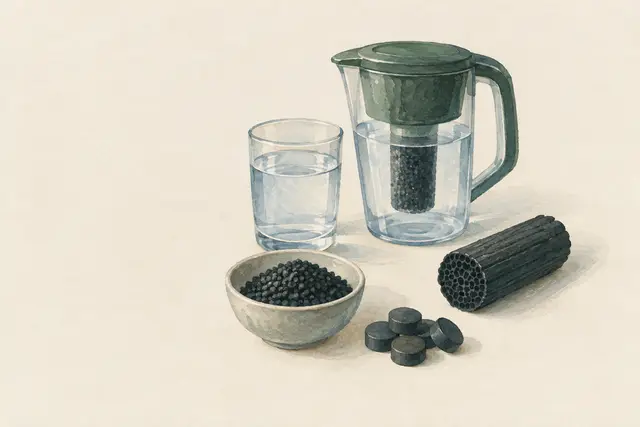
Activated carbon
Activated carbon binds certain dissolved substances to its large internal surface and thus improves smell and taste, for example after chlorination. It does not reliably remove pathogens, removes no salt and only some chemicals. Charcoal from a campfire is not activated carbon.
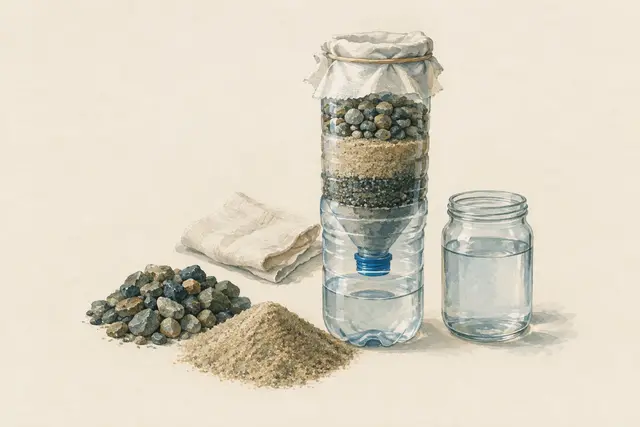
Improvised sand and gravel filter (teaching model)
A bottle filter of cloth, sand and gravel clearly demonstrates how layers retain turbidity. It reduces turbidity only: it does not make water safe and does not reliably remove pathogens, chemicals or salt. The filtrate must always be disinfected.
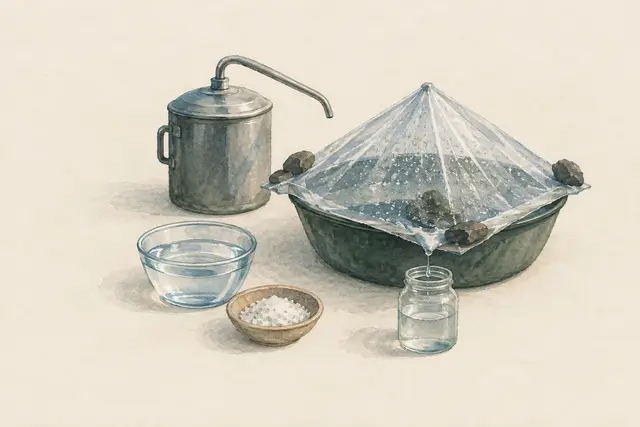
Distillation and solar still
In distillation, water evaporates and condenses on a cooler surface; salt, turbidity and pathogens stay behind. Distillation is the only method described here that removes salt. A solar still, however, usually yields only small amounts, and volatile chemicals can carry over.
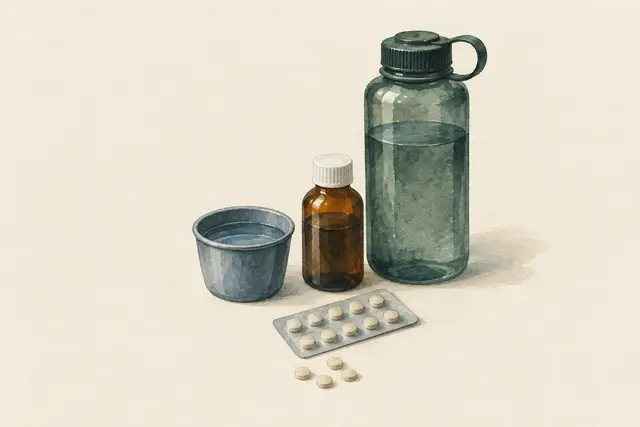
Disinfection with iodine
Iodine tablets or solutions inactivate bacteria and viruses and – with sufficient contact time – partly Giardia, but not reliably Cryptosporidium. Iodine is not suitable for everyone: pregnant people and those with thyroid disease or iodine allergy should only use it after consulting a doctor, and it is not intended for long-term use.
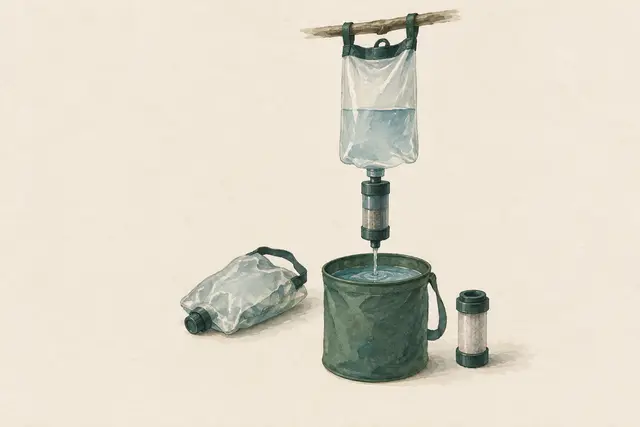
Gravity filters for camps and groups
In a gravity filter a bag of raw water hangs above a filter element; the water runs into a clean container without pumping. This is convenient for groups. Like any mechanical filter it retains bacteria and protozoa depending on the element, but usually no viruses and no chemicals – mechanical filtering alone is not complete drinking-water treatment.
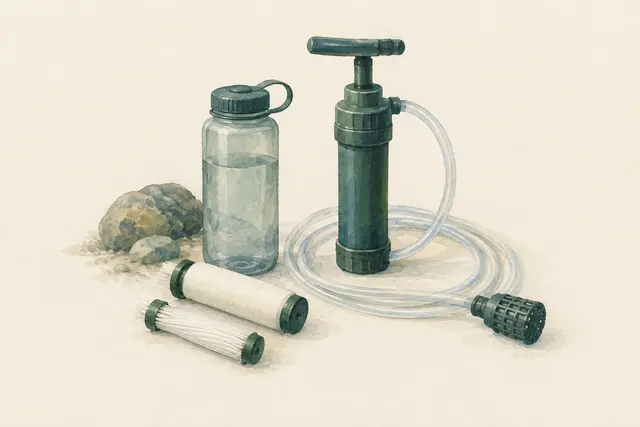
Using a pump filter correctly
Pump filters draw water through a hose and push it through a ceramic, glass-fibre or hollow-fibre element. They also reach shallow trickles and holes. What they retain depends on the element; usually not viruses, chemicals or salt. Pumped water is filtered, but not drinking-ready in every situation.
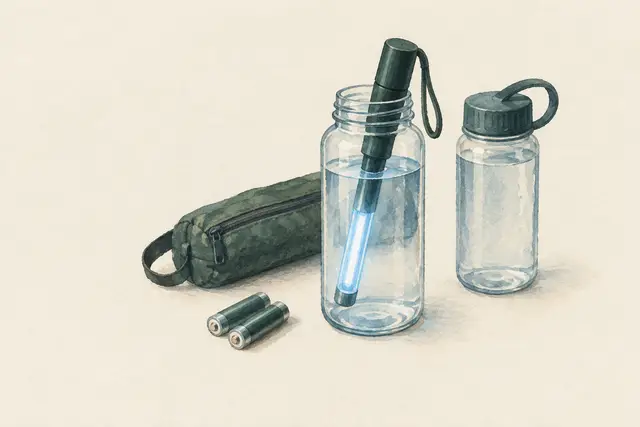
Using a UV-C pen correctly
A UV-C pen is dipped into clear water and irradiates it for a time set by the manufacturer. Used correctly it inactivates bacteria, viruses and protozoa according to the manufacturer. It needs clear water and charged batteries, does not act on threads and bottle rim, and leaves no residual protection.
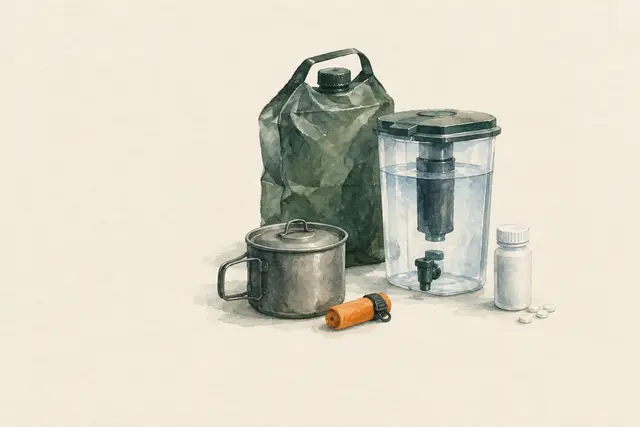
Treatment chains: combining methods sensibly
No single field method covers everything. A chain has proven itself: first clarify, then remove or kill pathogens, then store cleanly. Typical chains are ‘settle – filter – disinfect chemically’ or ‘settle – boil’. Order matters, and even the best field chain does little against chemicals and salt.
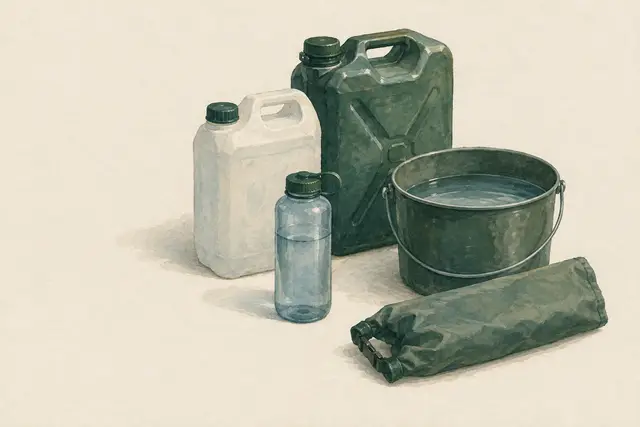
Determining water volumes for correct dosing
Chemical disinfection only works when dose and volume match. Anyone who does not know the volume of their containers doses too weakly (ineffective) or too strongly. With a bottle of known size, jerrycans, pots and bags can be measured once and marked permanently.
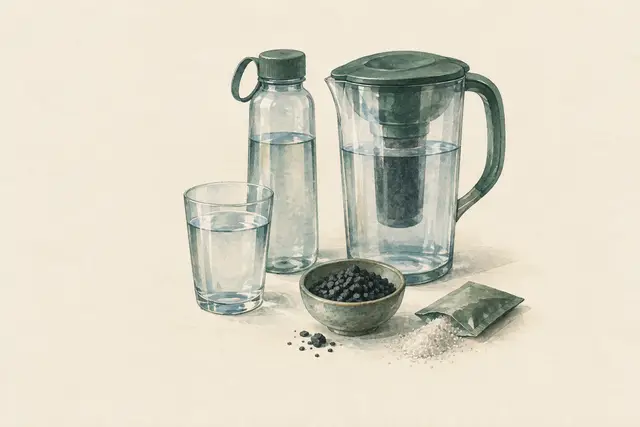
Improving the taste of treated water
Boiled water tastes flat, chlorinated or iodinated water tastes chemical – and bad-tasting water is drunk too little. Pouring between containers, letting it stand, activated carbon or drink powders help. Order is decisive: everything only after the full contact time.
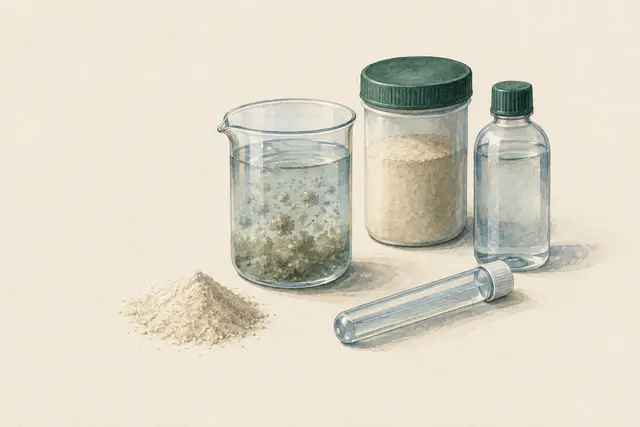
Coagulation and flocculation: clearing cloudy water
Coagulants make fine suspended particles that barely settle on their own clump into larger flocs that sink. This makes very cloudy water clear enough for disinfection. Flocculation alone does not make water drinkable – unless an approved combined product containing a disinfectant is used exactly according to the manufacturer's instructions.
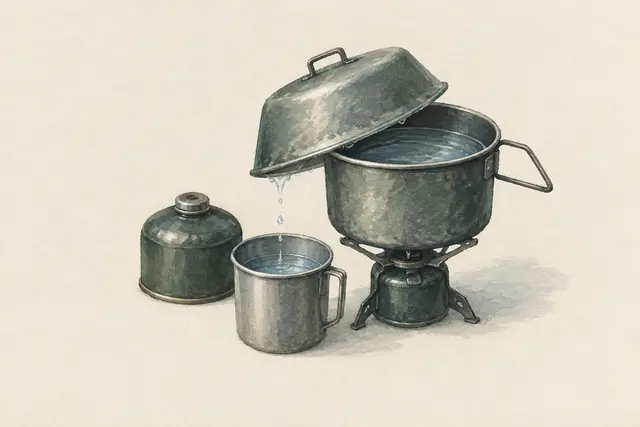
Desalination by stove distillation: principle and limits
Seawater or brackish water can only be made drinkable by distillation (or special desalination devices) – filters, tablets and boiling do not remove salt. With a pot, an inverted lid and a collecting vessel, small amounts can be distilled in an emergency. Fuel demand is high and yield small. Never drink seawater directly.
Planned topics (12)
- Sedimentation
- Pre-filtration
- Cloth filters
- Sand and gravel filters
- Activated carbon
- Ceramic filters
- Membrane and hollow-fibre filters
- Chemical disinfection
- Boiling
- UV treatment
- Distillation
- Portable treatment systems
Storage and transport
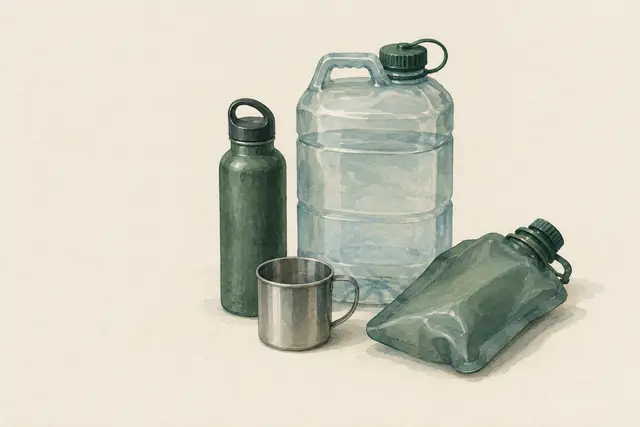
Storing and carrying water safely
Treated water stays safe only if containers are clean, food-grade and closed and are not contaminated when water is taken out. Containers that ever held chemicals or fuel are off-limits for drinking water.
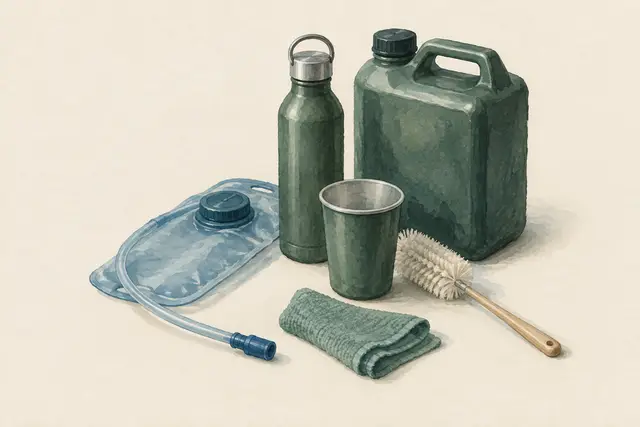
Water hygiene and cleaning containers
Water that has been treated safely is often contaminated again afterwards: by unwashed hands, dirty cups, drinking tubes and containers. Clean hands, separate vessels for raw and drinking water and regularly cleaned containers close this last gap.
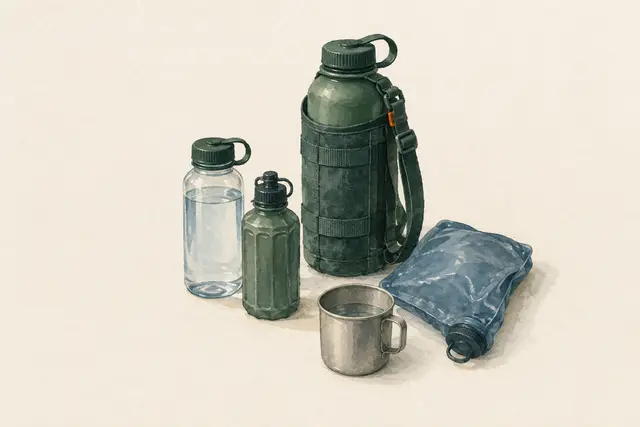
Carrying and transporting water
A litre of water weighs about one kilogram – water is often the heaviest load. Several smaller containers instead of one large one, clear separation of raw and drinking water, carrying close to the body and protection from heat and frost make transport safer and prevent one leak from costing the whole supply.
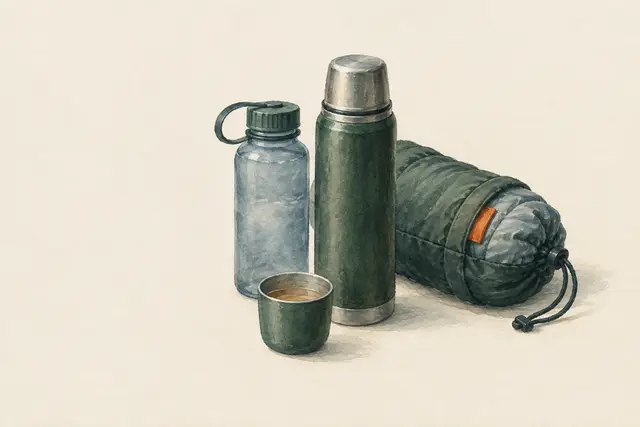
Drinking and keeping water liquid in the cold
In the cold the body keeps losing water through breathing and sweat, but thirst is often weaker. At the same time bottles and hoses freeze. Warm drinks from insulated bottles, bottles carried close to the body or in the sleeping bag, and drinking to a plan help. Eating snow is no substitute.
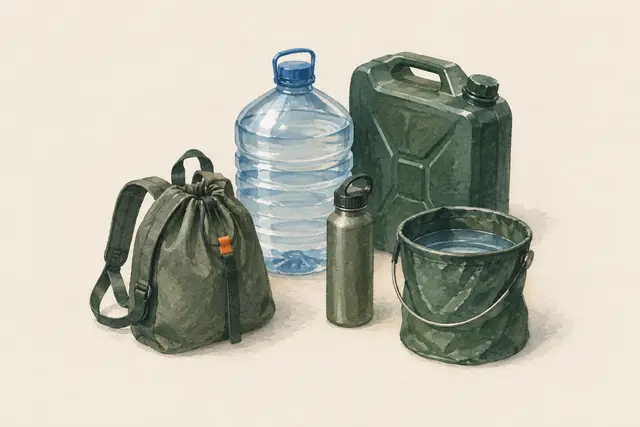
Fetching water from distribution points and tankers
When the mains supply fails for longer, authorities or utilities often provide water: tankers, distribution points, bottled water or, in some countries, emergency wells. What matters are clean, closable containers, a way to carry them and following the instructions – such as whether the water must be boiled before drinking.
Planned topics (4)
- Water storage
- Water transport
- Cleaning containers
- Water hygiene
Needs, risks and crises
How much water the body needs
A person's water requirement is not a fixed number: heat, exertion, altitude, cold and health change it considerably. Authorities give planning figures for stockpiles; in the field what matters is limiting water loss and treating water safely in good time.
Seawater and salt water
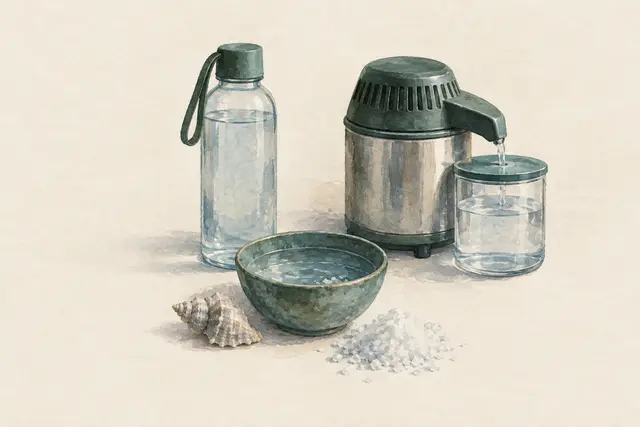
Seawater must not be drunk: the body has to excrete the salt using additional water, so dehydration worsens. Boiling, filters, chlorine, UV and activated carbon do not remove salt – only distillation or dedicated desalination devices do.
Common water treatment mistakes
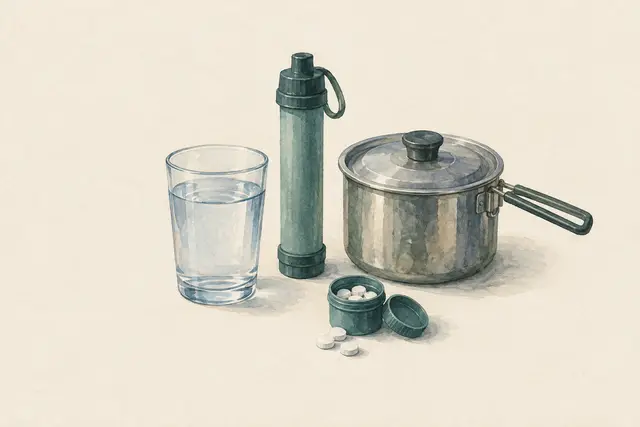
The most dangerous mistakes come not from poor technique but from wrong assumptions: that clear water is safe, that a filter removes everything, or that boiling helps against chemicals. No single method covers every risk.
Chemical contamination: what cannot be fixed in the field
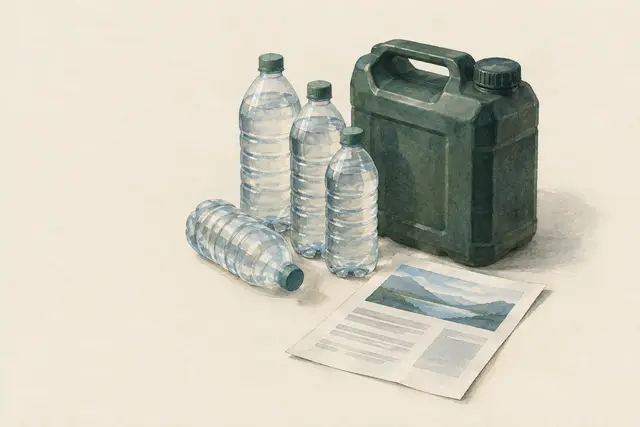
Boiling, filtering, chlorine and UV work against pathogens – not reliably against dissolved chemicals such as fuels, solvents, pesticides or heavy metals. When chemical contamination is suspected, the only safe field decision is to use a different source.
Water in natural disasters and supply failures
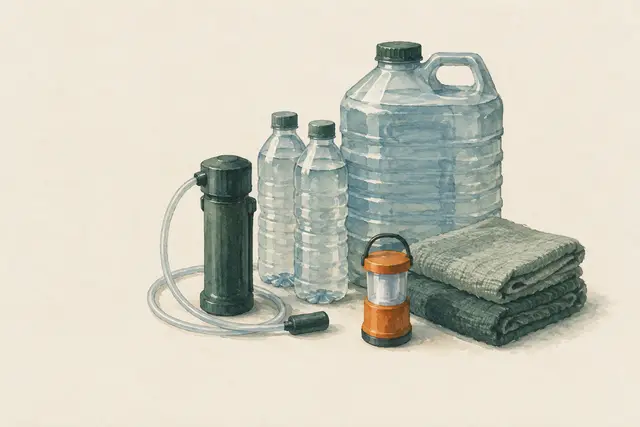
Floods, storms, earthquakes or long power cuts can interrupt or contaminate the drinking-water supply. What matters is a prepared stock, following official notices such as boil-water advisories, and caution about flood water, which is almost always contaminated.
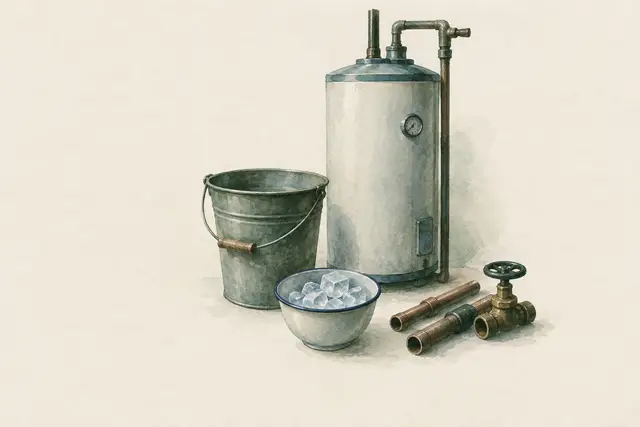
Emergency water from the water heater and pipes
When the supply fails, there is often still water in the house: in the water heater tank, in the pipes and in ice cubes. It can be drained safely once power or gas to the heater is switched off and the inlet is closed. Water from heating systems, toilet bowls, waterbeds or pools is not drinking water.
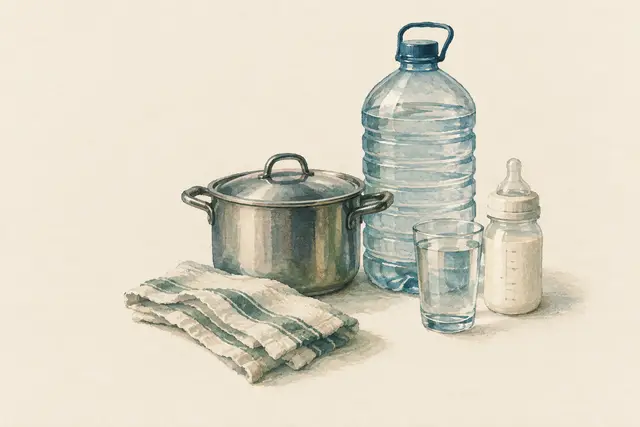
Boil-water notices and water during floods
Under a boil-water notice, tap water is microbiologically unsafe; boiled or bottled water is used for drinking, brushing teeth, ice cubes, infant formula and food preparation. Under a do-not-drink notice, boiling does not help. Flood water is almost always contaminated with sewage and chemicals.
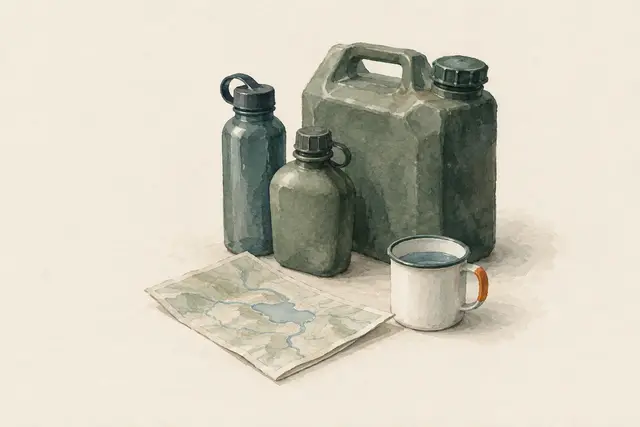
Measuring and sharing water within a group
When water is short, a clear plan helps: measure the stock, secure drinking water before everything else, share fairly by need and reduce losses. Cutting drinking water itself below what is needed is dangerous – better to reduce sweat, exertion and waste and organise help or resupply early.
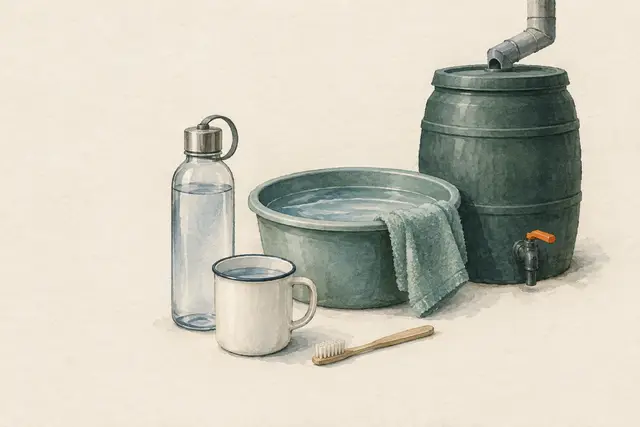
Separating water by use: drinking, hygiene and utility water
When water is scarce, it helps to divide it into tiers: safe drinking water for drinking, cooking, brushing teeth and baby food; treated or clean water for handwashing; utility water from a bathtub, rain barrel or pool only for flushing the toilet and cleaning. Clear labelling prevents mix-ups.
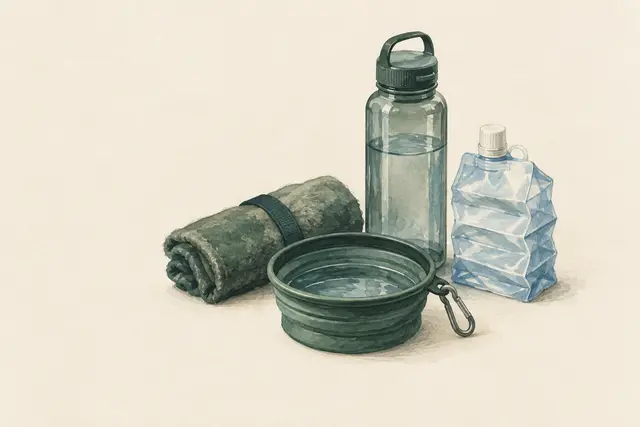
Water for pets in emergencies
Pets need their own safe drinking water in emergencies and belong in stock planning. They should not drink flood water, puddle water, water from toilet bowls or water with an algal bloom. The amount needed depends on species, size, food and weather – when in doubt, ask the vet.
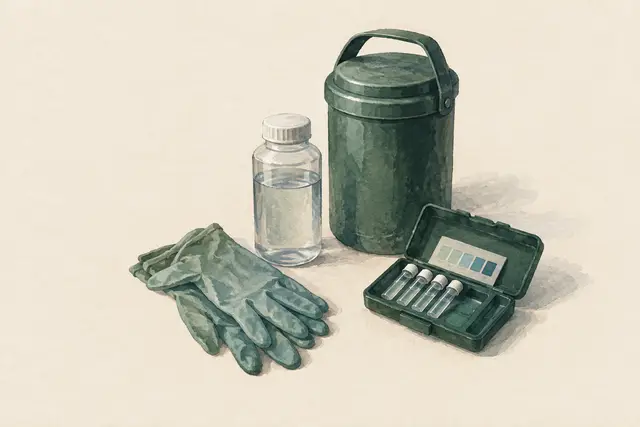
Private wells after flooding
If a private well or cistern has been flooded, the water is considered contaminated until a test shows otherwise. Do not drink it or use it for cooking or brushing teeth, and do not touch the pump's electrical connections while wet. Disinfect and flush the well according to the authority's instructions or by professionals, then have the water tested.
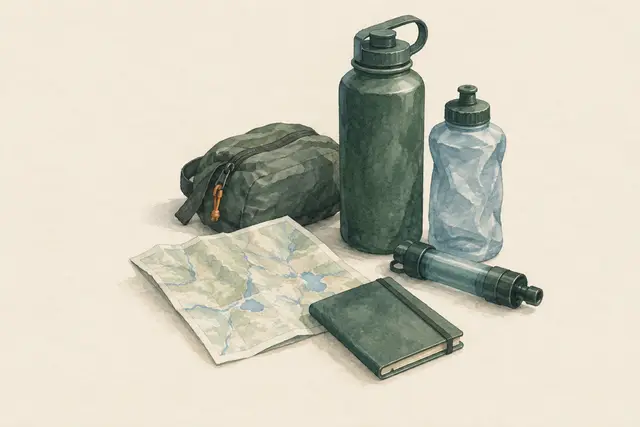
Planning water for trips: refill points and reserves
Planning water for a trip means fixing refill points, carrying amounts and a reserve before setting off. Springs can dry up, huts can be closed, fountains can be marked ‘not drinking water’. A second treatment method and a plan B in case a water point fails are part of it.
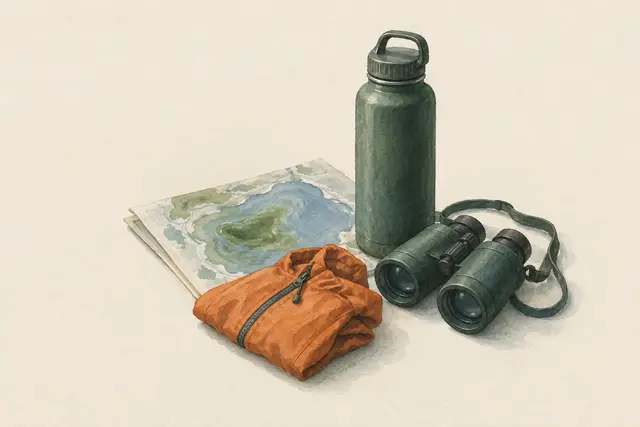
Blue-green algae and algal blooms: avoid the water
Mass growth of cyanobacteria (‘blue-green algae’) can produce toxins that neither boiling nor common outdoor filters or tablets reliably remove. Do not drink water with greenish, bluish or reddish streaks, scum or coloured mats, do not swim in it, and keep animals away. Find another source.
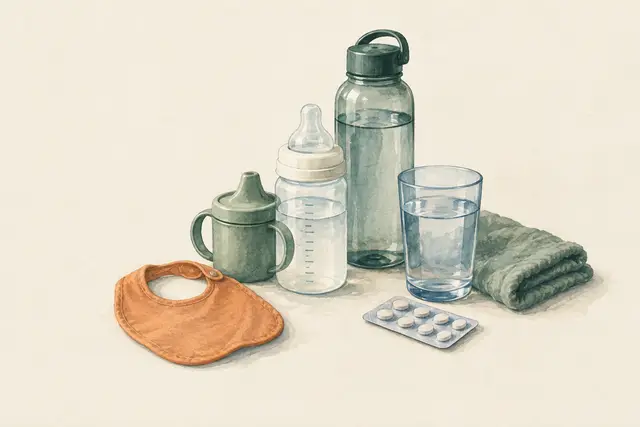
Water for infants, older people and the sick in emergencies
Infants, older people, pregnant women and the sick are especially at risk from water shortage and contaminated water. Use only safe water as advised by authorities for baby food, actively encourage older people to drink, and take medication needs into account. Get medical help early when warning signs appear.
Planned topics (7)
- Water needs
- Chemical contamination
- Salt water and seawater
- Water in natural disasters
- Water scarcity
- Treatment mistakes
- Household water treatment