Water for pets in emergencies
Pets need their own safe drinking water in emergencies and belong in stock planning. They should not drink flood water, puddle water, water from toilet bowls or water with an algal bloom. The amount needed depends on species, size, food and weather – when in doubt, ask the vet.
- One-off planning, then rotate the stock
Explained simply
Your dog, cat or rabbit needs clean water every day just like you do. But animals cannot tell whether water is dirty or poisonous. When they are thirsty, they drink from any puddle. That is why you have to think for them.
Animals count in an emergency water stock: extra water is added for them, not just a sip from your own supply. How much an animal needs depends on how big it is, what it eats and how warm it is. Your vet can tell you how much is normal for your animal.
Very important: do not let animals drink from flood water, puddles after floods or lakes with greenish, bluish or reddish scum, and do not let them swim in them. Such algae can be life-threatening for dogs.
How it works
Animals lose water through urine, faeces, breathing and – depending on the species – through panting or the skin. Dogs cool themselves mainly by panting, which evaporates a lot of water, especially in heat and during exercise. Dry food contains little water, so animals fed on it usually drink considerably more than those on wet food.
Unlike people, animals do not check their water. A thirsty dog drinks from the river, the puddle in the car park or the toilet bowl. In a crisis, when routines are disrupted and safe sources are scarce, this risk rises. Some pathogens that animals pick up can also be passed on to people – so controlling the water protects both animal and owner.
What really matters
The first step is a question to the vet: how much does my animal normally drink a day, and how does that change with heat, exercise or different food? With this figure you can plan. Store additional water for the animals for the same number of days as for the people, and keep it together with food, a bowl and any medication they need.
Animals get the same safe or treated water as people. Under a boil-water notice that means boiled and cooled water or bottled water in the bowl too. Use chemically disinfected water only as the manufacturer states; if you are unsure, use boiled and cooled water and ask the vet.
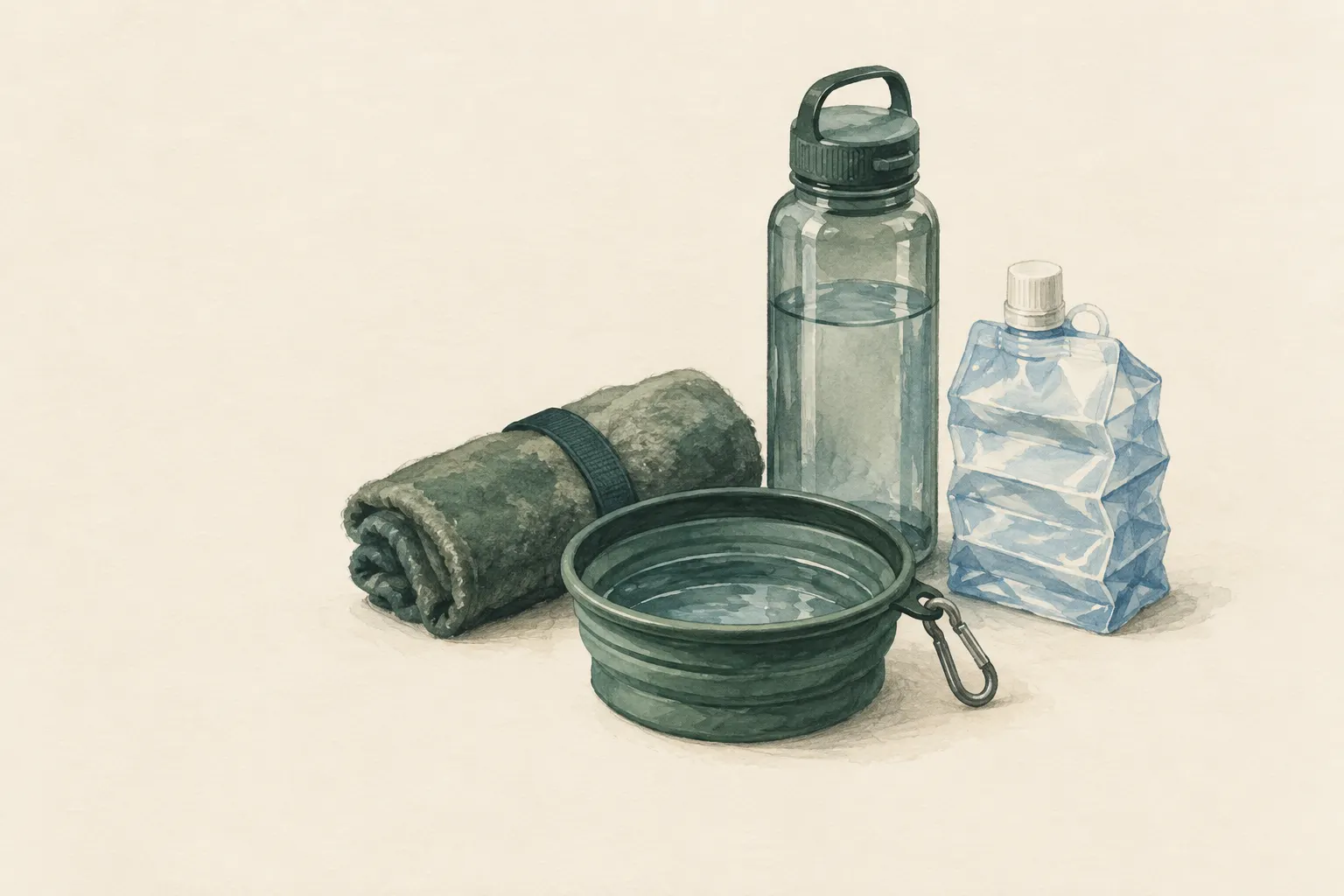
For an evacuation, water, a folding bowl and food go into the pet bag. Find out in advance whether emergency shelters in your area accept animals – that is not a given everywhere and affects how much you need to take yourself.
Safety: what to watch out for
Toxic algal blooms, usually caused by cyanobacteria (often called ‘blue-green algae’), appear as greenish, bluish or reddish streaks, scum or coloured mats on the water. Their toxins can be fatal to animals, especially dogs. Dogs are particularly at risk because they play in the water, swallow it and lick their fur afterwards. Keep animals away, and if an animal shows symptoms after contact, seek veterinary help immediately.
Flood water and puddles after floods can contain sewage, fuel and chemicals. Do not let animals drink it, and wash fur and paws with clean water after contact so that they do not lick the substances off. Keep the toilet lid closed, especially if there are cleaning agents in the cistern.
In heat the need rises markedly. An animal that pants heavily, staggers or seems listless needs shade, water and veterinary help.
Typical situations
On a summer hike with a dog, take extra water and a folding bowl and plan breaks in the shade. Streams and lakes along the way are not a safe water source for the dog, especially not if an algal bloom is suspected.
During a water outage at home, keep the bowl filled from the stock so the animal does not turn to the toilet, plant saucers or the rain barrel. Small animals, birds, reptiles and fish have their own requirements; specialist advice helps here.
Official preparedness guides explicitly recommend including pets in the emergency stock. Planning for it from the start means you do not have to share your own supply in an emergency.
Step by step
Find out the need
Ask your vet about your animal's usual daily water needs and how heat, food and activity affect them.
- 1
Find out the need
Ask your vet about your animal's usual daily water needs and how heat, food and activity affect them.
- 2
Include it in the stock
Store additional water for the animals for the same number of days as for the people, and keep it together with food and a bowl.
- 3
Control the sources
Keep animals away from puddles, flood water and waters with algal blooms on walks. Keep toilet lids closed, especially if there are cleaning agents in the cistern.
- 4
Pack for evacuation
Pack water, a folding bowl and food in the pet bag. For emergency shelters, find out in advance whether animals are accepted.
Common mistakes
- Forgetting the animals in the water stock
- Letting a dog drink from flood water or an algae-covered lake
- Leaving the toilet lid open with cleaning agents
- Filling the water bowl with utility water
Quick view
Materials
Pet emergency supplies
Food-grade water container
Additional water stock for animals
Only use containers that never held chemicals or fuel.
Collapsible water container or bag
For evacuation and on the move
Protect from sharp objects.
Use only food-grade and only for water.
Suitable for
- Households with dogs, cats, small animals or birds
- Evacuation planning
- Hikes with a dog
Not suitable for
- Larger-scale livestock keeping – get specialist advice for that
Prerequisites
- Knowing the animal's usual water needs (vet)
- Clean bowl and transport container
Safety
- Flood water and puddles after floods can contain sewage, fuel and chemicals. Do not let animals drink, and wash their fur and paws with clean water after contact.
- Animals get the same safe or treated water as people. Use chemically disinfected water only per manufacturer instructions; when unsure, use boiled and cooled water and ask a vet.
How it works
Like people, animals depend on regular, clean water and cannot recognise contaminated water. In crises they drink from anything they can reach. A separate stock and control over water sources protect both animal and owner, as some pathogens can be transmitted.
Advantages
- Protects animals from poisoning and infection
- Prevents people having to share their own stock
- Makes evacuation easier
Disadvantages
- Additional weight and storage space
- Need is hard to estimate exactly
Deep knowledge
Background
Official preparedness guides explicitly recommend including pets in the emergency stock, including water, food and medication.
Toxic algal blooms are a recurring summer problem in many regions; dogs are particularly at risk because they play in and drink the water.
Variants
- On the trail with a dog
- On walks with a dog, carry extra water and a folding bowl. In heat the need is much higher; plan breaks in the shade.
Common mistakes
- Forgetting the animals in the water stock
- Letting a dog drink from flood water or an algae-covered lake
- Leaving the toilet lid open with cleaning agents
- Filling the water bowl with utility water
Limits and risks
- No veterinary advice
- Amounts only from a vet
- Specialist animals (reptiles, fish) have their own requirements
Material alternatives
Derived from material properties: a substitute must have all relevant properties. Observe the notes on the substitute.
- Food-grade water container
- Single-wall stainless steel bottle (Heat only single-wall bottles without paint/plastic; remove the lid before heating.), Double-wall insulated bottle (Never heat directly.), PET bottle (clear, max. 2 litres) (Do not heat or place in a fire.), Airtight food-grade storage container (Fill only when clean and completely dry; never use containers that previously held chemicals.), Collapsible water container or bag (Protect from sharp objects.), Food-grade water bag (Use only for drinking water, never for chemicals or fuel.), Fermentation jar or crock (Use only food-grade containers of glass, food-safe glazed stoneware or food-grade plastic – no metal containers for acidic food.), Resealable food bags (Use only bags intended for food; do not use with boiling water unless the manufacturer explicitly allows it.)
- Collapsible water container or bag
- Single-wall stainless steel bottle (Heat only single-wall bottles without paint/plastic; remove the lid before heating.), Double-wall insulated bottle (Never heat directly.), PET bottle (clear, max. 2 litres) (Do not heat or place in a fire.), Food-grade water container (Only use containers that never held chemicals or fuel.), Airtight food-grade storage container (Fill only when clean and completely dry; never use containers that previously held chemicals.), Food-grade water bag (Use only for drinking water, never for chemicals or fuel.), Fermentation jar or crock (Use only food-grade containers of glass, food-safe glazed stoneware or food-grade plastic – no metal containers for acidic food.), Resealable food bags (Use only bags intended for food; do not use with boiling water unless the manufacturer explicitly allows it.)
Results come exclusively from structured entries. No improvised instructions are generated.
Sources
Ready.gov – U.S. Federal Emergency Management Agency (FEMA): Pets and animals – disaster preparedness guidance
Water and supplies for pets in the emergency plan
Ready.gov – U.S. Federal Emergency Management Agency (FEMA): Floods
Avoiding contact with flood water
World Health Organization (2022): Guidelines for drinking-water quality, fourth edition incorporating the first and second addenda
Cyanobacteria and their toxins in water bodies