Water in natural disasters and supply failures
Floods, storms, earthquakes or long power cuts can interrupt or contaminate the drinking-water supply. What matters is a prepared stock, following official notices such as boil-water advisories, and caution about flood water, which is almost always contaminated.
- Building a stock: about an hour once, then regular checks
Explained simply
Normally, clean water simply comes out of the tap. For that to work, you need pumps, electricity and intact pipes. In a flood, a severe storm, an earthquake or a long power cut, some of this can break down. Then perhaps no water comes out any more – or water that can make you ill.
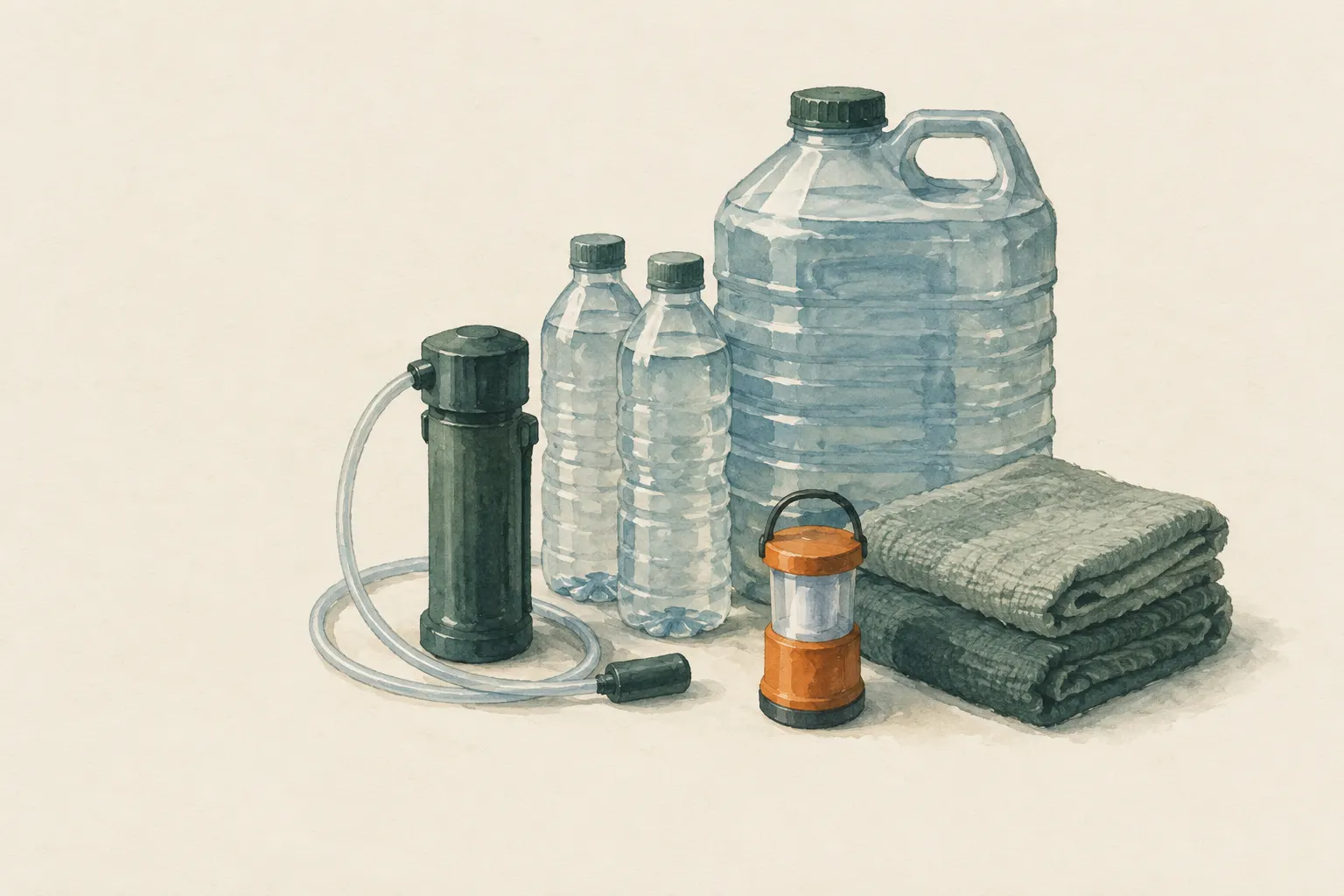
That is why a small water stock at home is a bit like a spare tyre in the car: most of the time you do not need it, but when you do, you are very glad to have it. Authorities state how much water per person per day makes sense.
Very important: flood water is not drinking water, even if it is only running through the basement. It almost always contains sewage, petrol and other harmful substances. And if the authorities say tap water must be boiled or not used at all, you stick to that.
How it works: why the supply fails
The drinking-water supply is a chain: water is abstracted, treated, pumped into reservoirs and distributed through pipes. In disasters several links often fail at once. Without power, pumps and pressure-boosting systems stop, and on higher floors in particular no water arrives any more. Broken pipes can draw dirt and sewage into the network, and floods can wash sewage into wells and facilities.
Water utilities and authorities respond with two kinds of notice. A boil-water notice is issued when contamination with pathogens cannot be ruled out – boiling then protects you. A do-not-use notice is issued when chemical contamination is involved. Then boiling does not help, and you need water from another source.
Your own stock bridges the time until the authorities provide water at distribution points or the supply is safe again. In large-scale disasters, help cannot reach everyone everywhere at the same moment – which is why authorities such as Germany’s BBK recommend keeping a stock.
What really matters: the stock
Base the amount on your own authority’s recommendation, as it differs between countries. Germany’s BBK gives around two litres per person per day for drinking and cooking in emergency preparedness and recommends a stock for several days. Plan an extra reserve: for children, sick people, pets, hot weather and a minimum of hygiene.
The simplest option is bought, sealed bottled water, because it keeps for a long time and you only need to watch the best-before date. Tap water you bottle yourself needs clean, food-grade containers and has to be renewed regularly. Store the stock somewhere cool and dark, away from chemicals, paints or fuels.
When an event is forecast – a storm or flood, for example – you can additionally fill clean containers with tap water while it is still considered safe. A filled bathtub or buckets provide utility water for flushing the toilet and rough cleaning. This water is not drinking water.
Safety: what to watch out for
Flood water usually contains sewage, fuels and chemicals. Do not drink it, do not use it for brushing teeth or cooking, and avoid contact as far as possible. Boiling does not make flood water safe either, because it does not help against chemicals.
A boil-water notice does not only apply to your drinking glass. It also covers brushing teeth, ice cubes, washing fruit and vegetables that are eaten raw, and preparing baby food. Always follow your water utility’s exact instructions – including on flushing pipes after a notice has been lifted.
Stoves, grills and generators produce carbon monoxide. This gas is invisible and odourless and can kill in enclosed spaces. So run them only outdoors – never in living spaces, garages, basements or tents. If you get a headache, dizziness or nausea near such devices, go into fresh air immediately and call the local emergency number (112 in the EU).
Typical situations
Long power cut: pumps and water heaters can fail, and without power you may no longer be able to boil water. Then the stock and a safe way of cooking outdoors become more important. A battery or crank radio helps you receive official notices when the internet and mobile network are disrupted.
Earthquake or pipe damage: when pipes are broken, dirt can enter the network even if water still comes out of the tap. Until it is cleared, use tap water only as the authorities instruct.
Flood: here several dangers come together – contaminated tap water, flooded wells and the flood water itself. Only use your own wells that were flooded once they have been tested or the authorities allow it. If no safe water is available and chemicals are not a concern, you can clarify cloudy water and then boil it or disinfect it chemically according to instructions.
How to prepare
Build the stock in quiet times, not once the crisis has begun – by then shops are often sold out. Write the date on the containers and set a fixed date each year to check and renew the stock. Expired bottled water can be used up for cooking or watering plants and replaced.
Divide the stock by purpose in your mind: safe water first for drinking and preparing food, utility water for the toilet and rough cleaning. Talk with everyone in the household about where the stock is kept and what a boil-water notice and a do-not-use notice mean. That way everyone can act calmly and correctly in an emergency.
Step by step
Build a stock
Build a drinking-water stock according to your authority's guidance. Germany's BBK gives around two litres per person per day for emergency preparedness and recommends a stock for several days; plan reserves for hygiene, children, sick people and pets.
- 1
Build a stock
Build a drinking-water stock according to your authority's guidance. Germany's BBK gives around two litres per person per day for emergency preparedness and recommends a stock for several days; plan reserves for hygiene, children, sick people and pets.
- 2
Follow warnings
Keep a battery or crank radio and warning apps ready. Watch for boil-water notices, do-not-use notices and drinking-water distribution points.
- 3
Fill before the event
If an event is forecast (storm, flood), fill clean, food-grade containers with tap water while it is still considered safe. A bathtub or buckets can also provide utility water for flushing the toilet – not drinking water.
- 4
Allocate the stock by purpose
Use safe water first for drinking and preparing food; use utility water for flushing toilets and rough cleaning.
- 5
Treat if necessary
If no safe water is available and chemicals are not a concern, clarify cloudy water first, then boil it or disinfect chemically according to instructions.
- 6
After restoration
Follow the utility's instructions on flushing pipes after a boil-water notice is lifted. Use private wells after flooding only once tested or as instructed by the authorities.
Common mistakes
- Thinking of a stock only once the crisis has begun
- Boiling and drinking flood water
- Ignoring a boil-water notice when brushing teeth or for ice cubes
- Using utility water from the bathtub or buckets as drinking water
- Running a stove or generator indoors
- Continuing to use a flooded well without testing
Quick view
Materials
Food-grade water container
Food-grade, closable
Only use containers that never held chemicals or fuel.
PET bottle (clear, max. 2 litres)
Bottled water as stock
Do not heat or place in a fire.
Metal pot (stainless steel, aluminium, titanium)
For boiling when energy is available
Hot – scalding risk.
Chlorine tablets (NaDCC) for drinking water
Follow the manufacturer's dose and contact time.
Suitable for
- Household emergency preparedness
- Floods, storms, earthquakes, power cuts
- Boil-water notices and supply disruptions
Not suitable for
- Replacing instructions from the water utility and authorities
- Treating flood water or chemically contaminated water
Prerequisites
- Access to warnings (radio, warning app, official websites)
Safety
- Official notices about tap water take precedence. A boil-water notice also applies to brushing teeth, ice cubes and washing food that is eaten raw.
How it works
In disasters several barriers often fail at once: pumps stop without power, pipes break, and flood water washes sewage into wells and networks. A household stock bridges the first days until authorities supply water or the supply is safe again. Household treatment protects against pathogens but not against chemicals.
Deep knowledge
Background
Authorities such as Germany's BBK recommend keeping a drinking-water stock at home for emergencies, because help does not reach everyone immediately in large-scale disasters. Specific recommendations on quantity and duration differ between countries; the guidance of your own region is what counts.
Boil-water notices are issued when microbiological contamination of the supply network cannot be ruled out. If chemical contamination is present, a do-not-use notice is issued instead – and then boiling does not help. The US agencies EPA and CDC describe boiling for emergencies, and disinfection with unscented household bleach when boiling is not possible.
Variants
- Long power cut
- Without power, pumps, pressure-boosting systems and water heaters can fail. The stock and a safe way of cooking outdoors then become more important.
- Earthquakes and pipe damage
- Broken pipes can draw dirt and sewage into the network. Until it is cleared, use tap water only as instructed by the authorities.
Common mistakes
- Thinking of a stock only once the crisis has begun
- Boiling and drinking flood water
- Ignoring a boil-water notice when brushing teeth or for ice cubes
- Using utility water from the bathtub or buckets as drinking water
- Running a stove or generator indoors
- Continuing to use a flooded well without testing
Limits and risks
- Regional official guidance takes precedence
- No guidance on treating chemically contaminated water
- No guidance on rehabilitating wells
Material alternatives
Derived from material properties: a substitute must have all relevant properties. Observe the notes on the substitute.
- Food-grade water container
- Single-wall stainless steel bottle (Heat only single-wall bottles without paint/plastic; remove the lid before heating.), Double-wall insulated bottle (Never heat directly.), PET bottle (clear, max. 2 litres) (Do not heat or place in a fire.), Airtight food-grade storage container (Fill only when clean and completely dry; never use containers that previously held chemicals.), Collapsible water container or bag (Protect from sharp objects.), Food-grade water bag (Use only for drinking water, never for chemicals or fuel.), Fermentation jar or crock (Use only food-grade containers of glass, food-safe glazed stoneware or food-grade plastic – no metal containers for acidic food.), Resealable food bags (Use only bags intended for food; do not use with boiling water unless the manufacturer explicitly allows it.)
- Metal pot (stainless steel, aluminium, titanium)
- Single-wall stainless steel bottle (Heat only single-wall bottles without paint/plastic; remove the lid before heating.)
- Chlorine tablets (NaDCC) for drinking water
- Chlorine dioxide tablets or drops (Only approved drinking-water products; follow manufacturer instructions.), Unscented household bleach (sodium hypochlorite) (Only unscented, without additives, with known concentration.), Iodine water purification tablets (Not in pregnancy, thyroid disease or iodine allergy without medical advice.)
Results come exclusively from structured entries. No improvised instructions are generated.
Sources
Bundesamt für Bevölkerungsschutz und Katastrophenhilfe (BBK), Deutschland: Ratgeber für Notfallvorsorge und richtiges Handeln in Notsituationen
Household drinking-water stock and planning figure per person per day
Centers for Disease Control and Prevention: Making Water Safe in an Emergency
Boiling and disinfection in emergencies; dealing with flood water
United States Environmental Protection Agency: Emergency Disinfection of Drinking Water
Boiling and disinfection with household bleach in emergencies