Mechanics and improvisation
Levers, friction, safe temporary fixes
Understanding mechanical principles to improvise and repair safely.
Mechanics
Understanding levers and friction
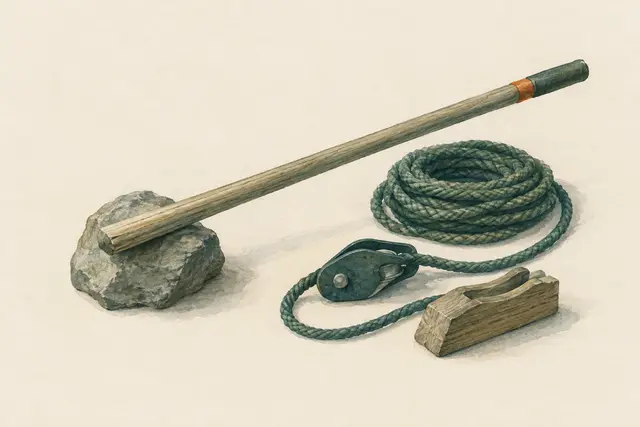
A lever trades distance for force: the longer the arm on your side relative to the load side, the less force you need – but you have to move further. Friction holds knots, brakes and rope wraps. Knowing these two principles lets you move loads more safely and understand why many techniques work – and when they fail.
Improvised pegs and deadman anchors in snow and sand
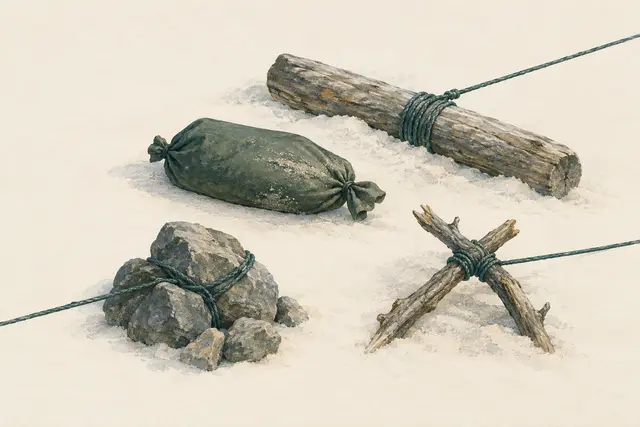
In snow and sand ordinary pegs hold poorly. An object buried crosswise – stick, bag of sand, peg or ski – with the line tied to its middle spreads the pull over a large area: the "deadman". On hard ground rocks and angled sticks help.
Improvising a stable pot support
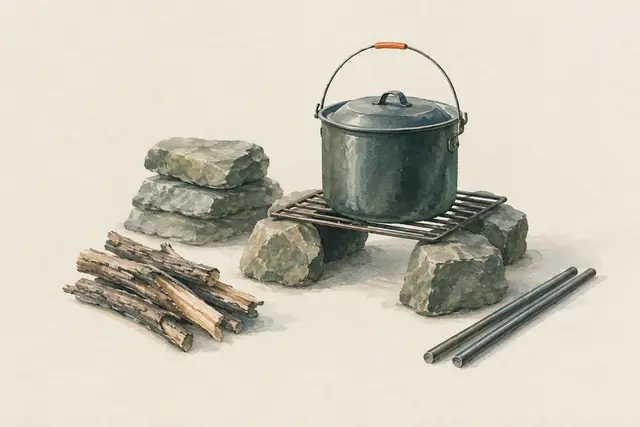
A pot of boiling water that tips over is a common scalding hazard. A stable, level support of dry stones, a grill grate, metal rods or a stove's frame carries the pot safely over a small fire or substitute cooking spot. A wide base, a low centre of gravity and no wet river stones are what matter.
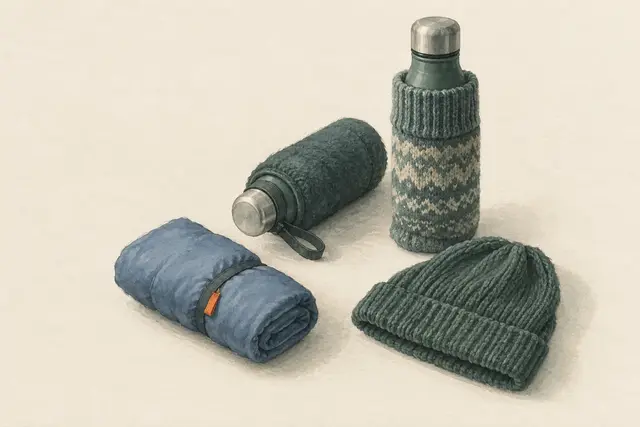
Insulating water bottles: against freezing and as a hot water bottle
In frost water in a bottle freezes first at the lid and the surface. A cover made from a sock, hat or foam, carrying it close to the body and storing the bottle upside down keep it liquid longer. A suitable, leak-proof bottle of warm water can warm a sleeping bag – with care because of the scald risk.
Planned topics (5)
- Levers
- Pulleys and redirects
- Friction
- Tension
- Material strength
Repair
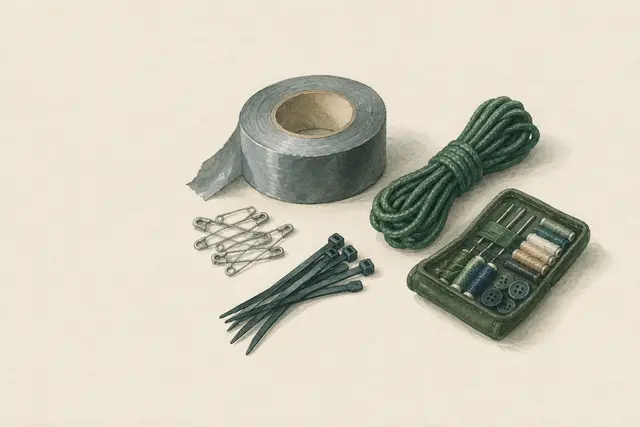
Putting together a small repair kit
A few metres of duct tape, some cord, safety pins, cable ties and a sewing kit fit in one hand and solve a surprising number of problems: a torn backpack strap, a ripped tarp, a split zip, a loose shoe sole. The kit does not replace a proper repair, but it holds until the next opportunity.
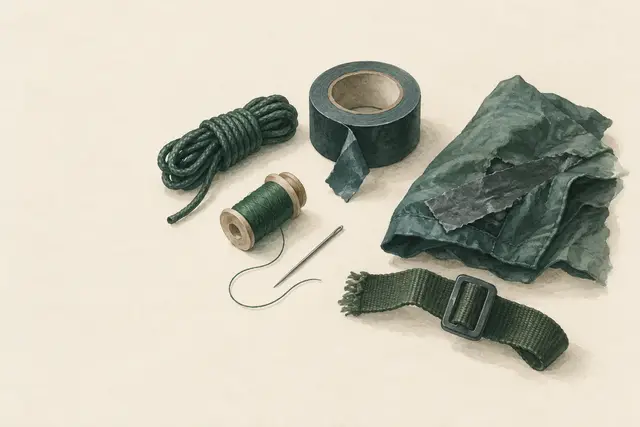
Temporary repairs to gear
A tear in a tarp or jacket, a torn strap, a loose shoe sole or a broken zip can usually be secured with tape, cord, needle and thread so the gear works until the end of the trip. The rule: fix damage early before it grows – and have the temporary fix properly repaired afterwards.
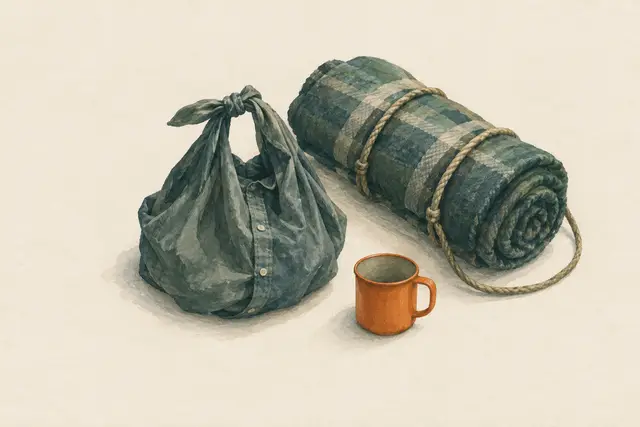
Improvised carrying: a bag from a shirt, a blanket roll
If a backpack is missing or broken, things can be carried with everyday items: a T-shirt or shirt becomes a bag by tying the sleeves and hem, a blanket or tarp becomes a roll over the shoulder with two cords. This carries light to medium loads over short distances – for heavy loads and long distances a proper backpack remains irreplaceable.
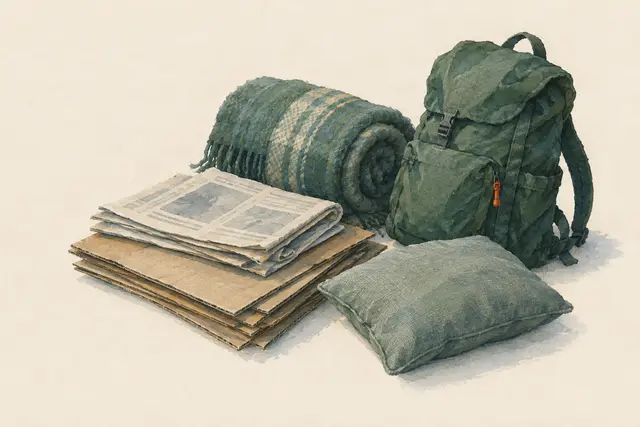
Improvising insulation from everyday items
When a sleeping pad or warm clothing is missing, cardboard, newspaper, cushions, blankets, backpacks or dry leaves also insulate. What matters is trapped, still air – and that everything stays dry. Insulation underneath has the biggest effect, because the ground draws away more heat by conduction than the air does.
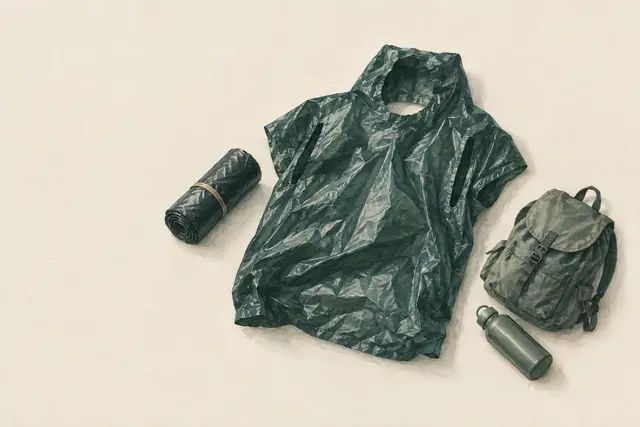
Emergency poncho from a bin bag
A large, heavy-duty bin bag becomes rain protection for the upper body in seconds with a face hole and arm slits. Important: the hole is for the face; the bag is never pulled over the head. The bag is not breathable and no substitute for rain gear, but it can slow cooling through wetness.
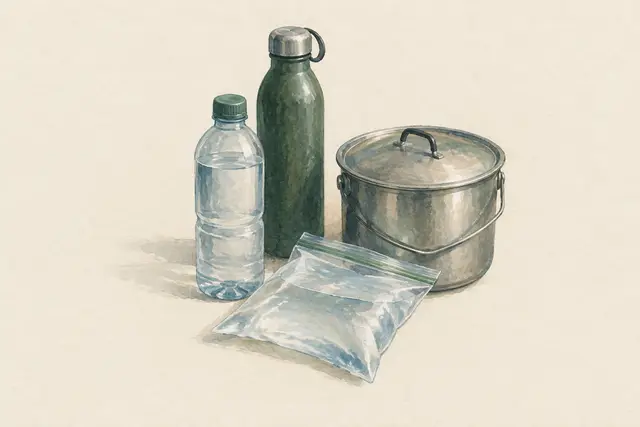
Carrying water improvised – only in clean, food-grade containers
If there is no jerrycan, drinks bottles, freezer bags, cooking pots or a food-grade bag in a backpack can carry water. What matters is that the container is meant for food, clean and has never held chemicals or fuel. Bin bags are not food-grade.
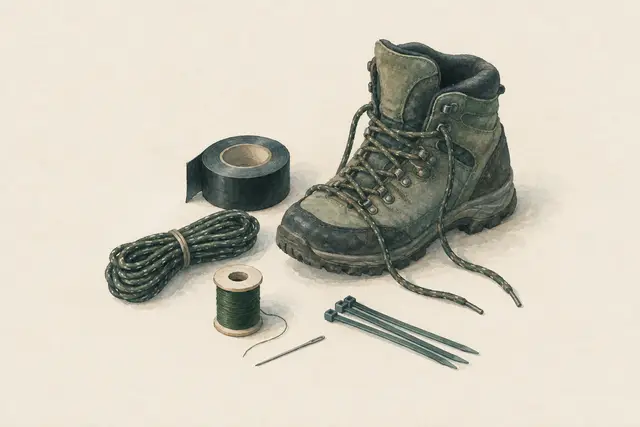
Repairing footwear on the way: sole, laces, seam
A loose sole, a broken lace or a split seam can end a trip. With tape, cord, cable ties, needle and thread footwear can usually be saved until you reach your destination. What matters is avoiding pressure points and checking the repair daily.
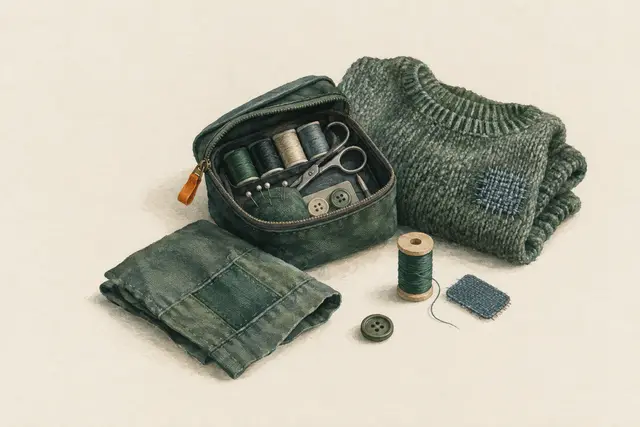
Hand sewing: four stitches for repairs
Four stitches cover most repairs: running stitch for quick tacking, backstitch for strong seams, whip stitch for edges and tears, and darning for holes in knitwear. Add sewing on a button. With a small sewing kit clothing, backpacks and tarps can stay in use.
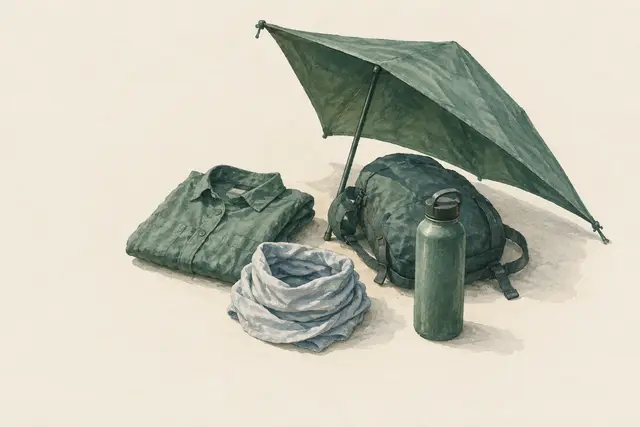
Improvising sun protection: shade, cover, neck protection
Without sunscreen or a hat, shade, loose, densely woven clothing and an improvised neck cover from a T-shirt or cloth protect you. A tarp or umbrella as a sunshade with airflow underneath lowers the heat load. Avoid the midday hours and drink water.
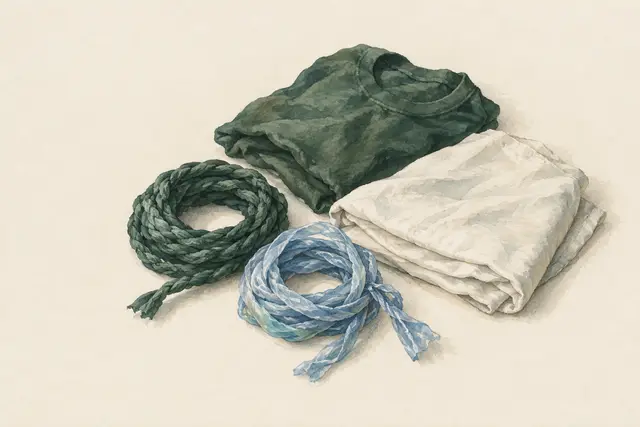
Cordage from clothing, fabric and plastic bags
An old T-shirt, a bed sheet or plastic bags can be cut into strips and twisted or braided into cord. That is enough for bundling, a washing line or tying light things. Such cord is unsuitable for loads above people, climbing or abseiling.
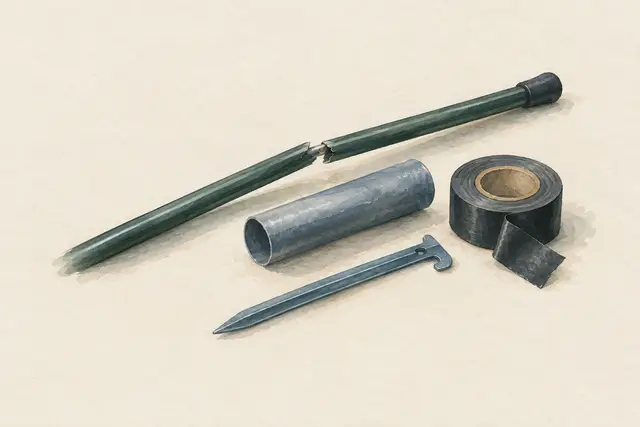
Splinting a broken tent pole
A broken or bent tent pole can usually be splinted on the move with a repair sleeve slid over the break and fixed with tape. Without a sleeve, a peg, a straight piece of wood or a section of trekking pole can serve as a splint. Splinters and sharp edges must be covered so they do not slit the tent fabric.
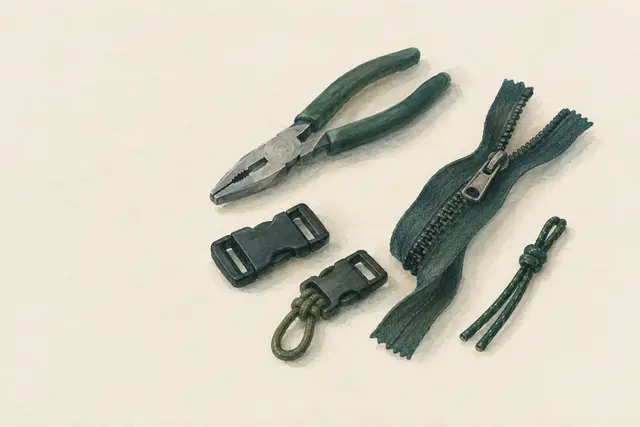
Repairing zips and buckles on the move
A zip that opens again behind the slider usually has a worn slider – carefully squeezing it with pliers often helps. A missing pull can be replaced with cord. Broken side-release buckles on a backpack or bag can be replaced temporarily with a knot or a cord loop.
Planned topics (4)
- Improvised repairs
- Workshop methods
- Temporary fastenings
- Material substitutes
Energy and measuring
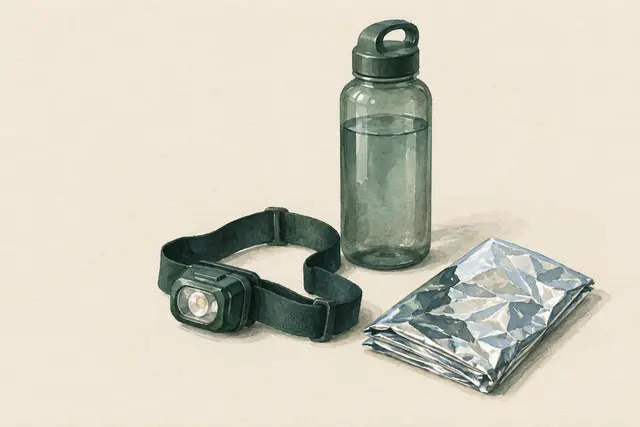
Improvising light – safely and without open flames indoors
A headlamp and a filled water bottle make a glare-free room light; white walls, mirrors and foil spread light. Improvised oil lamps, tin-can heaters or candle hacks from the internet do not belong in homes, though: fire and carbon monoxide risk.
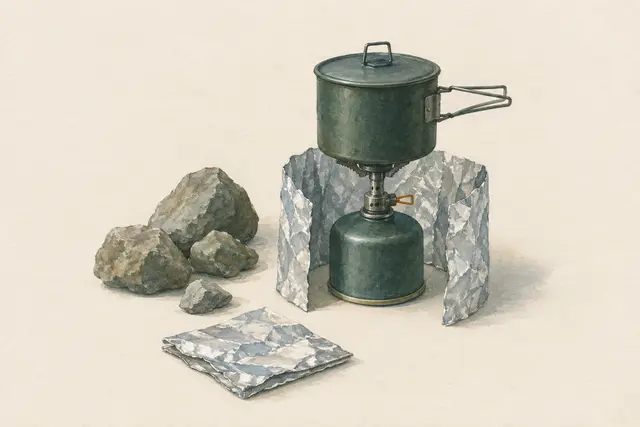
Improvising a stove windscreen – without overheating the canister
Wind carries heat away from the pot and can greatly increase fuel consumption. A windscreen of aluminium foil, stones, terrain or your body helps – but with canister-top stoves it must never enclose the canister, otherwise the canister can overheat and burst.
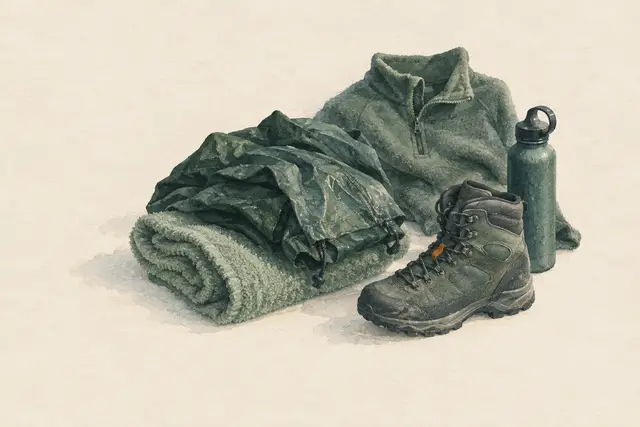
Drying wet clothing and gear – on the move and at home
Wet clothing chills strongly. Wringing, pressing in a towel, hanging on a line in moving air and letting thin layers dry on the body are the safe ways. It becomes dangerous when clothing is hung over stoves, fires or heaters – fire risk – or dried in cold homes without ventilation – mould.
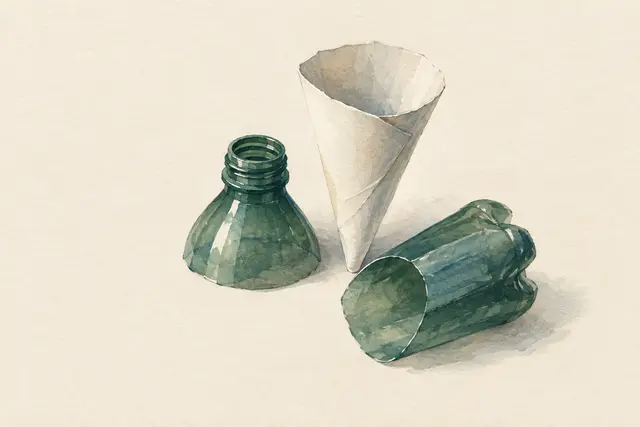
Improvising funnels and scoops
A cut-off bottle neck, a rolled paper cone or a piece of foil make a usable funnel; the lower part of a bottle becomes a scoop. Separation is what matters: anything used for drinking water and food must never come into contact with fuel, chemicals or dirty water.
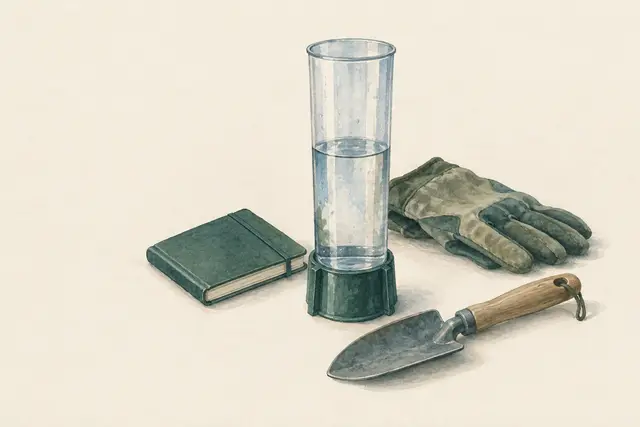
Building and reading a simple rain gauge
A straight container with a flat bottom and vertical walls is a simple rain gauge: the water depth in millimetres equals the rainfall, and 1 mm of rain is 1 litre per square metre. This lets you estimate how much rainwater you can collect or how wet the ground is.
Planned topics (3)
- Energy basics
- Simple measurements
- Tools and aids