Splinting a broken tent pole
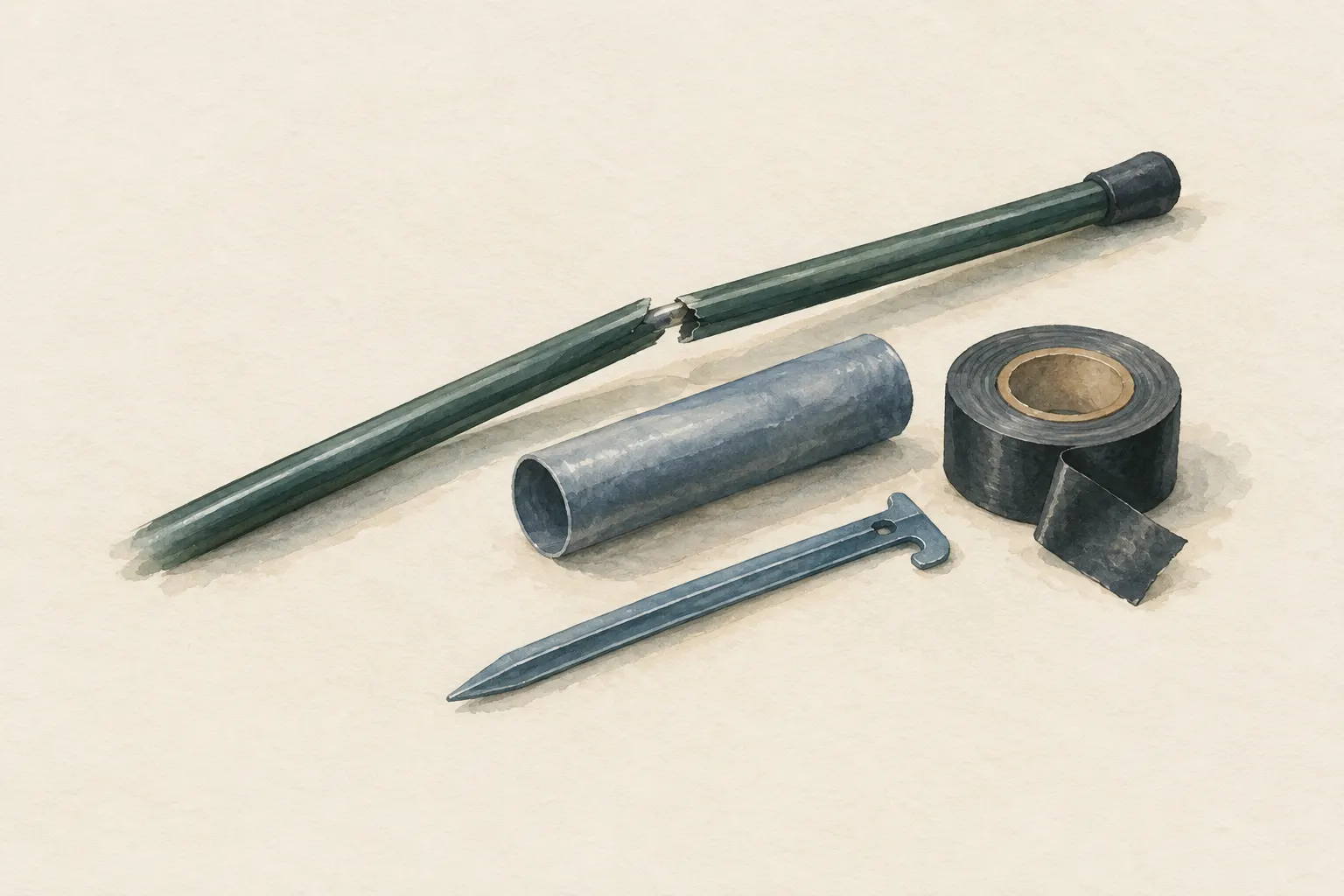
A broken or bent tent pole can usually be splinted on the move with a repair sleeve slid over the break and fixed with tape. Without a sleeve, a peg, a straight piece of wood or a section of trekking pole can serve as a splint. Splinters and sharp edges must be covered so they do not slit the tent fabric.
- 10–20 minutes
Explained simply
A tent's poles are like its bones. They hold the tent in shape. When a pole breaks, it is a bit like a broken arm: to take any load again it needs a splint – a firm, straight piece that is laid alongside and tied on. The splint then carries the load past the broken spot.
Many tents come with a repair sleeve for this. It is a short metal tube that you slide over the break and fix with tape. If you do not have one, a peg, a section of trekking pole or a straight piece of wood can serve as a splint.
Watch out for sharp splinters: fibreglass or carbon poles splinter when they break. Wear gloves and tape the break well so nothing slits the tent fabric or hurts you.
How it works
A tent pole is mainly loaded in bending: it is fitted in a curve, and wind presses against the tent on top of that. At a break the pole can no longer carry this bending – it kinks there. A splint bridges the break and takes over the bending, so the force runs through the splint rather than the break.
For this to work, the splint must reach well beyond the break on both sides. A splint that is too short acts like a new hinge and levers at its ends. The longer and stiffer the splint and the tighter it is fixed, the better the repair holds.
A repair sleeve works the same way, just all round from the outside: it surrounds the pole and keeps the two broken ends in line. Because it is round, it slides through the tent's pole sleeve more easily than a splint tied on to one side.
What really matters
First carefully pull the pole out of its sleeve or undo the clips. Look at the damage calmly: is the pole only bent, or properly broken? You can carefully straighten a bent aluminium pole as far as possible; it stays weakened, though, and still gets a splint or sleeve.
For the sleeve, take the pole apart at the nearest joint, slide the sleeve over the section and centre it over the break. Then wrap both ends of the sleeve tightly with tape. Round off the edges of sleeve and tape with a few extra turns so nothing catches on the fabric.
When putting it back in: slowly and without force. A splinted pole is thicker and stiffer; if you force it through the sleeve, it can damage the fabric or shift the repair. Afterwards, add extra guylines and check the repair the next morning.
Gear and materials
A tent repair kit should contain a matching repair sleeve (many tents come with one) and tape, ideally strong fabric tape. A tip: wrap a few metres of tape around a trekking pole or water bottle so you always have it with you without carrying a whole roll. A multitool and a pair of gloves help when working on splintered poles.
Without a sleeve, a straight metal peg, a section of trekking pole or a straight, firm piece of wood can serve as a substitute splint. What matters is that the splint is straight, stiff and long enough. Lay it lengthwise along the break so it sticks out well on both sides, and wrap everything tightly with tape.
If it is not the pole but the shock cord inside that snaps, that is usually no drama: the sections can be joined one by one and secured at the joints with tape. Pitching and striking become a little more fiddly, but it holds.
Safety: what to watch out for
Fibreglass and carbon poles splinter into fine, sharp fibres when they break. These can get into the skin and are unpleasant. So wear gloves, do not strip splinters with bare hands and cover the break completely with tape. On carbon poles an emergency repair has only limited strength.
A splinted pole withstands less than an intact one. In strong wind, add guylines, pitch the tent lower or find a more sheltered spot. In severe weather in an exposed position it is often wiser to seek shelter or retreat rather than repair the tent in the storm.
With several breaks in the same pole the method reaches its limits. Then think about whether the tent still provides safe shelter, and work out an alternative for the night.
Good to know
A repair on the move is always temporary. At home the broken section should be replaced. That is often possible through the manufacturer or a specialist shop, and many sections can be swapped individually without needing a whole new pole set.
Aluminium poles often bend first when overloaded, before they break. Fibreglass poles tend to break suddenly and splinter. Knowing this, you can check the poles specifically for kinks and fine cracks after a stormy night.
Prevention helps most: when pitching, always push the joints fully together, not halfway, and do not let the sections snap together wildly. Half-seated joints are a common place for breaks. That is why mountaineering handbooks count repair materials for tent and gear as basic equipment.
Step by step
Assess the damage
Pull the pole out of the sleeve or unclip it. If only bent, carefully straighten it as far as possible – it stays weakened. Remove or flatten loose splinters wearing a glove.
- 1
Assess the damage
Pull the pole out of the sleeve or unclip it. If only bent, carefully straighten it as far as possible – it stays weakened. Remove or flatten loose splinters wearing a glove.
- 2
Slide on the sleeve
Take the pole apart at the nearest joint, slide the sleeve over the section and centre it over the break.
- 3
Fix in place
Wrap both ends of the sleeve tightly with tape. Round off the edges with tape so the fabric does not tear.
- 4
Without a sleeve
Lay a straight peg, a section of trekking pole or a straight, firm piece of wood lengthwise along the break, well beyond it on both sides, and wrap tightly with tape.
- 5
Pitch carefully
Insert the pole slowly, do not force it. Add guylines and check the repair the next morning.
Common mistakes
- Splint too short
- Sharp edges not taped over
- Forcing a splinted pole through the sleeve
- No repair sleeve in the kit
Quick view
Materials
Tent pole repair sleeve
Temporary only – have broken sections replaced at home.
Duct tape
Do not use on power cables, gas lines or as a wound dressing.
Adhesive can soften in heat and leave residue.
Tent stakes
As a substitute splint
Multitool
Rules on carrying blades differ by place – check local rules.
Suitable for
- Aluminium poles that are bent or broken
- Broken fibreglass poles, as an emergency fix
Not suitable for
- A storm in an exposed position – seek shelter rather than repairing the tent
- Several breaks in the same pole
Prerequisites
- Repair sleeve in the kit (supplied with many tents)
- Tape
Safety
- Fibreglass and carbon poles splinter. Wear gloves, do not strip splinters with bare hands, cover the break completely.
- A splinted pole withstands less. In strong wind add guylines, pitch lower or find a more sheltered spot; consider retreating in severe weather.
How it works
A tent pole is loaded in bending. A splint that bridges the break far enough on both sides takes over this bending so the force runs through the splint rather than the break. The longer and stiffer the splint and the tighter it is fixed, the better.
Advantages
- Tent stays usable
- Light, small repair material
Disadvantages
- Temporary only
- The pole remains weakened
Deep knowledge
Background
Mountaineering handbooks such as "Mountaineering: The Freedom of the Hills" list repair materials for tent and gear as part of basic equipment. Many tent makers supply a repair sleeve.
At home the broken section should be replaced; this is often possible through the manufacturer or a specialist shop.
Variants
- Snapped shock cord
- If the shock cord inside the pole snaps, the sections can be joined one by one and secured with tape at the joints.
Common mistakes
- Splint too short
- Sharp edges not taped over
- Forcing a splinted pole through the sleeve
- No repair sleeve in the kit
Limits and risks
- Not a permanent repair
- Limited strength on carbon poles
Material alternatives
Derived from material properties: a substitute must have all relevant properties. Observe the notes on the substitute.
- Tent pole repair sleeve
- Trekking poles, Sturdy sticks / poles (Do not cut live wood where prohibited.)
- Tent stakes
- Sturdy sticks / poles (Do not cut live wood where prohibited.)
Results come exclusively from structured entries. No improvised instructions are generated.
Sources
The Mountaineers Books (2017): Mountaineering: The Freedom of the Hills, 9th edition
Repair materials for tent and gear