Choosing a tent: design, season, weight
The right tent depends on where, when and with how many people you travel. Dome, tunnel and geodesic tents differ in wind stability, space and pitching. Ventilation against condensation, a pitch that works in rain and a weight you will actually carry also matter.
- Research and a trial pitch take a few hours
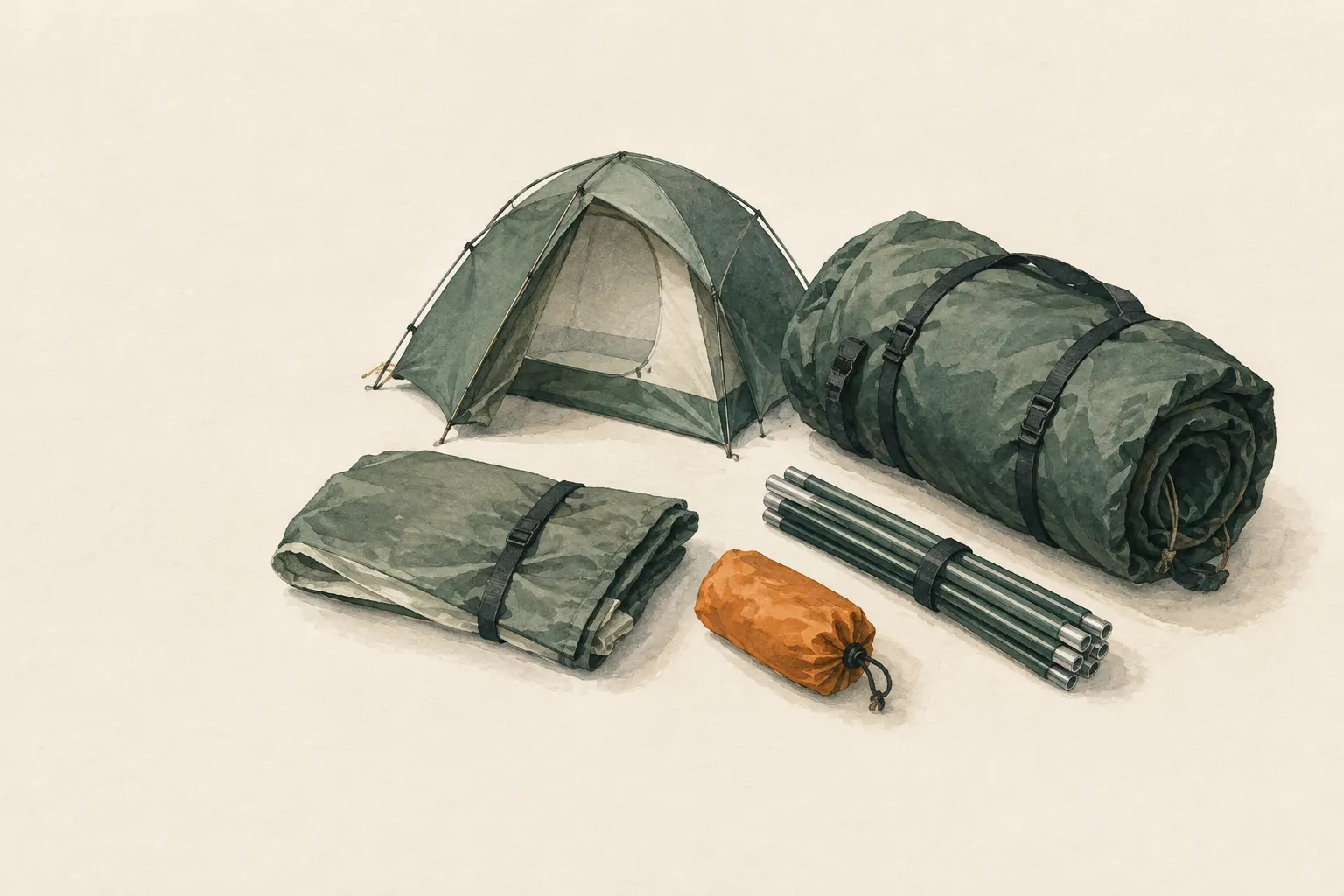
Explained simply
A tent is a little house made of fabric. It does not stand up because of thick walls but because of tension – a bit like an open umbrella. Poles, fabric and lines pull and push against each other and together resist wind and rain. There are different shapes: round dome tents, long tunnel tents and especially stable tents with many crossing poles.
Many tents have two walls: an airy inner tent in which you sleep, and over it a waterproof outer tent, the fly. In between there is a gap of air. It helps stop the moisture from your breath from dripping onto your sleeping bag.
The most important safety rule: never use a stove, barbecue or heater inside a closed tent. They produce carbon monoxide, a poisonous gas you can neither see nor smell. The tent can also catch fire within seconds.
How a tent works
A tent is a tensioned system: poles, fabric and guylines bear wind and snow together. In dome and geodesic tents the poles cross. As a result they stand even without pegs and can still be moved after pitching. Geodesic tents have especially many crossing points and are therefore very stable, but usually heavier.
Tunnel tents consist of several parallel hoops. They offer a lot of space for their weight but only stand when tensioned with pegs. They are most stable when the narrow end faces into the wind. If a tunnel tent stands side-on to the wind, the wind pushes against the large side wall.
A double-wall tent separates the waterproof outer skin from the breathable inner tent. That helps against condensation. Your breath and your body give off a lot of moisture overnight. When this warm, moist air meets the cold outer fabric, water forms there – just like on a cold glass in summer. In a double-wall tent it collects on the fly rather than directly above you. Single-wall tents are lighter but more prone to condensation inside.
What matters when choosing
First clarify the use: in which season, in which terrain – forest, mountains, coast – and with how many people are you travelling? And how will the tent be carried: in a pack, on a bike or in a car? A family at a campsite needs a very different tent from one person on a mountain trip.
Three-season tents are meant for spring to autumn. For snow load and winter storms there are four-season or expedition tents with stronger poles and more guy points. Also look at vents, vestibules (covered porches for gear and boots), the number of entrances, the floor fabric and whether the fly can be pitched first or together with the inner. In rain that is a big advantage, because the inner tent stays dry.
Manufacturer figures for waterproofness (hydrostatic head) and weight are only partly comparable. The hydrostatic head describes the water pressure a fabric withstands in the lab – but in practice seams, pitching and ventilation also decide whether you stay dry. The stated number of people is often tight. If you want room for your gear, it is usually better to go one size up. Buying a tent only by the lowest weight often results in a tent that does not suit your trips.
When it makes sense – and when not
No tent suits everything. A light three-season tent is ideal for summer trips but out of place in a mountain winter. A sturdy expedition tent is needlessly heavy for a weekend in the woods. If your trips vary a lot, you have to compromise or borrow for special conditions.
Sometimes no tent at all is the better choice. A tarp – a sheet pitched as a roof – is lighter and more versatile but protects less from wind and insects. A bivy bag is even smaller but offers hardly any room. For expeditions in extreme conditions, get specialist advice.
And no tent is storm-proof everywhere. On exposed summits, ridges or open ground, strong wind can damage any tent. When severe weather is forecast, it is often safer to move or end the trip than to trust the tent.
Safety: what to watch out for
Stoves, barbecues, charcoal and heaters never belong inside a closed tent or a closed vestibule. They consume oxygen and produce carbon monoxide (CO). This gas is invisible and odourless and even in small amounts can cause headache, dizziness, nausea and unconsciousness – even a barbecue that seems to have burnt out can still give off CO. Tent fabric can also catch fire very quickly.
With headache, dizziness or nausea in the tent, get to fresh air at once and call the local emergency number (112 in the EU). Cook outside, at a sufficient distance from the tent.
The site also decides how safe you are: not under dead branches, not in hollows or stream beds that can fill with water in rain, and not on exposed high points when thunderstorms are possible. Whether and where you may camp is regulated differently from country to country and area to area – check the local rules beforehand.
How to practise it
Pitch a new tent at home or in the garden before the first trip. Read the instructions as you go, count pegs and poles and replace anything missing. Once you have pitched it calmly, it will go much faster later in wind, rain or at dusk.
Feel free to practise in harder conditions too: in wind, with gloves or with only a headlamp. Try out how to orient the tent into the wind and tension the guylines. After practising – and after every trip – dry the tent completely before packing it. That way it stays waterproof for a long time and does not smell musty.
Step by step
Define the use
Decide season, terrain (forest, mountains, coast), number of people and transport (on foot, bike, car).
- 1
Define the use
Decide season, terrain (forest, mountains, coast), number of people and transport (on foot, bike, car).
- 2
Choose a design
Dome: freestanding, versatile. Tunnel: lots of space per weight, pitch into the wind. Geodesic: very stable, heavier. Single-wall: light but more prone to condensation.
- 3
Season
Three-season tents are meant for spring to autumn; four-season or expedition tents are made for snow load and winter storms.
- 4
Check details
Vents, vestibules for gear, entrances, guy points, floor material and whether the fly can be pitched first or together with the inner.
- 5
Trial pitch
Pitch it at home before the trip, take the instructions and replace missing parts.
Common mistakes
- Buying a tent by weight alone
- Three-season tent in mountain winter
- Setting off without a trial pitch
- Overrating waterproofness figures, forgetting ventilation
Quick view
Materials
Tent
Do not cook or heat inside the tent (fire and carbon monoxide danger).
Tent stakes
Suitable for
- Buying new
- Moving to harsher terrain
- Family and group trips
Not suitable for
- Expeditions in extreme conditions – seek specialist advice
Prerequisites
- A clear idea of terrain and season
- A trial pitch before the first trip
Safety
- No tent is storm-proof everywhere. In severe weather at exposed sites retreating is often safer.
How it works
A tent is a tensioned system: poles, fabric and guylines bear wind and snow together. Crossing poles (dome, geodesic) stand without guylines, tunnel tents need pegs but are lighter per area. A double-wall tent separates the waterproof fly from the breathable inner and so reduces condensation on the sleeping bag.
Advantages
- Suitable protection for the planned conditions
- Fewer bad purchases
Disadvantages
- No tent suits everything
Deep knowledge
Background
Mountaineering handbooks explain the designs and their suitability for wind, snow and weight. Condensation is an issue in every tent and depends strongly on ventilation and site.
Manufacturer figures for waterproofness and weight are only partly comparable; a practical test shows more.
Variants
- Tarp instead of a tent
- A tarp is lighter and more versatile but protects less from wind and insects.
Common mistakes
- Buying a tent by weight alone
- Three-season tent in mountain winter
- Setting off without a trial pitch
- Overrating waterproofness figures, forgetting ventilation
Limits and risks
- No product recommendations
- No test values
Material alternatives
Derived from material properties: a substitute must have all relevant properties. Observe the notes on the substitute.
- Tent
- Tarp, Plastic sheet / large bin bag (Tears easily; never pull over the head (suffocation risk).), Emergency blanket (Tears easily once punctured; short-term shelter only.), Document folder (waterproof) (Store securely – contains sensitive personal data.), Rain poncho (When used as a shelter, it no longer protects your body from rain.), Bivy bag (Never fully close off the face.), Heavy-duty bin bag (large) (Suffocation risk: never pull plastic bags over the head or face and keep them away from small children.), Group shelter bag (Airtight – ventilate regularly.)
- Tent stakes
- Sturdy sticks / poles (Do not cut live wood where prohibited.)
Results come exclusively from structured entries. No improvised instructions are generated.
Sources
The Mountaineers Books (2017): Mountaineering: The Freedom of the Hills, 9th edition
Tent designs, suitability for wind and snow, condensation
Centers for Disease Control and Prevention: Carbon Monoxide Poisoning – Prevention guidance
No fuel-burning devices in enclosed spaces