Pitching a tent in wind and rain
In storm and rain, the site, the order of steps and the guying decide whether a tent holds. Look for shelter from the wind, put the low end into the wind, never let go of the tent while pitching and use all guylines. In thunderstorms or storms in exposed places, retreating is often wiser than any pitch.
- About 10–30 minutes depending on tent and weather
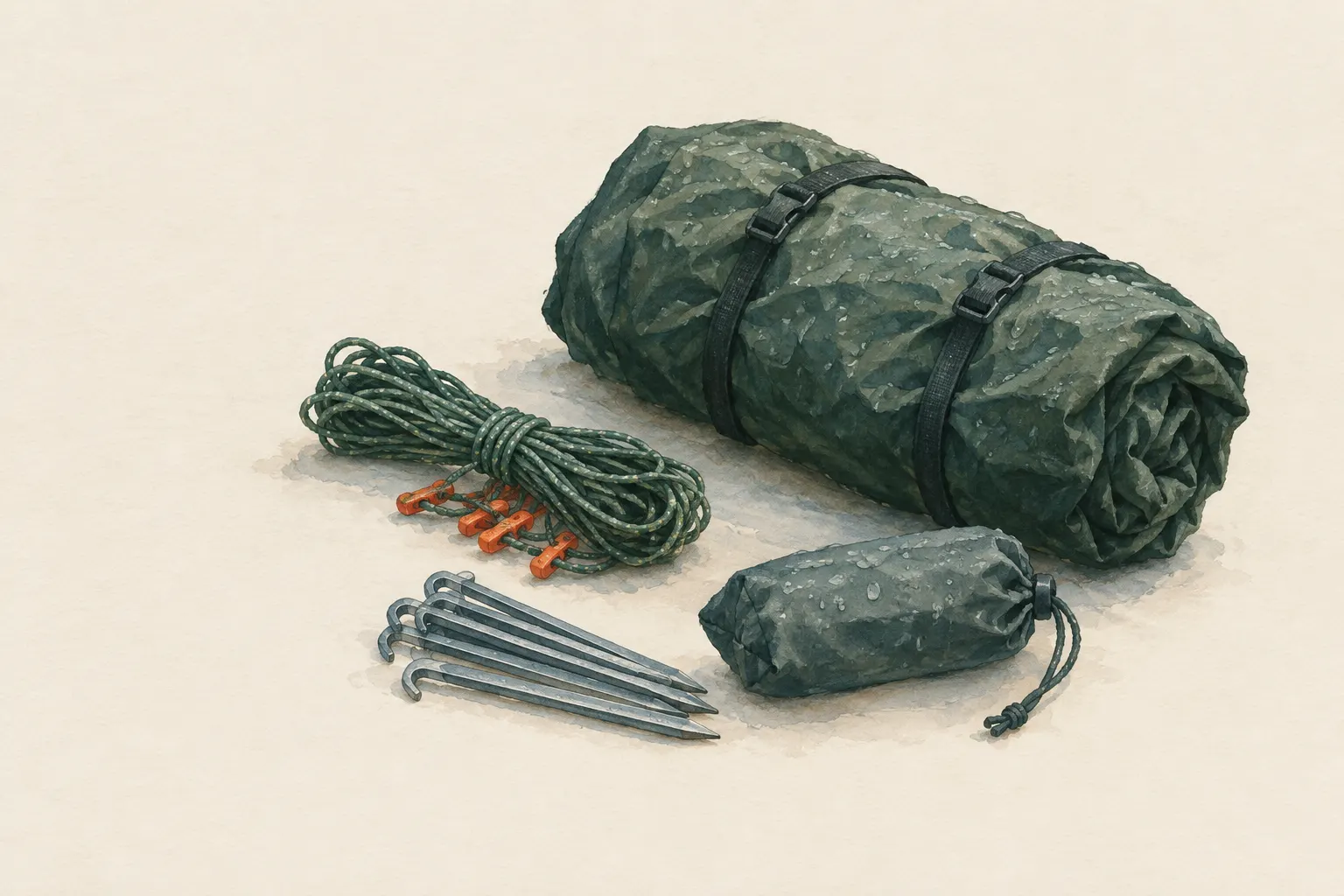
Explained simply
A tent in a storm is like a kite: if you let go, it flies away. So when pitching in wind and rain, the order of steps matters. First you secure the side the wind comes from, and you never let go of the tent.
The narrow or low end of the tent points into the wind – that way it offers the smallest surface, like a cyclist crouching down. All guylines are used and pulled taut. They carry the force of the wind into the ground.
Important: a tent does not protect against lightning. In a thunderstorm or storm in exposed places it is often wiser to turn back in time or go into a building than to pitch the tent.
How it works
A tent only withstands wind if the forces are carried into the ground through taut lines and well-set stakes. The poles alone are not built for that. Each guyline takes part of the load and stops fabric and poles from deforming or breaking.
The narrow or low end facing the wind offers the smallest surface. If the tent stands broadside to the wind, it pushes as if against a sail. The entrance is on the lee side so that no wind and rain blow in when you open it.
A taut fly sheds rain and does not touch the inner tent. If the two layers touch, water is pressed through the fabric. Vents reduce condensation, which otherwise collects on the inside of the fly and drips down.
What really matters
The spot: use natural shelter from the wind such as bushes, rocks or a terrain edge, but no hollow where rainwater collects. Look up for dead branches overhead. Do not camp in dry streambeds or right on the bank.
The order: lay the tent out flat and stake the windward corners first. Hold on to it the whole time or weigh it down with your backpack. Then come the poles and raising it. With tents that allow it, the fly is pitched first so the inner stays dry. The manufacturer's instructions for your tent take precedence.
Anchoring: use and tension all guylines. Drive stakes at an angle away from the tent so they do not pull out under load. In soft ground or sand, rocks on the stakes or buried anchors help – such as a stick or a filled bag to which the line is tied and which is buried crosswise. At night, as the wind picks up, retighten lines and knock snow off the fly.
Safety: what to watch out for
A tent does not protect against lightning, and the poles do not make it safer. In a thunderstorm avoid ridges, summits, isolated trees and open areas and get into a building or vehicle in good time. In hurricane-force wind on ridges or summits, retreating is wiser than any pitch.
In rain never cook inside the tent or in a closed vestibule. Stoves can set the tent on fire, and carbon monoxide can collect in the small space – invisible, odourless and dangerous. Cook outside, even if it is uncomfortable.
Water can rise quickly in heavy rain. Hollows, dry streambeds and bank sites are therefore unsuitable. Also look up before pitching: dead trees and branches can fall without warning in wind.
When it makes sense – and when not
A well-pitched tent offers much more protection in wind and rain than a tarp or bivy bag: you have room to change, your gear stays dry and you are protected all round. How much wind a particular tent can withstand depends on the model, the pitch and the site – this entry gives no figures for that.
In thunderstorms in exposed places, in hurricane-force wind on ridges and summits, and in hollows or on stream banks in heavy rain, the tent is not the right protection. Then it is better to descend in time, find a more sheltered spot or move to a hut.
How to practise it
The best preparation is a trial pitch in good weather. Anyone who knows their tent can pitch it reliably even with cold hands in the rain. Practise the storm order deliberately once: windward side first, never let go, then poles, then all lines.
Also try pitching the tent on your own, and mark the windward end or the right poles if they are easy to mix up. Practising nearby in windy but safe weather gives you a feel for how strongly wind pulls at a tent.
Step by step
Find a sheltered spot
Use natural shelter from the wind, but no hollow; look up for dead branches.
- 1
Find a sheltered spot
Use natural shelter from the wind, but no hollow; look up for dead branches.
- 2
Orient
Low or narrow end into the wind, entrance on the lee side.
- 3
Secure the windward side first
Spread the tent out flat and stake the windward corners first; never let go of the tent.
- 4
Insert the poles
Insert the poles and raise the tent. With tents that allow fly-first pitching, put the fly up first so the inner stays dry.
- 5
Guy all lines
Use and tighten all guylines; set stakes angled away from the tent, in soft ground secure them with rocks or as buried anchors.
- 6
Ventilate and keep clearance
Keep vents open; the inner tent must not touch the fly.
- 7
Check during the night
Retighten lines as the wind increases; knock snow off the fly.
Common mistakes
- Broad side into the wind
- Letting go of the tent while pitching
- Not using the guylines
- Inner tent touching the fly
- Camping in a hollow
- Cooking inside the tent
Quick view
Materials
Tent
Do not cook or heat inside the tent (fire and carbon monoxide danger).
Tent stakes
All stakes plus spares
Paracord
Extra guylines
Not a climbing or safety rope.
Sleeping pad
Suitable for
- Multi-day trips
- Campsites and camps in bad weather
Not suitable for
- Thunderstorms in exposed places
- Hurricane-force wind on ridges or summits
- Hollows and stream banks in heavy rain
Prerequisites
- Practised pitching your own tent in good weather
- Complete stakes and lines
Safety
- Do not camp in hollows, dry streambeds or right on the bank – water can rise quickly in heavy rain.
How it works
A tent only withstands wind if the forces are led into the ground through taut lines and well-set stakes. The narrow or low end facing the wind offers the smallest surface. A taut fly sheds rain and does not touch the inner tent, so no water is pressed through. Ventilation reduces condensation.
Advantages
- Fully enclosed protection
- Protection from insects
- Room for gear
Disadvantages
- Weight
- Material failure possible in storms
- Condensation
Deep knowledge
Background
Mountaineering literature such as "Mountaineering: The Freedom of the Hills" describes site choice, orientation and anchoring of tents in mountains and snow. The manufacturer's instructions for the specific tent take precedence for pitching order and load limits.
The best preparation is a trial pitch in good weather – anyone who knows their tent can pitch it reliably even with cold hands in the rain.
Variants
- In snow or sand
- Stakes hold poorly. Instead bury sticks, bags filled with snow or sand or wide anchors crosswise (deadman anchors).
Common mistakes
- Broad side into the wind
- Letting go of the tent while pitching
- Not using the guylines
- Inner tent touching the fly
- Camping in a hollow
- Cooking inside the tent
Limits and risks
- No figures for the wind resistance of particular tents
- No lightning protection
Material alternatives
Derived from material properties: a substitute must have all relevant properties. Observe the notes on the substitute.
- Tent
- Tarp, Plastic sheet / large bin bag (Tears easily; never pull over the head (suffocation risk).), Emergency blanket (Tears easily once punctured; short-term shelter only.), Document folder (waterproof) (Store securely – contains sensitive personal data.), Rain poncho (When used as a shelter, it no longer protects your body from rain.), Bivy bag (Never fully close off the face.), Heavy-duty bin bag (large) (Suffocation risk: never pull plastic bags over the head or face and keep them away from small children.), Group shelter bag (Airtight – ventilate regularly.)
- Tent stakes
- Sturdy sticks / poles (Do not cut live wood where prohibited.)
- Paracord
- Rope (Never use unknown or damaged rope for life-safety purposes.)
- Sleeping pad
- Dry leaves, grass or conifer boughs (Collect only where allowed; no protected plants. Check for ticks and insects.), Backpack, Dry spare clothing (Carry it in waterproof packaging – wet clothing barely insulates.), Wool blanket / duvet (Keep away from candles, stoves and heaters.), Insulated cool box (Keeps cold only for a limited time; without ice packs or ice it is not a fridge.), Sleeping bag (Do not store compressed long-term; do not pack away damp.), Newspaper and cardboard (Flammable – keep away from candles, stoves, heaters and embers.), Insulated cooking box (hay box, thermal cooker) (Never put open flame or embers inside – only the hot, closed pot.)
Results come exclusively from structured entries. No improvised instructions are generated.
Sources
The Mountaineers Books (2017): Mountaineering: The Freedom of the Hills, 9th edition
Campsite choice and anchoring in the mountains
NOAA National Weather Service (USA): Lightning Safety
No lightning protection in a tent or outdoors