Condensation and ventilation
Breath and body release a lot of moisture overnight, which condenses on the cold inner surfaces of a tarp, tent or bivvy bag. Ventilation removes the moist air before it condenses and so keeps sleeping bag and clothing drier.
- A few minutes while pitching
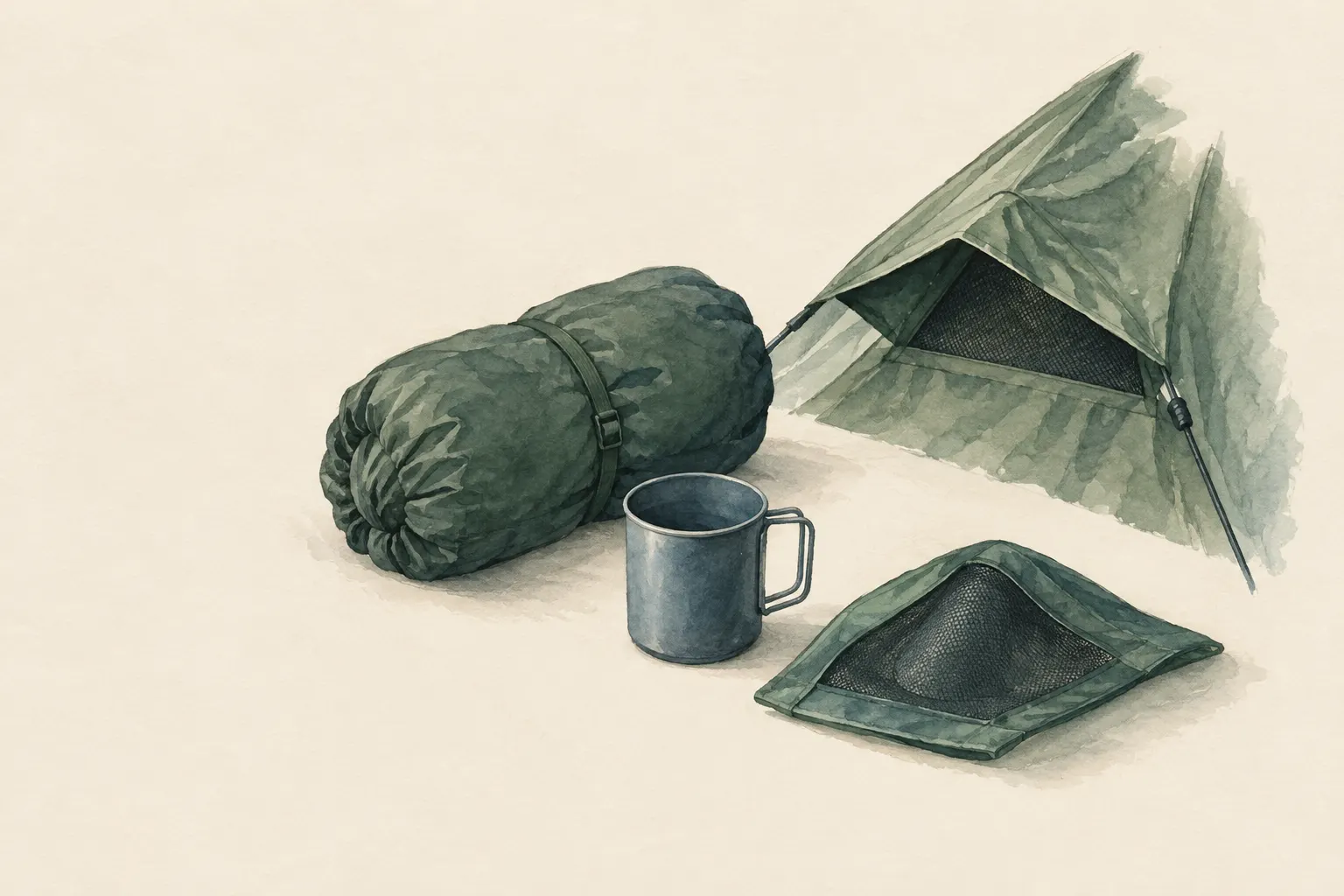
Explained simply
When you breathe on a window on a cold morning, it fogs up. That is water from your breath turning back into liquid on the cold glass. Exactly the same happens at night in a tent or under a tarp: you breathe and sweat a little, and this moisture settles on the inside of the cold fabric. It is called condensation.
In the morning the fabric is wet inside, and sometimes it drips onto the sleeping bag. That does not mean the tent is broken – it is simply physics. Ventilation helps: one opening low and one high let the moist air escape before it settles.
Very important: never seal a shelter airtight to keep warm, and never cook or heat inside it. A poisonous gas you cannot smell can build up.
How it works
Air can carry water as invisible vapour – warm air considerably more than cold air. When moist air cools, it eventually reaches a point at which it can no longer hold the water. This point is called the dew point. Then the vapour turns back into liquid water: drops on the tent wall, dew on the meadow, a fogged-up bathroom mirror.
In a shelter at night there are many sources of moisture: your breath, your skin, wet clothing, wet shoes, perhaps damp ground. The warm, moist air inside meets the outer skin, which is cooled by the cold night. That is where the water settles.
Ventilation uses a simple fact: warm air rises. If there is an opening at the top, the warm, moist air escapes there, and drier outside air flows in at the bottom. This creates a gentle airflow that carries the moisture out before it condenses on the wall.
What really matters
The site strongly influences condensation. In hollows, right by the water and in dense, still spots, moist cold air collects at night. A spot with a light breeze is usually drier, even if it feels a little cooler.
Open the tent's vents even when it is cold outside. With a tarp, leave a gap between edge and ground and keep the ends open. Wet clothing and gear stay outside or in the vestibule where possible, and there is no cooking inside.
Keep mouth and nose outside the sleeping bag. Breathing into the bag brings moisture straight into the insulation every night. Over several nights this moisture builds up and the bag keeps you noticeably less warm. In the morning, wipe off the condensation and dry sleeping bag and shelter in sun or wind when you get the chance.
Safety: what to watch out for
The most dangerous mistake when it comes to ventilation is closing all openings and then running a stove, grill, gas heater or open flame inside. This produces carbon monoxide, a gas you can neither see nor smell and that can be lethal. So never make a shelter airtight and never run combustion devices inside it.
Even without fire, a fully closed small enclosure can become unpleasantly stuffy. This applies especially to snow shelters and plastic covers. A clear opening for fresh air always belongs.
A damp sleeping bag is a real chilling risk on multi-day trips. So take moisture in your gear seriously and dry it whenever you can.
Typical situations
A clear, still night after a rainy day by a lake: the air is humid, the tent skin cools strongly through radiation, and no wind carries moisture away. On such nights condensation is almost certain. A spot a little further from the shore and open vents make a big difference.
A bivvy bag made of non-breathable material or an emergency blanket: here the moisture can hardly escape, and it gets wet inside. For one night that is usually acceptable, for longer periods it is not.
A lean-to with an open front: so much air flows through that hardly any condensation forms. That is one of the big advantages of open tarp pitches.
Good to know
Many people mistake condensation for a leak and get annoyed with their tent. A simple test: if the inside is evenly damp, even in places no rain could reach, it is almost always condensation. A leak tends to show at seams, eyelets or worn spots.
Condensation can rarely be prevented completely. The aim is to keep it low enough that sleeping bag and clothing stay dry enough through the night.
More draught can feel a little cooler. Even so, dry insulation with a bit of draught is usually warmer than damp insulation in still air.
Step by step
Mind the site
Avoid hollows, waterside spots and dense, still places where moist cold air collects overnight. A light breeze helps.
- 1
Mind the site
Avoid hollows, waterside spots and dense, still places where moist cold air collects overnight. A light breeze helps.
- 2
Open low and high
Open the tent's vents, or with a tarp leave a gap between edge and ground and keep the ends open.
- 3
Keep wet things outside
Avoid drying wet clothing and gear inside, and do not cook inside.
- 4
Do not breathe into the bag
Keep mouth and nose outside the sleeping bag so breath moisture does not get into the insulation.
- 5
Wipe and dry in the morning
Wipe off condensation in the morning and dry sleeping bag and shelter in sun or wind when possible.
Common mistakes
- Closing all openings to keep warmer
- Mistaking condensation for a leak
- Cooking inside
- Hanging wet clothes inside the tent
Quick view
Materials
Tarp
Sturdy sticks / poles
To prop vents open
Do not cut live wood where prohibited.
Suitable for
- Tents, tarps and bivvy bags
- Cold, clear or humid nights
- Multi-day trips where gear must stay dry
Not suitable for
Safety
- Over several nights, condensation gradually dampens sleeping-bag insulation and reduces its warmth.
How it works
Warm air can hold more water vapour than cold air. When moist inside air cools against the cold shelter wall, it drops below the dew point and the vapour condenses as water. One opening low and one high create airflow: warm, moist air rises and escapes at the top, while drier outside air flows in at the bottom.
Advantages
- Keeps insulation drier
- Improves air quality
Disadvantages
- More draught can feel colder
- Venting is limited in driving rain
Deep knowledge
Background
Condensation is not a sign of leaky material but of physics: even a fully waterproof tarp or tent gets wet inside when moist air meets a cold surface. It is especially common on clear, still nights when the outer skin cools strongly, and in high humidity near water.
Condensation can rarely be avoided entirely. The aim is to keep it low enough that sleeping bag and clothing stay dry enough through the night. Open tarp pitches such as the lean-to have an advantage here; closed, non-breathable covers such as emergency blankets or plastic bags are at a disadvantage.
Common mistakes
- Closing all openings to keep warmer
- Mistaking condensation for a leak
- Cooking inside
- Hanging wet clothes inside the tent
Limits and risks
- Condensation can usually only be reduced, not prevented
Material alternatives
Derived from material properties: a substitute must have all relevant properties. Observe the notes on the substitute.
- Tarp
- Plastic sheet / large bin bag (Tears easily; never pull over the head (suffocation risk).), Emergency blanket (Tears easily once punctured; short-term shelter only.), Document folder (waterproof) (Store securely – contains sensitive personal data.), Rain poncho (When used as a shelter, it no longer protects your body from rain.), Bivy bag (Never fully close off the face.), Tent (Do not cook or heat inside the tent (fire and carbon monoxide danger).), Heavy-duty bin bag (large) (Suffocation risk: never pull plastic bags over the head or face and keep them away from small children.), Group shelter bag (Airtight – ventilate regularly.)
Results come exclusively from structured entries. No improvised instructions are generated.
Sources
Headquarters, Department of the Army (USA) (2002): FM 3-05.70 Survival
Ventilating shelters and managing moisture