Emergency bivouac with blanket, bivvy bag or bin bag
An emergency blanket, bivvy bag or large bin bag can give short-term protection from wind and wet during an unplanned night or while waiting for help. A sheltered spot and insulation from the ground are essential. An emergency bivouac does not replace proper equipment.
- A few minutes; gathering ground insulation takes longer
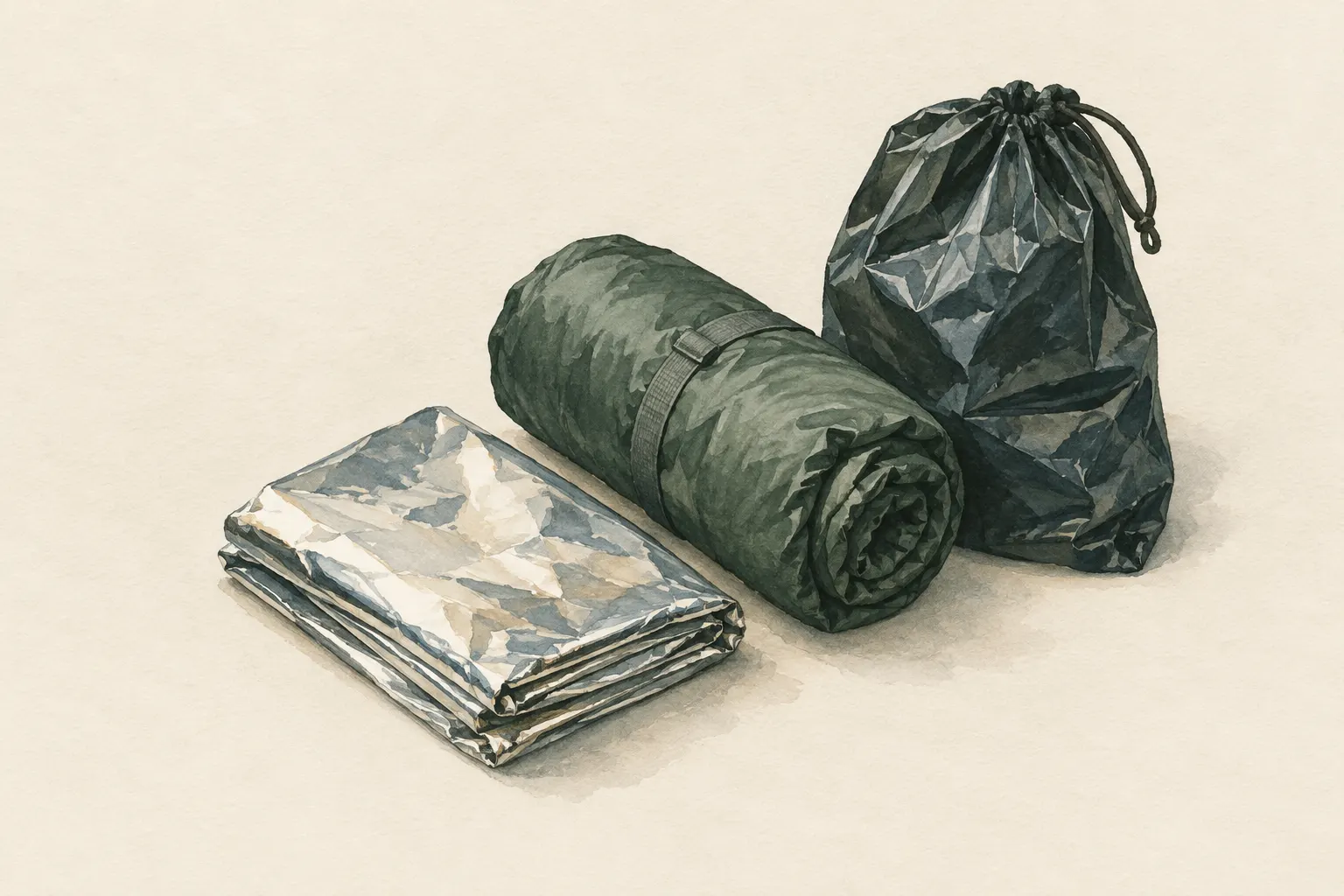
Explained simply
Sometimes a hike goes differently than planned: you get lost, someone is injured, or the weather turns. Then you may have to spend a night outside without a tent. For that there are small emergency solutions that fit in any backpack: a shiny emergency blanket, a bivvy bag or a large, strong bin bag.
These covers work like a raincoat for the whole body: they keep out wind and rain. But they hardly make you warm, and they do almost nothing against the cold ground. So you also sit on your backpack, a sleeping pad or a thick pile of dry leaves.
The most important rule: never pull a plastic bag or sheet over your head – you could suffocate. Your face always stays free. And if someone gets worse, call the emergency number early.
How it works
The thin cover keeps wind and rain off the body. In doing so, it slows two of the four ways the body loses heat: convection through wind and evaporation of moisture. A shiny metallised emergency blanket also reflects some of the radiant heat.
Against the third important path, conduction into the ground, the cover does practically nothing. It is far too thin to trap air. That is why every emergency bivouac needs an insulating layer underneath: a sleeping pad, backpack, rope or a thick layer of dry vegetation.
Because foil and plastic bags let no moisture through, condensation from breath and skin collects inside. For one night that is usually acceptable. Over several days, however, it soaks clothing and insulation – another reason why an emergency bivouac is only a short-term solution.
What really matters
Deciding early is the most important step. If it becomes clear you will not reach your destination safely, stop while it is still light, you still have energy and your clothing is still dry. Anyone who stops only when everything is wet and their strength is spent gains little from a sheet of foil. Alert help if possible.
Find a spot in the lee of rocks, terrain or dense vegetation, but not in hollows, gullies or under dead branches. Put on all dry spare clothing, a hat and gloves before climbing into the cover. Swap wet layers for dry ones where possible.
Sitting huddled on your backpack means only a small part of your body touches the ground. Climb into the bivvy bag or bin bag up to your shoulders; wrap an emergency blanket tightly around you so it does not flap in the wind and tear. In a group, huddle closely together.
Gear and materials
An emergency blanket is very light and small but tears quickly once it has a hole. Worn close to the body under a windproof jacket, it is protected from the wind and lasts longer. Emergency blankets conduct electricity – do not use them near power lines.
A bivvy bag is sturdier and encloses the whole body; the face stays free in the opening. A large, strong bin bag is the cheapest solution: it protects legs and torso from rain. Cut an opening for the face – never crawl in head first.
A headlamp and bright colours help you stay visible to rescuers. A mobile phone is an important tool; batteries lose power faster in the cold, so it helps to keep the phone warm close to your body.
Safety: what to watch out for
Never pull a plastic bag or sheet over your head. There is a risk of suffocation, especially when you are tired or fall asleep. The face always stays uncovered.
An emergency bivouac does not turn a dangerous situation into a safe one. Watch each other for intense shivering, confusion and drowsiness. If someone's condition worsens or warning signs of hypothermia appear, call the local emergency number (112 in the EU) early – better too early than too late.
In an emergency bivouac too: no stove and no open flame under the sheet. Plastic burns and melts, and carbon monoxide can collect under a cover.
When it makes sense – and when not
An emergency bivouac is the reserve for when something goes wrong: an unplanned night, waiting for rescue or a short break in wind and rain. It weighs so little that it should go into your backpack on every trip.
It is no substitute for planned nights out. For those, pack a tent or tarp, sleeping bag and sleeping pad. An emergency bivouac is also not enough for several nights or for severe cold without additional insulation.
Practise using it once at home or in the garden: how do you unfold the emergency blanket without it blowing away? How do you sit in a bin bag on your backpack? In a real emergency, with cold fingers and in the wind, you will then be much quicker.
Step by step
Decide early
If it becomes clear the destination cannot be reached safely, stop early while there is still daylight, energy and dry clothing. Alert help if possible.
- 1
Decide early
If it becomes clear the destination cannot be reached safely, stop early while there is still daylight, energy and dry clothing. Alert help if possible.
- 2
Find a sheltered spot
Use the lee of rocks, terrain or dense vegetation, but avoid hollows, gullies and hazards from above.
- 3
Insulate from the ground
Sit or lie on a pad, backpack, rope or a thick layer of dry vegetation – never directly on the ground. Sitting huddled on the backpack reduces the contact area.
- 4
Put on all clothing
Put on dry spare clothing, hat and gloves before closing the cover. Swap wet layers for dry ones where possible.
- 5
Put the cover on
Climb into the bivvy bag or bin bag up to the shoulders, or wrap the emergency blanket tightly around the body. The face always stays uncovered.
Never put your head inside a plastic bag.
- 6
Huddle and stay visible
In a group, huddle closely together. Use a headlamp and bright colours to stay visible to rescuers.
- 7
Monitor condition
Watch each other for shivering, confusion and drowsiness and call emergency services if things get worse.
Common mistakes
- Treating the emergency blanket as a full shelter
- Lying on cold ground without insulation
- Stopping too late, when clothing is already wet and energy spent
- Pulling the sheet over the head
- Letting the blanket flap loosely in the wind until it tears
Quick view
Materials
Emergency blanket
Tears easily once punctured; short-term shelter only.
Conductive – keep away from power lines.
Plastic sheet / large bin bag
Large, strong bin bag – never pull over the head
Tears easily; never pull over the head (suffocation risk).
Do not use for drinking water unless food-grade.
Sleeping pad
Backpack
As ground insulation
Dry leaves, grass or conifer boughs
As ground insulation
Collect only where allowed; no protected plants. Check for ticks and insects.
Headlamp / flashlight
To be seen and to find your way
Suitable for
- An unplanned night after getting lost, injured or caught by a change in weather
- Waiting for rescue
- Short breaks in wind and rain
Not suitable for
- Planned nights in place of a tent, tarp or sleeping bag
- Several nights
- Severe cold without additional insulation
Prerequisites
- An emergency blanket, bivvy bag or bin bag carried within reach
Safety
- Emergency blankets conduct electricity – keep them away from power lines.
How it works
The cover keeps out wind and rain and so reduces heat loss by convection and evaporation; a metallised emergency blanket also reflects some radiant heat. The thin cover does practically nothing against conduction into the ground – so an insulating layer underneath is essential. Because the materials do not breathe, condensation collects inside.
Advantages
- Very light and compact
- Ready in moments
- Significant gain in wind and wet protection
Disadvantages
- No ground insulation
- Heavy condensation
- Material tears easily
Deep knowledge
Background
An emergency bivouac is something you should always carry but never plan to use. An emergency blanket, bivvy bag or bin bag weighs little and can make an unplanned night much more bearable. It does not turn a dangerous situation into a safe one, though: it keeps out wind and wet but barely insulates.
The biggest mistakes are missing ground insulation and acting too late. Anyone who stops only when clothing is soaked and energy is spent gains little from a sheet of foil. The moisture that collects inside non-breathable covers is usually acceptable for one night but makes them unsuitable for longer periods.
Planned nights call for a tarp or tent, sleeping bag and pad. The emergency bivouac is the reserve for when something goes wrong.
Variants
- Bivvy bag
- A bivvy bag is sturdier than an emergency blanket and encloses the body completely; the face stays free in the opening.
- Emergency blanket
- Light and small but tears quickly once punctured. Worn snugly under a windproof jacket, it is protected from the wind.
- Large bin bag
- A large, strong bag over legs and torso protects against rain. Cut an opening for the face; never pull it over the head.
Common mistakes
- Treating the emergency blanket as a full shelter
- Lying on cold ground without insulation
- Stopping too late, when clothing is already wet and energy spent
- Pulling the sheet over the head
- Letting the blanket flap loosely in the wind until it tears
Limits and risks
- Intended for short periods only
- No substitute for sleeping bag, pad and tent or tarp
- No protection from ground cold without an extra insulating layer
Material alternatives
Derived from material properties: a substitute must have all relevant properties. Observe the notes on the substitute.
- Plastic sheet / large bin bag
- Tarp, Emergency blanket (Tears easily once punctured; short-term shelter only.), Document folder (waterproof) (Store securely – contains sensitive personal data.), Rain poncho (When used as a shelter, it no longer protects your body from rain.), Bivy bag (Never fully close off the face.), Tent (Do not cook or heat inside the tent (fire and carbon monoxide danger).), Heavy-duty bin bag (large) (Suffocation risk: never pull plastic bags over the head or face and keep them away from small children.), Group shelter bag (Airtight – ventilate regularly.)
- Sleeping pad
- Dry leaves, grass or conifer boughs (Collect only where allowed; no protected plants. Check for ticks and insects.), Backpack, Dry spare clothing (Carry it in waterproof packaging – wet clothing barely insulates.), Wool blanket / duvet (Keep away from candles, stoves and heaters.), Insulated cool box (Keeps cold only for a limited time; without ice packs or ice it is not a fridge.), Sleeping bag (Do not store compressed long-term; do not pack away damp.), Newspaper and cardboard (Flammable – keep away from candles, stoves, heaters and embers.), Insulated cooking box (hay box, thermal cooker) (Never put open flame or embers inside – only the hot, closed pot.)
- Backpack
- Sleeping pad, Dry leaves, grass or conifer boughs (Collect only where allowed; no protected plants. Check for ticks and insects.), Dry spare clothing (Carry it in waterproof packaging – wet clothing barely insulates.), Wool blanket / duvet (Keep away from candles, stoves and heaters.), Insulated cool box (Keeps cold only for a limited time; without ice packs or ice it is not a fridge.), Sleeping bag (Do not store compressed long-term; do not pack away damp.), Newspaper and cardboard (Flammable – keep away from candles, stoves, heaters and embers.), Insulated cooking box (hay box, thermal cooker) (Never put open flame or embers inside – only the hot, closed pot.)
- Dry leaves, grass or conifer boughs
- Sleeping pad, Backpack, Dry spare clothing (Carry it in waterproof packaging – wet clothing barely insulates.), Wool blanket / duvet (Keep away from candles, stoves and heaters.), Insulated cool box (Keeps cold only for a limited time; without ice packs or ice it is not a fridge.), Sleeping bag (Do not store compressed long-term; do not pack away damp.), Newspaper and cardboard (Flammable – keep away from candles, stoves, heaters and embers.), Insulated cooking box (hay box, thermal cooker) (Never put open flame or embers inside – only the hot, closed pot.)
- Headlamp / flashlight
- Mobile phone (The battery drains quickly in cold and with continuous screen and GPS use.), Battery lantern / LED light
Results come exclusively from structured entries. No improvised instructions are generated.
Sources
Wilderness & Environmental Medicine (Wilderness Medical Society) (2019): Wilderness Medical Society Clinical Practice Guidelines for the Out-of-Hospital Evaluation and Treatment of Accidental Hypothermia: 2019 Update
Protection from wind, wet and ground cold as measures against hypothermia in emergencies
Headquarters, Department of the Army (USA) (2002): FM 3-05.70 Survival
Improvised emergency shelters and use of plastic sheeting