Insulating from the ground
The ground constantly draws heat from a body lying on it by conduction. An insulating layer of sleeping pad, dry vegetation or gear interrupts this heat flow and is as important as a roof on any night out.
- Immediate with a pad; 20–60 minutes of gathering with natural material
Explained simply
Have you ever sat on cold stone steps and soon got a cold bottom? That is exactly what happens when you lie on the ground: the ground sucks the heat out of your body, all night long.
What helps is a layer with lots of trapped air in it – for example a sleeping pad, a backpack or a thick pile of dry leaves. Still air lets heat through only very slowly, just as the air between two panes of glass keeps the cold outside.
Important: the layer must be thick and dry. Under your weight, anything soft is squashed flat, and wet material hardly keeps you warm any more. That is why insulation underneath you is just as important as a roof over your head on every night outdoors.
How it works
Insulation almost always works on the same principle: it holds still air in many small spaces. Still air conducts heat poorly. Whether foam, down, wool or dry leaves – they all work mainly through the air they trap, not through the material itself.
Underneath the body there is a particular problem: your weight squashes soft material and presses the air out. A sleeping bag that is wonderfully lofty on top is just a thin layer beneath you. That is why ground insulation has to be either compression-resistant – like a foam pad or an inflatable pad with insulating fill – or very, very thick.
Water destroys this effect. It displaces the air from the spaces and conducts heat much better than air. Damp leaves or a wet jumper under you are therefore almost as bad as nothing at all.
What really matters
The torso comes first. Hips, back and shoulders press hardest into the ground and lose the most heat there. If material is short, it goes under the upper body and hips first, then under the legs. An empty backpack under the legs or a coiled rope add more.
With natural material, almost everyone underestimates the amount needed. Gather far more dry leaves, needle litter or grass than you think necessary – the layer settles heavily beneath you. Lie on it as a test: wherever you feel the ground or cold comes through, especially at hips and shoulders, add more.
On wet ground, a sheet or tarp under the insulating layer separates the material from the damp ground. That keeps the insulation dry. On very wet ground, a base of branches can lift the insulating layer further.
Gear and materials
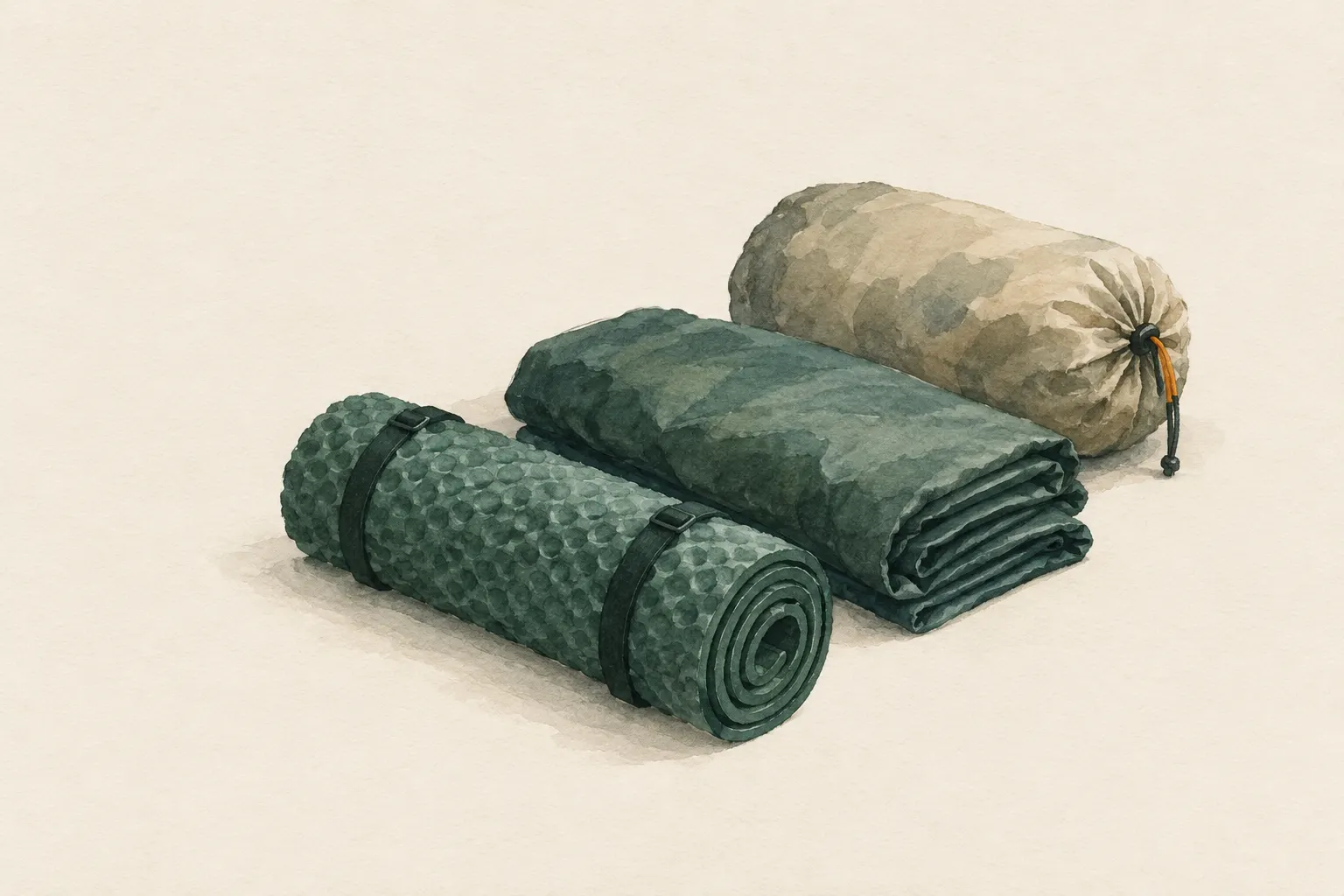
Foam pads are robust, cannot burst and still insulate when damaged. Inflatable pads are more comfortable and pack smaller but can lose their effect through a puncture. In the cold it makes sense to put a foam pad under an inflatable one: this increases the insulation and protects you if the inflatable loses air during the night.
Manufacturers often state a pad's insulation as an R-value. The higher the value, the better the pad insulates, and the values of stacked pads roughly add up. Which value is enough for which conditions cannot be stated in general, though – it depends on you, your clothing and the ground. Rely on manufacturer information and your own experience.
Without a pad, a backpack, rope, clothing you are not wearing, cardboard or a thick layer of dry plant litter will help. When gathering, respect protected-area rules and take only loose, dry material such as leaves or needle litter.
Safety: what to watch out for
On snow and frozen ground, a single thin pad is often not enough. Combine several layers and never sit or lie directly on snow – not even “just for a moment”. Snow melts under the body and makes clothing wet as well.
Cold from below is often underestimated because it is noticed late. Anyone who is cold at night despite a good sleeping bag should improve the ground insulation first rather than putting on even more clothing.
Ground insulation is only part of the protection. It does not replace protection from wind and wet. At warning signs of hypothermia – intense shivering, confusion, drowsiness – you need shelter from wind and wet and, if it gets worse, help via the local emergency number (112 in the EU).
How to practise it
Do a simple comparison: on a cool evening, lie directly on the ground for a few minutes, then on your pad, then on two pads stacked. You feel the difference straight away, especially at the hips.
In autumn, try out how many dry leaves you need for a sleeping area that really separates you from the ground. Most people are surprised how big the pile has to be. Clear the material away again afterwards where that is required.
On trips it pays to take breaks sitting on your backpack or a small foam sit pad. That way ground insulation becomes a habit.
Step by step
Pad as the base
If available, always use a sleeping pad. In cold conditions put a foam pad under an inflatable pad – this also protects you if the inflatable fails.
- 1
Pad as the base
If available, always use a sleeping pad. In cold conditions put a foam pad under an inflatable pad – this also protects you if the inflatable fails.
- 2
Add gear
Put an empty backpack, rope or clothing you are not wearing under the torso and legs. The torso comes first.
- 3
Gather natural material
Without a pad, gather dry leaves, needle litter or grass – far more than seems necessary at first, because the layer compresses heavily under the body.
- 4
Block moisture
On wet ground, put a sheet or tarp under the insulating layer to keep it dry.
- 5
Test and improve
Lie down to test: where cold comes through, especially at hips and shoulders, add more material.
Common mistakes
- Relying on the sleeping bag as ground insulation
- Too thin a layer of natural material
- Using damp leaves
- Insulating the upper body but not the hips
Quick view
Materials
Sleeping pad
Dry leaves, grass or conifer boughs
Effective only when dry and thickly layered
Collect only where allowed; no protected plants. Check for ticks and insects.
Backpack
Place under torso or legs
Suitable for
- Any night on the ground
- Long breaks on cold ground
- Emergency bivouac
Not suitable for
Safety
- When gathering plant material, respect protected-area rules and use only loose, dry material such as leaves or needle litter.
- On snow and frozen ground a thin pad is often not enough. Combine several layers and never sit or lie directly on snow.
How it works
Insulation works by trapping still air in many small spaces; still air conducts heat poorly. Under the body, any soft material is compressed and loses that air – which is why ground insulation must be compression-resistant or very thick. Wet displaces the air and makes insulation largely ineffective.
Advantages
- Large gain in warmth for little effort
- Possible without equipment using natural material
Disadvantages
- Natural material needs a lot of time and dry conditions
- Good pads are bulky or expensive
Deep knowledge
Background
Sleeping bags and jackets insulate through their loft. Under body weight, however, that fill is flattened and barely insulates. This is why people often lose more heat downwards than upwards at night, even in a good sleeping bag.
Manufacturers often state a pad's insulation as an R-value; higher values mean more insulation, and the values of stacked pads roughly add up. Which values suffice for which conditions depends on the person, clothing and ground and cannot be stated universally – rely on manufacturer information and your own experience.
Variants
- Raised bed
- A base of branches or wood separates the insulating layer from wet or cold ground. Useful mainly on very wet ground.
Common mistakes
- Relying on the sleeping bag as ground insulation
- Too thin a layer of natural material
- Using damp leaves
- Insulating the upper body but not the hips
Limits and risks
- Natural material is barely effective when wet
- Does not replace wind and wet protection
Material alternatives
Derived from material properties: a substitute must have all relevant properties. Observe the notes on the substitute.
- Sleeping pad
- Dry leaves, grass or conifer boughs (Collect only where allowed; no protected plants. Check for ticks and insects.), Backpack, Dry spare clothing (Carry it in waterproof packaging – wet clothing barely insulates.), Wool blanket / duvet (Keep away from candles, stoves and heaters.), Insulated cool box (Keeps cold only for a limited time; without ice packs or ice it is not a fridge.), Sleeping bag (Do not store compressed long-term; do not pack away damp.), Newspaper and cardboard (Flammable – keep away from candles, stoves, heaters and embers.), Insulated cooking box (hay box, thermal cooker) (Never put open flame or embers inside – only the hot, closed pot.)
- Dry leaves, grass or conifer boughs
- Sleeping pad, Backpack, Dry spare clothing (Carry it in waterproof packaging – wet clothing barely insulates.), Wool blanket / duvet (Keep away from candles, stoves and heaters.), Insulated cool box (Keeps cold only for a limited time; without ice packs or ice it is not a fridge.), Sleeping bag (Do not store compressed long-term; do not pack away damp.), Newspaper and cardboard (Flammable – keep away from candles, stoves, heaters and embers.), Insulated cooking box (hay box, thermal cooker) (Never put open flame or embers inside – only the hot, closed pot.)
- Backpack
- Sleeping pad, Dry leaves, grass or conifer boughs (Collect only where allowed; no protected plants. Check for ticks and insects.), Dry spare clothing (Carry it in waterproof packaging – wet clothing barely insulates.), Wool blanket / duvet (Keep away from candles, stoves and heaters.), Insulated cool box (Keeps cold only for a limited time; without ice packs or ice it is not a fridge.), Sleeping bag (Do not store compressed long-term; do not pack away damp.), Newspaper and cardboard (Flammable – keep away from candles, stoves, heaters and embers.), Insulated cooking box (hay box, thermal cooker) (Never put open flame or embers inside – only the hot, closed pot.)
Results come exclusively from structured entries. No improvised instructions are generated.
Sources
Wilderness & Environmental Medicine (Wilderness Medical Society) (2019): Wilderness Medical Society Clinical Practice Guidelines for the Out-of-Hospital Evaluation and Treatment of Accidental Hypothermia: 2019 Update
The role of insulation from the ground in preventing conductive heat loss
Headquarters, Department of the Army (USA) (2002): FM 3-05.70 Survival
Improvised ground insulation with natural material