Shelter and protection
Keep out wind, wet, cold and heat
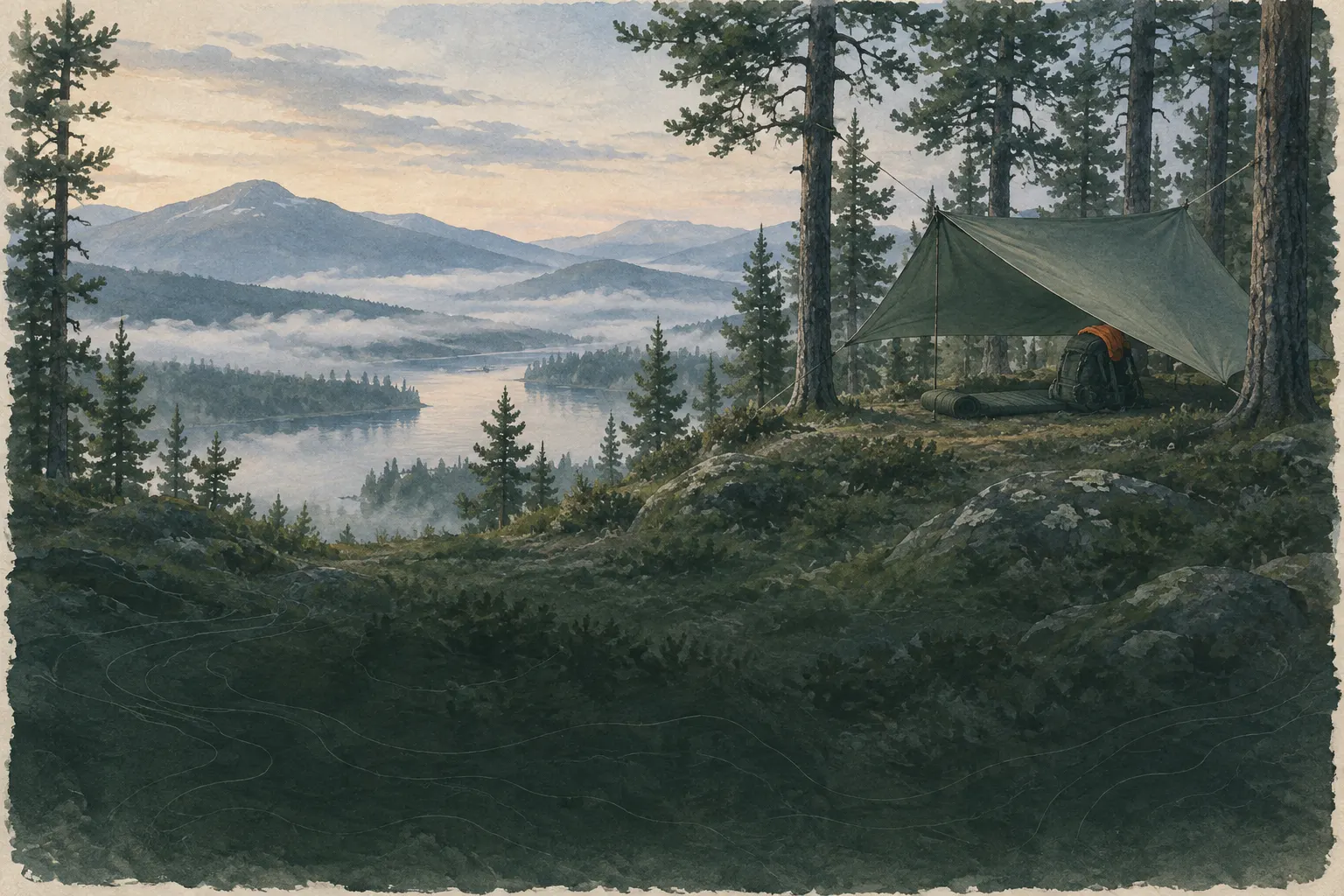
A shelter protects against heat loss, wet and sun. Site selection and ground insulation are often more important than the structure itself.
Method explorer
Which shelter fits when a night outdoors with wind and rain lies ahead?
Method explorer
Snow trench, quinzhee, snow cave or bivouac with bivy bag/tarp – what fits when a night in snow is unavoidable?
Method explorer
Which tarp pitch do I choose for the weather that is coming?
Method explorer
What do I put under me so that the ground does not draw away my warmth?
Method explorer
I have to wait unexpectedly while out – what can I do with what I have with me?
Fundamentals and site
How the body loses heat
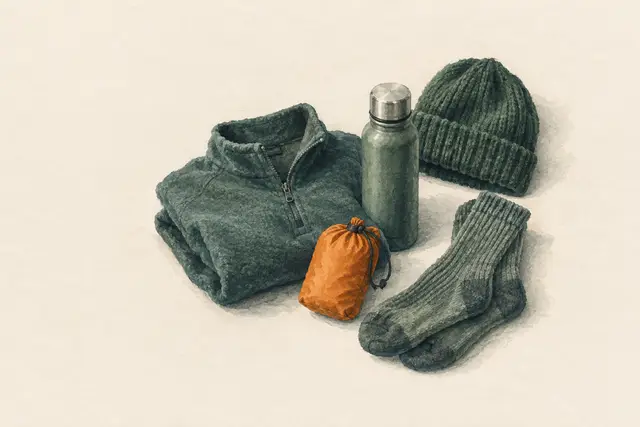
The body loses heat in four ways: conduction, convection, radiation and evaporation. A shelter is only as good as its ability to interrupt these paths – a roof and walls are not enough if the ground draws heat away or clothing is wet.
Choosing a shelter site
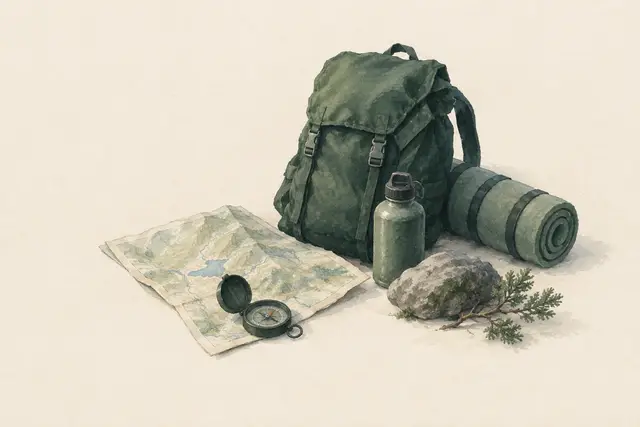
The site often decides more about a safe night than the structure itself. A good spot is slightly raised, level, sheltered from wind and free of hazards from above, below and the sides.
Tree wells in deep snow: hazard, not shelter
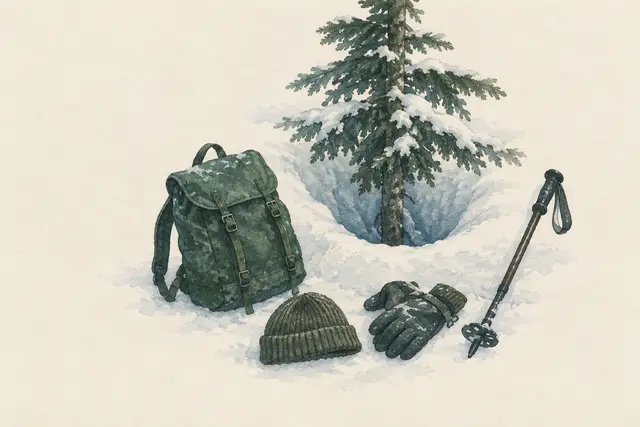
Around conifers, deep snow often forms a funnel of loose snow because the branches shield the trunk from snowfall. Anyone who falls in head first may be unable to free themselves and can suffocate. Older manuals describe tree wells as shelter – in loose deep snow the danger outweighs the benefit.
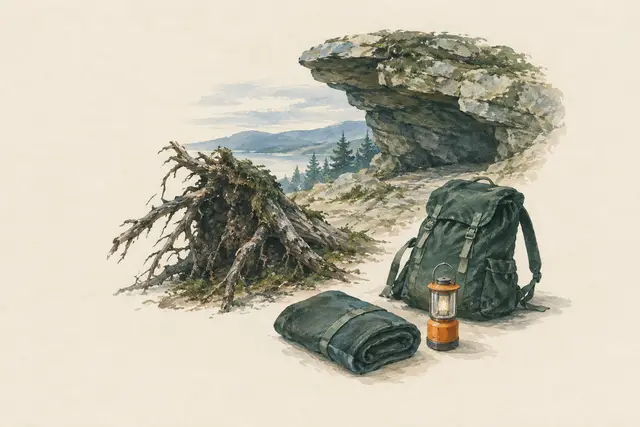
Natural shelters: rock overhang, root plate, terrain edge
Rock overhangs, fallen trees or terrain edges can quickly offer protection from rain and wind without much building. But every natural shelter must be checked for rockfall, flooding, unstable root plates, animals and lightning danger. Never enter caves or mine tunnels beyond the front overhang.
Planned topics (4)
- Shelter fundamentals
- Site selection
- Safe sleeping spots
- Hazards of unstable structures
Tarp and tent
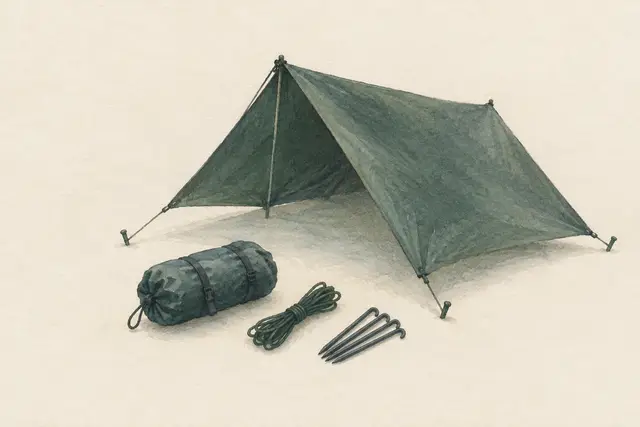
Tarp A-frame
A tarp is draped symmetrically over a tensioned ridgeline and staked out at all four corners. The A-frame protects from rain on both sides and, with the narrow end turned into the wind, gives reasonable wind protection.
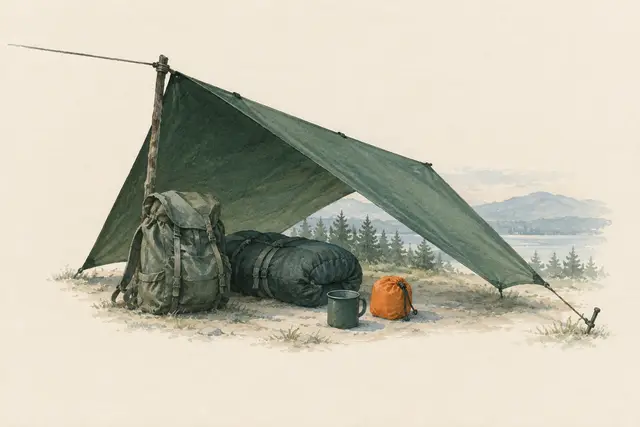
Tarp lean-to
One edge of the tarp is raised on a ridgeline and the opposite edge staked to the ground on the windward side. The lean-to offers plenty of room and an open view but protects only as long as the wind keeps coming from the expected direction.
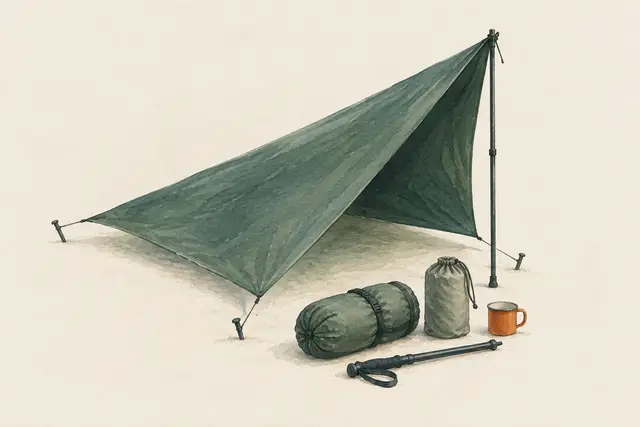
Tarp diamond / plow point (one corner raised)
A square tarp is raised at one corner and staked out at the other three. The result is a wedge-shaped one-person shelter that needs only one pole or tree and shields well when its low point faces the wind. The names "diamond" and "plow point" are not used consistently in the literature.
Tarp C-fly (lean-to with built-in groundsheet)
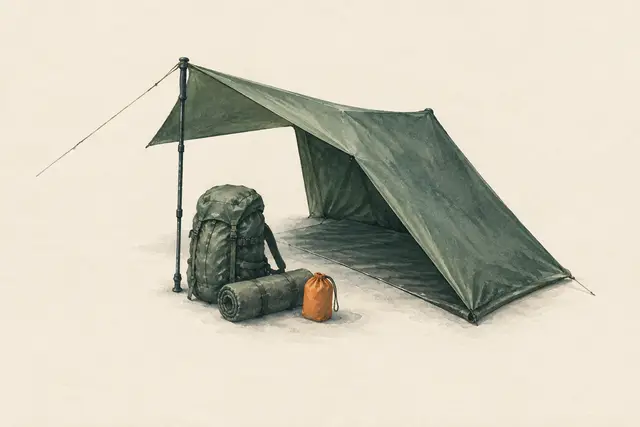
In a C-fly the tarp hangs over a ridgeline: a short part forms a front awning, the long part runs down to the ground at the back and is folded forward underneath as a groundsheet. In profile it resembles a "C". The pitch shields your back from wind, keeps the floor dry and stays open at the front.
Tarp tent with a closed end
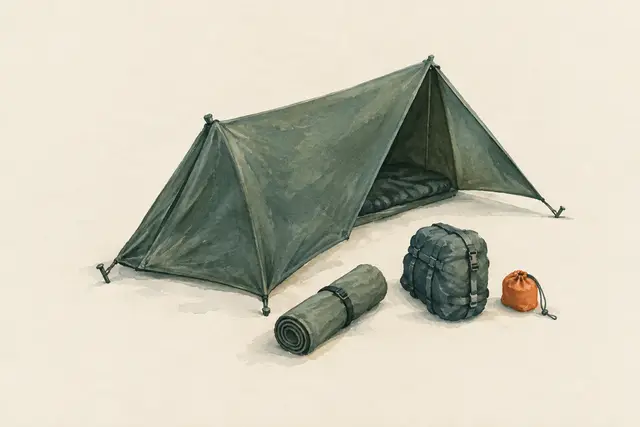
A variation of the A-frame in which one end of the tarp is folded in and staked so that the weather side is closed. The result resembles a small tent with an open entrance on the lee side. The pitch is shorter than a normal A-frame and takes some practice to fold.
Tarp Adirondack (lean-to with side walls)
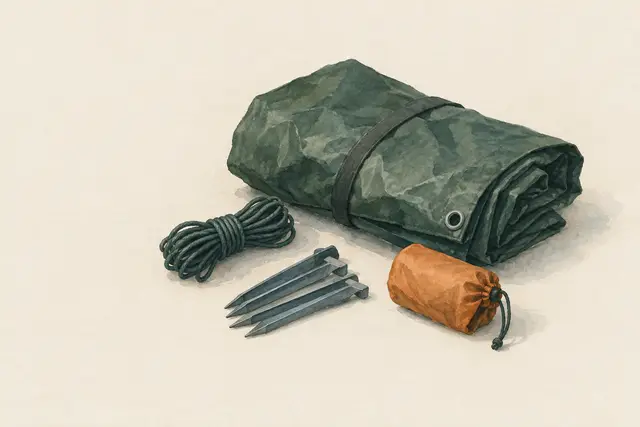
The Adirondack is a lean-to whose sides are pulled down to create a shelter closed on three sides with an open front. It is roomy, well ventilated and protects better against side wind than a simple lean-to.
Hammock with tarp
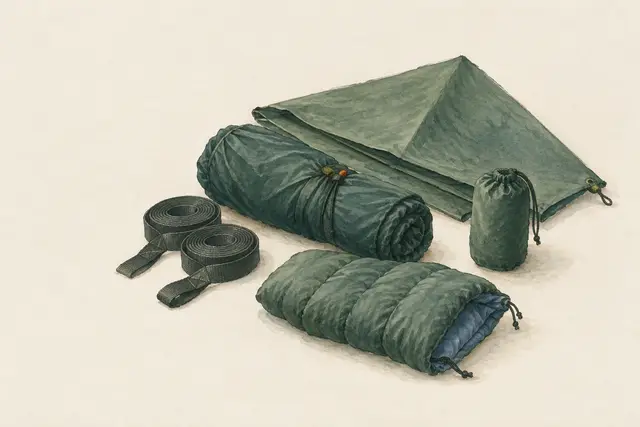
A hammock between two healthy trees with a tarp above keeps you off wet, uneven or crawling ground. Because cold air passes underneath, it almost always needs insulation under the body. Wide tree straps protect the bark; in some areas hammocks on trees are not permitted.
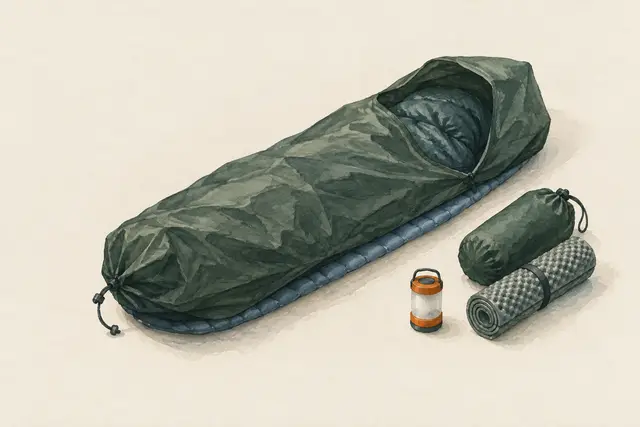
Planned bivouac in a bivy bag
A bivy bag is a waterproof or water-resistant cover for a sleeping bag and pad. For a planned night it is the lightest shelter, but it only protects the body, not gear or room to move. Breathable models reduce condensation but do not eliminate it.
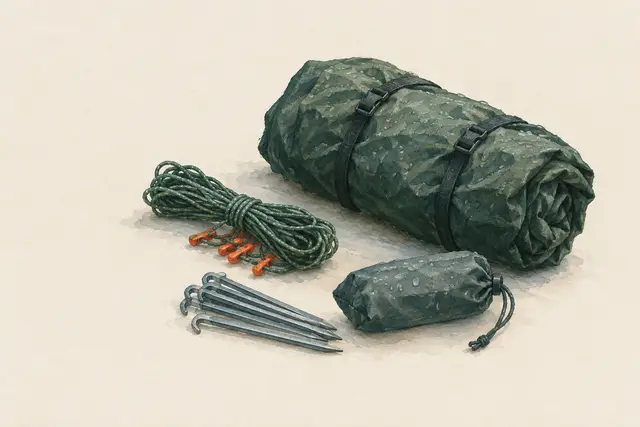
Pitching a tent in wind and rain
In storm and rain, the site, the order of steps and the guying decide whether a tent holds. Look for shelter from the wind, put the low end into the wind, never let go of the tent while pitching and use all guylines. In thunderstorms or storms in exposed places, retreating is often wiser than any pitch.
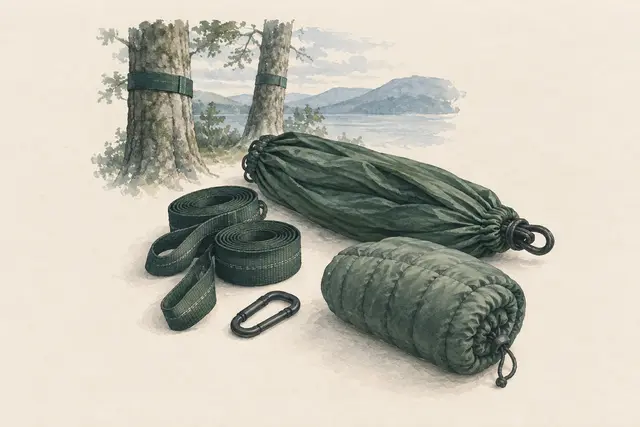
Hanging a hammock: straps, angle, lie
Whether a hammock is comfortable and safe depends mainly on the hang: healthy trees, wide tree straps, a sag that is not too tight, a low height above the ground and a diagonal lie. Insulation under the body is almost always needed because the hammock is cooled from below.
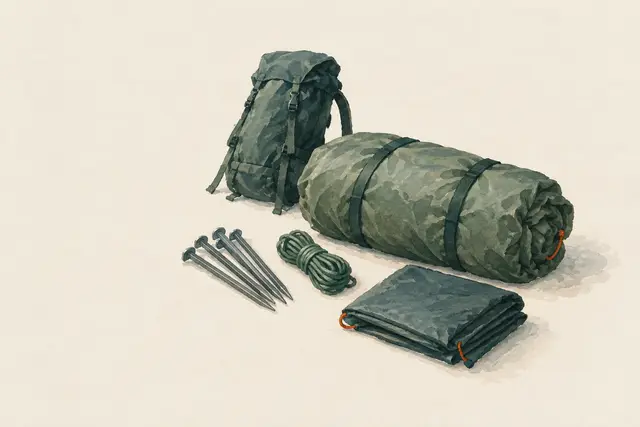
Pitching a tent: the basic routine in calm weather
A tent stands only as well as the site, stakes and guying allow. Practising the pitch at home, checking the site before unpacking, setting the stakes correctly and tensioning all lines evenly means less stress in the evening and a drier, quieter tent at night.
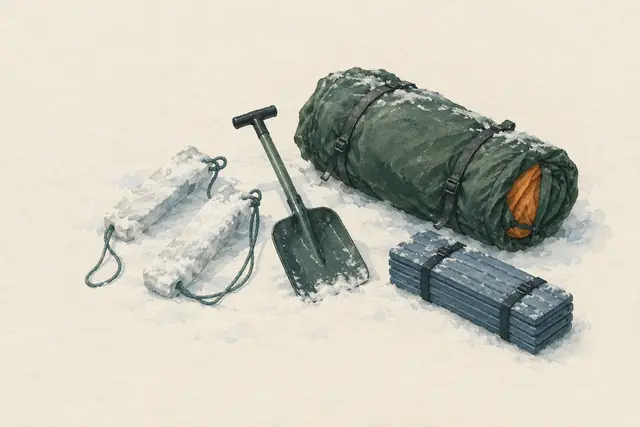
Pitching a tent on snow
Normal stakes hardly hold in snow. You stamp out a level platform, anchor lines with buried objects (deadman anchors) or wide snow stakes and keep vents and entrance clear of snow overnight. Avalanche terrain is excluded.
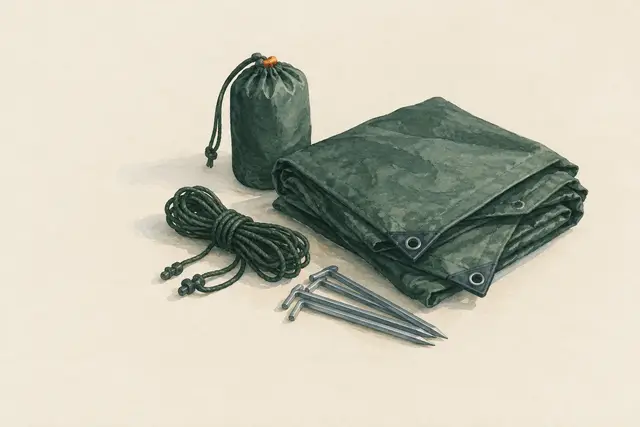
Tarp as an open roof (flat fly / group fly)
A tarp is guyed out raised at all corners to form an open roof over a cooking area, seating or gear. It protects several people from rain and sun but gives hardly any wind protection. To prevent water pooling, the roof must slope or be raised in the middle.
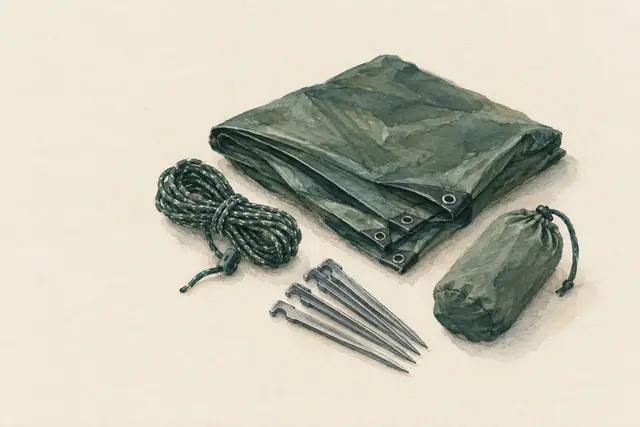
Adjusting a tarp when the weather turns
Unlike a tent, a tarp can be reshaped at night: lower the ridgeline, pull the weather side to the ground, add guylines and re-tension. Choosing a basic pitch that is easy to adapt and acting early keeps you dry when wind and rain arrive. In storms or thunderstorms in exposed places, retreating matters more than any adjustment.
Planned topics (5)
- Tarp shelters
- A-frame
- Lean-to
- Pitching a tent
- Hammocks
Emergency shelters
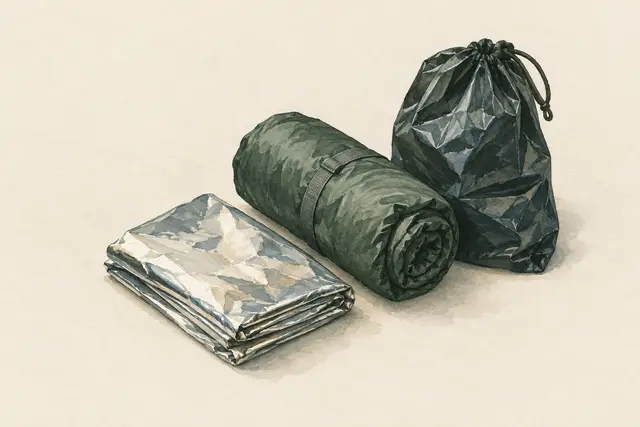
Emergency bivouac with blanket, bivvy bag or bin bag
An emergency blanket, bivvy bag or large bin bag can give short-term protection from wind and wet during an unplanned night or while waiting for help. A sheltered spot and insulation from the ground are essential. An emergency bivouac does not replace proper equipment.
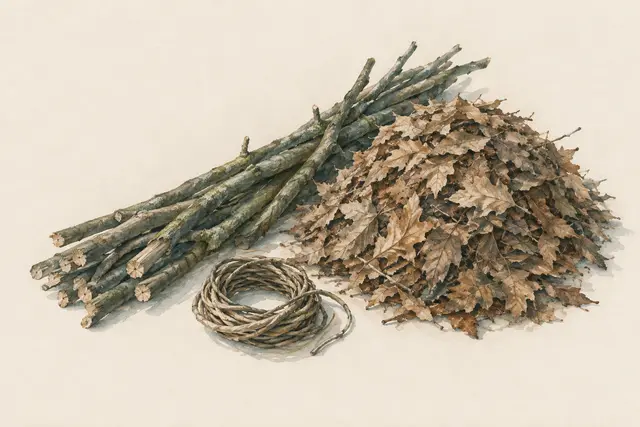
Debris hut from natural materials
A debris hut is a narrow, wedge-shaped shelter made from a ridgepole, branches leaned against it and a very thick layer of dry leaves. It insulates if it is covered thickly enough, but it costs hours of work and a lot of material – and is only permissible where collecting is allowed.
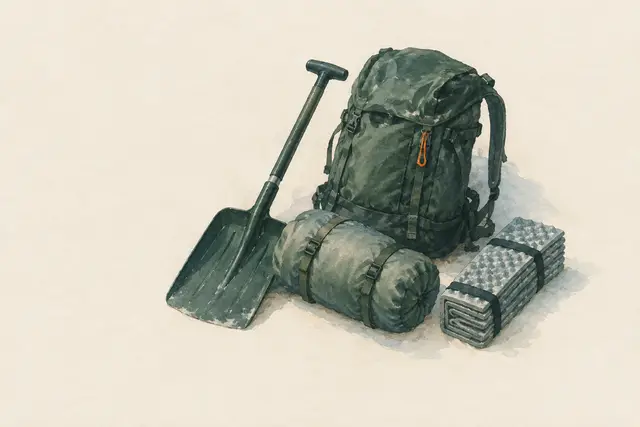
Snow as shelter: basics and limits
Snow insulates well, and a snow cave or trench can protect against wind and cold. But building one requires practice, a shovel, plenty of time and energy – and carries risks such as collapse, getting soaked, suffocation and carbon monoxide. This entry covers only basic principles; avalanche terrain is expressly excluded.

When the heating fails: staying warm at home
During a power cut, gas shortage or heating breakdown, a home slowly cools down in winter. The safest approach is to keep one room warm, dress warmly and use outside help. The greatest danger is improvised heating: grills, gas stoves and generators indoors can produce lethal carbon monoxide.
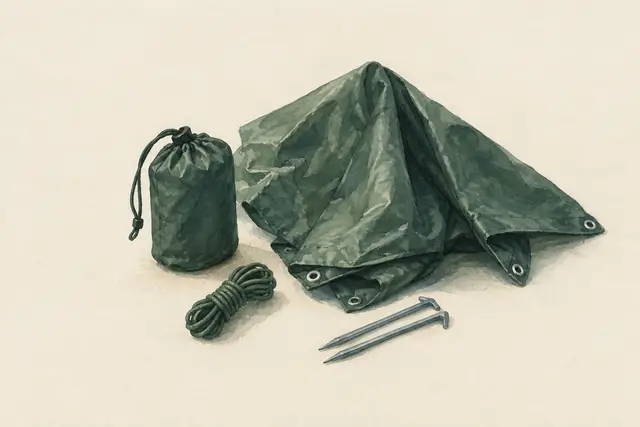
Poncho as an emergency shelter
A rain poncho with grommets can be pitched as a small lean-to or mini A-frame. It is an emergency solution for one person that keeps off rain – but the poncho is then no longer available as rainwear, and the area is small.
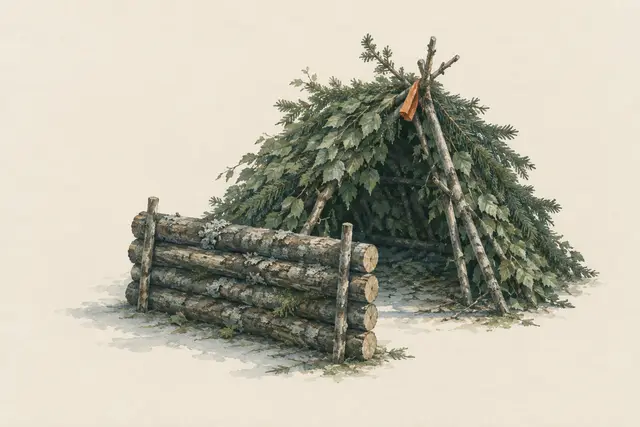
Natural lean-to with fire reflector
A lean-to of poles with a dense covering of branches or leaves, with a small fire burning in front; a wall of logs or rocks behind the fire throws radiant heat back. It is labour-intensive, needs constant fire supervision and is only permissible where fires and collecting material are allowed.
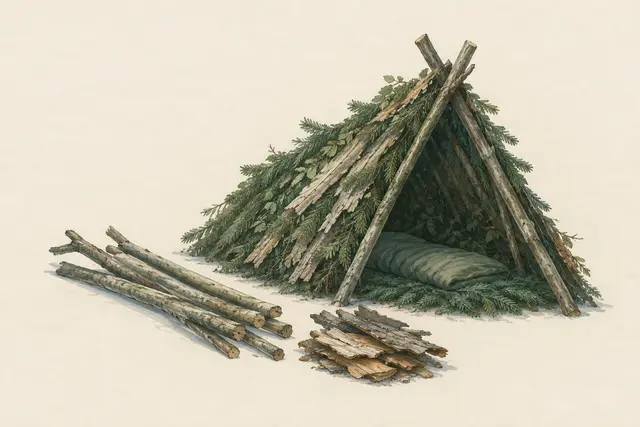
A-frame shelter from natural materials
A ridged roof of a ridgepole, bipods or forked sticks and poles leaned against it, covered with branches, bark from deadwood or leaves. Larger than the narrow debris hut and meant for one or two people, it mainly protects from rain and wind – it only keeps you warm with good ground insulation and a sleeping bag.
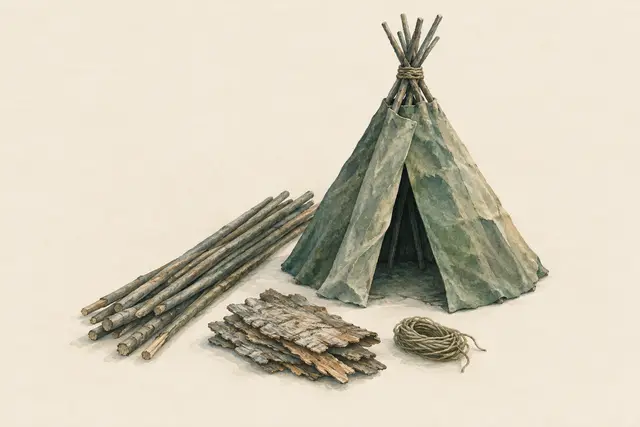
Cone frame (tipi / wickiup style)
Several poles are leaned against each other in a cone and tied at the top; the frame is covered with a sheet, bark from deadwood, branches or leaves. The form is stable, needs no tree as an anchor and offers sitting height – but takes a lot of material and time.
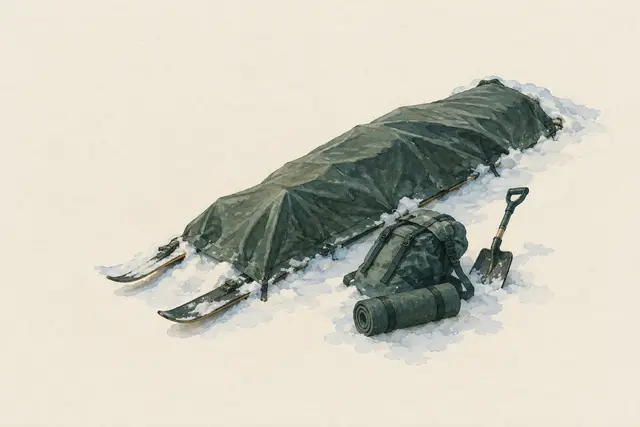
Covered snow trench
A body-length, narrow trench in the snow, covered with a tarp, sheet, skis with a sheet or snow blocks. Of the snow shelters it is usually the quickest and least prone to collapse, and so often preferable to a cave in emergencies – but only in flat terrain without avalanche danger.
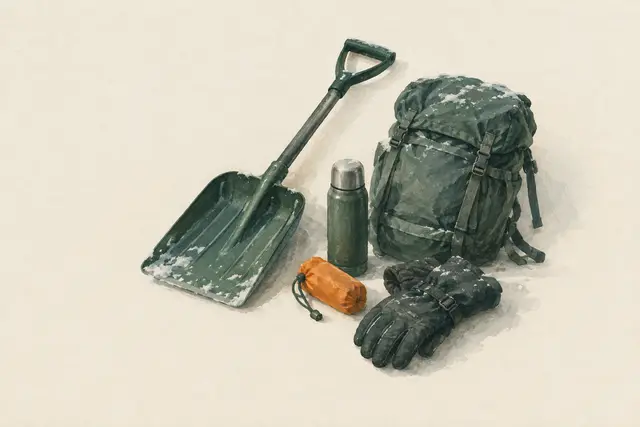
Quinzhee (hollowed snow mound)
A large pile of shovelled snow is left to settle and then hollowed out. It works even with little snow depth but costs a lot of time and energy and carries collapse, suffocation and carbon monoxide risks. Only with two or more people, with practice and never in avalanche terrain.
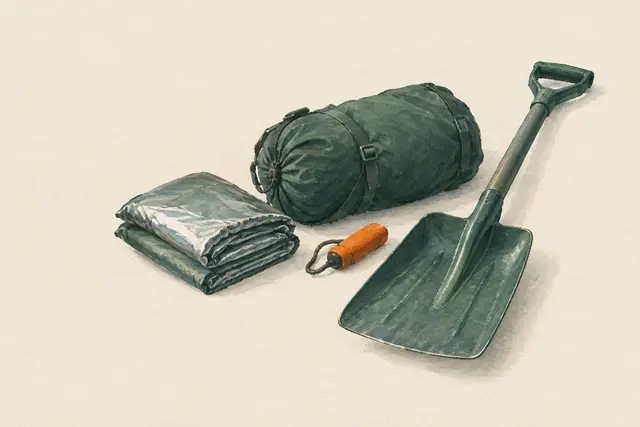
Snow cave in a drift
A cave dug into a deep, consolidated snowdrift insulates best of all snow shelters. But it needs very deep snow, a shovel, practice and a lot of time – and drifts often lie exactly where there is avalanche and cornice danger. In emergencies a snow trench is usually the safer choice.
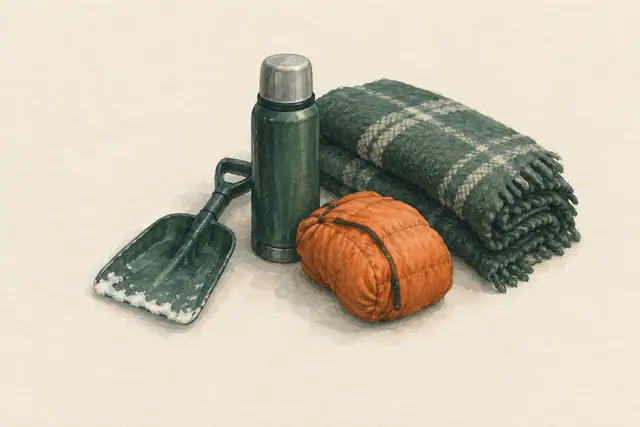
The car as an emergency shelter in winter
If you get stuck in snow, you are usually better protected in the vehicle than outside on foot, and you are easier to find there. It is vital to keep the exhaust pipe clear of snow and to run the engine only intermittently, because carbon monoxide can otherwise enter the cabin.
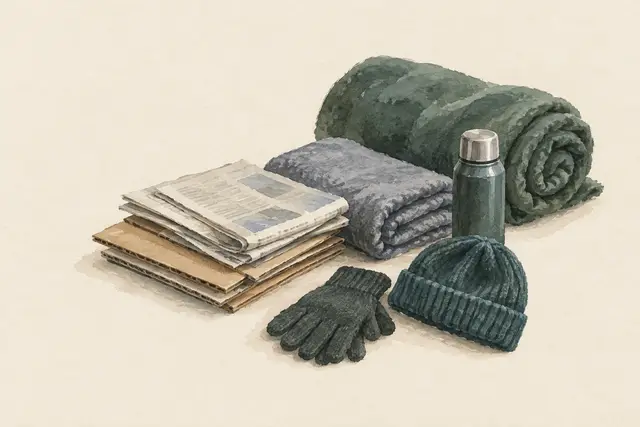
Improvised cold protection in the city
Anyone in a city left without a warm place to stay by an emergency – for example after building damage, during a power outage or while travelling – should first look for official emergency shelters and warming centres. To bridge the gap, cardboard and newspaper help as ground insulation, buildings break the wind and dry layers keep you warm. Damaged buildings and unsafe places are off-limits.
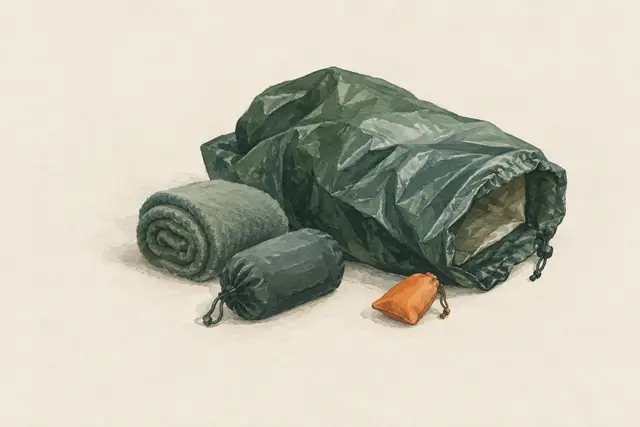
Group shelter bag and huddling
A group or emergency shelter ("bothy bag") is a light cover without poles that several people pull over their heads and bodies and then sit on. In minutes it creates a windproof space in which body heat warms the air. It is for waiting and caring for someone, not a tent for the night.
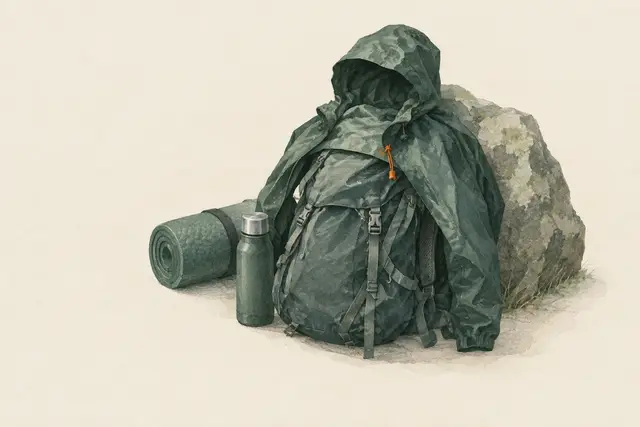
Sitting bivouac with backpack and rain gear
If you must wait unexpectedly while out – in fog, after dark or until help arrives – a sitting bivouac can protect quickly: sit on the backpack or pad, back against a rock or tree out of the wind, all clothing on, hood up, legs in the empty backpack. This keeps the contact area with the ground small.
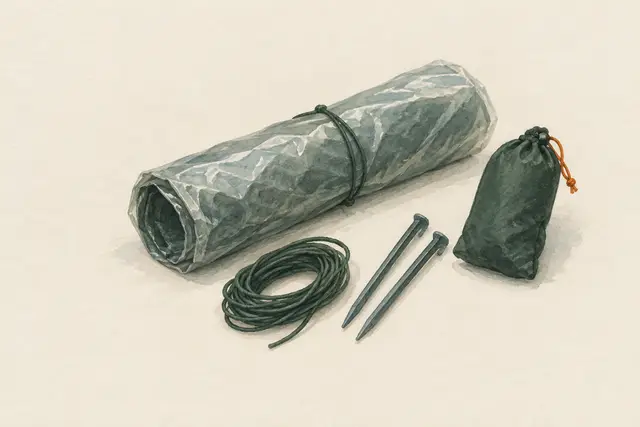
Plastic tube tent
A tube tent is a plastic tube with a line threaded through it and tied between two trees. Body weight holds the floor down, creating a simple triangular tent with open ends. It is cheap and light but prone to condensation and sensitive to wind – an emergency solution.
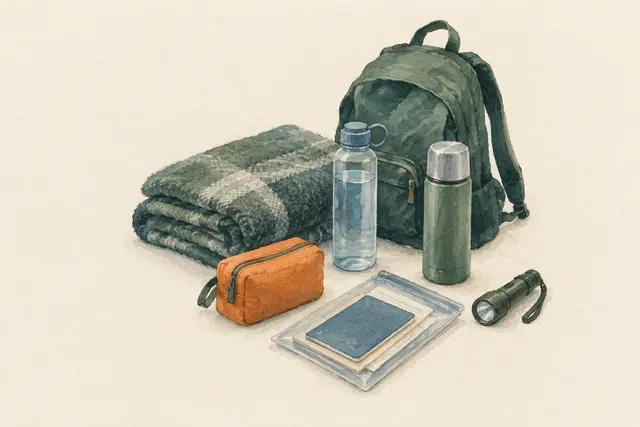
Using public emergency shelters, warming and cooling centres
During evacuations, heatwaves, cold spells or long power cuts, authorities and aid organisations often set up emergency shelters, warming centres or cooling rooms. Where and when is announced via official warning channels, radio and the local council. Anyone going there brings medication, documents, bedding and basics and follows the instructions on site.
Planned topics (4)
- Emergency bivouac
- Natural materials
- Snow shelter
- Urban emergency shelter
Shelter climate
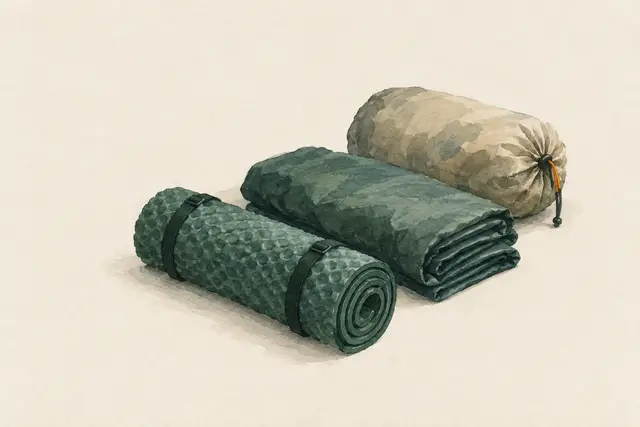
Insulating from the ground
The ground constantly draws heat from a body lying on it by conduction. An insulating layer of sleeping pad, dry vegetation or gear interrupts this heat flow and is as important as a roof on any night out.
Condensation and ventilation
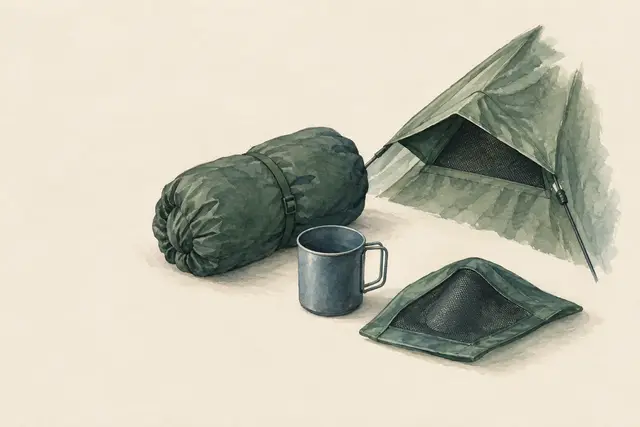
Breath and body release a lot of moisture overnight, which condenses on the cold inner surfaces of a tarp, tent or bivvy bag. Ventilation removes the moist air before it condenses and so keeps sleeping bag and clothing drier.

Carbon monoxide in tents and shelters
Stoves, grills, generators, charcoal and fires produce carbon monoxide (CO) – a gas you cannot see, smell or taste. In tents, shelters and enclosed spaces it can build up unnoticed to lethal concentrations. Never operate these devices in such spaces.
Staying warm overnight: layers, dry clothing, sleep system
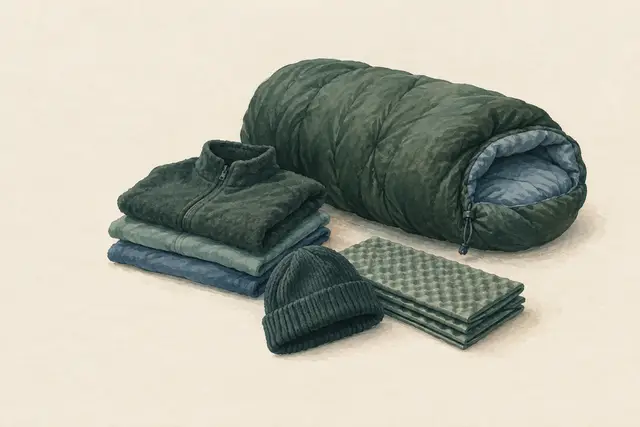
Whether a night outdoors is bearable rarely depends on a single piece of gear but on the interplay of ground insulation, sleeping bag, dry clothing, headwear and starting the night warm. Going to bed dry and insulated from the ground makes for a much warmer night.
Protection from heat and sun
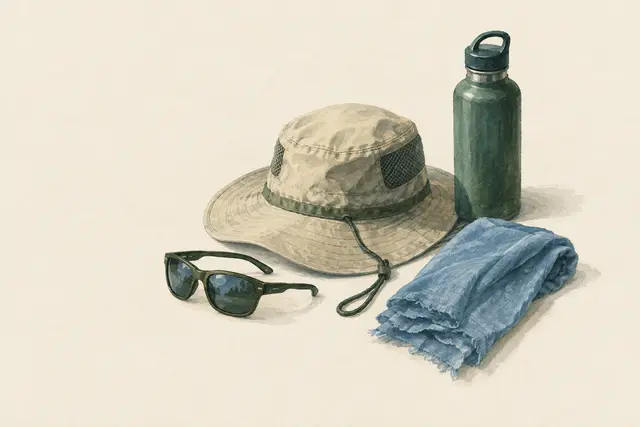
In heat, a shelter mainly protects from direct sun and hot ground. Shade with airflow, distance from heated ground and rest at midday reduce heat stress and water loss. A closed, dark tent in the sun, by contrast, can become dangerously hot.
Sleeping on snow: insulation from below
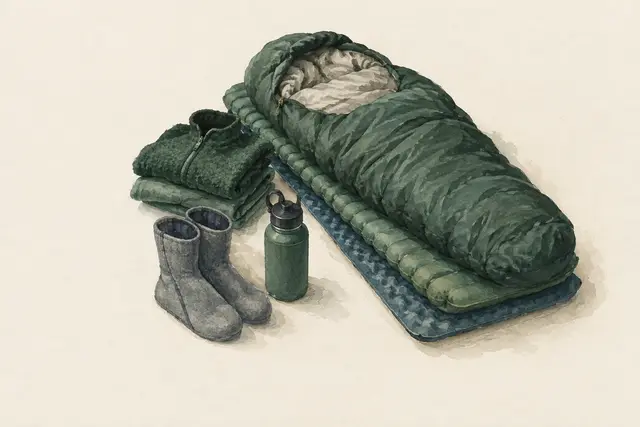
On snow the ground draws heat from the body all night. What matters is two pads or a pad rated for winter conditions, dry clothing, boot liners and water bottle protected from frost, and a sleep system you have tested beforehand.
Staying dry in prolonged rain: wet and dry zones
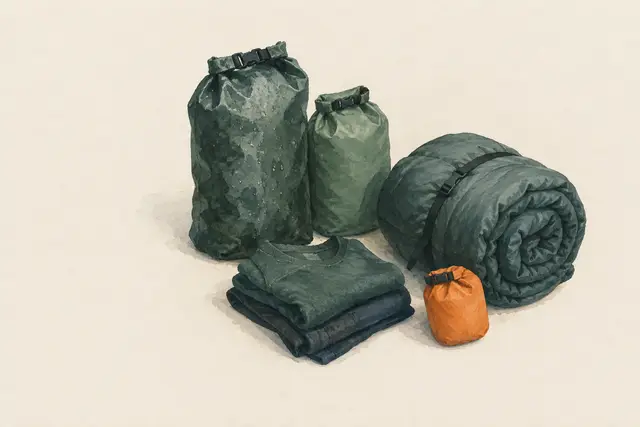
Over several days of rain, routine decides whether sleeping bag and sleep clothing stay dry. Basic rule: consistently separate wet gear (vestibule, outside) from the dry sleep system (inside, packed), keep one set of clothing only for the night, and use dry bags for everything that must stay dry.
Protection from mosquitoes: a net over the sleeping area
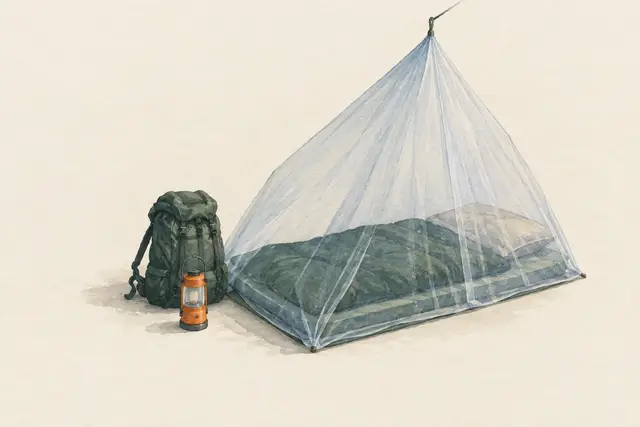
In areas with many mosquitoes or insect-borne diseases, a mosquito net over the sleeping area is important protection. It is hung from a line or a single point, tucked in without gaps under the pad or groundsheet, and must not touch the body because mosquitoes can bite through the net.
Planned topics (6)
- Insulation
- Ground moisture
- Ventilation
- Condensation
- Heat protection
- Fire and carbon monoxide risks