Using public emergency shelters, warming and cooling centres
During evacuations, heatwaves, cold spells or long power cuts, authorities and aid organisations often set up emergency shelters, warming centres or cooling rooms. Where and when is announced via official warning channels, radio and the local council. Anyone going there brings medication, documents, bedding and basics and follows the instructions on site.
- Preparing a bag: 30 minutes; travel depends on the situation
Explained simply
When something big happens – a flood, a long heatwave, severe cold or a power cut lasting many hours – the city, the local council and aid organisations often help. They open, for example, a sports hall as an emergency shelter, a warming centre where it is warm, or a cool room during great heat. There is usually water, toilets, information and people who look after you there.
You find out where such a place is via radio, warning apps, the council's website or notices. Do not simply believe rumours on the internet; rely on official sources. If the authorities say you should leave, leave at once.
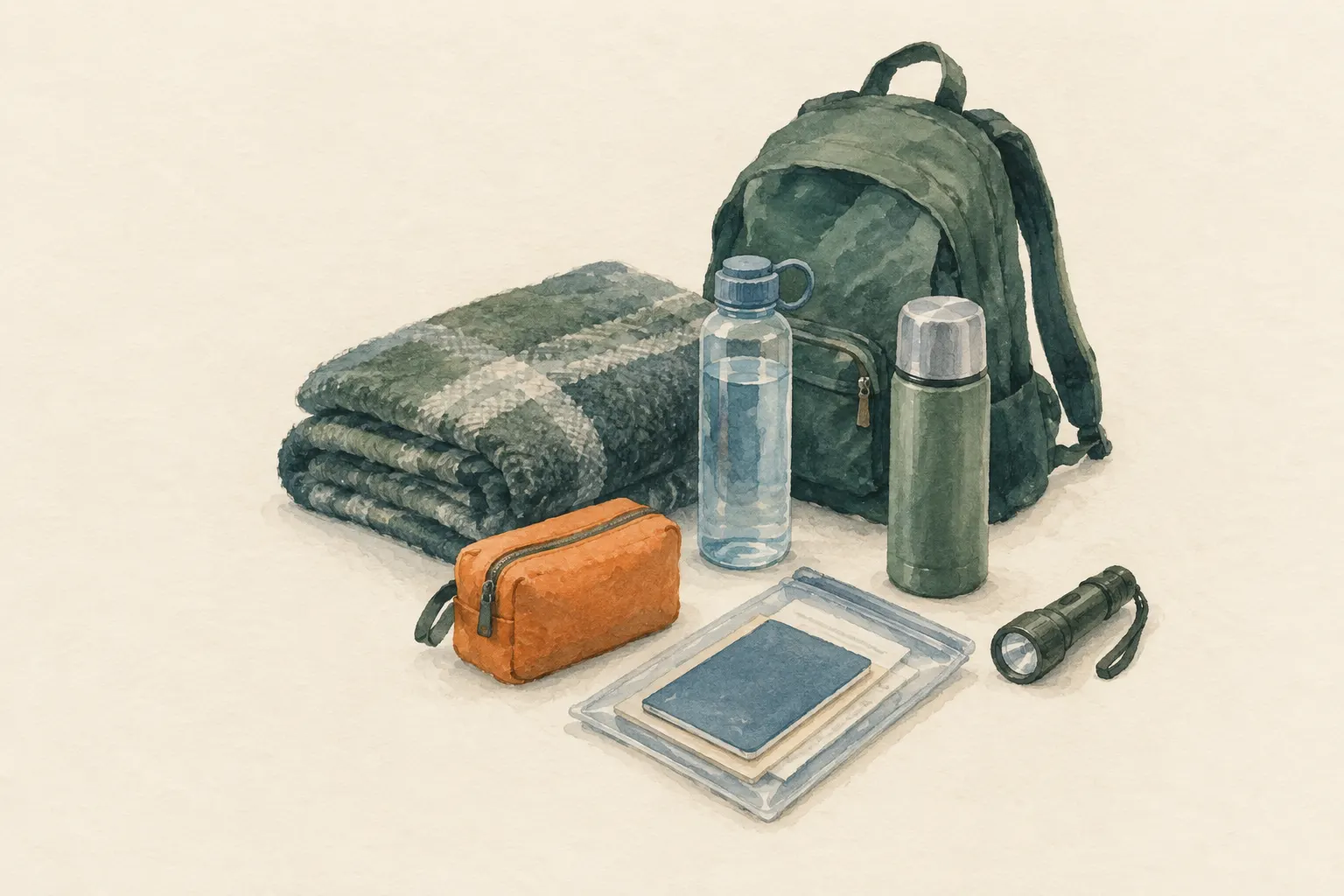
Pack a bag with what you really need: medication, ID documents, a charger, glasses, a toothbrush, a change of clothes, a blanket and something to eat. Tell someone where you are going. And think of neighbours who are alone or cannot walk well – they may need help.
How it works
During evacuations, heatwaves or cold spells and long power cuts, authorities and aid organisations often set up organised shelters. Depending on the situation they are called emergency shelters, assembly points, warming centres or cooling rooms. Schools, sports halls, community centres or other public buildings are often used for this.
Such places offer more than a single household can improvise: warmth or coolness, drinking water, toilets, up-to-date information and often care from helpers. For older, ill or isolated people this can make the decisive difference.
How such services are organised and announced differs from country to country and municipality to municipality. That is why it is worth knowing in advance which channels your local council uses to inform people in an emergency.
What really matters
Get information from official sources: warning apps, radio, the council's website, loudspeaker announcements and notices. In crises, rumours spread quickly on social media and can be wrong – for example about locations, times or closed roads. Follow instructions on evacuation routes and closures.
Decide in time. When an evacuation is ordered, leave at once. In cold or heat, do not wait until the home has become dangerous – especially when children, older or ill people are with you, because they are more vulnerable. Those who go early usually get there more easily and are more likely to find a place.
Register on arrival. That way relatives and authorities can find you. Also say there if you have special needs, such as regular medication, a disability or a device that needs power.
The bag: what to take
Because places and facilities in emergency shelters are limited, it makes sense to bring your own basics. Most important are medication for several days, important documents (ID, insurance papers, medication list), charger and power bank, glasses or contact lenses and toiletries.
Add a change of clothes, a blanket or sleeping bag, snacks and a water bottle, baby supplies for families and food and lead for pet owners. Whether pets are allowed differs from place to place – check with the local council beforehand or listen to the announcements. A small battery-powered radio helps when power and networks fail.
The easiest way is to pack such an emergency bag in advance. Official guides explicitly recommend this. Then in an emergency you do not have to think, just grab it.
Safety: what to watch out for
Emergency shelters are meant for emergencies, not for immediate danger to life. In acute danger, breathing difficulty, confusion from cold or heat, or suspected carbon monoxide, call the local emergency number (112 in the EU) at once. Carbon monoxide is suspected, for example, when a room is being heated in an improvised way and several people get headaches, dizziness or nausea.
Before you leave, secure the home as the authorities instruct: switch off appliances, close windows and doors. Tell relatives or neighbours where you are going. On the way, cordons and instructions from emergency services apply, even if another route would be shorter – walking or driving through flooded streets, for example, is dangerous.
Getting through the crisis together
Many people cannot hear or read warnings, have no car or cannot manage the journey alone. Talk to neighbours who live alone or have limited mobility and offer help – with packing, with the journey or simply with information. Neighbourly help like this is among the most effective things of all in a crisis.
In the shelter itself there is little privacy, and it can be noisy and crowded. Patience, consideration and following the house rules make living together easier for everyone. Anyone who can stay with friends or relatives outside the affected area relieves the public shelters – but should still tell the authorities where they are if that is required.
Step by step
Get information
Follow warning apps, radio, the council website or notices: where are emergency shelters, warming or cooling centres, and at what times?
- 1
Get information
Follow warning apps, radio, the council website or notices: where are emergency shelters, warming or cooling centres, and at what times?
- 2
Decide in time
When ordered to evacuate, leave at once. In cold or heat, do not wait until the home becomes dangerous – especially with children, older or ill people.
- 3
Pack a bag
Medication, documents, charger, glasses, toiletries, change of clothes, blanket or sleeping bag, snacks, and baby and pet supplies if needed.
- 4
Secure the home
As instructed, switch off appliances, close windows and doors and tell relatives where you are going.
- 5
Register on site
Register on arrival so that relatives and authorities can find you; mention special needs (medication, disability).
- 6
Take others along
Talk to neighbours who live alone or have limited mobility and offer help.
Common mistakes
- Staying too long in a cold or overheated home
- Forgetting medication
- Following rumours instead of official information
- Telling no one
Quick view
Materials
Medication supply
For several days
Agree any stock of prescription medication with a doctor or pharmacist; observe storage instructions and expiry dates.
Document folder (waterproof)
Store securely – contains sensitive personal data.
Sleeping bag
Do not store compressed long-term; do not pack away damp.
Battery or crank radio
Check batteries regularly and keep spares.
Pet emergency supplies
Suitable for
- Evacuation
- A home without heating or in dangerous heat
- Older, ill or isolated people
Not suitable for
- Immediate danger to life – call emergency services at once
Prerequisites
- Access to official information (radio, warning app, local council)
- A prepared emergency bag
Safety
- Follow only information from official sources; rumours on social media can be wrong. Observe instructions on evacuation routes and closures.
- Whether pets are allowed differs from place to place – check with the local council or in the announcements beforehand.
How it works
Organised shelters offer warmth or coolness, water, sanitation, information and often care – more than a single household can improvise. Because capacity and facilities are limited, it makes sense to bring your own basic needs.
Advantages
- Warmth, coolness, water and information in one place
- Care and community
- Relief during long crises
Disadvantages
- Little privacy, noise
- Limited places
- Getting there can be difficult
Deep knowledge
Background
Official guides such as that of the German Federal Office of Civil Protection and Disaster Assistance (BBK) and FEMA guidance recommend a prepared emergency bag and following official instructions during evacuations. Many cities set up warming or cooling centres during cold spells and heatwaves.
How such services are organised and announced differs from country to country and municipality to municipality.
Variants
- With friends or relatives
- Those who can stay with people outside the affected area, which relieves public shelters – still inform the authorities of your whereabouts if required.
Common mistakes
- Staying too long in a cold or overheated home
- Forgetting medication
- Following rumours instead of official information
- Telling no one
Limits and risks
- Availability depends on place and situation – check local information
- No legal statements on evacuation obligations
Material alternatives
Derived from material properties: a substitute must have all relevant properties. Observe the notes on the substitute.
- Document folder (waterproof)
- Tarp, Plastic sheet / large bin bag (Tears easily; never pull over the head (suffocation risk).), Emergency blanket (Tears easily once punctured; short-term shelter only.), Rain poncho (When used as a shelter, it no longer protects your body from rain.), Bivy bag (Never fully close off the face.), Tent (Do not cook or heat inside the tent (fire and carbon monoxide danger).), Heavy-duty bin bag (large) (Suffocation risk: never pull plastic bags over the head or face and keep them away from small children.), Group shelter bag (Airtight – ventilate regularly.)
- Sleeping bag
- Sleeping pad, Dry leaves, grass or conifer boughs (Collect only where allowed; no protected plants. Check for ticks and insects.), Backpack, Dry spare clothing (Carry it in waterproof packaging – wet clothing barely insulates.), Wool blanket / duvet (Keep away from candles, stoves and heaters.), Insulated cool box (Keeps cold only for a limited time; without ice packs or ice it is not a fridge.), Newspaper and cardboard (Flammable – keep away from candles, stoves, heaters and embers.), Insulated cooking box (hay box, thermal cooker) (Never put open flame or embers inside – only the hot, closed pot.)
Results come exclusively from structured entries. No improvised instructions are generated.
Sources
Bundesamt für Bevölkerungsschutz und Katastrophenhilfe (BBK), Deutschland: Ratgeber für Notfallvorsorge und richtiges Handeln in Notsituationen
Emergency bag and behaviour during evacuation
U.S. Federal Emergency Management Agency (FEMA): Are You Ready? An In-Depth Guide to Citizen Preparedness
Evacuation and emergency shelters