Organising neighbourhood help in a power outage
In a widespread outage the nearest help is often the neighbourhood. If you know beforehand who in the building lives alone, needs care or has a radio, you can check on people, share information and run errands to official contact points in an emergency – without putting yourself at risk.
- One meeting or notice; regular short rounds during the outage
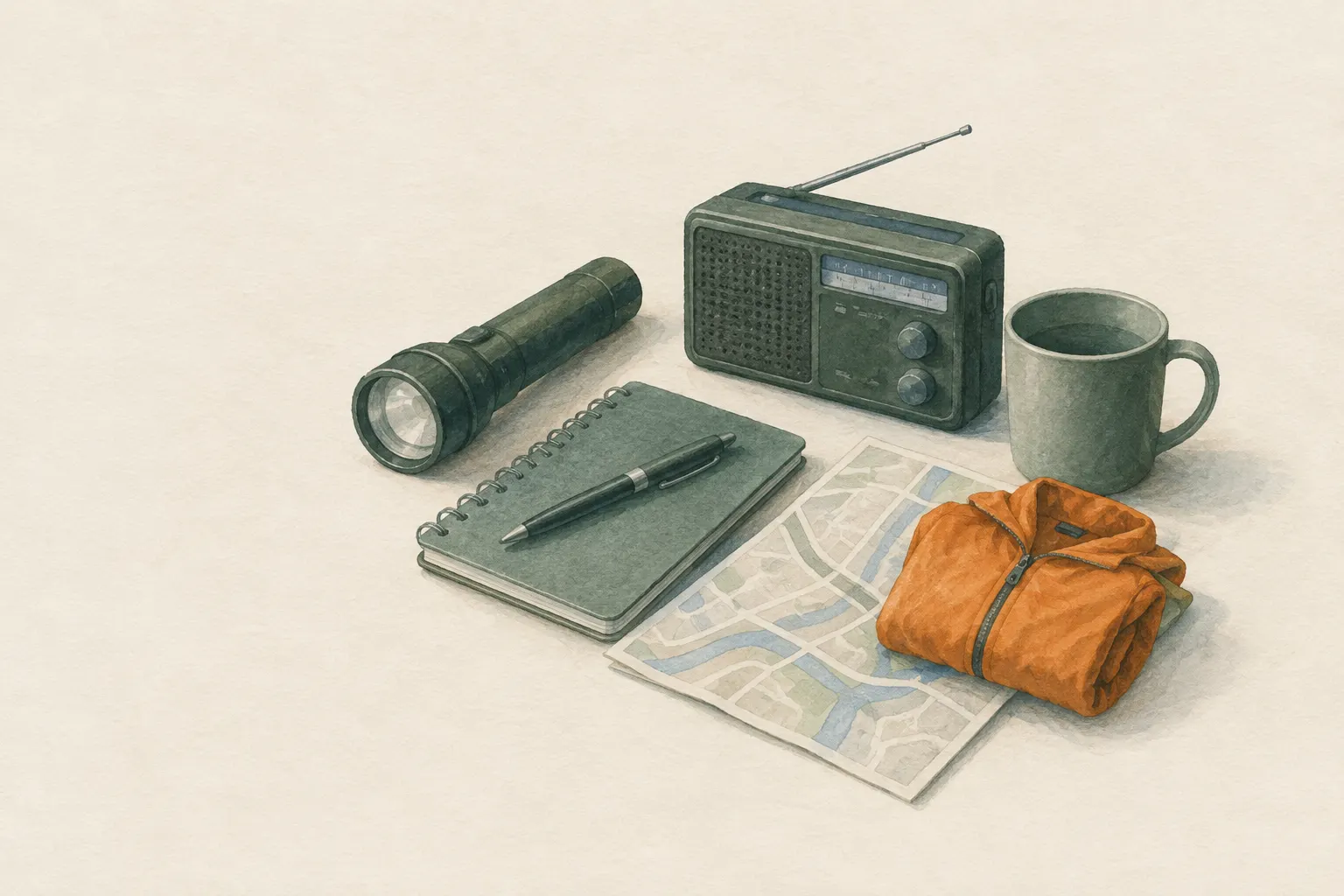
Explained simply
When the power goes out over a large area, fire and ambulance services have a great deal to do. The people who can reach you fastest often live right next door. Neighbourhood help means looking out for each other, sharing information and helping one another.
This works best if people already know each other beforehand. Then you know who in the building lives alone, who has difficulty walking or who has a radio. During the outage you might knock on the older neighbour's door and ask whether she is warm enough and has her medication.
Important: only help in ways that do not put yourself in danger. Do not go into flooded cellars and do not go near fallen power lines. In a life-threatening situation, call the emergency number (112 in the EU).
How it works
In a widespread outage, many people need help at the same time, and phone and internet may not work. Official bodies then have to concentrate on the most urgent cases. The neighbourhood fills the gap in between: short visits, a notice in the stairwell and mutual support replace the telephone.
Neighbourhood help complements official structures but does not replace them. It is voluntary, respects privacy and does not take on dangerous tasks. Its great advantage is closeness: anyone living in the same building quickly notices when someone no longer appears or needs help.
What really matters
The most important step happens long before the outage: getting to know each other. A chat in the hallway, a courtyard party or a notice is enough to find out who would like to take part during outages. Contact details go on a paper list only with consent. Voluntarily and confidentially, you clarify who lives alone, needs care, has small children or animals – and who can contribute something, such as a radio, first-aid skills, a stove for the garden or a cargo bike.
During the outage, fixed routines help. A notice in the entrance with date and time states current radio announcements, the location of the municipality's emergency contact point and who in the building offers help. At fixed times someone rings or knocks on the doors of people who need support and asks about warmth, water, medication and mood.
A simple form is a buddy system: each person needing help has a fixed contact and a deputy in the building. That is easier to organise than a large group and still works when someone is unavailable themselves.
Safety: what to watch out for
Your own safety comes first. Do not go into flooded cellars, keep away from fallen lines and avoid walking alone through unlit areas at night. Working on power lines or rescuing people from rubble are tasks for professionals.
Watch out for carbon monoxide. If you see neighbours using grills, gas heaters or generators indoors, clearly point out the danger. If several people complain of headache, dizziness or nausea: everyone into fresh air and call the emergency number.
In a life-threatening situation – unconsciousness, breathing difficulty, fire, suspected carbon monoxide – call the emergency number (112 in the EU) immediately. If it cannot be reached, one person goes to the municipality's emergency contact point, reports the emergency and brings back information.
Typical situations
Sharing instead of hoarding saves resources: one radio in the hallway that everyone can hear, cooking together outdoors, shared charging opportunities or pooled shopping. That way not every household has to have everything itself, and nobody is left alone.
During heat or cold waves, older and sick people are particularly at risk, often without asking for help themselves. A visit on the first day – not only after several days – is especially valuable then. Pass on anything you notice to relatives or authorities.
Rumours spread quickly in a crisis. Only post information from reliable sources, such as the radio or the municipality, and add when it was last updated.
Good to know
The BBK stresses that neighbourhood help plays an important role in emergencies and recommends looking after people in need around you. Ready.gov likewise advises checking on neighbours during outages, especially older people.
Many municipalities plan contact points for long power outages where you can make emergency calls and get information. What they are called and where they are differs from place to place – ask your municipality early. And as a side effect, good neighbourly relations strengthen everyday life too.
Step by step
Get to know each other beforehand
A chat in the hallway, a courtyard party or a notice is enough: who would like to take part during outages? Contact details on a paper list only with consent.
- 1
Get to know each other beforehand
A chat in the hallway, a courtyard party or a notice is enough: who would like to take part during outages? Contact details on a paper list only with consent.
- 2
Clarify needs and skills
Who lives alone, needs care, has small children or animals? Who has a radio, a stove for the garden, first-aid skills, a cargo bike? Voluntary and confidential.
- 3
Set up an information point
During an outage put a notice in the entrance with date and time: current radio announcements, location of the emergency contact point, who in the building offers help.
- 4
Check regularly
At fixed times ring or knock on the door of people who need support: warmth, water, medication, mood. Pass on concerns to relatives or authorities.
- 5
Share instead of hoarding
Shared solutions save resources: one radio in the hallway, cooking together outdoors, sharing charging opportunities, pooling shopping.
- 6
Connect with official points
One person goes to the municipality's emergency contact point, reports emergencies that cannot be reported otherwise and brings back information.
Common mistakes
- Trying to meet neighbours only during the outage
- Collecting or posting personal details without consent
- Passing on rumours instead of official information
- Putting yourself in danger while helping
- Visiting older neighbours only after days
Quick view
Materials
Battery or crank radio
To pass on information
Check batteries regularly and keep spares.
Labels and waterproof marker
For notices
Headlamp / flashlight
For unlit stairwells
Suitable for
- Apartment buildings and streets
- Longer power, water or network outages
- Heat and cold waves
Not suitable for
- A substitute for emergency or care services
- Dangerous tasks such as working on power lines or rescuing from rubble
Prerequisites
- Contact with a few neighbours
- Willingness to share personal details only with consent
Safety
- Your own safety first: not into flooded basements, not near fallen lines, not alone through unlit areas at night if it can be avoided.
How it works
Neighbourhood help works if it is prepared beforehand: people know each other, know who needs support and who can contribute what. During an outage, short personal visits and a notice replace the telephone. Help remains voluntary, respects privacy and complements official structures instead of replacing them.
Advantages
- Fastest help on site
- Relieves emergency services
- Strengthens cohesion in everyday life too
Disadvantages
- Depends on volunteers
- Data protection and trust must be maintained
Deep knowledge
Background
The BBK stresses that neighbourhood help plays an important role in emergencies and recommends looking after people in need in your surroundings. Ready.gov also advises checking on neighbours during outages, especially older people.
Many municipalities plan contact points for long power outages where emergency calls can be made and information obtained. Names and locations differ from place to place – ask your municipality early.
Variants
- Buddy system
- Each person needing help has a fixed contact and a deputy in the building – simpler than a large organisation.
Common mistakes
- Trying to meet neighbours only during the outage
- Collecting or posting personal details without consent
- Passing on rumours instead of official information
- Putting yourself in danger while helping
- Visiting older neighbours only after days
Limits and risks
- No legal advice on data protection or liability
- No organisational rules for associations or initiatives
Material alternatives
Derived from material properties: a substitute must have all relevant properties. Observe the notes on the substitute.
- Headlamp / flashlight
- Mobile phone (The battery drains quickly in cold and with continuous screen and GPS use.), Battery lantern / LED light
Results come exclusively from structured entries. No improvised instructions are generated.
Sources
Bundesamt für Bevölkerungsschutz und Katastrophenhilfe (BBK), Deutschland: Ratgeber für Notfallvorsorge und richtiges Handeln in Notsituationen
Neighbourhood help and help for people in need
Ready.gov – U.S. Federal Emergency Management Agency (FEMA): Power Outages
Checking on neighbours, carbon monoxide hazards