The city in a crisis
Cities depend heavily on electricity, water pumps, transport and supply chains. When these fail, lifts, water on upper floors, card payments and communication quickly become a problem, and many people are affected at once. Supplies at home, local knowledge, contact with neighbours and official information sources matter more in a city than outdoor skills.
- A few hours of preparation once; refresh regularly
Explained simply
In a city almost everything depends on invisible lines: electricity comes from the socket, water from the tap, food from the supermarket that is restocked every day. That is very convenient. But when one of these lines fails, many people notice it at the same time. Without power, lifts stop, tills do not work, and in tall buildings water sometimes no longer reaches the upper floors because the pumps have stopped.
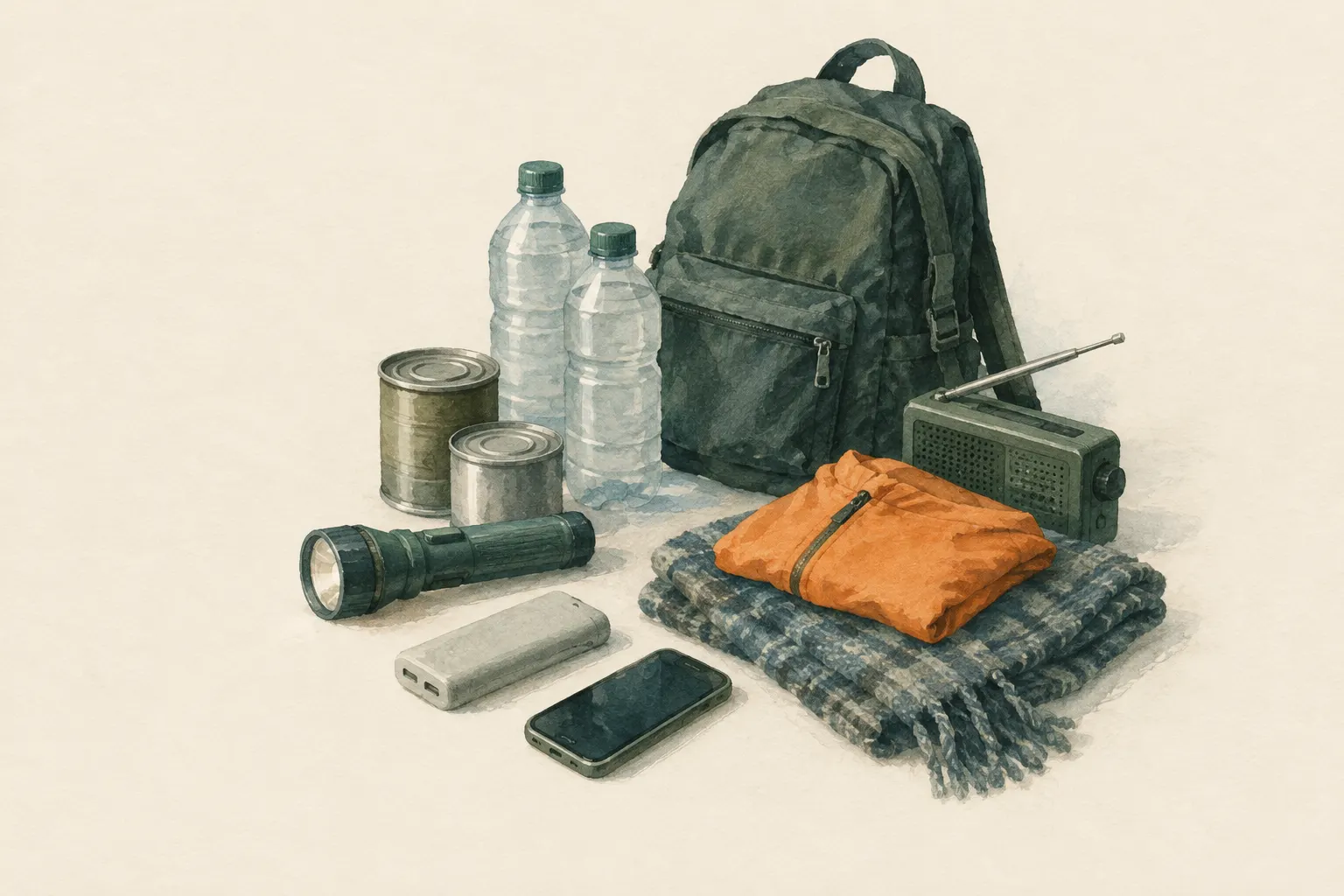
So in a city the important thing is not how to light a fire in the woods, but: do I have some water and food at home? Do I know how to get home on foot? Do I know my neighbours? And where do I get reliable news, for example from a battery radio?
The most important safety point: grills, camping stoves or generators never belong in the flat, the basement or the stairwell. They produce a poisonous gas that you cannot smell. And when the authorities say what to do, you follow their instructions.
How it works
Cities are built for efficiency. Shops often keep only small stocks because deliveries arrive constantly. In many buildings water is pushed to the upper floors by electric pumps. Paying, refuelling, phoning and getting information all depend on electricity and data networks. In daily life you notice none of this, but in a disruption you notice it very quickly.
Because so many people in a small area use the same networks, an outage immediately affects a huge number of households. Mobile networks can be overloaded because everyone is calling at once. Shops empty, roads jam, and emergency services have to decide whom to help first. Authorities therefore stress that in large-scale incidents not every household can get help immediately.
At the same time the city has strengths that the forest lacks: short distances, many people who can help each other, and facilities planned for emergencies. The best strategy uses those strengths. Usually that means staying at home well supplied, being reliably informed and involving the neighbourhood, rather than rushing off.
What really matters
A basic stock at home is the foundation: water, long-life food you can eat without a cooker, important medication, hygiene items, a light, batteries and some cash. How much makes sense is recommended by the authorities in your country; those recommendations are a good guide. A battery or crank radio matters because it still works when power and internet are gone.
If you live in a high-rise, think about water and stairs. In a power cut the lifts stop and water pressure on upper floors may fail. A water stock in the flat is especially important there. Also clarify how people in the building who cannot use the stairs, such as older or disabled people, will be supported.
Know the way home from work, school or nursery on foot as well. Comfortable shoes at the office are a small but effective trick. Agree a meeting point within the family and a person outside the city whom everyone contacts if you cannot reach each other. Find out whether your city provides emergency information points or water distribution points, and where they are.
Safety: what to watch out for
Carbon monoxide is the hidden danger during power cuts. Grills, gas stoves, outdoor patio heaters and generators produce this gas, which you can neither see nor smell. It can build up dangerously in a flat, basement, stairwell or underground car park. Headache, dizziness and nausea in several people in the same room are a warning sign: get into fresh air at once and call the emergency number (112 in the EU). There is also the fire risk from candles; torches are safer.
In a crisis the authorities decide whether to stay at home or leave the area. Follow these instructions and get information via radio, warning apps and official channels. Do not pass on rumours from social media unchecked – false reports spread especially fast in a crisis and can put people in danger.
In dense crowds keep away from bottlenecks such as passageways and stairs, keep exits in view and do not move against the flow. If it gets tight, move to the edge of the crowd early, before the pressure becomes too great. If you trip or drop something in a crush, it is better not to bend down for it.
Typical situations
Power cut in the afternoon: the train has stopped, your phone is at half charge. Instead of waiting for ages, you walk the route you know and send your family a short text rather than calling – text messages often get through overloaded networks more easily. At home you switch on the radio and check on the older neighbour.
Water fails on the upper floors: whoever has a small stock stays calm and can even share some with others. Whoever does not should follow official notices about distribution points. Tap water that returns after a disruption is not automatically safe to drink straight away; watch for notices from the water supplier.
In an unfamiliar city when travelling you know neither the routes nor the neighbours. Then the guidance of your accommodation and the local authorities helps, along with contact with your embassy or consulate and documents kept at hand. This text deliberately does not cover behaviour during violent incidents or attacks; the authorities publish separate guidance for that.
Step by step
Supplies at home
Build a basic stock of water, food, medication and hygiene items according to your authority's recommendations.
- 1
Supplies at home
Build a basic stock of water, food, medication and hygiene items according to your authority's recommendations.
- 2
Think about high-rises
On upper floors, lifts and often water pressure fail in a power outage. Keep water in stock and clarify how people who cannot use stairs will be supported.
- 3
Know the way home
Know the way home from work or school on foot too – public transport may stop. Comfortable shoes at the workplace help.
- 4
Official information
Keep a battery or crank radio ready, install a warning app and do not pass on rumours from social media unchecked.
- 5
Involve the neighbourhood
Know your neighbours, especially older people or those living alone; agree to check on each other in a crisis.
- 6
Know the support points
Find out whether the city provides emergency information points, shelters or water distribution points, and where they are.
Common mistakes
- Relying on daily shopping
- No water stock in a high-rise flat
- Spreading rumours
- Leaving by car in panic and getting stuck in traffic
- Not knowing your neighbours
Quick view
Materials
Battery or crank radio
Check batteries regularly and keep spares.
Headlamp / flashlight
Power bank
Do not use damaged or swollen batteries; do not charge while covered.
Cash reserve
Store securely and discreetly.
Sturdy closed shoes
For long distances on foot
Suitable for
- City residents and commuters
- High-rise residents
- People who work far from home during the day
Not suitable for
- Behaviour during terrorist attacks or violent incidents (separate official guidance)
- A substitute for instructions from the authorities
Prerequisites
- Basic stock of water and food at home
- A family emergency plan with meeting points
Safety
- In dense crowds keep away from bottlenecks, keep exits in view and do not move against the flow. In a crush, move to the edge early.
How it works
In the city distances are short but dependencies are great: many people share the same networks. When a network fails, hundreds of thousands are affected at once, shops empty and help must be prioritised. The best urban strategy is usually to stay at home well supplied, be reliably informed and involve neighbours – not to rush off.
Advantages
- Short distances to help and support points
- Many people can help each other
Disadvantages
- High dependence on power and supply chains
- Help has to be spread across many people
Deep knowledge
Background
The guide of Germany's BBK and Ready.gov's guidance consistently recommend supplies at home, a radio independent of the grid, a family emergency plan and mutual support in the neighbourhood. Both stress that in large-scale incidents not every household can receive help immediately.
How cities issue warnings and which support points they provide varies greatly. The information from your own city or municipality applies.
Variants
- In an unfamiliar city
- When travelling, follow the guidance of your accommodation and local authorities, keep in touch with your embassy or consulate and have documents at hand.
Common mistakes
- Relying on daily shopping
- No water stock in a high-rise flat
- Spreading rumours
- Leaving by car in panic and getting stuck in traffic
- Not knowing your neighbours
Limits and risks
- No guidance on violent incidents or terrorist situations
- No quantities for supplies
Material alternatives
Derived from material properties: a substitute must have all relevant properties. Observe the notes on the substitute.
- Headlamp / flashlight
- Mobile phone (The battery drains quickly in cold and with continuous screen and GPS use.), Battery lantern / LED light
Results come exclusively from structured entries. No improvised instructions are generated.
Sources
Bundesamt für Bevölkerungsschutz und Katastrophenhilfe (BBK), Deutschland: Ratgeber für Notfallvorsorge und richtiges Handeln in Notsituationen
Supplies, radio, neighbourhood help in emergency preparedness
Ready.gov – U.S. Federal Emergency Management Agency (FEMA): Make A Plan
Emergency plan and communication
Centers for Disease Control and Prevention: Carbon Monoxide Poisoning – Prevention guidance
No combustion devices indoors