Bushcraft and craft
Tools, wood, fibres, repair
Traditional skills with natural materials and simple tools – tool safety first.
Wood
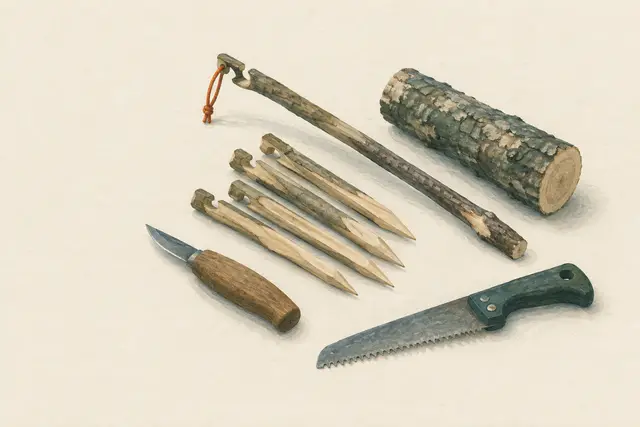
Carving simple camp tools: tent pegs and a pot hanger
With a knife and saw, a piece of dead wood can be turned into spare tent pegs and a simple pot hanger for the fireplace. At their core both need only two basic cuts: a point and a notch. If you know the carving grips, you will have usable results in half an hour.
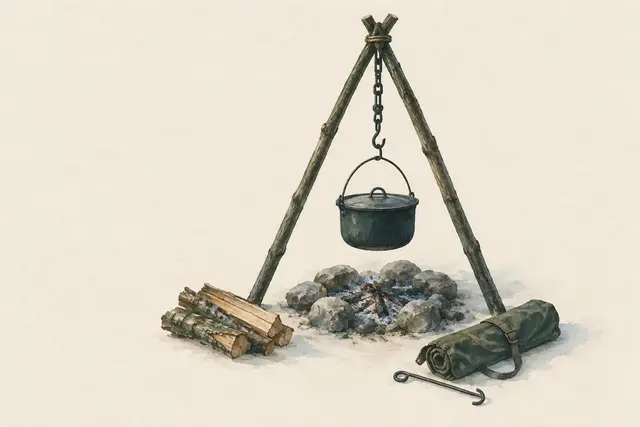
Tripod and pot crane over the fire
A tripod made of three poles or an angled pot crane hangs a pot over the fire without standing it in the embers. With an adjustable hook the height – and so the heat – can be regulated. Stability, keeping the poles away from the flames and a secure pot handle are what matter.
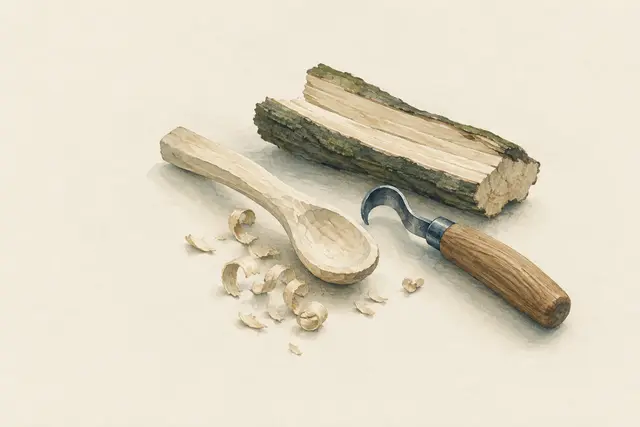
Carving a spoon
A spoon is the classic first project in green woodworking: split a blank, mark the outline, shape it with a knife and hollow the bowl with a hook knife. Work in fresh, soft wood from trees you know for certain or bought as carving stock. The hook knife needs its own safety rules.
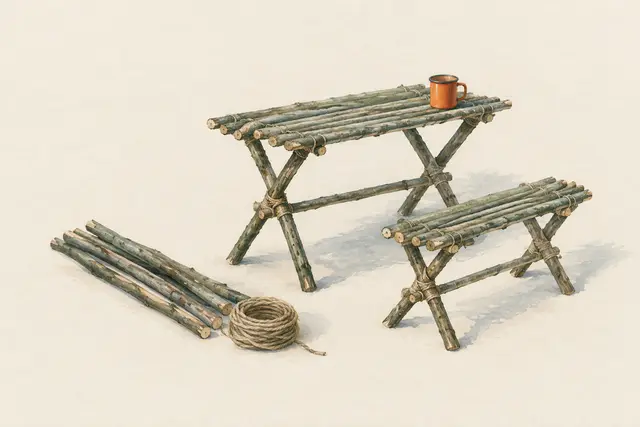
Lashing a camp table and bench from poles
With straight dead-wood poles and cord you can lash a simple table or bench without nails: two trestles of crossed poles, joined by cross bars, with a layer of thin poles as the surface. This gets cooking, washing up and tools off the ground – and can be taken apart without a trace when breaking camp.
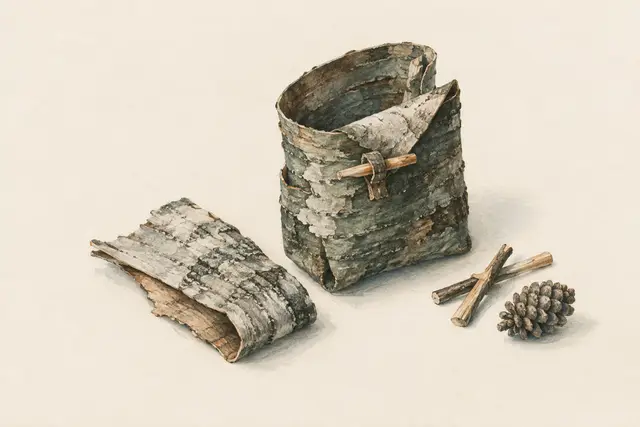
Folded bark container – only from bark of dead, fallen wood
Loose, still flexible bark from fallen, dead trunks can be folded into a simple container and closed with wooden clips or cord – for tinder, collected items or small parts. Bark is never peeled from living trees. If folding does not work the bark is too brittle; then leave it where it is.
Planned topics (4)
- Carving
- Wood joints
- Wood species
- Containers
Fibres and textiles
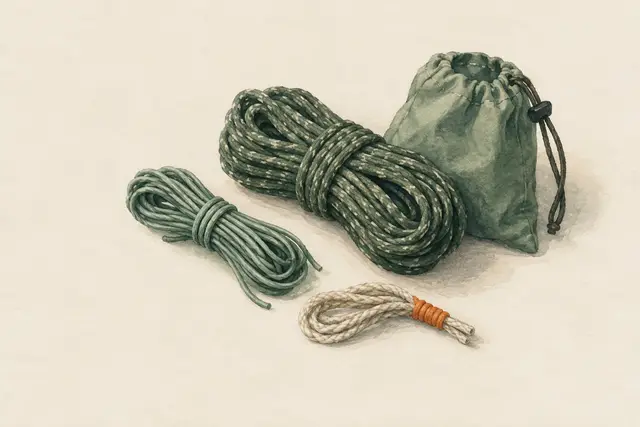
Cord and rope in camp: choice, securing ends, care
Cord is one of the most versatile aids in camp – for guylines, washing lines, repairs and bundles. To keep it reliable it needs secured ends, careful storage and regular checks for abrasion, sun damage and moisture. Camp and craft cords are never meant for climbing or safety-critical uses.
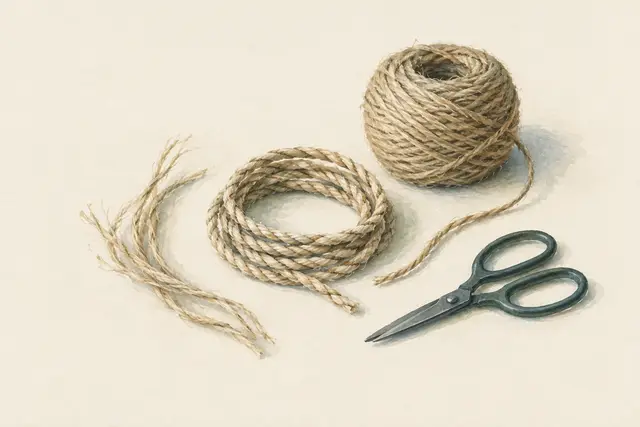
Twisting two-ply cord (reverse wrap) – practise with jute or sisal
In the reverse wrap two strands of fibre are each twisted in one direction and laid around each other in the opposite direction. The counter-tension holds the cord together. Practise with bought jute or sisal twine that you unravel – that way you learn the technique without plant identification. The result is suitable for light ties, not for loads.
Rigging a camp ridgeline
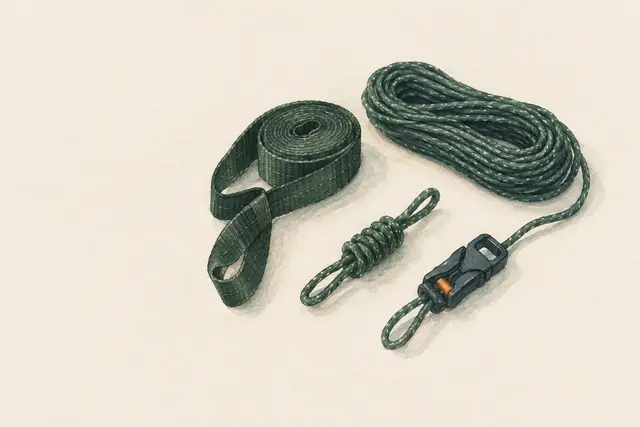
A taut line between two trees is the backbone of many camps: a ridgeline for the tarp, a drying line and a hanger for gear. It is built with tree-protecting straps, a fixed knot on one side and a tensionable, quick-release connection on the other. Friction hitches on the line act as sliding hooks.
Planned topics (3)
- Rope and cordage
- Weaving
- Textile repairs
Tools
Safe knife handling and carving grips
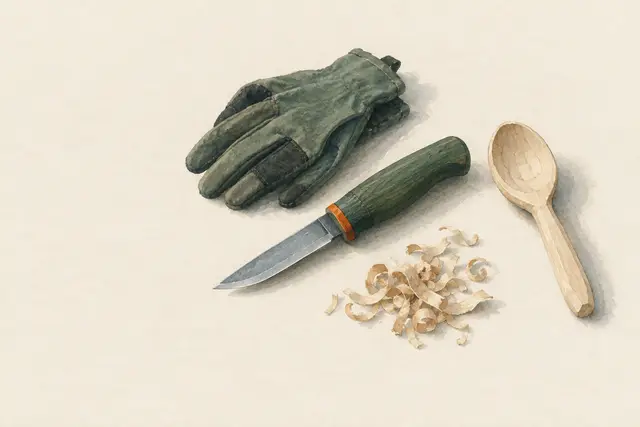
Most cuts while carving happen when the blade slips and travels to where a hand, leg or another person is. Planning the cutting path in advance, keeping a safety distance, cutting away from the body and mastering a few controlled grips makes work safer and more precise.
Using a saw and hatchet safely – the basic rules
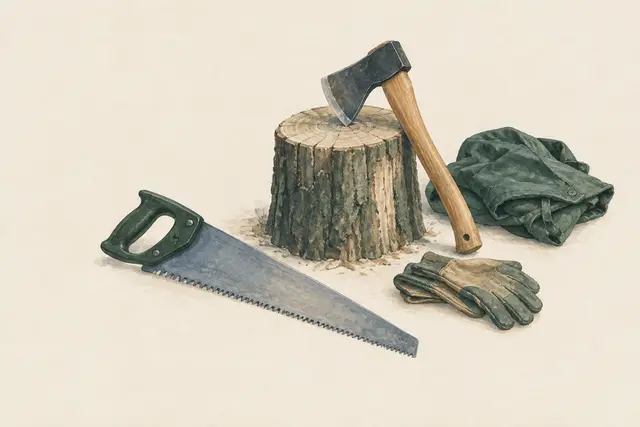
For firewood and simple camp tasks a saw is usually the safer choice: it works slowly and with control. A hatchet is faster, but a deflected blow can cause serious injuries. A firm stance, a clear swing area, a chopping block and distance from other people greatly reduce the risks.
Sharpening a knife on a stone
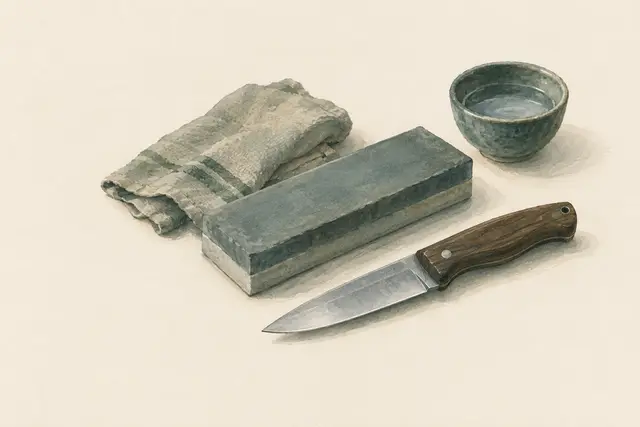
A sharp knife cuts with less force and slips less often. Sharpening means removing material evenly at the edge until the bevels from both sides meet in a fine edge. What matters is a consistent angle, feeling for the burr and progressing from coarse to fine.
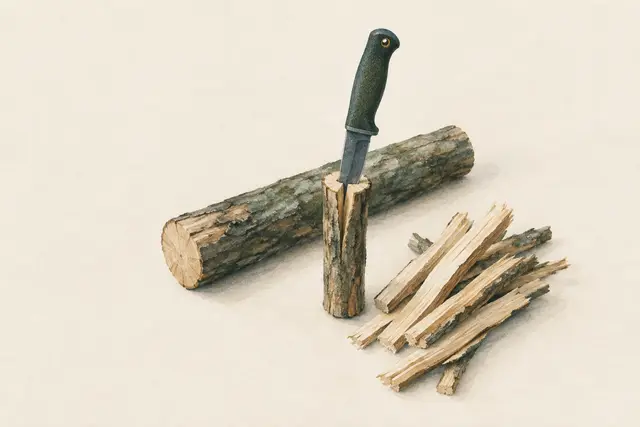
Batoning: splitting small wood with a knife and baton
In batoning a sturdy fixed-blade knife is placed on the end grain of a short, thin piece of wood and driven through it with a wooden club (baton). This produces dry kindling from the inside of wet logs – without a hatchet. It only works with a suitable knife, knot-free wood and controlled blows.
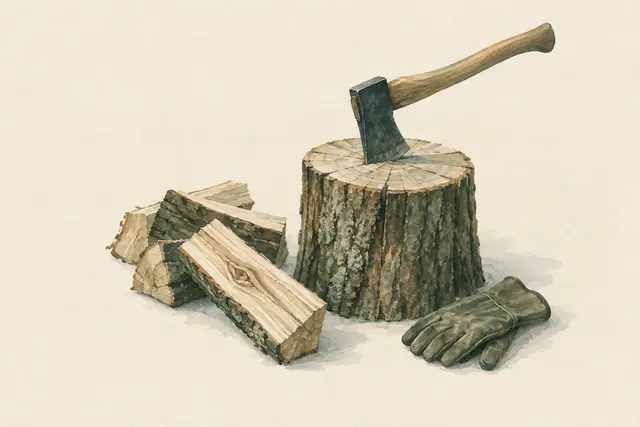
Splitting wood with an axe: block, stance, swing
Safe splitting with an axe rests on three things: a stable chopping block at a suitable height, a wide stance with a clear swing area and a blow that ends in the block, not the leg, when it misses. Reading the wood – cracks, knots, grain – takes less force.
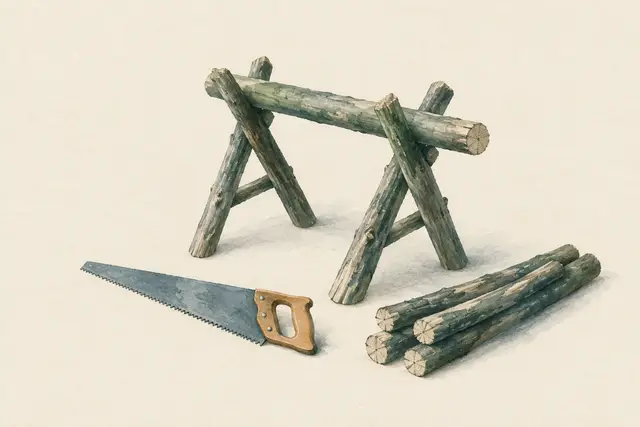
Sawing on a sawhorse – improvised too
A sawhorse holds wood at a comfortable height and supported so that the cut opens rather than pinching the blade. This spares your back and the saw and keeps the free hand out of the danger zone. In camp an improvised horse made from two crossed pairs of poles or a lying log is enough.
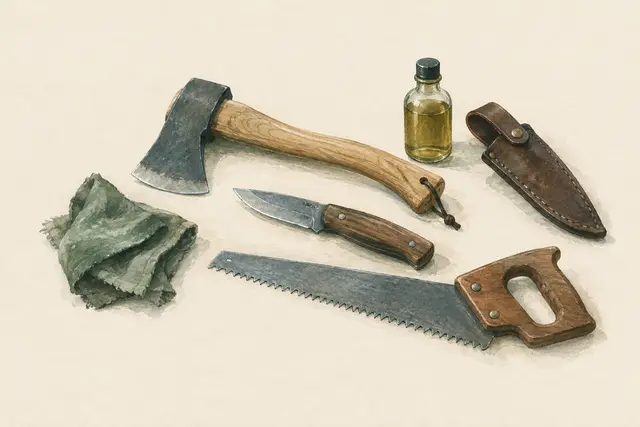
Tool care: cleaning, oiling, preventing rust, checking handles
Knife, hatchet and saw stay safe if they are cleaned, dried and lightly oiled after every use. Carbon steel rusts quickly, wooden handles dry out or swell and leather sheaths hold moisture. A short care routine prevents damage that only becomes dangerous the next time you use the tool.
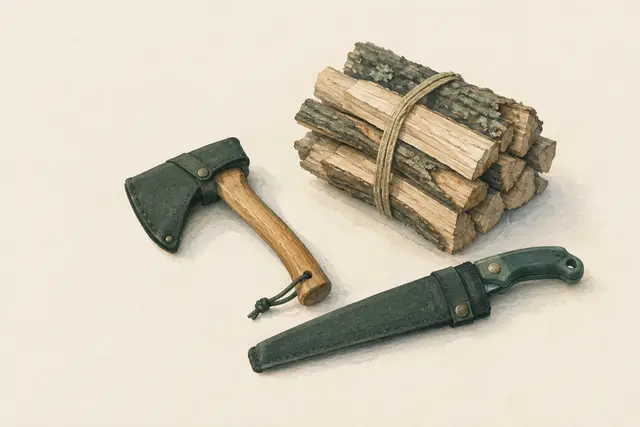
Carrying tools and wood safely
Many injuries happen not while working but on the way: a hatchet without a guard, an open saw, a stumble with an armful of wood. Always carry blades covered and away from the body, move wood in manageable bundles and lift with the legs.
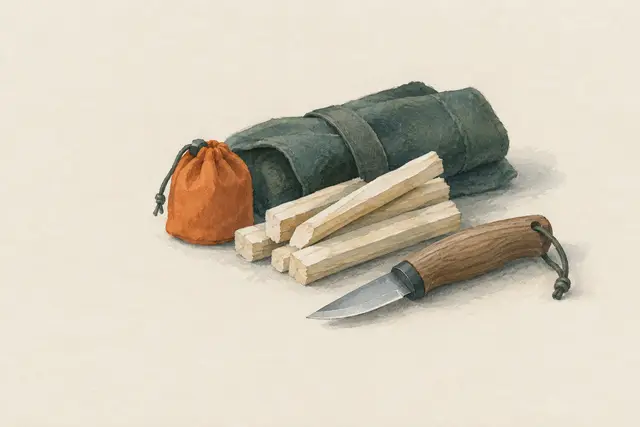
Teaching children to whittle safely
Whittling teaches children patience, respect for tools and self-confidence – if clear rules apply from the start. These include a safety circle around the carver, sitting rather than walking, cutting away from the body, a suitable knife, soft wood and supervision within reach. Rules first, then the knife.
Planned topics (4)
- Tool safety
- Improvised tools
- Working materials
- Simple devices
Traditional skills
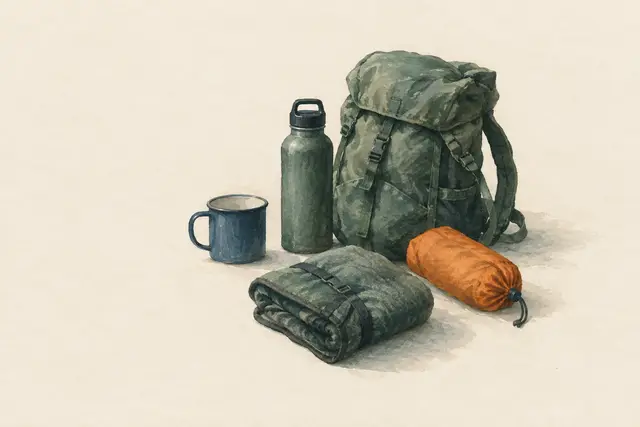
Camping without a trace: Leave No Trace in practice
A good camp is one you cannot recognise afterwards. The seven Leave No Trace principles help protect nature, wildlife and other visitors: plan ahead, camp on durable surfaces, pack out waste, leave what you find, minimise campfires, respect wildlife and be considerate of others.
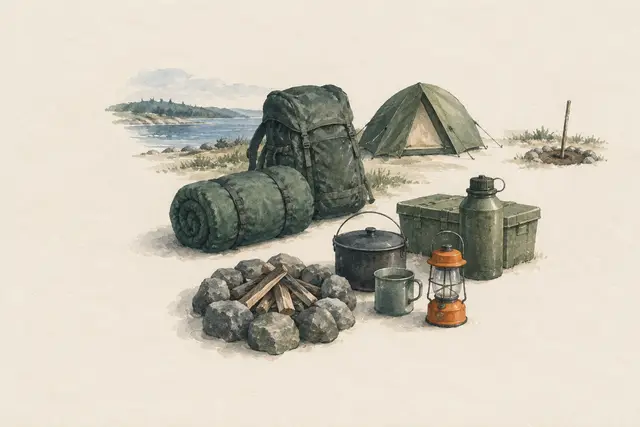
Laying out a camp: sleeping, fire, kitchen, toilet, water
A well-laid-out camp separates zones by distance: sleeping area upwind of the fire, kitchen and food away from the tents, toilet far from water and camp, water source kept clean. This prevents spark damage, illness, animal visits and conflict – and protects nature.
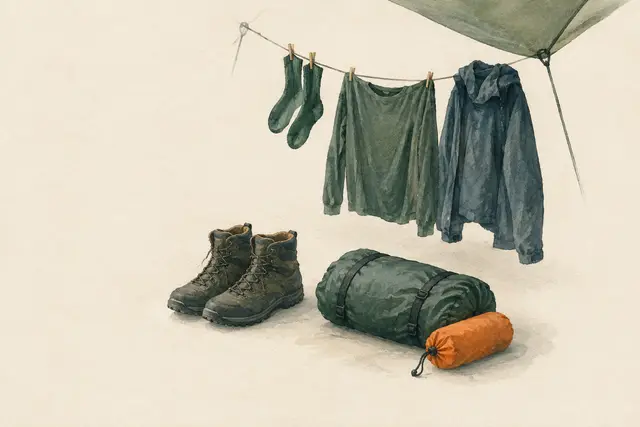
Drying clothes and gear in camp
Wet clothing chills and chafes. In camp you dry things systematically: wring out, use wind and sun, string a line under the tarp, dry small items with body heat and keep boots at a distance from the fire. A dry set for sleeping always stays untouched.
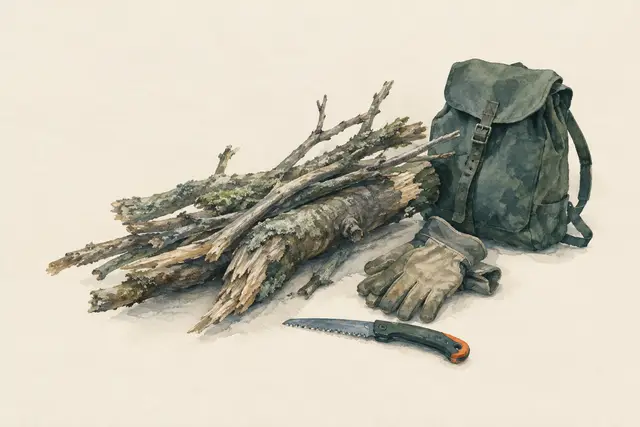
Collecting deadwood – permitted, safe and gentle
In bushcraft only deadwood is used for fires and camp structures, and only where that is permitted. Fallen, thin wood that can be broken by hand is usually the most suitable. Dead trees stay standing, hung-up branches are not pulled down, and part of the deadwood always remains as habitat.
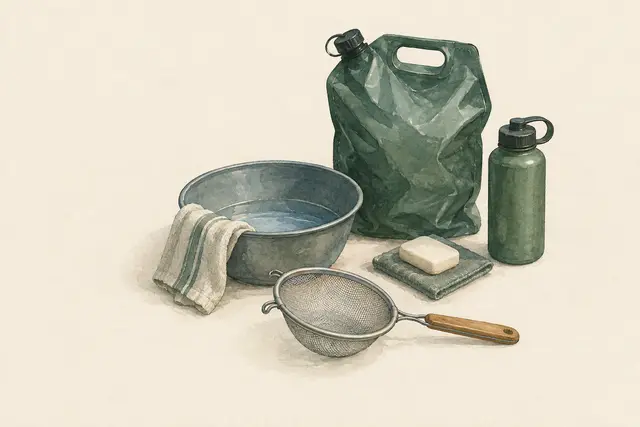
Washing up and washing in camp – away from water
In camp you do not wash up in the stream. Fetch water in a container, wash dishes and yourself well away from the bank, use little or no soap, strain food scraps from the washing water and scatter it widely. Washing hands before cooking and after the toilet is the most important rule against stomach bugs.
Planned topics (4)
- Natural materials
- Materials science
- Weather protection
- Repairs