Washing up and washing in camp – away from water
In camp you do not wash up in the stream. Fetch water in a container, wash dishes and yourself well away from the bank, use little or no soap, strain food scraps from the washing water and scatter it widely. Washing hands before cooking and after the toilet is the most important rule against stomach bugs.
- 10–20 minutes per meal
Explained simply
When you wash up outdoors, it is tempting just to hold the pot in the stream. But you do not do that. The stream carries soap and food scraps onwards, to fish, plants and people further down who may be fetching water. Instead you fetch water in a container and wash up well away from the bank.
The soil works like a big filter. If you pour a little used washing water widely over the ground, tiny organisms in the soil can slowly break it down. A stream cannot do that – it carries everything away. You strain out food scraps first and put them in the rubbish bag, because they attract animals.
The most important rule of all, though, is hand washing: before cooking and eating and after every toilet visit. Otherwise germs get from hands into food and into the mouth, and soon everyone in the group has tummy ache and diarrhoea.
How it works
Many stomach bugs are passed on by the so-called faecal-oral route: tiny amounts of germs from the gut get into another person's mouth via hands, dishes or food. Clean dishes and clean hands interrupt exactly this route. In groups that cook and eat closely together, such infections spread particularly fast.
Soap loosens grease and dirt so that water can rinse them away. In the soil, small scattered amounts of soap and washing water are broken down by microorganisms. If soap goes straight into a lake or stream, however, it acts on the creatures living there – even biodegradable soap, because it needs time and soil to break down. That is why Leave No Trace gives a distance of about 60 metres from water for washing up and pouring away.
Food scraps are a problem of their own. They do not rot in the woods as quickly as people think; they smell and attract animals – from mice to foxes to larger animals, depending on the area. Animals that get used to campsites as a source of food often become a problem for people and for themselves. So scraps are strained out and carried away.
What really matters
Washing up starts with eating: eat pots and plates clean or scrape them out with a spoon. Whatever is left goes into the rubbish bag. The fewer scraps stuck to the dishes, the less water and soap you need. A splash of hot water right after cooking often loosens burnt-on food even without soap.
Wash with warm water and little or no soap, from the cleanest to the dirtiest item: first mugs, then plates, the cooking pot last. Then rinse with clean water. For rinsing use water that is safe to drink or has been treated – otherwise you put the germs from the stream straight back onto the dishes. Let the dishes air-dry instead of wrapping them in a damp cloth where germs thrive.
Pour the used washing water through a fine strainer or a piece of cloth. The scraps go into the rubbish, and the water is scattered widely, well away from water and camp – not in one spot but in a broad swing. Where local rules require waste water to be carried out, or where there is a dedicated washing area, those rules come first.
Safety: what to watch out for
Washing hands before preparing food and after every toilet visit is the single most effective measure against stomach bugs in camp. Take your time: soap, rub thoroughly – including between the fingers and under the nails – then rinse. Where water is scarce, hand sanitiser helps in addition. It works less well, however, when hands are visibly dirty or greasy; then clean them with water first.
Water from a stream or lake is not automatically clean, even if it looks clear. For drinking, cooking and rinsing it is treated, for example by boiling. How exactly is described in the entries on water treatment. If someone gets severe diarrhoea with signs of dehydration, or seems very weak or confused, that is serious – call the local emergency number (112 in the EU).
How to set it up
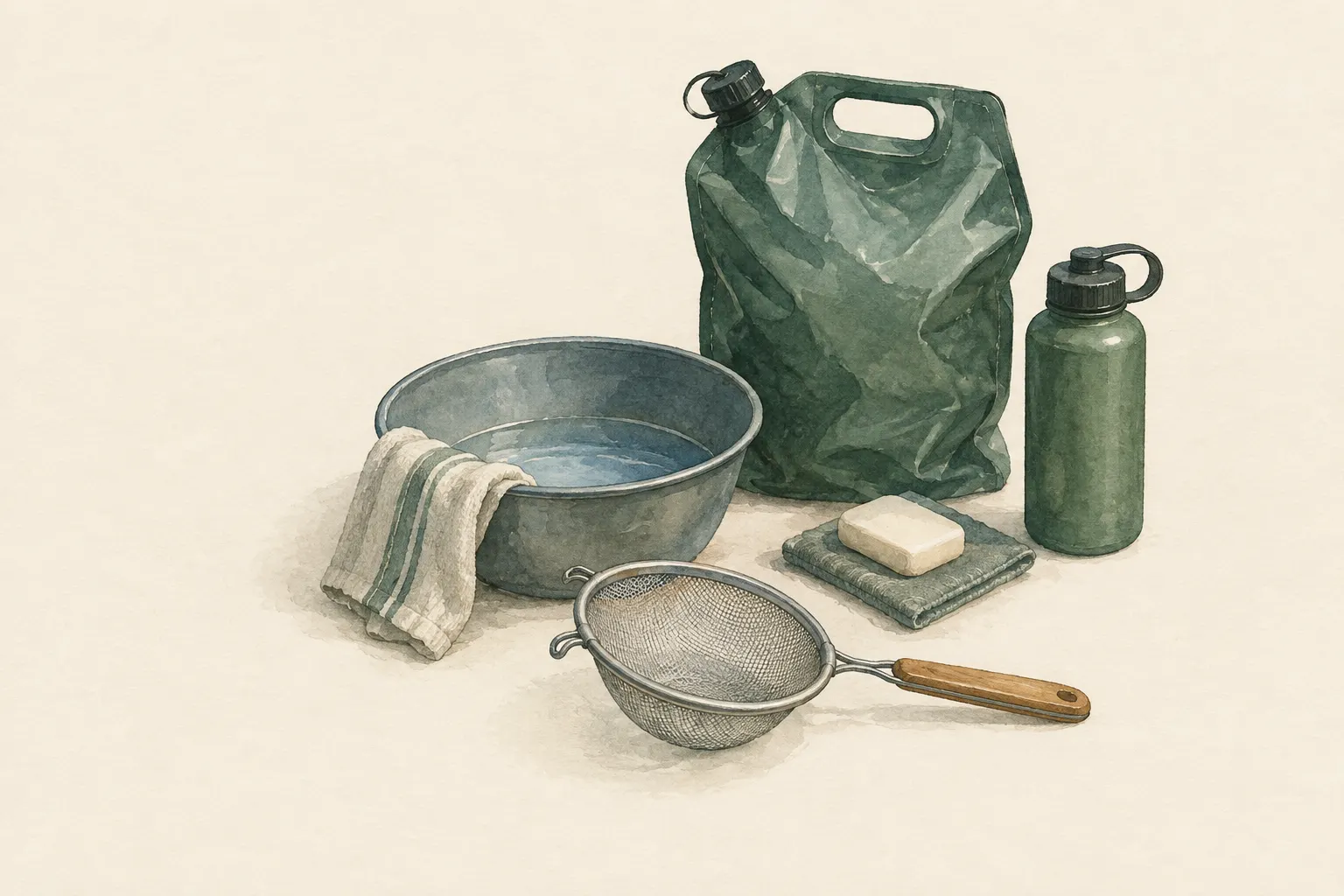
Fix the washing area when setting up camp: well away from water, apart from the tents, near the kitchen. A large pot serves as a washing bowl, and a collapsible water container saves many trips to the bank. A small strainer or a piece of cloth and a rubbish bag belong right beside it.
For groups, a hand-washing station at the toilet and at the kitchen is worthwhile. It can be a hung-up container with a tap or a bottle with a small hole in the cap, plus soap and a catch basin. If washing hands is so easy that you cannot forget it, it actually gets done.
You wash yourself with water from the container too, away from the bank. Where swimming is allowed, wash off sunscreen and insect repellent first so they do not get into the water. How hygiene works without running water at home, for example during a water outage, is explained in a separate entry.
Good to know
A common mistake is thinking: “The soap is biodegradable, so I can use plenty and wash up in the lake.” Biodegradable only means that microorganisms can break the soap down over time – in the soil. In the water it can still do harm before that. So little soap and a large distance remain the rule.
The Leave No Trace principle “dispose of waste properly” sums all this up: little soap, a large distance from water, strain and scatter dishwater, carry out scraps. It takes a little more effort than washing at the bank – but waters stay clean, animals stay away and the group stays healthy.
Step by step
Scrape out leftovers
Eat pots and plates clean or scrape them out with a spoon. Leftovers go into the rubbish bag, not into nature.
- 1
Scrape out leftovers
Eat pots and plates clean or scrape them out with a spoon. Leftovers go into the rubbish bag, not into nature.
- 2
Fetch water
Fetch water in a container from the bank and carry it to the washing area.
- 3
Wash
Wash with warm water and little or no soap, cleanest items first. Rinse with clean water.
- 4
Strain and scatter
Pour the washing water through a fine strainer or cloth, put the scraps in the rubbish and scatter the water widely, well away from water and camp.
- 5
Dry
Let dishes air-dry rather than wrapping them in a damp cloth.
- 6
Personal washing
Wash yourself with water from the container away from the bank too. Where swimming is allowed, wash off sunscreen and insect repellent first.
Common mistakes
- Washing the pot directly in the stream
- Tipping leftovers into the bushes
- Using lots of soap because it is "biodegradable"
- Forgetting to wash hands before cooking
Quick view
Materials
Metal pot (stainless steel, aluminium, titanium)
As a washing bowl
Hot – scalding risk.
Soap / detergent
Sparingly, biodegradable if possible
Rinse drinking-water containers thoroughly after cleaning.
Collapsible water container or bag
Protect from sharp objects.
Use only food-grade and only for water.
Rubbish bag (resealable)
For strained food scraps
Suitable for
- Multi-day camps
- Groups
- Camps by lakes and streams
Not suitable for
- Sites with their own washing facilities – follow their rules
- Areas where waste water must be carried out
Prerequisites
- A container for fetching water
- Space for a washing area away from water and camp
Safety
- Wash hands before preparing food and after every toilet visit; stomach bugs spread quickly in groups. Where water is scarce, also use hand sanitiser.
- Even biodegradable soap harms waters. No washing or emptying washing water at or in a lake or stream – Leave No Trace gives a distance of about 60 m.
- Rinse dishes with water that is safe to drink or has been treated, and let them dry well.
How it works
Soil filters and breaks down small amounts of scattered washing water, whereas a stream or lake carries soap and food scraps onwards. Food scraps attract animals. Clean dishes and clean hands interrupt the path of germs into the mouth.
Advantages
- Less illness in the group
- Clean waters
- Fewer animal visits
Disadvantages
- Water has to be carried
- More effort than washing at the bank
Deep knowledge
Background
The Leave No Trace principle "dispose of waste properly" describes washing with small amounts of biodegradable soap well away from water and scattering strained dishwater.
Hygiene without running water at home is covered in a separate entry.
Variants
- Hand-washing station
- A hung-up container with a tap or a bottle with a hole in the cap, soap and a catch basin – for groups at the toilet and the kitchen.
Common mistakes
- Washing the pot directly in the stream
- Tipping leftovers into the bushes
- Using lots of soap because it is "biodegradable"
- Forgetting to wash hands before cooking
Limits and risks
- No water treatment – see the water entries
- Local rules (e.g. carrying out waste water) take precedence
Material alternatives
Derived from material properties: a substitute must have all relevant properties. Observe the notes on the substitute.
- Metal pot (stainless steel, aluminium, titanium)
- Single-wall stainless steel bottle (Heat only single-wall bottles without paint/plastic; remove the lid before heating.)
- Collapsible water container or bag
- Single-wall stainless steel bottle (Heat only single-wall bottles without paint/plastic; remove the lid before heating.), Double-wall insulated bottle (Never heat directly.), PET bottle (clear, max. 2 litres) (Do not heat or place in a fire.), Food-grade water container (Only use containers that never held chemicals or fuel.), Airtight food-grade storage container (Fill only when clean and completely dry; never use containers that previously held chemicals.), Food-grade water bag (Use only for drinking water, never for chemicals or fuel.), Fermentation jar or crock (Use only food-grade containers of glass, food-safe glazed stoneware or food-grade plastic – no metal containers for acidic food.), Resealable food bags (Use only bags intended for food; do not use with boiling water unless the manufacturer explicitly allows it.)
Results come exclusively from structured entries. No improvised instructions are generated.
Sources
Leave No Trace Center for Outdoor Ethics: The Seven Principles of Leave No Trace (Principle 5: Minimize Campfire Impacts)
Washing away from water, little biodegradable soap, straining and scattering dishwater
World Health Organization (WHO) (2006): Five Keys to Safer Food Manual
Hand washing and clean utensils in food preparation