Toilet and hygiene without running water
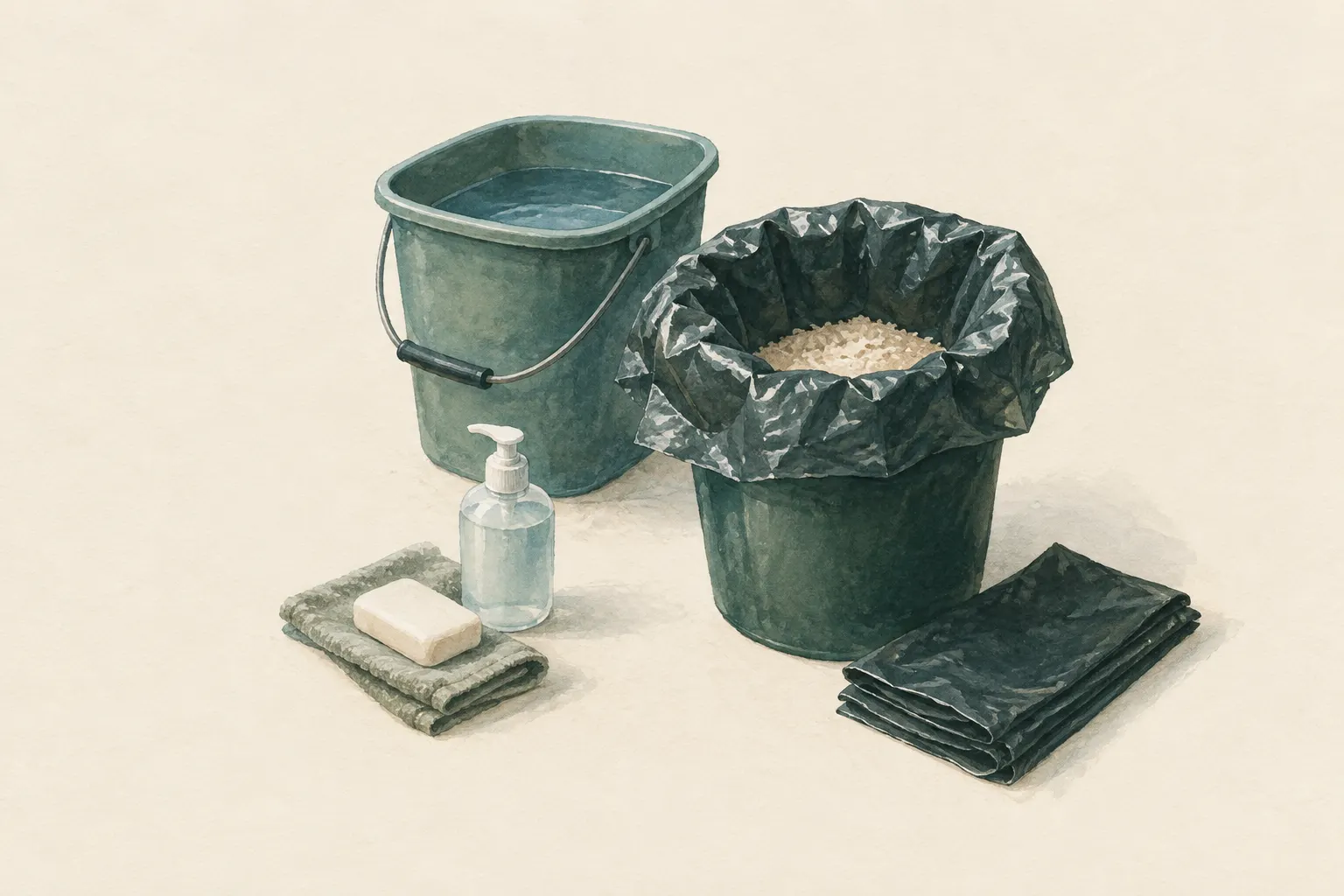
When the water supply fails, the toilet quickly becomes a problem. If the sewer still works, flush with a bucket of utility water. If the sewer is also disrupted, use a bag toilet with absorbent. Washing hands with a little water and soap remains a must.
- About 30 minutes of preparation; a few minutes a day during the outage
Explained simply
When no more water comes from the tap, you quickly notice that the toilet needs water too. But it does not need water pressure from the mains to flush. It is enough to pour a bucket of water briskly into the bowl – then everything rushes away like a normal flush. For this you use “utility water”, meaning water you do not drink, such as rainwater or used washing-up water.
Sometimes, though, the sewer pipes do not work either, for example during a flood. Then you must not flush at all. Instead, two strong bin bags go into the toilet, and after each use you sprinkle in some cat litter or sawdust. It soaks up liquid and smell.
Most important of all: wash your hands with soap – after every toilet visit and before eating. Otherwise diarrhoeal diseases spread very quickly in emergencies.
How it works
A normal toilet flush lets a larger amount of water rush into the bowl in a short time. This raises the water level, and the water carries the contents over the trap – the curved section of pipe behind the bowl – into the sewer. You can copy exactly that with a bucket. What matters is pouring the water in briskly in one go, not slowly trickling it.
This bucket flush only works if the sewer pipe itself is still clear. During floods or sewer disruptions, sewage can back up and even be pushed into the home. Then waste must be collected, absorbed, sealed tightly and stored separately until proper disposal is possible.
In high-rise buildings, water often fails first on the upper floors because the pumps that push water upwards stop without power. Then utility water has to be carried – a good reason to flush sparingly.
What really matters
First, work out which problem you have. Follow radio announcements and the water utility's instructions. If only tap water is missing, use the bucket flush. If there is a sewer problem, a flood, or the authorities ask people not to flush, the bag toilet comes into use.
For the bag toilet, bail the water out of the bowl or use a bucket, put two strong bin bags one inside the other and sprinkle some absorbent in after each use. Then close the lid. Carefully press the air out of full bags, knot them firmly and store them in a closable container in a cool, shaded, child-proof place outside the living area. Your municipality decides how they are disposed of.
Utility water and drinking water stay strictly separate. Never use your drinking-water stock for the toilet. Instead, collect used washing water for flushing, and do not flush every time if water is short – agree this within the household.
Safety: what to watch out for
Do not flush during floods or when sewage is backing up. Otherwise sewage can be pushed into the home. Then use only the bag toilet and follow the authorities' instructions.
Do not mix household chemicals such as bleach-based and acidic cleaners in the same bag toilet. Toxic gases can form. A simple absorbent such as cat litter or sawdust is enough.
Hand hygiene is the most important protection against illness. Set up a small wash station next to the toilet: a canister or bottle of utility water, soap and a bowl to catch the water. Hand sanitiser supplements washing but does not replace it when hands are visibly dirty. Disposable gloves help when changing bags.
Personal hygiene with little water
Instead of showering, wash with a flannel and a small bowl of water – from top to bottom, face first. A cup of drinking water is enough for brushing your teeth. Wet wipes are handy in between but belong in the bin and never in the toilet, because they block pipes.
A camping toilet with a holding tank is more comfortable than the bag solution, but needs suitable additives and a way to empty it. The manufacturer's instructions apply.
Good to know
The BBK points out that a power outage can also bring down the water supply and recommends keeping hygiene items and bin bags. Ready.gov advises planning water for hygiene in addition to drinking water.
In humanitarian operations, safe toilets and handwashing are among the most important measures against disease outbreaks. The same applies on a small scale to a household: keep waste safely separated from the living area and wash your hands. It is unpleasant, but it protects effectively.
Step by step
Clarify: water gone or sewer disrupted?
Follow radio announcements and the utility's instructions. Water outage only: bucket flush. Sewer problem, flood or a request not to flush: bag toilet.
- 1
Clarify: water gone or sewer disrupted?
Follow radio announcements and the utility's instructions. Water outage only: bucket flush. Sewer problem, flood or a request not to flush: bag toilet.
- 2
Bucket flush
Pour a few litres of utility water (rainwater, used washing-up water) briskly into the bowl. Do not flush every time if water is short – as agreed within the household.
- 3
Set up a bag toilet
Empty the bowl or bail out the water, put in two strong bin bags or line a bucket with them. After each use sprinkle in some absorbent (cat litter, sawdust). Close the lid.
- 4
Seal and store bags
Change bags as needed, press out the air, knot them firmly and store them in a closable container in a cool, shaded, child-proof place outside the living area. Dispose of them according to the municipality's instructions.
- 5
Organise hand hygiene
A wash station next to the toilet: canister or bottle of utility water, soap, a catch bowl. Hand sanitiser supplements soap but does not replace washing when hands are visibly dirty.
- 6
Personal hygiene with little water
A flannel wash instead of a shower, brushing teeth with a cup of drinking water, wet wipes in between. Collect used washing water for flushing the toilet.
Common mistakes
- Using up the drinking-water stock for flushing
- Continuing to flush when sewage backs up
- Storing bags open or in the living area
- Skipping handwashing because water is short
- Throwing wet wipes into the toilet
Quick view
Materials
Toilet bags and absorbent
Use strong, leak-proof bags and double them.
Store filled bags sealed, cool and away from living areas; dispose of them as the authority instructs.
Hygiene supplies
Soap, toilet paper, hand sanitiser
Disposable gloves
Consider latex allergies – prefer latex-free gloves (e.g. nitrile).
Food-grade water container
For utility water to flush
Only use containers that never held chemicals or fuel.
Soap / detergent
Rinse drinking-water containers thoroughly after cleaning.
Suitable for
- Failure of the water supply, including high-rise buildings without pressure boosting
- Floods with a disrupted sewer system
- Emergencies lasting several days
Not suitable for
- Flushing when authorities ask people not to, or when sewage is backing up
- Using the drinking-water stock for flushing
Prerequisites
- A separate stock of utility water or knowing where it comes from (e.g. rainwater)
- A bucket
Safety
- Wash hands with soap after every toilet visit and before eating – diarrhoeal diseases spread quickly in emergencies.
- Do not mix household chemicals such as bleach-based and acidic cleaners in the same bag toilet – toxic gases can form.
How it works
A toilet only needs a larger quantity of water at once to flush, not the pressure from the mains: a bucket poured briskly into the bowl triggers the flush. If the sewer system itself is disrupted, waste must be collected, absorbed, sealed tightly and stored separately until proper disposal is possible.
Advantages
- Keeps the home hygienically usable
- Simple, cheap materials
- Saves drinking water
Disadvantages
- Unpleasant and smelly over longer periods
- Storing the bags needs space
Deep knowledge
Background
The BBK recommends keeping hygiene items and bin bags for emergencies and points out that a power outage can also bring down the water supply. Ready.gov recommends planning water for hygiene in addition to drinking water.
In humanitarian operations safe toilets and handwashing are among the most important measures against disease outbreaks. For a household the same principle applies on a small scale: keep waste safely separated, wash hands.
Variants
- Camping toilet
- A camping toilet with a waste tank is more convenient but needs suitable additives and a place to empty it. Follow the manufacturer's instructions.
- High-rise
- On upper floors water often fails first because pumps stop without power. Utility water must then be carried – one more reason to save flushing water.
Common mistakes
- Using up the drinking-water stock for flushing
- Continuing to flush when sewage backs up
- Storing bags open or in the living area
- Skipping handwashing because water is short
- Throwing wet wipes into the toilet
Limits and risks
- No rules on waste disposal – the municipality decides these
- No quantities for utility water
Material alternatives
Derived from material properties: a substitute must have all relevant properties. Observe the notes on the substitute.
- Food-grade water container
- Single-wall stainless steel bottle (Heat only single-wall bottles without paint/plastic; remove the lid before heating.), Double-wall insulated bottle (Never heat directly.), PET bottle (clear, max. 2 litres) (Do not heat or place in a fire.), Airtight food-grade storage container (Fill only when clean and completely dry; never use containers that previously held chemicals.), Collapsible water container or bag (Protect from sharp objects.), Food-grade water bag (Use only for drinking water, never for chemicals or fuel.), Fermentation jar or crock (Use only food-grade containers of glass, food-safe glazed stoneware or food-grade plastic – no metal containers for acidic food.), Resealable food bags (Use only bags intended for food; do not use with boiling water unless the manufacturer explicitly allows it.)
Results come exclusively from structured entries. No improvised instructions are generated.
Sources
Bundesamt für Bevölkerungsschutz und Katastrophenhilfe (BBK), Deutschland: Ratgeber für Notfallvorsorge und richtiges Handeln in Notsituationen
Hygiene preparedness and failure of the water supply during power outages
Ready.gov – U.S. Federal Emergency Management Agency (FEMA): Water (emergency water supply guidance)
Planning water for hygiene too
Sphere Association (2018): The Sphere Handbook: Humanitarian Charter and Minimum Standards in Humanitarian Response
Importance of safe sanitation and hand hygiene in emergencies