Floods: before, during, after
Floods and flash floods are among the deadliest natural hazards – often because people walk or drive through water. The most important rule: never walk or drive through flood water. Take warnings seriously, move to higher ground, follow the authorities' instructions and only return when they allow it.
- A few hours of preparation; immediate action during the event
Explained simply
Water looks harmless, but it is incredibly strong. Imagine someone pushing hard against your legs the whole time – that is exactly what moving water does. Even if it only reaches your knees, it can knock you over. And a car can start to float in water like a toy boat in the bath.
On top of that, flood water is usually brown and murky. You cannot see what is underneath – a hole in the road, an open manhole or sharp debris. That is why there is one very simple rule: never walk through flood water and never drive through it. Turn around and find a higher place.
In a flood, grown-ups, the fire service and the authorities work together. When they say “Please leave your home”, you go straight away. And if you are stuck somewhere, go upstairs and call the local emergency number (112 in the EU).
How it works
A flood happens when more water arrives than rivers, streams and drains can carry away. This can happen after days of rain, when a large river slowly overflows its banks, or after a single violent thunderstorm. The second case is called a flash flood: the rain falls so fast that the ground cannot absorb it, and the water rushes downhill over roads, slopes and small streams. Flash floods can develop within minutes – even where there is no river nearby.
The force of water is almost always underestimated. Moving water does not only push against you, it also washes away the ground under your feet. A car is lighter in water than you would think, because it contains air and therefore gets buoyancy. Once the wheels lose their grip, it drifts with the current. That is why a large share of flood deaths happen in vehicles.
Under murky water you also cannot tell whether the road is still there. The current can undermine asphalt and lift manhole covers. If you walk through, you may step into nothing. That is exactly why there is no safe rule of thumb for “still shallow enough” – the right decision is always: not through.
What really matters
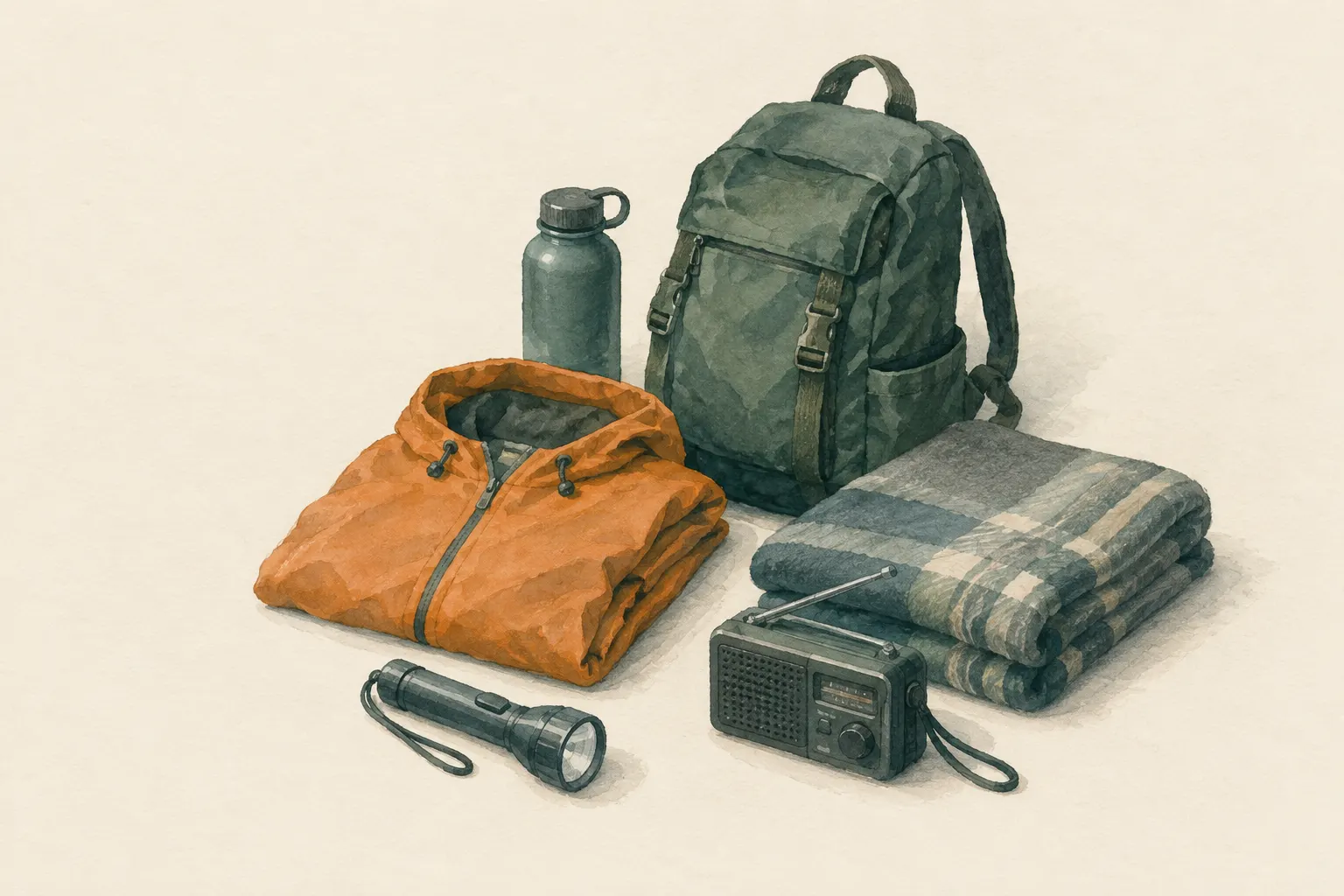
The most important part happens before the flood. Ask your municipality whether your home is in a flood or heavy-rain hazard area. Many regions have hazard maps showing which areas flood first. Do not store documents, medication and supplies in the basement, and keep a go bag ready.
When a warning comes, time is the most valuable thing. Now is the moment to move people and animals upstairs, charge devices and check the way to a higher place. Do not wait until you see the water rising – with flash floods it is often too late by then. When the authorities call for evacuation, leave immediately.
During the flood: go up, not through. Move to upper floors or higher ground, keep away from banks, bridges and streams, and avoid basements, underground car parks and underpasses. If you are trapped, go to the highest floor – but not into a closed attic without an exit – call the emergency number and make yourself noticeable.
Safety: what to watch out for
Basements and underground car parks are traps when water is rising. They can fill very quickly, and a door often cannot be opened against the pressure of the water. Nothing in the basement is worth going down for. The same applies to underpasses, where water collects.
Water and electricity are a dangerous mix. Do not touch electrical devices or switches if you are wet or standing in water. Switch off the power only if it is safe to do so; otherwise inform the utility or the fire service. Flood water is also often contaminated with sewage, fuel or chemicals – avoid skin contact, wash your hands thoroughly and throw away food that has touched the water.
An underestimated danger comes during the clean-up: pumps, dryers and generators with combustion engines produce carbon monoxide. This gas has no smell and can be deadly in enclosed spaces. So only run such devices outdoors. And only go back into the house when the authorities allow it – watch for gas smells, damage to the building, power lines and notices about drinking water.
Good to know
The US National Weather Service coined a motto for the most important rule: “Turn Around, Don't Drown”. It reminds you that turning back is not weakness but the wisest decision. Many people get into danger because they know a road well and believe they know how deep the water is there.
A common mistake in thinking is: “It has always been fine so far.” But heavy rain can also hit places that have not flooded for a long time. Even far from rivers, hollows, slopes and basement flats can be affected. If you know your region's warning channels – radio, warning apps, sirens, announcements – you gain the minutes that matter.
After the flood, it helps to photograph damage before you throw anything away; this makes things easier with your insurance. Wear gloves, sturdy shoes and protective clothing during the clean-up. And accept help: clearing up after a flood is hard work that you do not have to manage alone.
Step by step
Before: know the risk
Find out from your municipality or the authorities whether your home is in a flood or heavy-rain hazard area and which warning channels exist.
- 1
Before: know the risk
Find out from your municipality or the authorities whether your home is in a flood or heavy-rain hazard area and which warning channels exist.
- 2
Before: prepare
Do not store important documents, valuables and supplies in the basement. Keep a go bag ready, check your insurance cover, know your evacuation route and a higher location.
- 3
When warned: act
Follow radio and warning messages. Move people, animals and, if there is still time, valuables upstairs. Follow evacuation orders immediately.
- 4
During: go up, not through
Move to higher ground or upper floors. Do not walk or drive through water; turn around if a road is flooded. Keep away from banks, bridges and streams.
Do not go into basements, underground car parks or underpasses.
- 5
Trapped
If you are trapped in a building: go to the highest floor, but not into a closed attic without an exit. Call the local emergency number (112 in the EU) and make yourself noticeable.
- 6
After: return only when allowed
Return only when the authorities allow it. Watch for structural damage, gas smells and power lines. Follow drinking-water notices.
- 7
Clean up with protection
Wear gloves, sturdy shoes and protective clothing during clean-up. Photograph damage for insurance before you throw things away.
Common mistakes
- Driving through flooded roads
- Walking through moving water
- Going into the basement to save belongings
- Ignoring warnings because "it has always been fine so far"
- Returning to the building too early
- Running a generator indoors to dry things out
Quick view
Materials
Battery or crank radio
For warnings during power outages
Check batteries regularly and keep spares.
Document folder (waterproof)
Waterproof, ready to grab
Store securely – contains sensitive personal data.
Headlamp / flashlight
Sturdy closed shoes
For clean-up work
Suitable for
- Households near rivers, streams, in hollows or with basement flats
- Heavy rain even far from bodies of water
Not suitable for
- Technical flood protection on buildings – consult experts and authorities
- Tsunami behaviour – coastal authorities' own rules apply
Prerequisites
- Knowing whether your home is in a flood or heavy-rain risk area
- Knowing the region's warning channels and evacuation routes
Safety
- Flood water can be contaminated with sewage, fuel and chemicals. Avoid contact, wear protective clothing, wash your hands and discard food that came into contact with the water.
How it works
Water develops great force: moving water pushes against legs and vehicles, lifts cars and undermines roads. Under murky water, holes, open manholes and debris are invisible. Flash floods after heavy rain develop very quickly, even where there is no river. So one thing matters most: get away from the water and up in time, rather than through it.
Advantages
- Clear, simple basic rules
- Preparation reduces damage and risks considerably
Disadvantages
- Warning times for flash floods can be very short
- Evacuation routes may themselves be flooded
Deep knowledge
Background
The US National Weather Service runs the campaign "Turn Around Don't Drown" because a large share of flood deaths happen in vehicles. FEMA (Ready.gov) also advises never to walk, swim or drive through flood water, to move to higher ground and to follow the authorities' instructions. The BBK's emergency preparedness guide gives advice on preparation and behaviour in floods.
Warning systems, hazard maps and evacuation rules are organised regionally. Your municipality or the responsible authority knows which areas are at risk and which routes should be used.
Variants
- Flash flood after heavy rain
- Flash floods can develop within minutes, even in towns and along small streams. When heavy rain is forecast, avoid valleys, streams and underpasses, and do not wait until the water visibly rises.
Common mistakes
- Driving through flooded roads
- Walking through moving water
- Going into the basement to save belongings
- Ignoring warnings because "it has always been fine so far"
- Returning to the building too early
- Running a generator indoors to dry things out
Limits and risks
- No figures on water depths or flow speeds
- No technical flood-protection measures
- No guidance on tsunamis
Material alternatives
Derived from material properties: a substitute must have all relevant properties. Observe the notes on the substitute.
- Document folder (waterproof)
- Tarp, Plastic sheet / large bin bag (Tears easily; never pull over the head (suffocation risk).), Emergency blanket (Tears easily once punctured; short-term shelter only.), Rain poncho (When used as a shelter, it no longer protects your body from rain.), Bivy bag (Never fully close off the face.), Tent (Do not cook or heat inside the tent (fire and carbon monoxide danger).), Heavy-duty bin bag (large) (Suffocation risk: never pull plastic bags over the head or face and keep them away from small children.), Group shelter bag (Airtight – ventilate regularly.)
- Headlamp / flashlight
- Mobile phone (The battery drains quickly in cold and with continuous screen and GPS use.), Battery lantern / LED light
Results come exclusively from structured entries. No improvised instructions are generated.
Sources
NOAA National Weather Service (USA): Turn Around Don't Drown
Never drive or walk through flood water
Ready.gov – U.S. Federal Emergency Management Agency (FEMA): Floods
Behaviour before, during and after floods
Bundesamt für Bevölkerungsschutz und Katastrophenhilfe (BBK), Deutschland: Ratgeber für Notfallvorsorge und richtiges Handeln in Notsituationen
Preparation and behaviour in floods
European Commission: 112 – the European emergency number
European emergency number 112