Using generators safely
Portable generators with a combustion engine produce carbon monoxide – an invisible, odourless gas that can kill within a short time indoors. Generators therefore belong outdoors only, well away from windows, doors and vents. They must never be connected directly to household wiring.
- About 30 minutes to set up; ongoing supervision
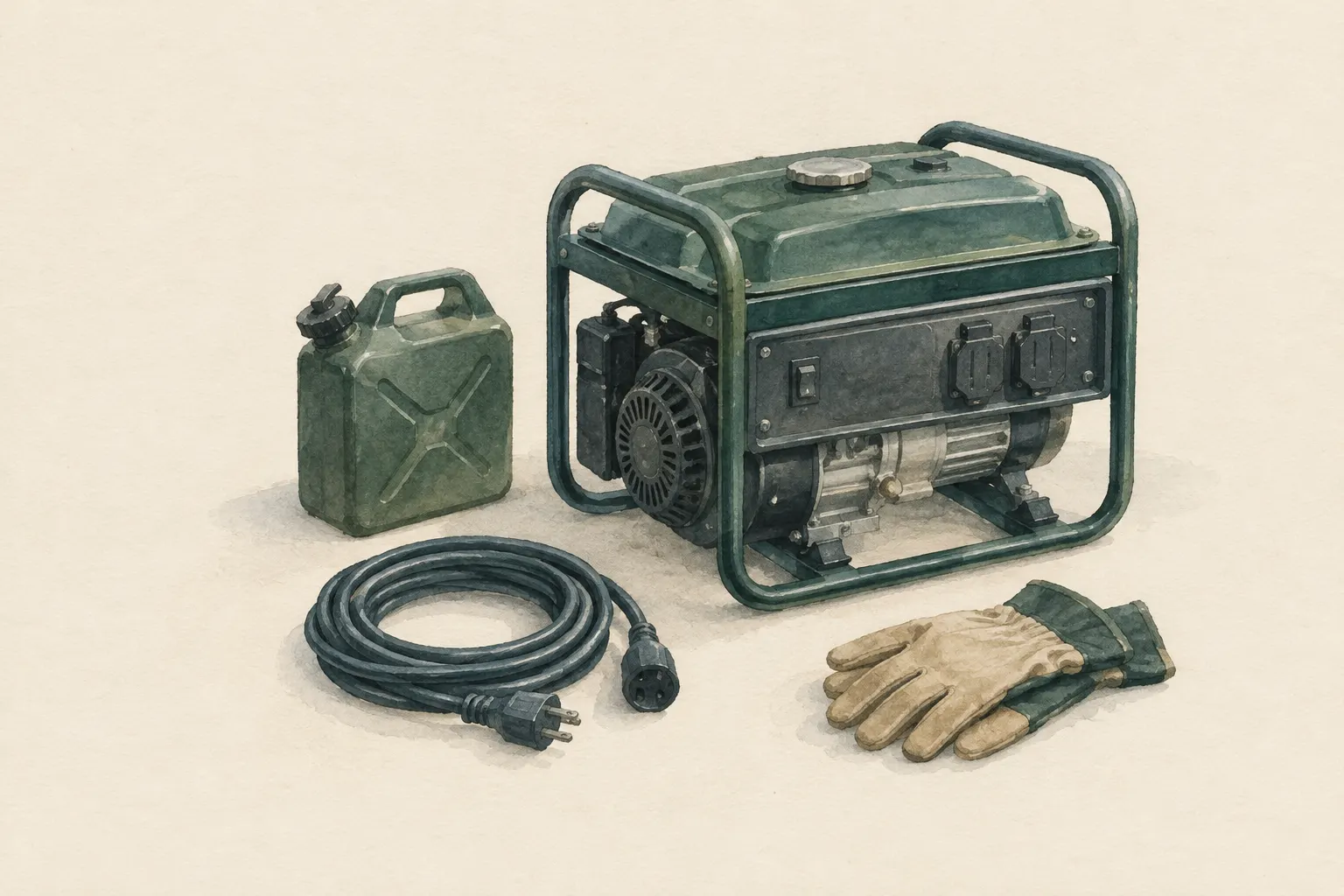
Explained simply
A generator is a small machine with an engine, like a lawnmower's, that makes electricity. It burns petrol or diesel to do this, and exhaust comes out of the exhaust pipe. This exhaust contains carbon monoxide, CO for short. This gas is invisible, has no smell and can quickly make people unconscious and kill them in enclosed spaces.
That is why there is one very firm rule: a generator only runs outdoors, well away from windows, doors and vents. Never in the home, never in the cellar, never in the garage – not with the door open and not “just briefly” either.
The second rule: never plug a generator into a wall socket or into the house wiring. That can give people a fatal electric shock, for example workers repairing the power lines outside. Devices are connected one by one with an outdoor cable directly to the generator.
How it works
In a generator, a combustion engine drives an electricity generator. Because combustion in the engine is never quite complete, the exhaust contains a lot of carbon monoxide. When breathed in, CO enters the blood and binds to the red blood pigment much more tightly than oxygen does. The blood can then carry less oxygen, and the brain and heart get too little of it.
The treacherous thing is that you cannot perceive CO. It has no smell, you cannot see it, and the first signs – headache, dizziness, nausea, tiredness – seem harmless and are often mistaken for flu or exhaustion. During sleep you do not notice them at all. An open window or door is not enough to safely carry away the exhaust of a running engine.
The second danger is electrical. If a generator feeds the household wiring through a socket, the current also flows into the line to the street. There it energises lines that are supposed to be dead – deadly for utility workers and neighbours. Fires and damage can also happen when grid power returns.
What really matters
The location decides how safe it is. The generator belongs outdoors on firm, dry ground, well away from windows, doors, vents and neighbouring houses, with the exhaust pointing away from the house. How far away it must be is stated in the manufacturer's manual and your authorities' guidance – stick to it, even when it is inconvenient.
Devices are connected one by one to the generator using undamaged extension cords rated for outdoor use. Watch the power limit: the generator can only deliver a certain amount of power, and too many devices at once overload it. Read the manual before first use and practise starting it in daylight – not for the first time in the dark during an outage.
Anyone who wants to supply the house with backup power permanently needs a transfer switch installed by a qualified electrician. It disconnects the house from the public grid before the generator feeds in. This is not a DIY job, and the rules for it differ from country to country.
Safety: what to watch out for
Battery-powered carbon monoxide alarms in the house, especially near bedrooms, are an important second layer of protection. They beep before the amount of CO becomes dangerous – even while you are asleep. Check them before you start the generator.
If the alarm sounds or someone gets a headache, dizziness, nausea, weakness or drowsiness: everyone into fresh air immediately, call the local emergency number (112 in the EU) and do not go back into the house to fetch something “just quickly”.
When refuelling: switch the engine off and let it cool, only then top up. Remove spilled fuel before restarting. Fuel belongs in approved containers outside living areas and away from ignition sources; check local storage rules. Keep the generator dry, do not handle it with wet hands and protect it from rain only as the manufacturer allows – never enclose it.
When it makes sense – and when not
A generator can supply a fridge, lamps or chargers during long outages. But it brings noise, exhaust in the neighbourhood, fuel storage and a theft risk. For many households it is enough to run only a few truly important devices.
An alternative is a battery power station. It produces no exhaust and may be used indoors, but has only limited capacity and must be charged beforehand. For life-sustaining medical devices, neither is a solution to improvise on your own: this needs a plan agreed with the doctor and the device supplier.
Good to know
The US health agency CDC and Ready.gov explicitly warn against running generators in homes, garages, basements or near windows. After storms and floods, carbon monoxide poisonings from incorrectly placed generators happen again and again – often because people wanted to protect the generator from rain or theft.
A common misconception is: “It's safe with the garage door open.” It is not. Exhaust can still build up and drift into the house through doors and gaps. The only reliable solution is a place outdoors with enough distance.
Step by step
Read the manual
Read the manufacturer's manual before first use – not during the outage. Practise starting it in daylight.
- 1
Read the manual
Read the manufacturer's manual before first use – not during the outage. Practise starting it in daylight.
- 2
Outdoor location
Set the generator outdoors on firm, dry ground, far from windows, doors, vents and neighbouring buildings, with the exhaust pointing away from the house.
Never in a garage, basement or carport – not even "just briefly".
- 3
Check carbon monoxide alarms
Make sure battery-powered CO alarms in the home are working, especially near bedrooms.
- 4
Connect devices individually
Connect devices directly to the generator using suitable, undamaged outdoor extension cords. Observe the generator's power limits.
- 5
Refuel safely
Switch the generator off and let it cool, then refuel. Remove spilled fuel before restarting.
- 6
Watch for warning signs
If the CO alarm sounds or symptoms such as headache and dizziness occur: everyone into fresh air immediately, call the emergency number, do not go back inside.
Common mistakes
- Running the generator in the garage with the door open
- Placing the generator directly under a window
- Feeding the generator into a house socket via a cable
- Refuelling while the engine is running or hot
- Using unsuitable or damaged extension cords
Quick view
Materials
Portable generator
Operate outdoors only – never in the home, basement, garage or a tent (carbon monoxide).
Never connect directly to household wiring.
Carbon monoxide alarm
Inside the home, especially near sleeping areas
Does not replace the rule never to run combustion devices indoors. Choose battery-powered or with battery backup.
Suitable for
- Running individual devices such as a fridge, lamps or chargers via extension cords
- Households that have practised handling beforehand
Not suitable for
- Operation in the home, basement, garage, carport, crawl space, conservatory or tent – even with the door or window open
- Feeding directly into household wiring without a transfer switch installed by a qualified electrician
- Life-sustaining medical equipment without a plan agreed with the supplier
Prerequisites
- Manufacturer's manual read
- A suitable location outdoors
- Extension cords rated for outdoor use and the load
- Working carbon monoxide alarms
Safety
- Refuel only with the engine switched off and cooled down. Store fuel in approved containers outside living areas and away from ignition sources; check local storage rules.
- Keep the generator dry and do not handle it with wet hands; protect it from rain only as the manufacturer specifies, without enclosing it.
How it works
Besides electricity, a combustion engine produces exhaust gases with a high carbon monoxide content. Carbon monoxide blocks oxygen transport in the blood; you cannot see, smell or taste it. The only reliable protection is to stop the exhaust reaching indoor spaces at all. The second danger is electrical: an incorrectly connected generator energises lines that are assumed to be dead.
Advantages
- Can supply refrigeration, light and chargers for longer periods
- Independent of the grid
Disadvantages
- Danger to life from carbon monoxide if positioned incorrectly
- Fuel needs and storage
- Noise and exhaust in the neighbourhood
- Theft risk outdoors
Deep knowledge
Background
The US health agency CDC and FEMA (Ready.gov) explicitly warn against running generators in homes, garages, basements or near windows and recommend battery-powered carbon monoxide alarms. After storms and floods, carbon monoxide poisonings from incorrectly placed generators occur again and again. WHO describes carbon monoxide as a product of incomplete combustion that can reach dangerous concentrations indoors.
The electrical side is also critical: Ready.gov warns against connecting generators directly to household wiring, because backfeeding into the grid endangers people. Permanent connections belong in the hands of a qualified electrician; the regulations for them differ from country to country.
Variants
- Battery power station instead of a generator
- Portable battery power stations produce no exhaust and can be used indoors. However, they have limited capacity and must be charged beforehand; follow the manufacturer's instructions on charging and storage.
Common mistakes
- Running the generator in the garage with the door open
- Placing the generator directly under a window
- Feeding the generator into a house socket via a cable
- Refuelling while the engine is running or hot
- Using unsuitable or damaged extension cords
Limits and risks
- No distance in metres – manufacturer's instructions and official guidance apply
- No instructions for installing transfer switches or feed-ins
- Fuel storage rules vary by region
Sources
Centers for Disease Control and Prevention: Carbon Monoxide Poisoning – Prevention guidance
Never run generators indoors or near windows; CO alarms
Ready.gov – U.S. Federal Emergency Management Agency (FEMA): Power Outages
Generators outdoors only, not connected to household wiring
World Health Organization, Regional Office for Europe (2010): WHO guidelines for indoor air quality: selected pollutants (carbon monoxide chapter)
Formation and danger of carbon monoxide indoors