When the heating fails: staying warm at home
During a power cut, gas shortage or heating breakdown, a home slowly cools down in winter. The safest approach is to keep one room warm, dress warmly and use outside help. The greatest danger is improvised heating: grills, gas stoves and generators indoors can produce lethal carbon monoxide.
- About 30 minutes of preparation; ongoing during the outage
Explained simply
Sometimes the heating fails at home in winter – for example during a power cut. The home does not turn icy straight away, but it cools down hour by hour, like a cup of tea left standing.
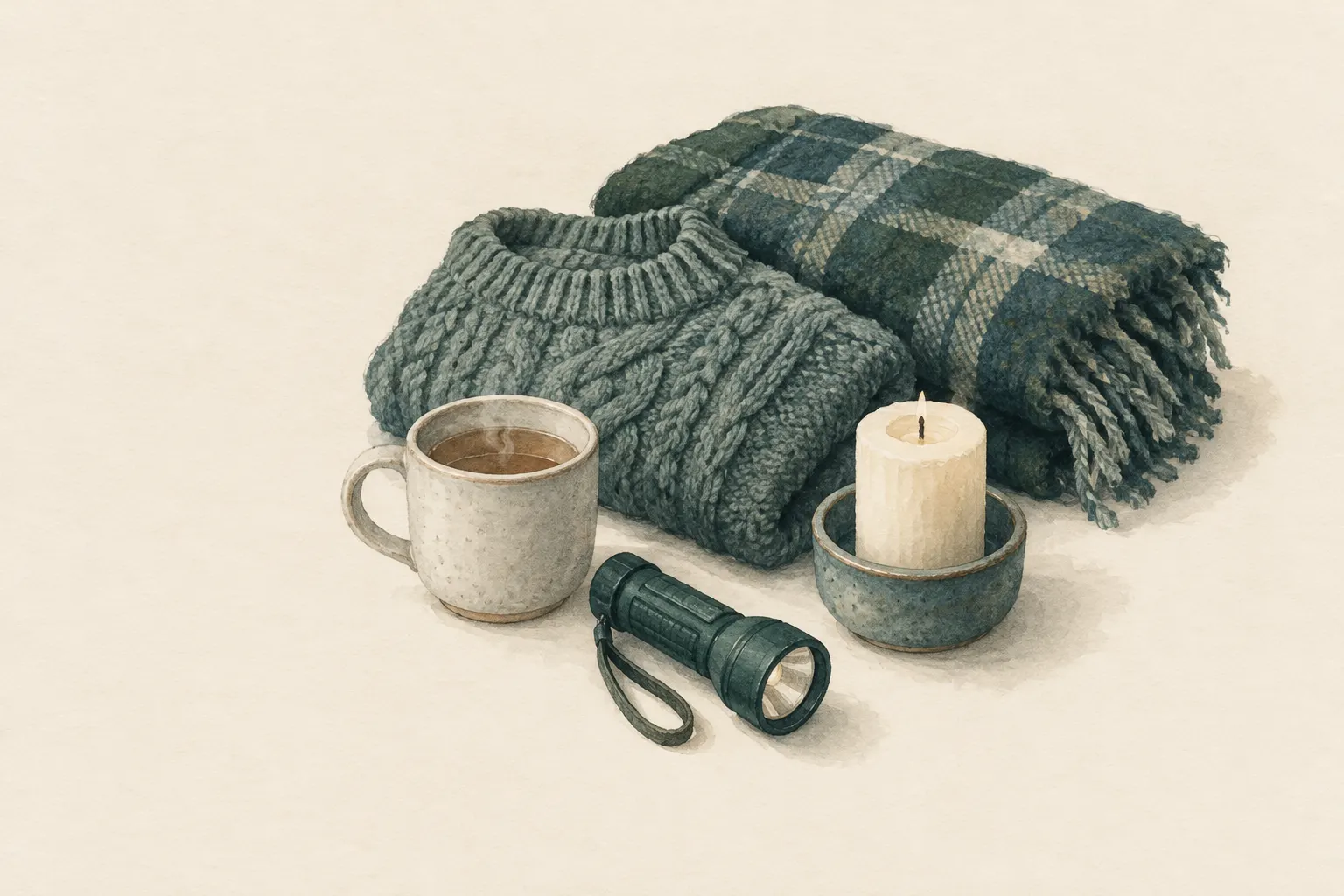
What helps most is keeping the warmth together: everyone stays in one small room, the doors to the other rooms are closed, the curtains drawn. You put on several layers of clothing, a hat and thick socks, and snuggle under blankets. Warm drinks from a vacuum flask feel good.
The most important rule: never heat the home with a grill, a camping stove or a generator – not even with a window open. They produce an invisible, odourless gas that is very dangerous. If it gets too cold, it is better to go in good time to relatives, friends or a warming centre.
How it works
A home constantly loses heat through outer walls, windows and roof and through air exchanged via gaps. As long as the heating runs, this heat is continuously replaced. If it fails, the temperature drops gradually – how quickly depends heavily on how well the building is insulated and how cold it is outside.
Concentrating warmth in a small room slows the loss. A small room with few outer walls and windows can be kept at a bearable temperature for longer by the body heat of the people in it, closed doors and curtains than a whole home can.
Even more important than the room temperature is the warmth right at the body. Several layers of clothing, a hat, socks and blankets hold the heat your body produces just like a sleeping bag does outdoors.
What really matters
Get information first: a battery or crank radio, warning apps or official websites tell you how long the outage is expected to last and whether there are warming centres, emergency shelters or help points.
Then choose a small room as the shared living space, close the doors to unused rooms and draw the curtains, especially at night. You can reduce draughts at door gaps with blankets or towels. Air the room briefly and deliberately rather than leaving windows tilted open – fresh air still matters.
Wear several layers, a hat, socks and slippers, change damp clothing, and sit and sleep on mats or rugs rather than cold floors. Do not put beds against cold outer walls. Eat regularly and drink warm drinks from vacuum flasks while they are available.
Safety: what to watch out for
The greatest danger is improvised heating. Charcoal or gas grills, camping stoves, patio heaters or generators never belong in the home, basement, garage or a tent – not even with a window open. They can produce carbon monoxide, which is invisible and odourless and can be lethal. A gas hob and oven are not room heaters either.
Headache, dizziness, nausea or drowsiness in several people in the same room can indicate carbon monoxide. Then get to fresh air immediately and call the local emergency number (112 in the EU).
Never leave candles and tealights unattended or use them near curtains, blankets or children. Battery lights and headlamps are safer. Smoke alarms should be working; if fuels are used for heating or cooking at home, a carbon monoxide alarm also makes sense.
Keeping vulnerable people in mind
Older people, infants, young children and sick people cool down faster and often notice late. Check on them regularly: are hands and feet cold, do they seem unusually tired, confused or quiet?
Also ask older neighbours or those living alone whether they are coping. In emergencies, neighbours are often the quickest help.
If the home becomes too cold or someone shows warning signs of hypothermia – such as intense shivering, confusion or drowsiness – move early to warm accommodation or call the emergency number. Waiting too long is one of the most common mistakes.
Being prepared
Authorities such as Germany's Federal Office of Civil Protection and Disaster Assistance (BBK) recommend, as part of emergency preparedness, warm clothing, blankets, torches instead of candles and a battery radio, among other things. Having these within reach means you do not have to improvise in an emergency.
Sleeping bags are very useful at home too, because they wrap the body all round and so let little warmth escape. A sleeping pad protects against cold floors. Vacuum flasks keep drinks warm for a long time.
Wood stoves and heaters approved for indoor use may only be operated according to the manufacturer's instructions, with a working flue or adequate ventilation, with a carbon monoxide alarm and under supervision. If in doubt, do not use them. Work on electrics, gas or heating systems belongs in the hands of professionals.
Step by step
Get information
Use radio, warning apps or official websites to find out how long the outage is expected to last and whether there are warming centres, emergency shelters or help points.
- 1
Get information
Use radio, warning apps or official websites to find out how long the outage is expected to last and whether there are warming centres, emergency shelters or help points.
- 2
Choose one room
Use a small room with as few outer walls and windows as possible as the shared living space. Close doors to unused rooms.
- 3
Reduce draughts
Close curtains, especially at night, and reduce draughts at door gaps with blankets or towels. Air the room briefly and deliberately instead of leaving windows tilted open.
- 4
Wear layers
Wear several layers, a hat, socks and slippers. Change damp clothing. Sit and sleep on mats or rugs rather than cold floors.
- 5
Sleep warm
Use sleeping bags and several blankets, and keep beds away from cold outer walls. Several people can sleep in the same room.
- 6
Eat and drink
Eat regularly and drink warm drinks from vacuum flasks while available.
- 7
Neighbours and vulnerable people
Check on older neighbours or those living alone. If the home becomes too cold or someone shows warning signs of hypothermia, move early to warm accommodation or call the emergency number.
Common mistakes
- Running a grill, camping stove or generator indoors
- Using a gas hob or oven as a heater
- Leaving candles burning unattended
- Trying to keep the whole home warm instead of one room
- Waiting too long before going to warm accommodation
- Losing track of vulnerable relatives and neighbours
Quick view
Materials
Wool blanket / duvet
Wool blankets, duvets, sleeping bags
Keep away from candles, stoves and heaters.
Dry spare clothing
Several layers, hat, socks
Carry it in waterproof packaging – wet clothing barely insulates.
Headlamp / flashlight
Instead of candles where possible
Double-wall insulated bottle
To keep drinks warm
Never heat directly.
Sleeping pad
Against cold floors
Suitable for
- Power cuts in winter
- Failure of heating, gas or district-heating supply
- Households with older people, young children or chronically ill people – with particular attention
Not suitable for
- Using devices approved only for outdoor use
- Long outages in severe frost without contact with authorities or support services
Prerequisites
- Smoke alarms; carbon monoxide alarms if fuels are used for heating or cooking at home
- Battery or crank radio for official information
Safety
- Do not use a gas hob or oven to heat the room.
- Older people, infants and sick people cool down faster and often notice late. Check on them regularly and move early to warm accommodation if needed.
How it works
A large, unheated room constantly loses heat to outer walls, windows and cold air. Concentrating warmth in a small room and on your own body – closing doors, sealing windows, wearing layers, staying under blankets – slows that loss. Additional heat sources with open flames or combustion engines bring heat, but also carbon monoxide and fire risk, into the living space.
Advantages
- Possible without special equipment
- Avoids the most dangerous improvised heat sources
Disadvantages
- The home still cools down during a long outage
- Depends on blankets, clothing and supplies in the household
Deep knowledge
Background
Authorities such as Germany's BBK recommend warm clothing, blankets, torches instead of candles and a battery radio, among other things, as part of emergency preparedness for power and heating outages. WHO describes carbon monoxide as a gas produced by incomplete combustion that can reach dangerous concentrations indoors.
The danger arises when grills, generators or camping stoves are run in enclosed spaces to heat or cook. An open window does not reliably protect against it. The warmth from such devices is not worth the risk.
Variants
- Approved space heaters
- Operate wood stoves and heaters approved for indoor use only according to the manufacturer's instructions, with a working flue or adequate ventilation, with a carbon monoxide alarm and under supervision. The device's approval and condition are decisive; if in doubt, do not use it.
Common mistakes
- Running a grill, camping stove or generator indoors
- Using a gas hob or oven as a heater
- Leaving candles burning unattended
- Trying to keep the whole home warm instead of one room
- Waiting too long before going to warm accommodation
- Losing track of vulnerable relatives and neighbours
Limits and risks
- No instructions for operating stoves or heaters
- No statements about building damage such as frozen pipes
- Not medical guidance
Material alternatives
Derived from material properties: a substitute must have all relevant properties. Observe the notes on the substitute.
- Wool blanket / duvet
- Sleeping pad, Dry leaves, grass or conifer boughs (Collect only where allowed; no protected plants. Check for ticks and insects.), Backpack, Dry spare clothing (Carry it in waterproof packaging – wet clothing barely insulates.), Insulated cool box (Keeps cold only for a limited time; without ice packs or ice it is not a fridge.), Sleeping bag (Do not store compressed long-term; do not pack away damp.), Newspaper and cardboard (Flammable – keep away from candles, stoves, heaters and embers.), Insulated cooking box (hay box, thermal cooker) (Never put open flame or embers inside – only the hot, closed pot.)
- Dry spare clothing
- Sleeping pad, Dry leaves, grass or conifer boughs (Collect only where allowed; no protected plants. Check for ticks and insects.), Backpack, Wool blanket / duvet (Keep away from candles, stoves and heaters.), Insulated cool box (Keeps cold only for a limited time; without ice packs or ice it is not a fridge.), Sleeping bag (Do not store compressed long-term; do not pack away damp.), Newspaper and cardboard (Flammable – keep away from candles, stoves, heaters and embers.), Insulated cooking box (hay box, thermal cooker) (Never put open flame or embers inside – only the hot, closed pot.)
- Headlamp / flashlight
- Mobile phone (The battery drains quickly in cold and with continuous screen and GPS use.), Battery lantern / LED light
- Double-wall insulated bottle
- Single-wall stainless steel bottle (Heat only single-wall bottles without paint/plastic; remove the lid before heating.), PET bottle (clear, max. 2 litres) (Do not heat or place in a fire.), Food-grade water container (Only use containers that never held chemicals or fuel.), Airtight food-grade storage container (Fill only when clean and completely dry; never use containers that previously held chemicals.), Collapsible water container or bag (Protect from sharp objects.), Food-grade water bag (Use only for drinking water, never for chemicals or fuel.), Fermentation jar or crock (Use only food-grade containers of glass, food-safe glazed stoneware or food-grade plastic – no metal containers for acidic food.), Resealable food bags (Use only bags intended for food; do not use with boiling water unless the manufacturer explicitly allows it.)
- Sleeping pad
- Dry leaves, grass or conifer boughs (Collect only where allowed; no protected plants. Check for ticks and insects.), Backpack, Dry spare clothing (Carry it in waterproof packaging – wet clothing barely insulates.), Wool blanket / duvet (Keep away from candles, stoves and heaters.), Insulated cool box (Keeps cold only for a limited time; without ice packs or ice it is not a fridge.), Sleeping bag (Do not store compressed long-term; do not pack away damp.), Newspaper and cardboard (Flammable – keep away from candles, stoves, heaters and embers.), Insulated cooking box (hay box, thermal cooker) (Never put open flame or embers inside – only the hot, closed pot.)
Results come exclusively from structured entries. No improvised instructions are generated.
Sources
Bundesamt für Bevölkerungsschutz und Katastrophenhilfe (BBK), Deutschland: Ratgeber für Notfallvorsorge und richtiges Handeln in Notsituationen
Emergency preparedness for power and heating failures: warm clothing, blankets, light and radio
World Health Organization, Regional Office for Europe (2010): WHO guidelines for indoor air quality: selected pollutants (carbon monoxide chapter)
Carbon monoxide from indoor combustion and its hazards
Wilderness & Environmental Medicine (Wilderness Medical Society) (2019): Wilderness Medical Society Clinical Practice Guidelines for the Out-of-Hospital Evaluation and Treatment of Accidental Hypothermia: 2019 Update
Insulation and dry clothing to prevent hypothermia