
Signals and communication
Be found, stay in touch
Emergency systems, signalling and communication planning – so help can reach you.
Method explorer
How do I get rescuers' attention?
Method explorer
Which distress device suits trips without mobile coverage?
Method explorer
How do I make searchers or helpers notice me at night?
Emergency calls
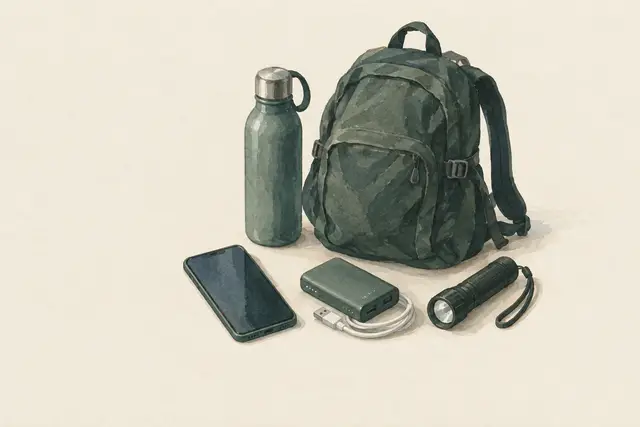
Making an emergency call: what to say, staying reachable
A good emergency call is short, calm and structured: where it happened, what happened, how many people are affected, what injuries or hazards – and then wait for questions. The local emergency number in the EU is 112. After the call, stay reachable and conserve the battery.
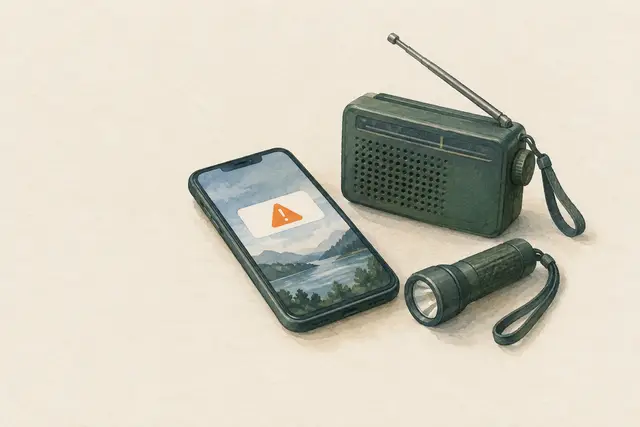
Warnings on your phone: setting up cell broadcast and warning apps
Many countries warn the population via cell broadcast: a message goes to every phone in a cell area, without registration and without an app. Official warning apps complement this. Knowing the settings, taking test alerts seriously and using other channels (radio, sirens) means learning about hazards earlier.
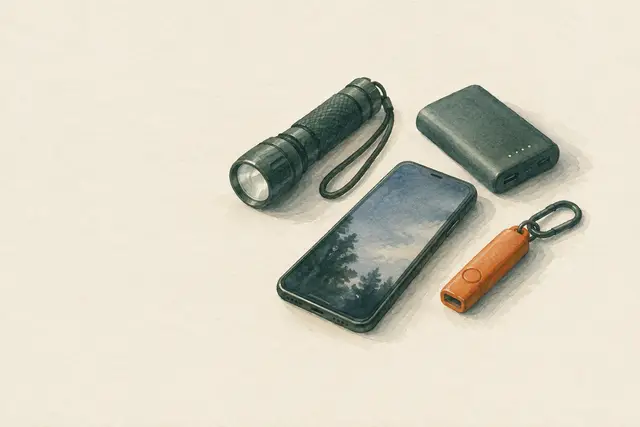
The phone as a signalling device: light, screen, sound, emergency function
Even without signal, a smartphone can help you be found: torch for SOS light signals, a bright screen, loud tones or alarms, screen reflection as a makeshift mirror. With signal, many phones have an emergency function that calls and shares location. Saving battery is crucial.
Planned topics (3)
- Emergency systems
- International emergency numbers
- Sharing your location
Signalling
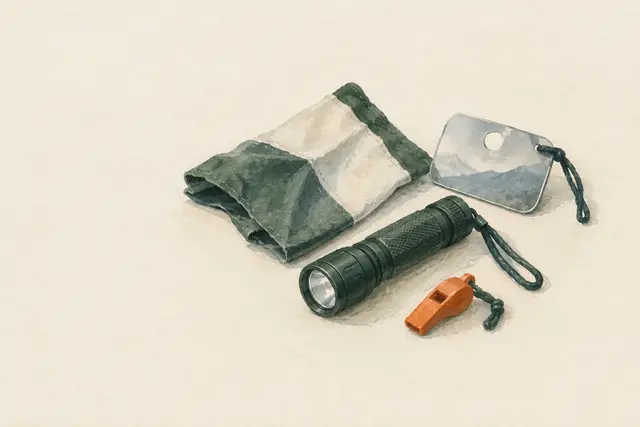
Alpine distress signal
The alpine distress signal is a convention widely used in the European Alps: six signals per minute (about every ten seconds), then one minute's pause, repeat. The reply is three signals per minute. Signals can be shouts, whistle blasts or flashes of light. It complements an emergency call but does not replace it.
Signalling to helicopters (Y/N) and behaviour during landing
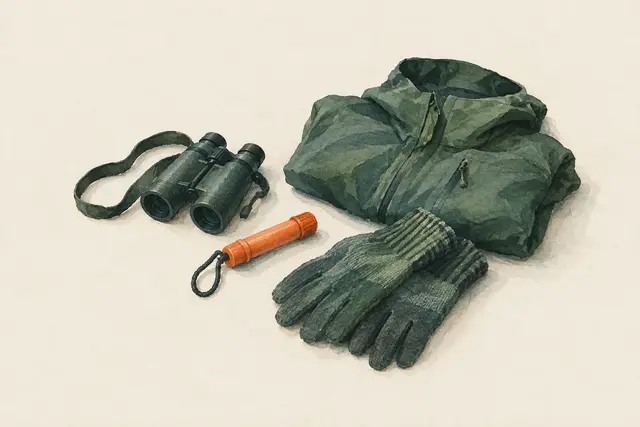
In Europe two body signals are widely used for rescue helicopters: both arms raised diagonally (the shape of a 'Y') means 'Yes, we need help'; one arm raised diagonally up and one diagonally down (the shape of an 'N') means 'No, we do not need help'. During landing: keep your distance, secure loose objects and only approach when the crew signals.
Signal whistle and signal mirror: basics
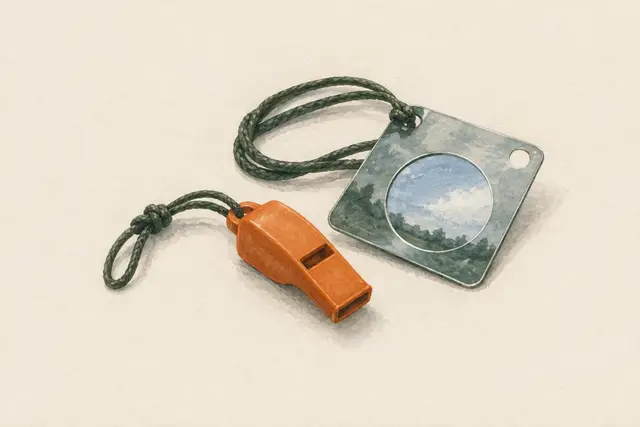
A whistle carries further than the voice and costs little energy; a mirror can produce flashes visible over long distances in sunshine. Both are light, cheap and battery-free – but they only work if someone is within hearing or sight.
Ground-to-air signs
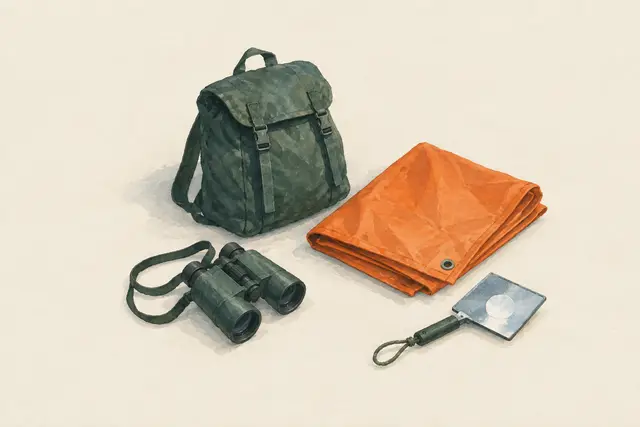
Large, high-contrast signs on the ground – such as 'SOS' – can be recognised by search aircraft and helicopters, even when you cannot actively signal at that moment. What matters is size, contrast, straight lines and an open location.
Signal fires and smoke signals
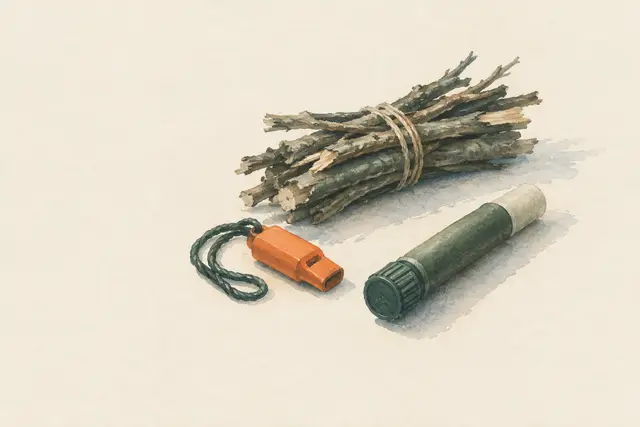
Fire at night and smoke by day are signals visible from afar – especially to aircraft. A signal fire is prepared but lit only when rescuers are within sight or earshot. Three fires are widely recognised as a distress sign. The fire risk is considerable: only where it is safe and permitted.
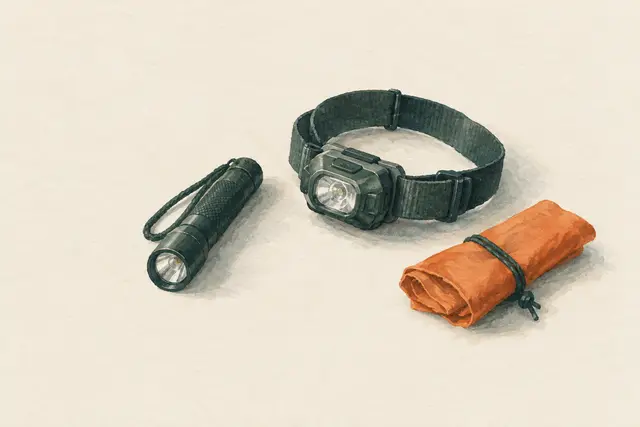
Light signals at night: SOS and flashing
A torch or headlamp is one of the best signalling tools at night. The internationally known SOS is given as three short, three long, three short flashes (··· ––– ···) and repeated. Important: aim the light towards possible rescuers, save battery and do not dazzle aircraft crews.
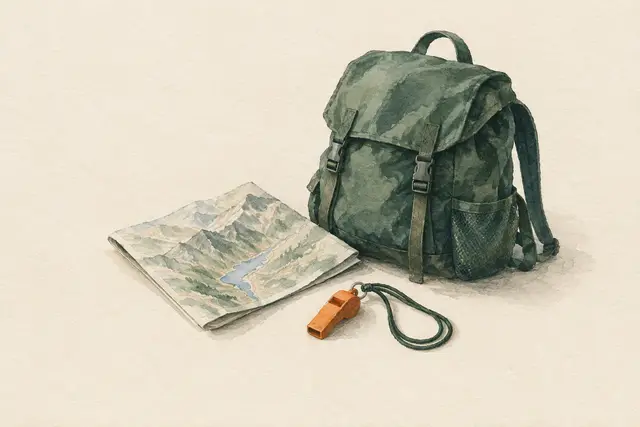
Agreeing whistle signals: three blasts for help and group codes
Three blasts are widely understood as a call for help; in the Alps the alpine distress signal is customary. For groups – families, school classes, hiking teams – it is worth agreeing and practising a few simple whistle signals before the trip. Whistling saves your voice and carries further.
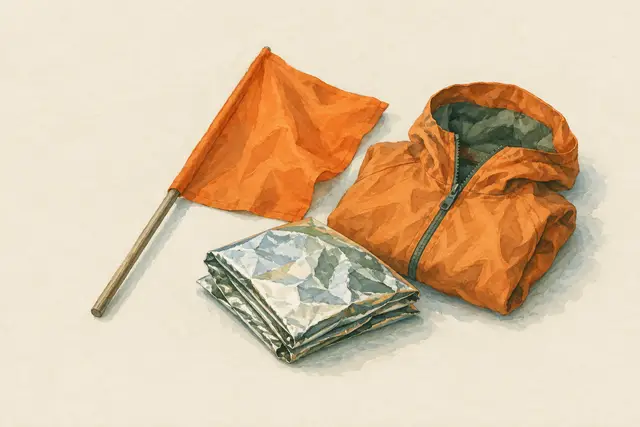
Standing out with colour: signal panel, flag, clothing
Bright colours and movement make people visible from the air and from afar. An orange cloth, an emergency blanket, a jacket waved on a stick or laid out flat – anything that contrasts with the surroundings improves the chance of being found.
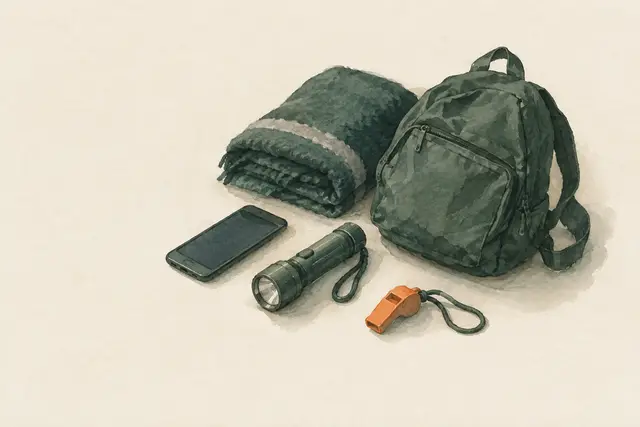
Trapped or buried under debris: making yourself known
If you are trapped after an earthquake, collapse or storm, save your strength and air and signal so that helpers can locate you: a message or call if possible, otherwise steady tapping on pipes or walls or a whistle – shout only when helpers are close.
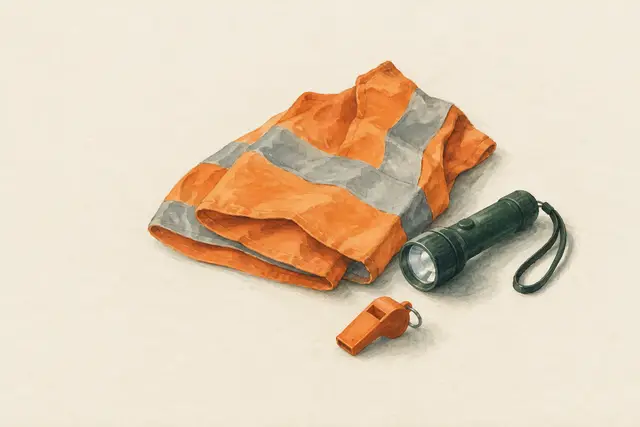
Signalling for help from a house or flat (e.g. in a flood)
If you are stuck in a building during a flood, storm or after an incident and the phone does not get through, you can make yourself noticed from a window, balcony or – only if necessary – the roof: bright cloth, large lettering, light at night, a whistle. The key is not to endanger yourself in doing so.
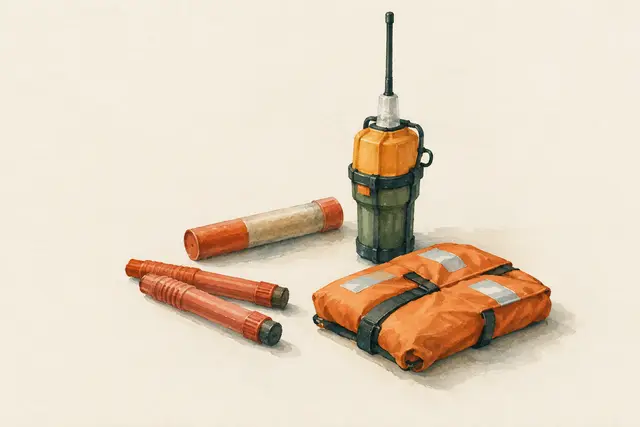
International distress signals at sea: overview
The international collision regulations (COLREGs, Annex IV) list signals that mean 'I am in distress and need help' on the water – including MAYDAY by radio, SOS, red flares, orange smoke, slowly raising and lowering outstretched arms and emergency beacons. Anyone on the water should recognise them and be able to use the signalling equipment they carry.
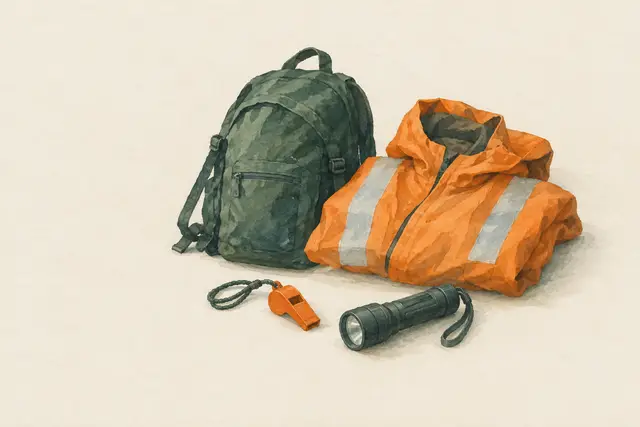
Responding to searchers: answer, stay put, be visible
When you are being searched for, search teams often call your name, blow whistles or shine lights. Answer with a whistle, shouting or light, stay in a highly visible spot and do not chase sounds you cannot place reliably. Children should know: searchers are helpers, nobody is angry – do not hide.
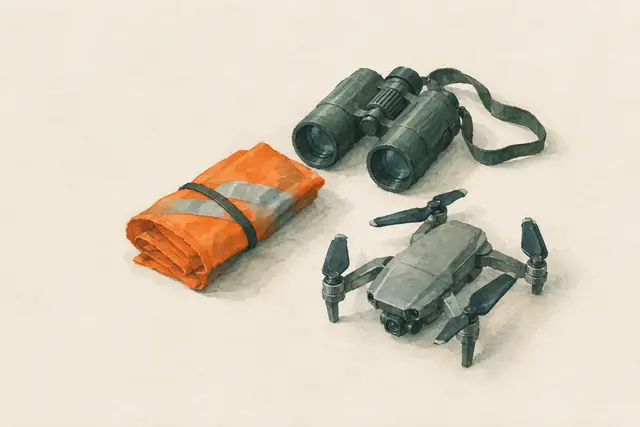
Being found from the air: helicopters, aircraft, drones
Air searches cover a lot of ground but easily miss small, still, camouflaged people. If you want to be found, move to an open spot nearby, lay out high-contrast colours and move when an aircraft or drone is in sight. Do not touch or throw things at drones, and do not run towards helicopters.
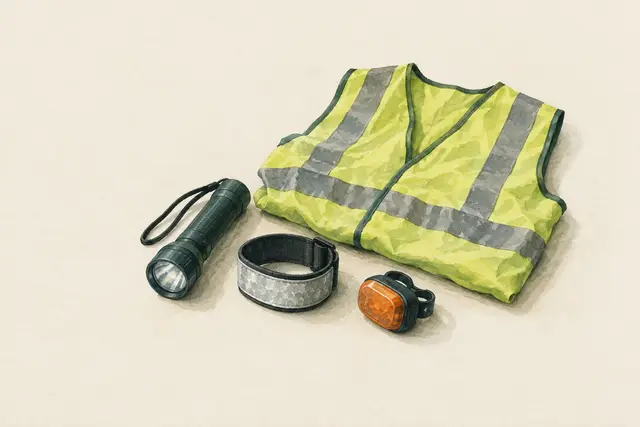
Being seen in the dark: reflectors, hi-vis vest, light
On foot or by bike on country roads, after a breakdown or walking through a dark city during a power cut: if you are not seen, you are in danger. Fluorescent colours work in daylight and dusk, reflectors only when light falls on them (e.g. headlights), your own lights always. Combining all three is best.
Planned topics (3)
- Whistles
- Signal lights
- Reflective signals
Radio and satellite
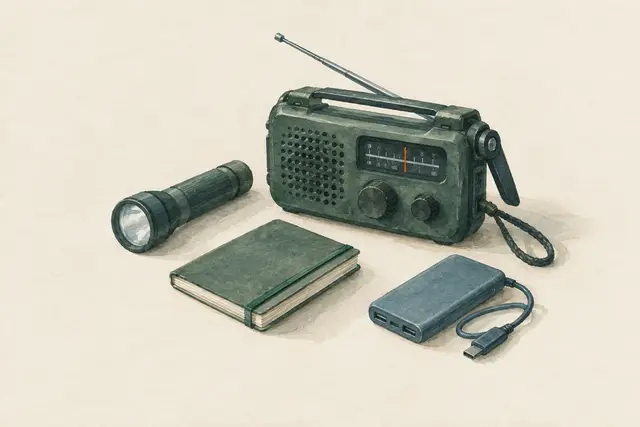
Emergency information by radio in disasters
If power, internet or mobile networks fail, a battery or crank radio often remains the most reliable source of information: authorities issue warnings and instructions via broadcast radio. Transmitting yourself is only allowed within the applicable rules – these differ between countries.
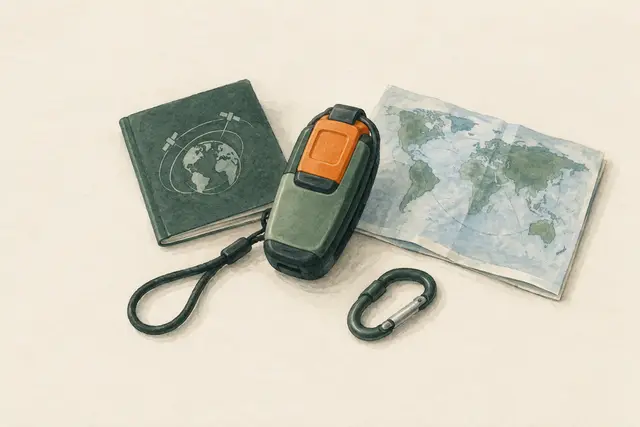
Personal locator beacon (PLB): how it works, registration, activation
In an emergency a PLB sends a signal to an international satellite system for search and rescue services, usually with a GNSS position. It works worldwide without a mobile network and usually without a subscription, but it is one-way: you can only raise the alarm, not communicate. Registration and correct handling are crucial.
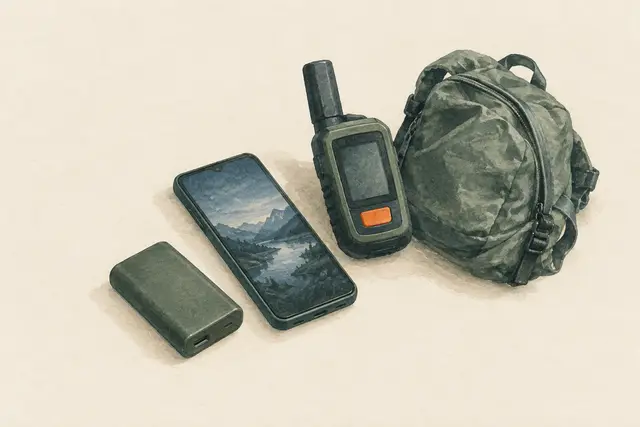
Satellite messengers and satellite SOS on phones
Satellite messengers send text messages, position data and – in an emergency – an SOS alert to an emergency response centre via commercial satellite networks. Unlike a PLB they usually allow two-way communication, but require a subscription. Some smartphones also offer emergency messaging via satellite in certain countries.
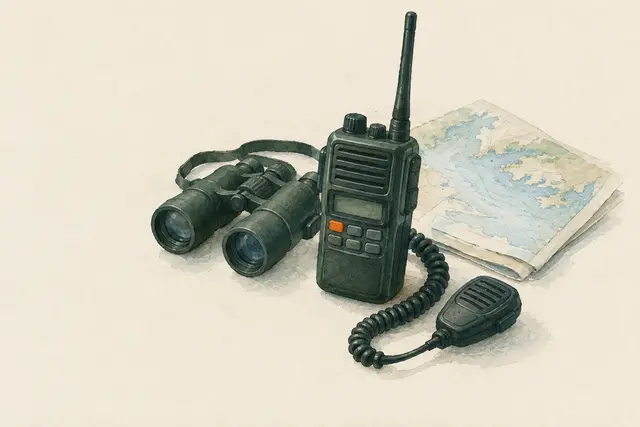
Marine VHF radio: MAYDAY distress call – basics
On the water, marine VHF radio is the standard way to call for help: channel 16 is internationally reserved for distress, urgency and safety traffic, and DSC-equipped sets send a digital distress alert at the press of a button. MAYDAY only for grave and imminent danger. Operating the radio requires a certificate and licence in many countries.
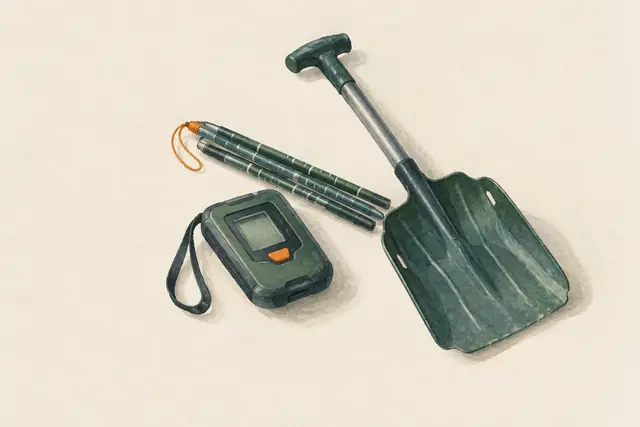
Avalanche transceiver: basics – training required
An avalanche transceiver transmits a signal in normal mode and can locate other devices in search mode. It only helps if everyone in the group wears one, it is switched on and checked, shovel and probe are carried – and the group has practised companion rescue regularly. This entry explains the principle; the search itself is learned on a course.
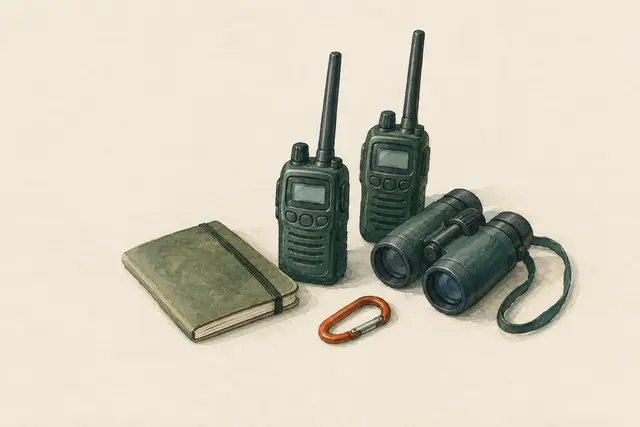
Handheld two-way radios for groups and families: use and radio etiquette
Simple handheld radios (in Europe e.g. PMR446, elsewhere other systems) keep groups and families in touch over short distances without a mobile network. For them to work in an emergency you need permitted devices, an agreed channel with a backup channel, fixed call times and short, clear messages. Anyone listening hears everything – radio is not private.
Planned topics (3)
- Radio basics
- Satellite communication
- Offline communication
Energy and planning
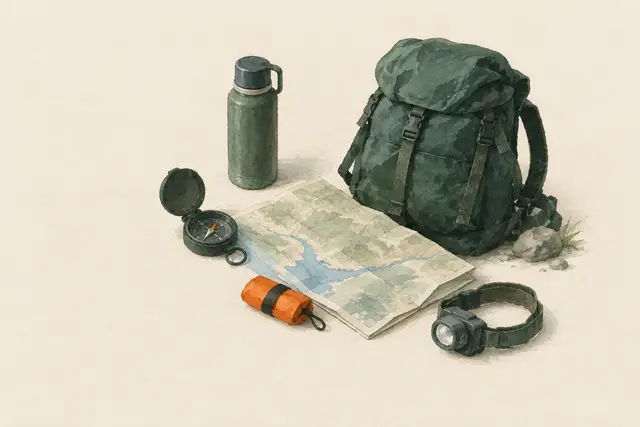
Staying findable: trip plan, staying put, leaving clues
Rescue starts before you set off: leaving a trip plan means you are missed sooner and searched for more precisely. In an emergency it usually helps to stay at a clearly visible place, prepare signals and remain reachable. If you must move, leave notes and markers.
Energy plan for emergency communication: batteries, cold, reserve
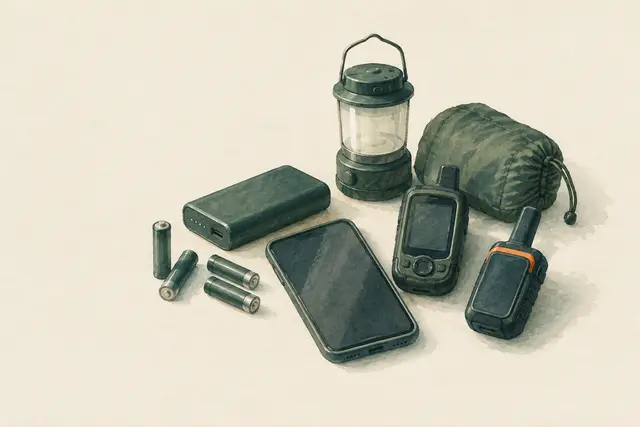
Phone, lamp, GPS and satellite device only help as long as they have power. A simple energy plan – start fully charged, carry a reserve, cut consumption, keep batteries warm and leave a fixed emergency reserve untouched – often decides whether an emergency call is still possible.
When networks are overloaded: messages instead of calls
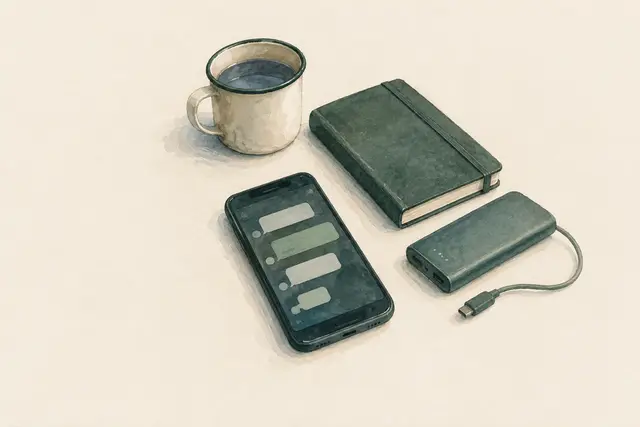
After major events, everyone tries to phone at once and networks become overloaded. Short text messages then often get through when calls do not. With an agreed contact person outside the area, short status messages and lines kept free for emergency calls, you reach your family more reliably.
Planned topics (3)
- Battery management
- Saving power
- Communication planning