Energy plan for emergency communication: batteries, cold, reserve
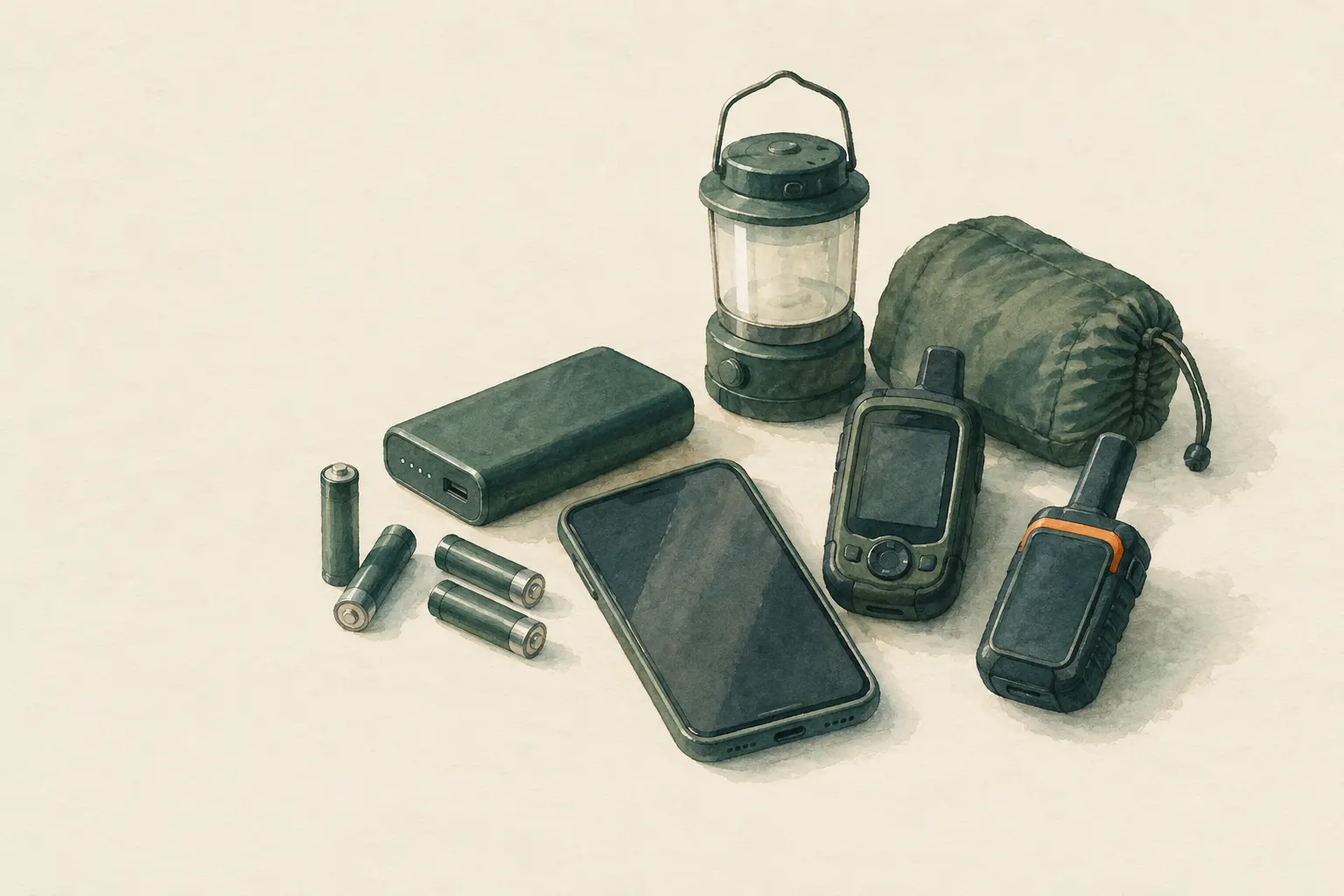
Phone, lamp, GPS and satellite device only help as long as they have power. A simple energy plan – start fully charged, carry a reserve, cut consumption, keep batteries warm and leave a fixed emergency reserve untouched – often decides whether an emergency call is still possible.
- 15 minutes before the trip; discipline on the way
Explained simply
Phone, headlamp, GPS unit and satellite device are like hungry pets: they need power, or they do nothing. An energy plan makes sure there is enough power when you really need it – above all for an emergency call.
The plan is simple: charge everything fully before you set off. Take a reserve, for example a power bank. Be sparing on the way. Keep batteries warm, because cold makes them weak. And set aside part of the power for emergencies only, like a rainy-day fund you do not spend on sweets.
Important for safety: do not use or charge batteries that are swollen, damaged or very hot – they can catch fire.
How it works
A battery stores energy chemically. In the cold these chemical processes slow down and the battery can temporarily deliver less power. That is why a phone sometimes shuts down in frost even though the display showed a fair amount of charge a moment ago. Once the battery warms up again, part of that charge is often usable again.
The biggest power consumers in a smartphone are the screen, the radio connections and continuous GPS logging. Searching for a network with poor reception is especially costly: the phone then transmits at higher power and keeps trying again and again. In a valley without signal a battery can run down surprisingly fast this way.
Switching off these consumers deliberately and using devices to a plan rather than casually extends run time considerably. It costs nothing but a little discipline.
What really matters
Start fully charged: charge phone, lamp, GPS, satellite device and power banks the evening before. Check spare batteries and pack the right cables – a wrong or missing cable makes the best power bank useless. Make a small list of which device needs which battery or cells.
On the way: power-saving mode on, screen brightness down, Bluetooth, Wi-Fi and background apps off when you do not need them. Download maps for offline use beforehand instead of loading them over the network on the way. Photos and videos make nice memories, but they cost power you may still need.
Where there is no signal, airplane mode pays off. Then switch the phone on briefly at fixed times to check messages. This works best when a contact knows these times and knows when they can reach you.
The emergency reserve
The heart of the energy plan is a fixed reserve used only for emergency calls, location and contact with rescuers. This can be a separate power bank that you do not touch on the way, or a minimum phone charge level that you do not go below for photos or music. Set this limit beforehand, not when the battery is already low.
Why so strict? Because emergencies do not announce themselves. If you only notice things are serious when the battery is almost flat, you may have no power left for the call, for being located by the dispatch centre or for the rescuers' callback. The callback in particular is often underestimated: rescuers want to ask questions, give advice or guide you.
For devices with replaceable batteries, such as many headlamps, carry matching spare batteries in your pack – packed dry.
Safety: what to watch out for
Lithium batteries are built into phones, power banks and many lamps. They are very practical, but a damaged, swollen or unusually hot battery can catch fire. Do not keep using or charging such a battery, and dispose of it properly later.
Keeping batteries warm does not mean making them hot. Carry the phone and spare batteries close to your body in an inner pocket and take them into your sleeping bag at night. But if a device gets hot while charging in the sleeping bag, take it out – heat under an insulating cover is dangerous.
An energy plan does not replace signalling tools that work without power. A whistle and a signal mirror need no battery and still belong in your kit.
Typical situations
Multi-day trip: here it pays to check consumption on the first evening. How much battery is left? Will it last if you carry on like this? If not, start saving more right away. Solar chargers can help on long trips but often deliver little in cloud, forest and winter – plan them as an extra at most.
Winter trip: cold is the biggest enemy. The phone does not belong in the outer pocket of your pack or jacket but close to your body. If a cold device has shut down, warm it up in an inner pocket first before switching it on again.
Power cut at home: the same rules apply. Keep power banks charged, use a battery radio for news and use the phone only for important contacts. Agree within the family who calls when, so that not all batteries run flat at the same time.
Step by step
Start fully charged
Charge all devices and power banks before the trip, check spare batteries, pack cables.
- 1
Start fully charged
Charge all devices and power banks before the trip, check spare batteries, pack cables.
- 2
Cut consumption
Power-saving mode, low screen brightness, unnecessary radios and background apps off. Offline maps instead of loading online.
- 3
Keep warm
Carry the phone and spare batteries close to the body (inner pocket), take them into the sleeping bag at night.
- 4
Fixed times
Without signal, do not let the phone search constantly: airplane mode and switch on briefly at agreed times – if a contact knows about this arrangement.
- 5
Leave the reserve untouched
Use the fixed emergency reserve only for emergency calls, location and contact with rescuers.
Common mistakes
- Starting with a half-full battery
- Power bank flat because never checked
- Phone in an outer pocket in frost
- Battery used up for photos and videos
- Wrong cable or none
Quick view
Materials
Power bank
Do not use damaged or swollen batteries; do not charge while covered.
Spare batteries
Store cool and dry, observe the expiry date; keep button cells out of children's reach.
Mobile phone
The battery drains quickly in cold and with continuous screen and GPS use.
Do not plan on it as your only means of navigation or emergency calls.
Dry bag
Suitable for
- Multi-day trips
- Winter and cold
- Power cuts at home
Not suitable for
- As a substitute for power-independent signals (whistle, mirror)
Prerequisites
- Knowing which devices use which batteries
- Matching charging cables
Safety
- Set a reserve used only for emergency calls and rescue – e.g. one power bank or a minimum phone charge level – and stick to it.
- Do not keep using or charging damaged, swollen or very hot lithium batteries – fire risk. Do not charge batteries in the sleeping bag if they get hot.
How it works
Cold temporarily reduces the usable capacity of many batteries; batteries kept warm deliver more. The greatest consumers are the screen, radio connections (especially searching for a network with poor reception) and continuous GPS logging. Reducing these deliberately and using devices to a plan extends run time considerably.
Advantages
- Extends reachability considerably
- Little effort
- Also useful for power cuts at home
Disadvantages
- Additional weight
- Requires discipline
Deep knowledge
Background
Preparedness guides recommend power banks and spare batteries as part of an emergency kit. Mountain sports guidance stresses that cold shortens battery life and that the phone should be preserved as a means of calling for help.
An energy plan is simple but often forgotten – usually the problem is noticed only when the battery is already low.
Variants
- At home during a power cut
- The same rules apply in a power cut: keep power banks charged, use a battery radio, use the phone only for important contacts.
- Solar charger
- Solar panels can help on long trips but often deliver little in cloud, forest and winter.
Common mistakes
- Starting with a half-full battery
- Power bank flat because never checked
- Phone in an outer pocket in frost
- Battery used up for photos and videos
- Wrong cable or none
Limits and risks
- No run-time or capacity figures
- Device-specific settings not described
Material alternatives
Derived from material properties: a substitute must have all relevant properties. Observe the notes on the substitute.
- Mobile phone
- Headlamp / flashlight, Battery lantern / LED light
Results come exclusively from structured entries. No improvised instructions are generated.
Sources
Ready.gov – U.S. Federal Emergency Management Agency (FEMA): Build A Kit
Chargers, power banks and batteries in an emergency kit
Bundesamt für Bevölkerungsschutz und Katastrophenhilfe (BBK), Deutschland: Ratgeber für Notfallvorsorge und richtiges Handeln in Notsituationen
Preparedness for power cuts and communication