
Blackout and urban survival
When power, water or networks fail
Practical preparedness for home and neighbourhood: light, heat, water, communication and safety during utility outages.
Method explorer
How do I light my home safely when the power goes out?
Method explorer
How do I stay warm at home when the heating or power fails?
Method explorer
How do I keep small devices running during a longer power outage?
Power and light
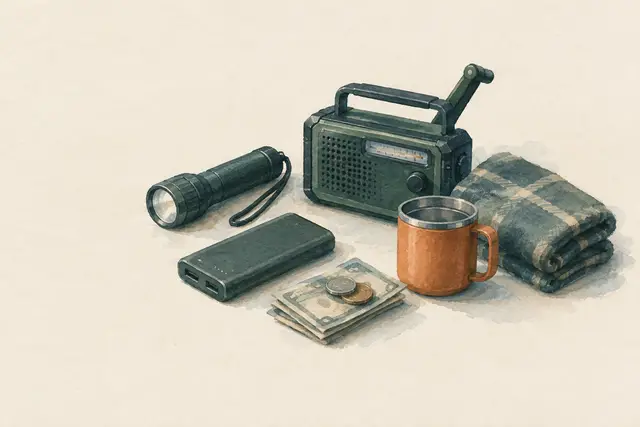
Preparing for a power outage
A longer power outage knocks out light, refrigeration, often heating, card payments and, after a while, mobile networks. If you have prepared light without candles, a battery or crank radio, charged power banks, some cash and a simple communication plan, you can bridge the first days much more calmly.
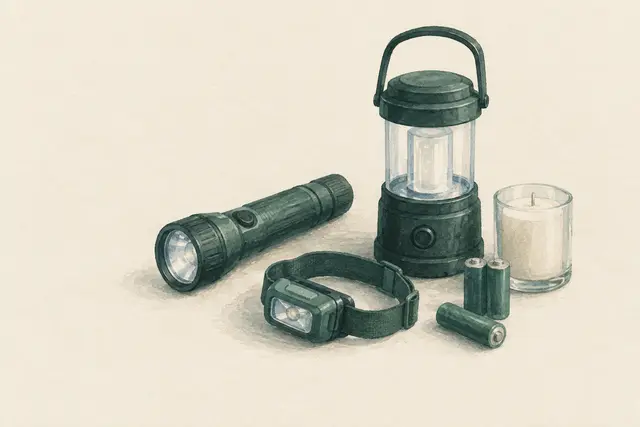
Safe lighting without candles
During a power outage many people reach for candles – and that is exactly when house fires often happen. Battery and rechargeable lights are safer, more practical and last longer. If you do use candles, you need firm rules: never unattended, stable, far from anything flammable and from children.
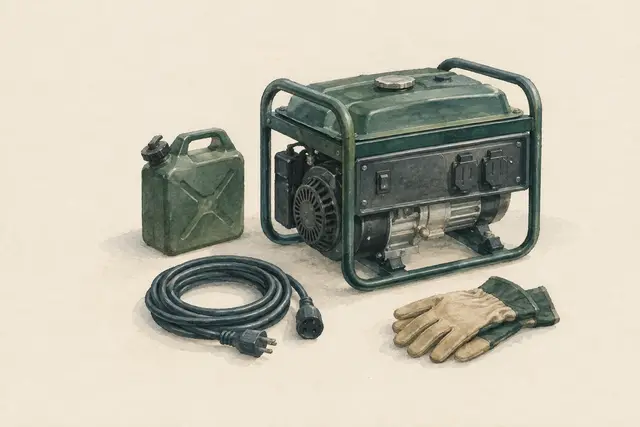
Using generators safely
Portable generators with a combustion engine produce carbon monoxide – an invisible, odourless gas that can kill within a short time indoors. Generators therefore belong outdoors only, well away from windows, doors and vents. They must never be connected directly to household wiring.
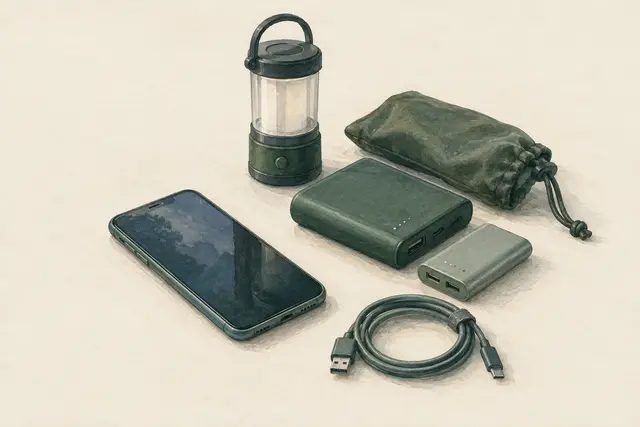
Keeping phones charged during a power outage
During a power outage the phone is torch, warning receiver and link to the family – and its battery is limited. If you charge power banks beforehand, switch to power-saving straight away and use the car as a charging station only outdoors, you stay reachable much longer.
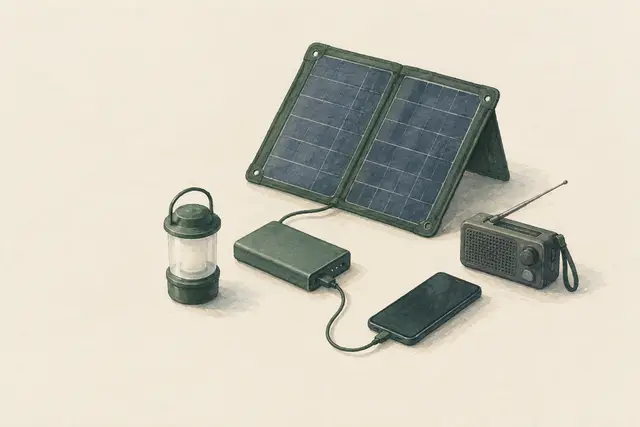
Solar chargers: realistic expectations
A small solar panel can keep phones, lights and radios running during longer outages – but much more slowly and less reliably than the figures on the packaging suggest. It works best to charge a power bank during the day and the devices from it at night.
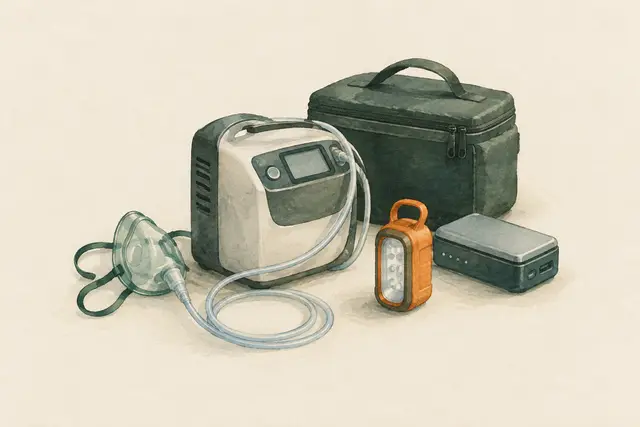
Powered medical devices: an outage plan
Anyone using ventilation, oxygen, home dialysis, suction devices, an electric care bed or medication that must be kept cold at home needs their own outage plan – agreed with their doctor, care service and device supplier. The core: know the battery run time, organise backup, know where to go in good time.
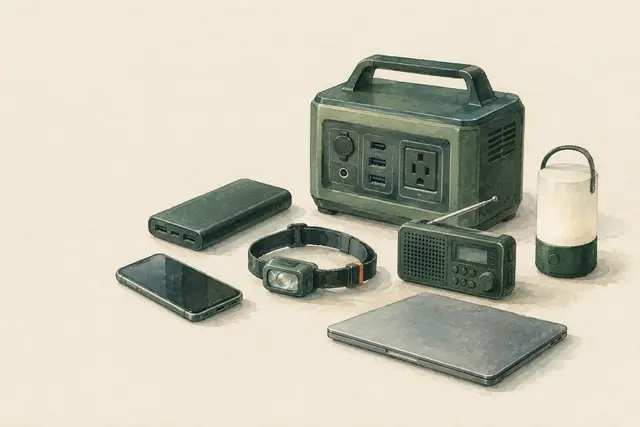
Power banks and power stations: choosing, calculating, using safely
Power banks supply phone, radio and headlamp; portable power stations with a socket can also run a router, laptop or small lamp for hours. What matters is comparing the capacity in watt-hours with the devices' consumption, keeping the batteries charged and charging and storing lithium batteries safely.
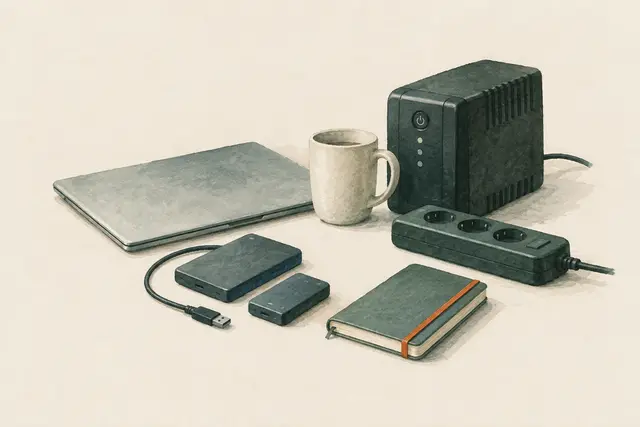
Protecting devices and data: home office, UPS, surges
A sudden power cut can destroy unsaved work, and surges when power returns can damage electronics. Saving regularly, backups outside the device, a small uninterruptible power supply (UPS) for computer or router and unplugging sensitive devices during the outage reduce the damage.
Planned topics (6)
- Power cuts
- Safe lighting
- Batteries
- Power stations
- Backup power
- Generator safety
Supplies
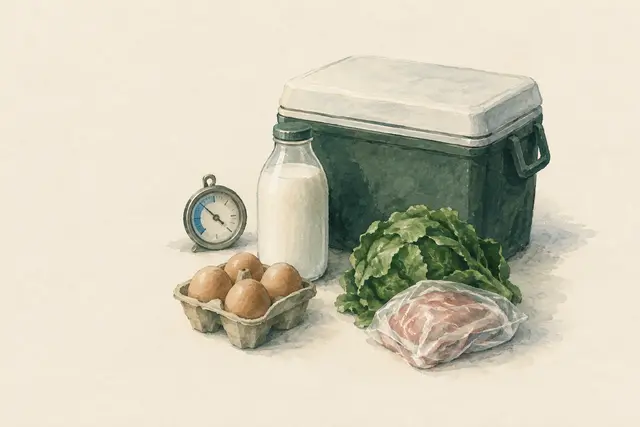
Food safety when the fridge and freezer fail
During a power outage the rule is: keep fridge and freezer doors closed – that keeps the cold in longest. The US food safety authority USDA gives guide values for this. Perishable food that has been too warm for too long is thrown away. And: when in doubt, throw it out – appearance and smell do not tell you whether food is safe.
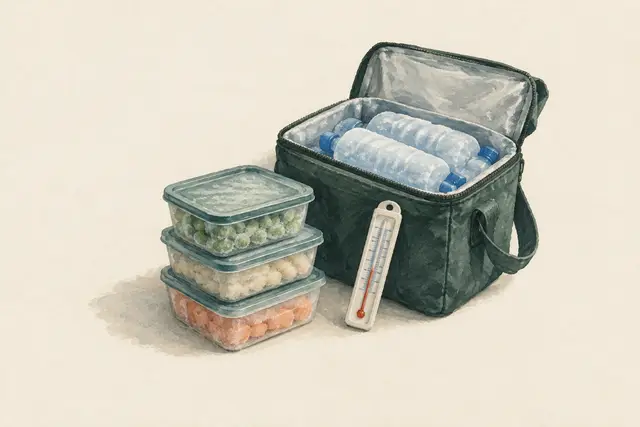
Getting the freezer and fridge through an outage
How long frozen food lasts is decided mainly before and in the first hours of an outage: a full freezer stays cold longer than a half-empty one, and every door opening costs cold. If you fill gaps with frozen water bottles, use thermometers and have a plan, you save more food.
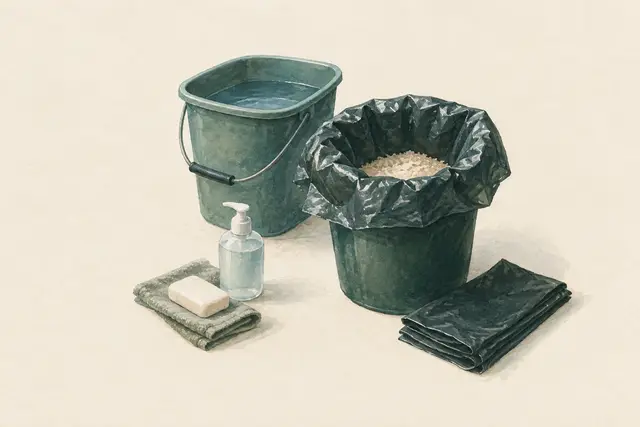
Toilet and hygiene without running water
When the water supply fails, the toilet quickly becomes a problem. If the sewer still works, flush with a bucket of utility water. If the sewer is also disrupted, use a bag toilet with absorbent. Washing hands with a little water and soap remains a must.
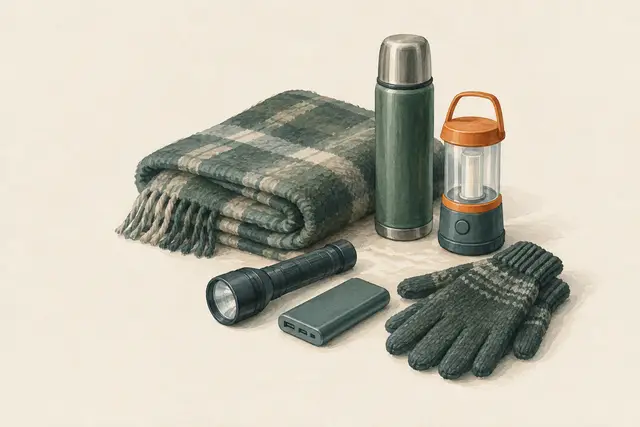
Why heating stops without power – and what to prepare
Gas and oil boilers also need electricity: for controls, ignition, burner fan and circulation pump. Heat pumps, pellet boilers and many flat-level heaters stop too. If you know how your own system reacts, you can keep heat in the home, protect water pipes from frost and restart the heating correctly afterwards.
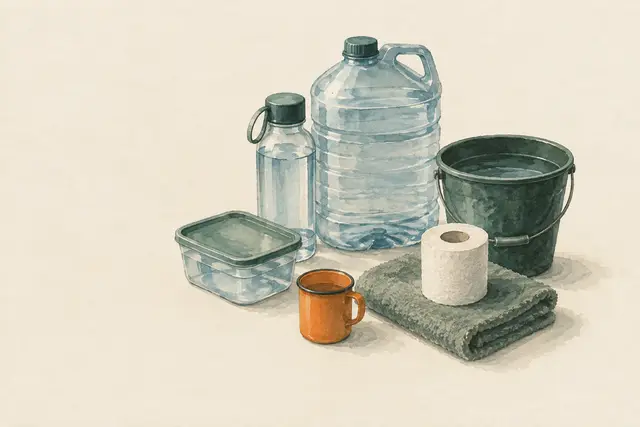
Water in high-rise buildings: when pumps stop
In taller buildings electric booster pumps lift water to the upper floors. If they stop, upper floors soon have no water while it still runs further down. A water stock in the flat, agreed ways of fetching water and sparing toilet use make the difference.
Planned topics (5)
- Water outage
- Heating failure
- Cooking without grid power
- Food during outages
- Hygiene
Communication and community
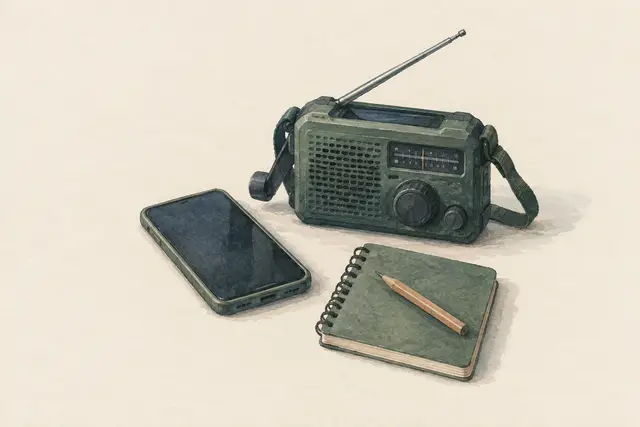
Communication when networks fail
During power outages and disasters, landlines, internet and mobile networks often fail gradually or become overloaded. A battery or crank radio remains the most reliable source of information. Short text messages often get through more easily than calls, and a plan agreed beforehand replaces many phone calls.
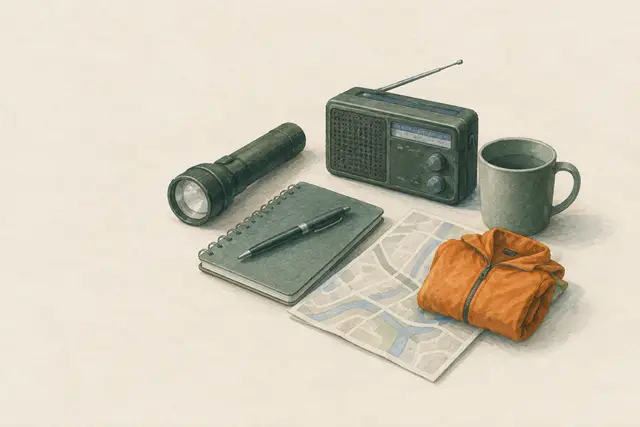
Organising neighbourhood help in a power outage
In a widespread outage the nearest help is often the neighbourhood. If you know beforehand who in the building lives alone, needs care or has a radio, you can check on people, share information and run errands to official contact points in an emergency – without putting yourself at risk.
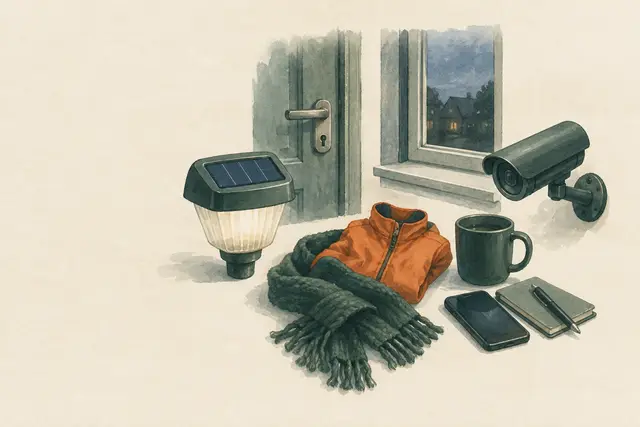
Security in the dark: home, light and a watchful neighbourhood
In a power outage streets are dark, alarm systems and cameras may not work and electric locks behave differently. Closed doors and windows, battery or solar outdoor light, arrangements with neighbours and reporting anything suspicious to the police increase safety – without intervening yourself.
Planned topics (4)
- Communication outage
- Crisis communication
- Caring for families
- Helping neighbours
Home and building
When the power comes back
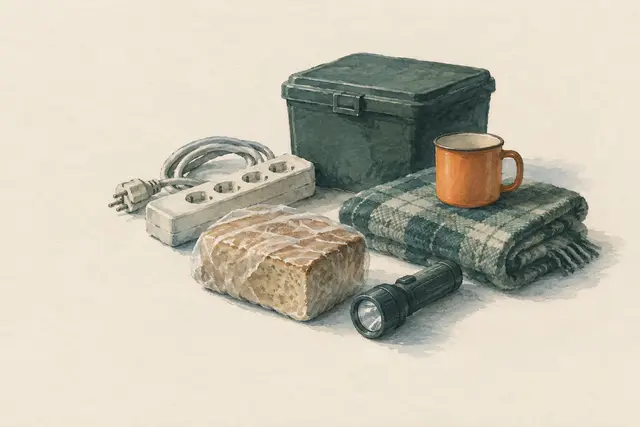
The end of a power outage brings its own risks: power surges, forgotten hotplates and irons, thawed food, heating that does not restart. If you switch devices back on gradually, check food and restock supplies, you close the outage safely.
Lifts, electric doors and garage doors in a power outage
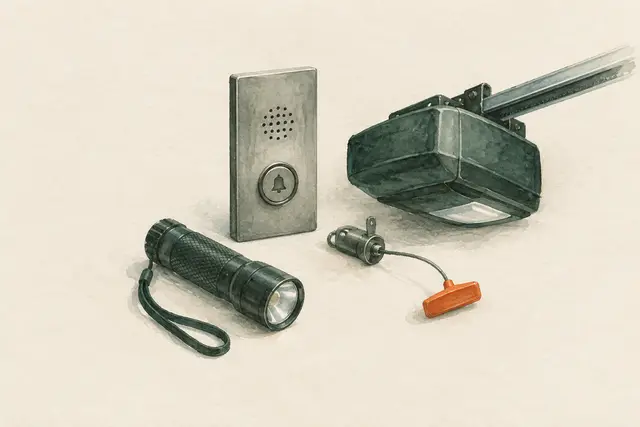
Without power lifts stop, and garage doors, shutters, barriers and electric door openers can no longer be used as usual. If you are stuck in a lift, trigger the alarm and wait for help – never climb out yourself. Doors and gates often have a manual release that you should know beforehand from the manufacturer's instructions.

Cash and payments in a power outage
Without power and network, card terminals, cash machines, online banking and often petrol pumps do not work. A small cash reserve in small notes and coins, kept safely, bridges the first days. An overview of standing orders and caution against fraud in a crisis also matter.

A multi-day power outage: a plan by day
An outage of hours is an inconvenience; one lasting several days is an endurance test. A rough plan by phase – first hour, first day, days two to three, beyond – helps to ration supplies, conserve energy and decide in time whether to stay or go to relatives or an official help point.
Planned topics (4)
- Home preparedness
- Supply management
- Building safety
- Evacuation planning