Why heating stops without power – and what to prepare
Gas and oil boilers also need electricity: for controls, ignition, burner fan and circulation pump. Heat pumps, pellet boilers and many flat-level heaters stop too. If you know how your own system reacts, you can keep heat in the home, protect water pipes from frost and restart the heating correctly afterwards.
- Clarify once: 1 hour
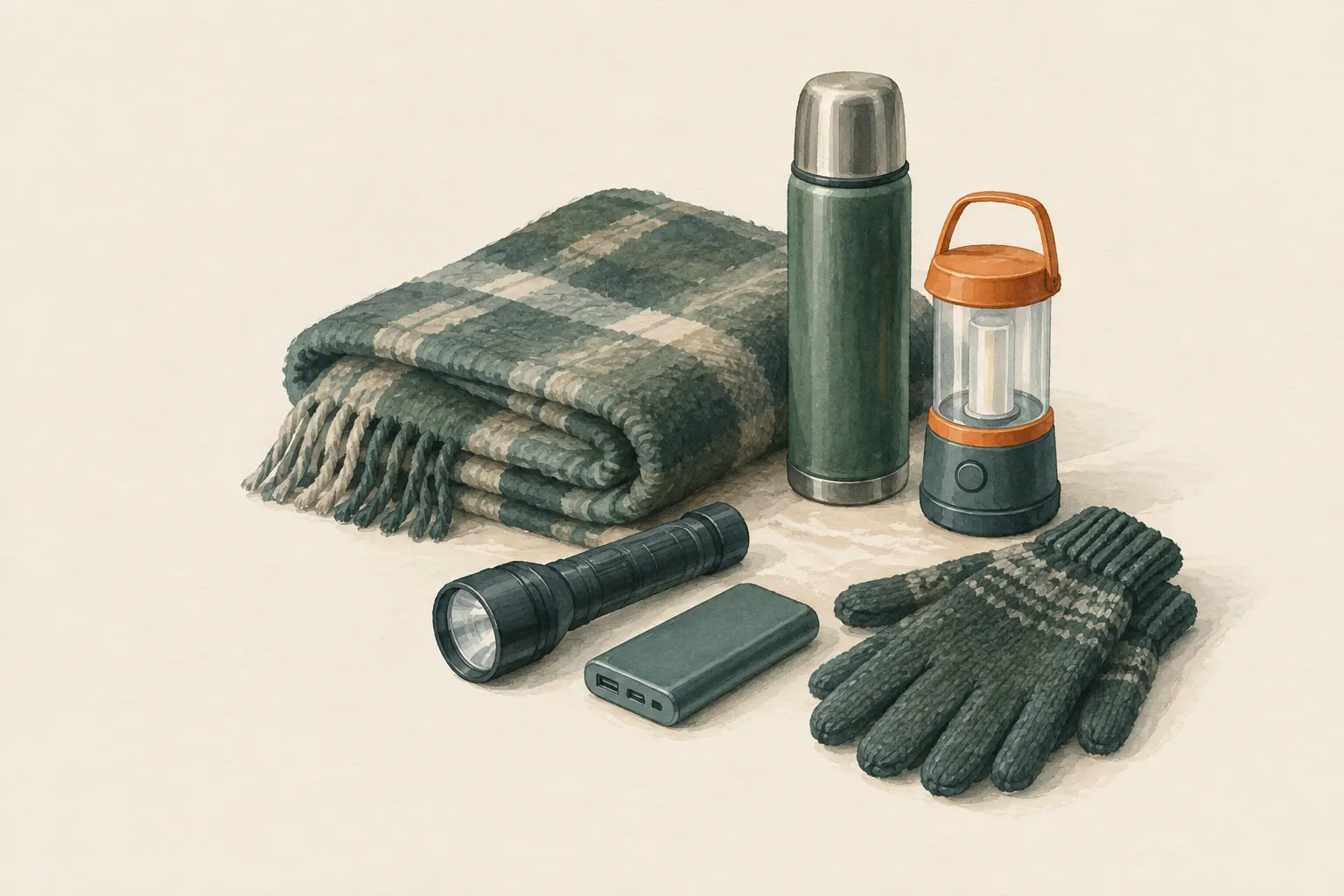
Explained simply
Many people think: “My heating runs on gas, so I don't need electricity.” Unfortunately that is not true. A gas or oil boiler also needs electricity – for the controls, the ignition, a fan and a pump that pushes the warm water to the radiators. Without power the heating stays cold.
The home then cools down slowly, a bit like a thermos flask cooling over time. That is why it is wise to hold on to the existing warmth: doors shut, everyone in one room, curtains closed, warm clothes and blankets.
Very important: never heat with a gas hob, oven, barbecue or camping stove. They produce carbon monoxide – an invisible gas you cannot smell and that can be fatal.
How it works
Modern heating is electronically controlled. Without power the gas valve does not open, the burner does not ignite and the circulation pump moves no warm water to the radiators. Heat pumps, pellet boilers and many flat-level heaters stop too. With district heating it depends on the network and the substation in the building – the supplier can tell you.
After the outage the building cools slowly. How fast depends on insulation, outside temperature and how much it is aired. A well-insulated house holds heat much longer than an old, draughty one. That is why there is no general time figure. The aim is to keep the existing heat in a few rooms rather than creating new heat in dangerous ways.
What really matters
Know your system before it gets cold. Note what type of heating you have, where the boiler and shut-off valves are, and the emergency number of the heating engineer or building management. Ask: does the system need power? Is there a wood stove that works without a fan?
During the outage, hold on to the warmth. Close doors to rooms you do not need and gather in one room, ideally a smaller one on the sunny side. Close curtains and shutters at night and let the sun in during the day. Air briefly and vigorously with the window wide open rather than leaving it tilted for a long time – that way you exchange the air without chilling the walls.
Keep people warm: several layers of clothing, a hat, warm drinks, blankets and sleeping bags. Pay special attention to older and sick people and to small children, because they cool down faster and often do not notice it themselves in time.
Safety: what to watch out for
The greatest danger in a cold outage is not the cold but heating the wrong way. Gas hobs, ovens, barbecues, camping stoves, charcoal and outdoor heaters produce carbon monoxide. This gas is invisible and odourless and can be fatal. With headache, dizziness or nausea: get into fresh air immediately and call the local emergency number (112 in the EU).
Do not bypass controls, disable safety devices or connect gas or oil systems to backup power yourself. That is work for specialists. A wood stove with natural draught can heat without power – but only with an inspected chimney, dry wood and a working carbon monoxide alarm.
When the power returns, check whether the heating restarts by itself. If it shows a fault, use only the reset button the manual provides – and not repeatedly in a row. If that does not help, call the specialist. If you smell gas: do not operate any switches, leave the building and call the gas emergency service from outside.
Frost protection for water pipes
Water expands when it freezes. In an unheated building, pipes can therefore freeze and burst during prolonged frost. The damage often only shows when they thaw and water suddenly escapes. Exposed pipes in the cellar, the garage and on outside walls are at risk first.
Clarify beforehand with the landlord, building management or specialist where the shut-off valves are and how pipes are drained in an emergency. If the temperature in the building drops towards freezing, the water is shut off and the pipes drained, as agreed beforehand.
Good to know
The BBK points out that most heating systems also fail in a power outage. Ready.gov and the US health agency CDC strongly warn against using gas cookers, barbecues or generators indoors for heating.
This entry produces no heat – it helps you act early while there is still heat in the building. If it still gets too cold, for example for older or sick people, relatives with working heating or the municipality's warming centres are often a better solution than any improvisation.
Step by step
Know your system
Note heating type, location of the boiler and shut-off valves, the specialist's emergency number. Ask: does the system need power? Is there a wood stove that works without a fan?
- 1
Know your system
Note heating type, location of the boiler and shut-off valves, the specialist's emergency number. Ask: does the system need power? Is there a wood stove that works without a fan?
- 2
Keep the heat in
Close doors to unused rooms, gather in one room, close curtains and shutters at night, let in sun during the day. Air briefly rather than leaving windows tilted.
- 3
Keep people warm
Wear layers, a hat, warm drinks, blankets and sleeping bags. Pay special attention to older people, the sick and small children.
- 4
Frost protection
If the temperature in the building drops towards freezing, shut off the water and have pipes drained as agreed beforehand. Keep an eye on exposed pipes in cellar and garage first.
- 5
Restart
When power returns, check whether the heating restarts by itself. If it shows a fault, use only the reset button the manual provides, otherwise call the specialist.
Common mistakes
- Assuming a gas boiler runs without power
- Heating with the oven
- Trying to keep the whole home warm
- Resetting a faulted boiler repeatedly
Quick view
Materials
Wool blanket / duvet
Keep away from candles, stoves and heaters.
Carbon monoxide alarm
Does not replace the rule never to run combustion devices indoors. Choose battery-powered or with battery backup.
Suitable for
- Power outages in winter
- Owners and tenants
- Preparedness planning
Not suitable for
- Your own interventions in gas or oil systems
- Improvised heaters indoors
Prerequisites
- Knowing what type of heating the building has
- Contact for landlord, building management or heating engineer
Safety
- In unheated buildings water pipes can freeze and burst in prolonged frost. Clarify beforehand with landlord or specialist where the shut-off valves are and how pipes are drained.
How it works
Modern heating is electronically controlled: without power the gas valve does not open, the burner does not ignite and the pump moves no warm water to the radiators. The building then cools slowly – how fast depends on insulation, outside temperature and ventilation. The aim is to keep the existing heat in a few rooms rather than create new heat dangerously.
Advantages
- No surprise in an emergency
- Protects against frost damage
Disadvantages
- Produces no heat – only planning and heat retention
Deep knowledge
Background
The BBK points out that most heating systems also fail in a power outage; Ready.gov and the CDC strongly warn against using gas cookers, barbecues or generators indoors for heating.
How long a home stays warm cannot be stated in general. The steps aim at acting early while there is still heat in the building.
Variants
- Wood stove available
- A stove with natural draught can heat without power – only with an inspected chimney, dry wood and a working carbon monoxide alarm.
- District heating
- Whether district heating continues in an outage depends on the network and the building's substation. Ask the supplier.
Common mistakes
- Assuming a gas boiler runs without power
- Heating with the oven
- Trying to keep the whole home warm
- Resetting a faulted boiler repeatedly
Limits and risks
- No instructions for specific heating models
- No substitute for a specialist
Material alternatives
Derived from material properties: a substitute must have all relevant properties. Observe the notes on the substitute.
- Wool blanket / duvet
- Sleeping pad, Dry leaves, grass or conifer boughs (Collect only where allowed; no protected plants. Check for ticks and insects.), Backpack, Dry spare clothing (Carry it in waterproof packaging – wet clothing barely insulates.), Insulated cool box (Keeps cold only for a limited time; without ice packs or ice it is not a fridge.), Sleeping bag (Do not store compressed long-term; do not pack away damp.), Newspaper and cardboard (Flammable – keep away from candles, stoves, heaters and embers.), Insulated cooking box (hay box, thermal cooker) (Never put open flame or embers inside – only the hot, closed pot.)
Results come exclusively from structured entries. No improvised instructions are generated.
Sources
Bundesamt für Bevölkerungsschutz und Katastrophenhilfe (BBK), Deutschland: Ratgeber für Notfallvorsorge und richtiges Handeln in Notsituationen
Heating failure during power outages
Ready.gov – U.S. Federal Emergency Management Agency (FEMA): Power Outages
No heating with gas cookers, grills or generators indoors
Centers for Disease Control and Prevention: Carbon Monoxide Poisoning – Prevention guidance
Carbon monoxide danger from fuel-burning devices