A multi-day power outage: a plan by day
An outage of hours is an inconvenience; one lasting several days is an endurance test. A rough plan by phase – first hour, first day, days two to three, beyond – helps to ration supplies, conserve energy and decide in time whether to stay or go to relatives or an official help point.
- Making the plan: 1–2 hours
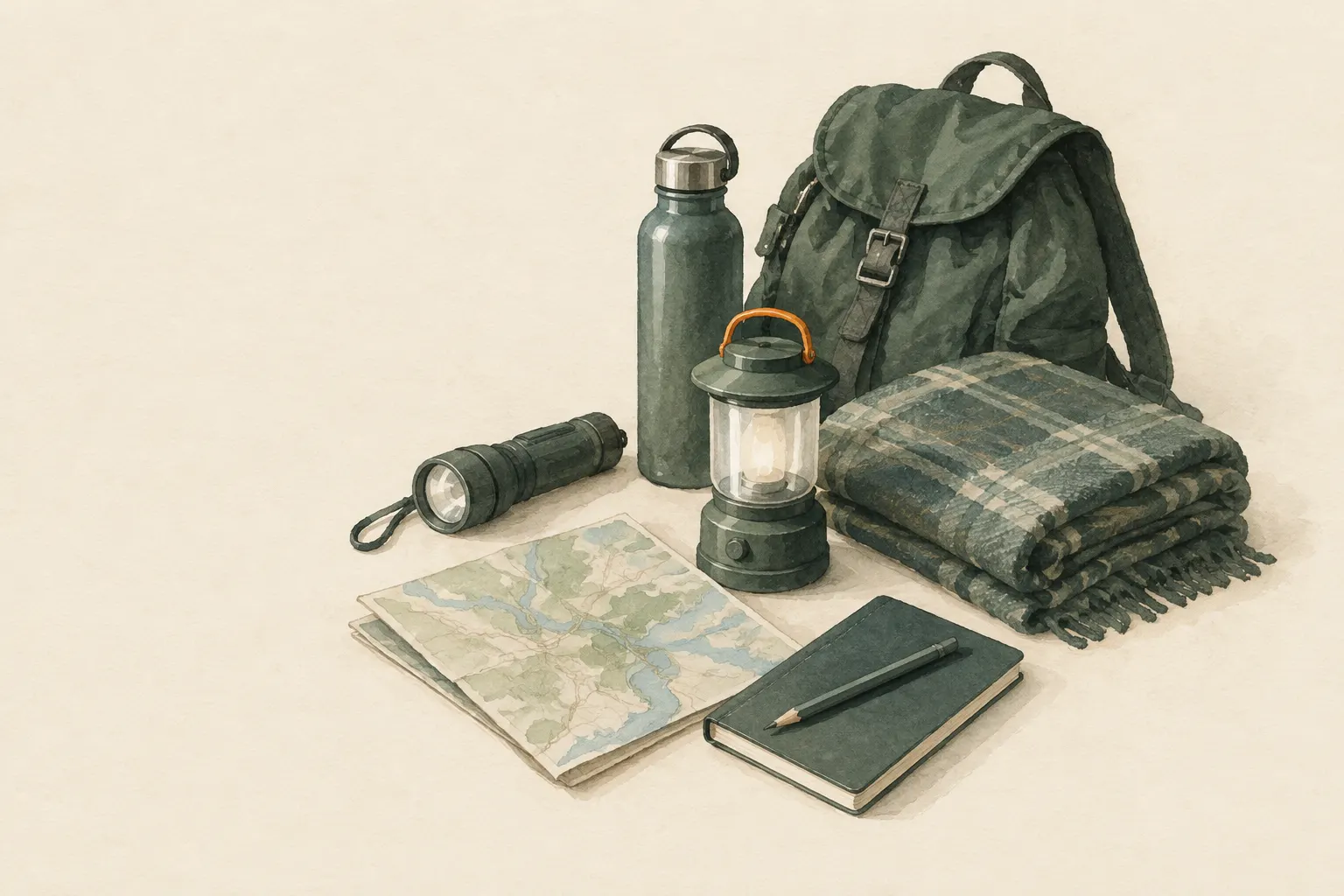
Explained simply
A power outage of a few hours is uncomfortable but soon over. If it lasts several days, it becomes a real test of patience. Then a plan helps that divides the outage into stages: the first hour, the first day, days two and three, and the time after that. That way you know what to take care of at each stage.
Think of your supplies as several candles burning down at different speeds: the fridge warms up first, batteries run flat, water and warmth decrease. If you keep an eye on that, you share everything out wisely and do not use up all the light on the first evening.
Most important: if the home becomes dangerously cold or hot, if water or medication runs out, or if someone needs a powered medical device, do not hold out. Go to relatives or an official help point in good time. In an emergency, call the emergency number (112 in the EU).
How it works
The resources in a household – water, warmth, batteries, refrigeration and your own strength – run down at different speeds. Fridge cooling often lasts only hours, batteries one or a few days depending on use, and the warmth in a home depends on insulation and weather. People get tired too: cold, darkness and uncertainty cost energy and sleep.
Thinking in phases puts each resource where it does most good. Even more importantly, you recognise early the point at which staying becomes riskier than leaving. That decision is much easier while it is still light, the car still has fuel and everyone still has strength.
The plan by phase
In the first hour, check whether only your home is affected – a look at the fuse box and at the neighbours is enough. Then switch on the radio, unplug sensitive devices, note the time for the fridge and fill water while it still runs.
On the first day the fridge stays closed, and you eat the perishable food that is still cold first. The phone goes into power-saving mode, batteries are rationed and the warmth is kept in one room. Also look in on neighbours who need special support.
On days two and three, count your supplies and water, organise toilet and hygiene without running water and give the day a structure with set times for meals, sleep and news. Follow official information on help points and water and food distribution.
Stay or go?
Check five things deliberately every day: warmth, water, medication, health and strength. If any of them becomes critical, plan a move to relatives outside the affected area or to an official help point – while there is still daylight, fuel and strength. There are no fixed deadlines for this; it depends on your situation.
If you leave, leave a note on the door or for the family saying where you have gone. Shut off water and power as you planned beforehand, and take medication, documents, chargers and warm clothing with you.
In acute danger such as fire, gas smell or flooding, the phase plan does not apply: get yourself to safety immediately and follow the authorities' instructions.
Safety: what to watch out for
The longer an outage lasts, the greater the temptation to improvise. Carbon monoxide poisonings occur more often during longer power outages. Generators, grills and stoves therefore belong only outdoors and away from windows; a generator is never connected to the house wiring. Battery-powered carbon monoxide alarms are an important protection.
Candles and open flames are a common cause of fire in long outages, because tired people are more likely to overlook something. Prefer battery light.
In heat, shade, cross-ventilation at night, drinking enough and cool public places matter. With older people and children, watch for signs that the heat is getting to them, such as confusion, marked weakness or dizziness – then call the emergency number. In extreme cold or heat, Ready.gov recommends going to places that have power.
Good to know
A fixed daily structure sounds trivial but helps a lot. Set times for meals, sleep and radio news give stability, especially to children, and stop you from constantly waiting for news. Typical mistakes are using up all the light and batteries on the first day, constantly opening the fridge and believing rumours from the stairwell more than the radio.
The BBK recommends supplies for several days and a battery radio as a source of information; FEMA's “Are You Ready?” guide describes planning for longer outages. Some municipalities set up help points or warming centres during large outages – ask beforehand whether and where they exist near you. Every outage is different, so the plan is a framework that you adapt to the situation.
Step by step
First hour
Check whether only your own home is affected (fuses, neighbours). Switch on the radio, unplug sensitive devices, note the time for the fridge, fill water while it still runs.
- 1
First hour
Check whether only your own home is affected (fuses, neighbours). Switch on the radio, unplug sensitive devices, note the time for the fridge, fill water while it still runs.
- 2
First day
Keep the fridge closed, eat perishable food first. Phone in power-saving mode, ration batteries. Keep heat in one room. Check on neighbours with special needs.
- 3
Days two to three
Count supplies and water, organise toilet and hygiene without running water, keep a daily structure with set times for meals, sleep and news. Follow official information on help points and water and food distribution.
- 4
Decision point
Check deliberately every day: heat, water, medication, health, energy. If any becomes critical, plan a move to relatives outside the area or to a help point – while there is still daylight, fuel and strength.
- 5
If you leave
Leave a note on the door or for the family, shut off water and power as planned, take medication, documents, chargers and warm clothing.
Common mistakes
- Using up all light and batteries on the first day
- Opening the fridge constantly
- Holding out too long until fuel, light or health run out
- Following only rumours from the stairwell
Quick view
Materials
Battery or crank radio
Check batteries regularly and keep spares.
Non-perishable food
Prefer food that can be eaten without cooking; consider allergies and dietary needs; do not forget a can opener.
Spare batteries
Store cool and dry, observe the expiry date; keep button cells out of children's reach.
Cash reserve
Store securely and discreetly.
Suitable for
- Widespread outages after storms, ice or floods
- Households with children, older people or people in need of care
Not suitable for
- Acute danger such as fire, gas smell or flooding – then get to safety first and follow official instructions
Prerequisites
- Basic stock of water, food, light and radio
- Family or household plan with meeting points
Safety
- Candles and open flames are a common cause of fire in long outages. Prefer battery light.
How it works
Household resources – water, heat, batteries, refrigeration, energy – run down at different rates. Thinking in phases puts them where they do most good and shows early the point at which staying becomes riskier than leaving.
Advantages
- Resources last longer
- Decisions are made earlier and more calmly
- Gives stability and structure
Disadvantages
- Every outage is different – the plan must be adapted
Deep knowledge
Background
Ready.gov recommends going to places with power during extreme heat or cold and never using generators indoors. The BBK recommends supplies for at least several days and information via a battery radio. FEMA's "Are You Ready?" guide describes planning for longer outages.
Some municipalities set up help points during large outages. Ask your municipality in advance whether and where they exist.
Variants
- Outage in a heatwave
- Without fans and cooling, shade, cross-ventilation at night, plenty to drink and cool public places matter. Watch for heat illness in older people and children.
Common mistakes
- Using up all light and batteries on the first day
- Opening the fridge constantly
- Holding out too long until fuel, light or health run out
- Following only rumours from the stairwell
Limits and risks
- No fixed deadlines for when to leave
- No substitute for official instructions
Sources
Ready.gov – U.S. Federal Emergency Management Agency (FEMA): Power Outages
Places with power in extreme heat or cold, no generators indoors
Bundesamt für Bevölkerungsschutz und Katastrophenhilfe (BBK), Deutschland: Ratgeber für Notfallvorsorge und richtiges Handeln in Notsituationen
Supplies for several days, radio as information source
U.S. Federal Emergency Management Agency (FEMA): Are You Ready? An In-Depth Guide to Citizen Preparedness
Planning for longer utility outages