Emergency information by radio in disasters
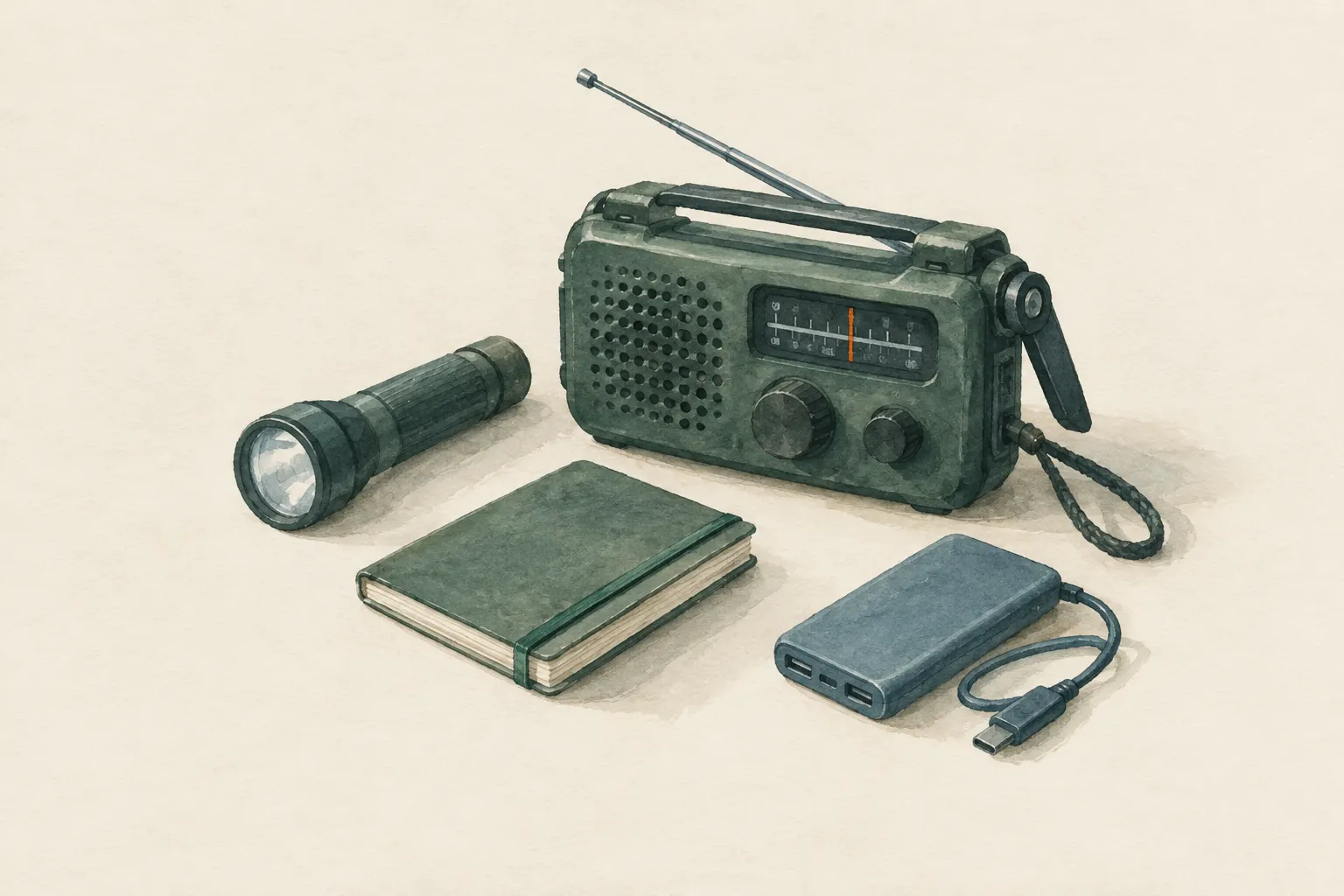
If power, internet or mobile networks fail, a battery or crank radio often remains the most reliable source of information: authorities issue warnings and instructions via broadcast radio. Transmitting yourself is only allowed within the applicable rules – these differ between countries.
- One-off purchase, regular battery checks
Explained simply
When a storm knocks out the power, the internet and mobile network often stop working too. Then a small radio with batteries or a crank is worth its weight in gold. It works without a socket, and radio stations can reach a huge number of people at once.
Authorities say on the radio what is happening and what you should do – for example whether to stay indoors or where to go. A crank radio works like a bicycle dynamo: you turn the handle, and that makes electricity for the radio.
An ordinary radio can only listen, not transmit. So you cannot make an emergency call with it. For that you need the phone and the local emergency number (112 in the EU). And in a crisis, trust official sources more than rumours.
How it works
A radio station broadcasts its programme from large transmitters. Every radio within range can receive it – no matter how many people are listening at once. That is a big difference from the internet or mobile networks, which quickly reach their limits when overloaded or when the power fails. A receiver also needs little energy, so batteries last a long time.
Civil protection authorities, such as Germany's Federal Office of Civil Protection and Disaster Assistance (BBK), therefore recommend keeping a grid-independent radio at home. In a crisis, many broadcasters work with the authorities and spread warnings and instructions.
A crank radio has a small built-in generator: when you turn the handle, a built-in rechargeable battery is charged. Some models also have a solar cell or can give a phone an emergency top-up. How long the cranking lasts varies greatly from model to model.
What really matters: preparation
The best radio is useless if the batteries are flat or have leaked. Store matching spare batteries and check the radio and batteries at regular intervals, for example when you check your other supplies. Leaking batteries can damage the device; if the instructions recommend it, take them out during long storage.
Write the frequencies of your regional public broadcasters on paper and keep the note with the radio. In an emergency you will not be able to look them up online. Try out beforehand which stations come in well at home – including in the cellar or in the room where you would take shelter in danger.
Listening well in a crisis
Do not leave the radio running for hours; listen to the news at set times instead – that saves energy. Follow the authorities' instructions, for example on evacuation, sheltering indoors or help points. Pass important information on to neighbours, especially older people or anyone without a radio.
Rely on official sources: authorities, public or designated broadcasters. In a crisis, rumours spread fast, especially on social media. False news can lead to dangerous decisions, such as driving into a flooded area. If something is unclear, wait for the next official announcement.
Many countries also warn via sirens, warning apps or cell broadcast – warning messages sent directly to all phones in an area. These channels complement the radio but may fail if the network is down.
Transmitting yourself: follow the rules
A broadcast receiver can only receive. If you want to transmit yourself, you need a transmitter – and transmitting is regulated by law. Many radio services require a licence or an exam; amateur radio, for example, generally requires an exam. Other radio uses are licence-free, but only with approved equipment, on certain frequencies and with limited power.
In Europe, for example, there are licence-free handheld radios for short distances (PMR446) that a family or group can use to stay in touch. Which devices, frequencies and transmit powers are allowed differs from country to country. Check the local rules before you buy or use a radio – including devices ordered abroad or online.
When life or health is in danger, the first route is always the local emergency number (112 in the EU). If that does not work, follow the authorities' instructions about help points where you can call for help in a crisis.
Good to know
Radios exist for different reception types, such as FM, AM (medium wave) or digital radio. Which stations in your region use which channels varies. A device that handles several reception types is more flexible. This entry deliberately lists no frequencies, because they vary by region.
A radio is also useful on the move, for example on longer trips or travels, to hear weather warnings. At home it is best kept in a fixed place with the emergency supplies, together with a lamp, spare batteries and the note with the frequencies. That way you can find it even in the dark.
Step by step
Prepare a radio
Keep a radio with battery, rechargeable or crank power with your supplies and store matching spare batteries.
- 1
Prepare a radio
Keep a radio with battery, rechargeable or crank power with your supplies and store matching spare batteries.
- 2
Note the stations
Write down the frequencies of regional public broadcasters on paper and keep the note with the radio.
- 3
Listen regularly
During an incident, listen to the news at set times instead of leaving the radio on constantly – this saves energy.
- 4
Follow instructions
Follow the authorities' instructions, e.g. on evacuation, sheltering indoors or help points. Pass information on to neighbours who have no radio.
- 5
Check regularly
Test the radio and batteries at regular intervals.
Common mistakes
- No grid-independent radio at home
- Flat or leaking batteries
- Frequencies saved only online
- Trusting rumours on social media over official sources
- Transmitting without knowing the rules
Quick view
Materials
Battery or crank radio
Store spare batteries and check them regularly.
Headlamp / flashlight
Suitable for
- Power and network outages
- Severe weather, floods and other major incidents
- Household preparedness
Not suitable for
- Making an emergency call – a broadcast receiver cannot transmit
- Transmitting without knowing the local rules
Prerequisites
- A radio with batteries or crank
- Knowledge of regional stations or frequencies
Safety
- Follow only official sources (authorities, public or designated broadcasters). Rumours and unconfirmed news can lead to dangerous decisions.
- Transmitting is regulated by law: many radio services require a licence or exam, others are licence-free. The rules differ between countries – check local rules.
How it works
Broadcast radio reaches many people at once, and a receiver needs little energy. That is why civil protection authorities recommend keeping a grid-independent radio at home.
Advantages
- Works without internet or mobile networks
- Low energy use
- Official information for many people at once
Disadvantages
- Receive only, no call for help
- Depends on batteries or crank
- Station coverage varies by region
Deep knowledge
Background
Civil protection authorities such as Germany's BBK recommend a battery-powered radio as part of household preparedness, to receive warnings and instructions during power cuts.
Each country has its own rules for transmitting; amateur radio generally requires an exam. This entry therefore does not list frequencies or transmit powers.
Variants
- Warning apps and cell broadcast
- Many countries additionally warn via apps, sirens or cell broadcast to mobile phones. These complement the radio but may fail if the network is down.
- Two-way radio in a group
- In some countries there are licence-free handheld radios for short distances (in Europe e.g. PMR446). Check permitted devices, frequencies and power under local rules beforehand.
Common mistakes
- No grid-independent radio at home
- Flat or leaking batteries
- Frequencies saved only online
- Trusting rumours on social media over official sources
- Transmitting without knowing the rules
Limits and risks
- No frequency details – they vary by region
- No legal advice on radio licences
Material alternatives
Derived from material properties: a substitute must have all relevant properties. Observe the notes on the substitute.
- Headlamp / flashlight
- Mobile phone (The battery drains quickly in cold and with continuous screen and GPS use.), Battery lantern / LED light
Results come exclusively from structured entries. No improvised instructions are generated.
Sources
Bundesamt für Bevölkerungsschutz und Katastrophenhilfe (BBK), Deutschland: Ratgeber für Notfallvorsorge und richtiges Handeln in Notsituationen
Battery-powered radio as part of emergency preparedness
U.S. Federal Emergency Management Agency (FEMA): Make a Plan (Ready.gov)
Emergency plans and receiving official alerts