Planning a route and leaving a trip plan
Good planning prevents most navigation emergencies: set the route, time needed, weather, escape options and a turnaround time – and tell a trusted person where you are going and when you will be back. Then the alarm is raised in time if something happens.
- 30–60 minutes before the trip
Explained simply
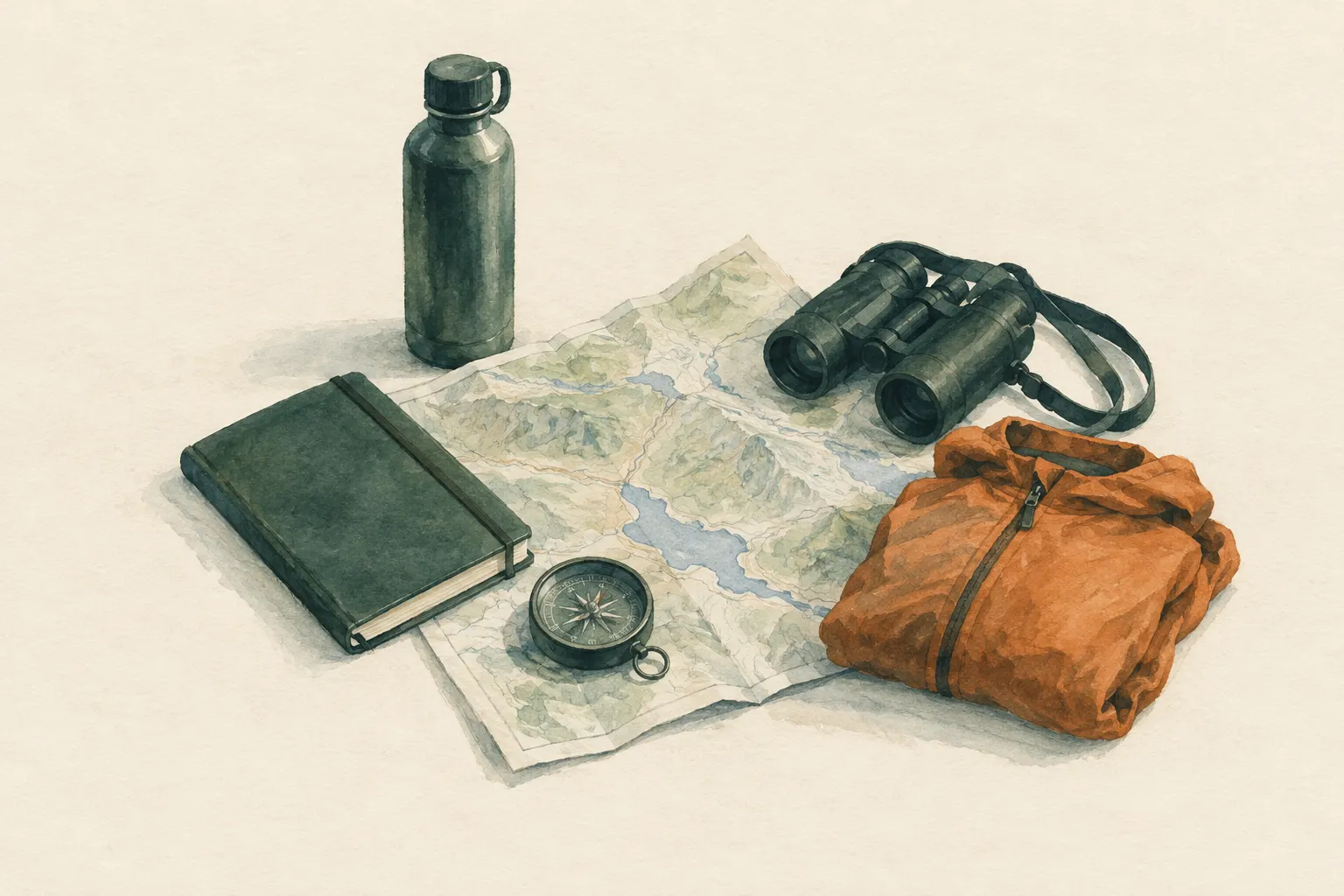
Most problems on a hike can be avoided at home – at the kitchen table, with a map and the weather forecast. There you have time, can think calmly and look everything up. Outside, when you are tired and it starts to rain, good decisions are much harder.
Planning includes: which way will you take? Roughly how long will you need? When does the sun set? What will the weather be like? And a 'turnaround time': a time at which you turn back if you have not reached your goal by then – even if it seems only a little further.
The most important safety point: tell someone you trust where you are going and when you will be back. If you do not get in touch, they know something is wrong and can get help. And reliably check in after the trip.
How it works
Planning moves decisions from the field to the desk. At home you can think calmly about which sections are difficult, where you could take a shortcut or bail out, and what you will do if the weather turns. On the way, you then only have to check whether the situation matches the plan – much easier than deciding everything on the spot.
The second part is the plan you leave with someone. It makes sure somebody notices if you do not come back and can tell rescuers where to look. Especially for people out alone, it is often the only way to get help if they can no longer make a call themselves – for example after a fall or with no signal.
What really matters
Look closely at the route on the map: length, height gain, steep sections, stream crossings, junctions, water sources, huts. Note the key points – places where you have to make a decision or where it gets difficult – and possible escape routes by which you can shorten the trip.
There is no formula for the time needed that fits everyone. Distance, height gain, ground, load, breaks and above all the slowest person in the group determine the pace. Rules of thumb from books or the times on signposts are a guide; over time you learn how your own pace compares. Always plan a generous reserve.
Check the sunset time. In a forest or a deep valley it often gets dark earlier than the clock suggests. And look at the forecast and local warnings again shortly before you set off. If thunderstorms or storms are forecast, adjust the trip or postpone it. In many mountain areas, summer thunderstorms often only build up in the course of the afternoon.
The turnaround time
The turnaround time is a time by which you must have reached a particular point. If you are not there by then, you turn back – however close the goal seems. It sounds strict, but it is one of the most effective safety rules there is.
The reason: on the way it is very hard to give up a goal you can almost see. 'Just a bit further' is one of the most common thoughts before an emergency. If you made the decision at home, you do not have to renegotiate it outside against tiredness, ambition and group pressure.
Work the turnaround time out backwards from sunset: how long do you need for the way back, plus a reserve? Remember that you are often more tired on the way back and do not always go faster downhill.
The trip plan: what goes in it
A good trip plan contains: the planned route with start and end point, possible alternatives, names of the participants, important gear (for example whether you carry a bivvy bag or head torch), vehicle and registration plus where it is parked, the planned return time – and very clearly, from when the contact person should call the local emergency number (112 in the EU).
Write the plan down, as a message or a note. A written plan is more reliable than a quick 'We're going to the mountains today', because the contact person can pass it straight to rescuers. If you change the route on the way, report it as soon as you have signal.
Checking in afterwards is just as important as signing out. Anyone who forgets to check in after the trip can trigger a false alarm and set rescuers in motion for nothing.
When it makes sense – and where it ends
Planning is worth it for every outdoor outing: the short family hike, the bike ride, the ski tour, the solo walk in the woods. It costs nothing but a little time and prevents many emergencies in advance.
Planning does not replace training, though. Alpine terrain, glaciers or avalanche slopes need knowledge and experience that you do not learn at the kitchen table. And the contact person must be reliable – they need to know what to do and stay reachable.
Step by step
Set the route and alternatives
Choose the route on the map, note key sections, junctions, water sources and possible shortcuts or escape routes.
- 1
Set the route and alternatives
Choose the route on the map, note key sections, junctions, water sources and possible shortcuts or escape routes.
- 2
Estimate the time needed
Consider distance, height gain, terrain, the fitness of the slowest person and breaks. Plan in reserves and check sunset time.
- 3
Set a turnaround time
Decide by when a certain point must be reached, otherwise you turn back.
- 4
Leave the plan
Tell a trusted person: route, start and end point, participants, equipment, vehicle and registration, planned return and when they should raise the alarm.
- 5
Stick to the plan or report changes
Deviate on the way only when necessary, and report changes as soon as you have signal.
- 6
Check in
Check in with your contact person immediately after returning.
Common mistakes
- Telling nobody
- Ignoring the turnaround time ('just a bit further')
- Underestimating the time needed
- Changing the route spontaneously without telling anyone
- Forgetting to check in
Quick view
Materials
Topographic map
Check the publication date – paths and buildings may have changed.
Protect from wet (map case or bag).
Mobile phone
The battery drains quickly in cold and with continuous screen and GPS use.
Do not plan on it as your only means of navigation or emergency calls.
Suitable for
- Every hike, cycling or ski trip
- Solo outings
- Groups with children
Not suitable for
- A substitute for training in alpine or avalanche terrain
Prerequisites
- Map or map app
- Current weather and, where relevant, condition reports
- A reachable contact person
Safety
- Set a turnaround time and stick to it even if the goal seems close. Darkness and exhaustion greatly increase risk.
- Check the forecast and local warnings shortly before starting; adjust or postpone the trip if thunderstorms or storms are forecast.
How it works
Planning moves decisions from the field to the desk, where you can decide calmly with all the information. A plan left with someone ensures that somebody notices if you do not return and can tell rescuers where to look.
Advantages
- Prevents many emergencies in advance
- Speeds up a search if needed
- Costs nothing
Disadvantages
- Requires discipline to stick to
- The contact person must be reliable
Deep knowledge
Background
Authorities and preparedness organisations recommend plans that family or trusted people know about. Mountaineering textbooks additionally stress turnaround times and estimating the time needed.
For solo outings in particular, a plan left with someone is often the only way anyone will notice an emergency if you cannot make a call yourself.
Variants
- Written trip plan
- A short written plan (message or note) is more reliable than a verbal agreement because it can be passed on to rescuers.
Common mistakes
- Telling nobody
- Ignoring the turnaround time ('just a bit further')
- Underestimating the time needed
- Changing the route spontaneously without telling anyone
- Forgetting to check in
Limits and risks
- No formula for the time needed – terrain and groups vary too much
- Does not replace training for demanding terrain
Material alternatives
Derived from material properties: a substitute must have all relevant properties. Observe the notes on the substitute.
- Mobile phone
- Headlamp / flashlight, Battery lantern / LED light
Results come exclusively from structured entries. No improvised instructions are generated.
Sources
The Mountaineers Books (2017): Mountaineering: The Freedom of the Hills, 9th edition
Trip planning and turnaround time
U.S. Federal Emergency Management Agency (FEMA): Make a Plan (Ready.gov)
Agreed emergency and communication plans in advance
European Commission: 112 – the European emergency number
Europe-wide emergency number 112