Making an emergency call: what to say, staying reachable
A good emergency call is short, calm and structured: where it happened, what happened, how many people are affected, what injuries or hazards – and then wait for questions. The local emergency number in the EU is 112. After the call, stay reachable and conserve the battery.
- A few minutes
Explained simply
If someone is badly hurt, has got lost or something is on fire, you call the emergency number. In the EU that is 112, and the call is free. At the other end is a dispatch centre – people whose job is to send help: an ambulance, the fire service or mountain rescue.
The dispatcher cannot see you. They are like someone asked to do a jigsaw puzzle blindfolded: you have to hand them the pieces. The most important piece is the location – where are you? After that: what happened, how many people are affected, who is hurt and how? And then you listen, because the dispatcher will ask you questions.
Very important: do not be the first to hang up. The dispatcher ends the call once they know everything. Afterwards keep your phone switched on so they can call you back, and do not use it for games or photos – the battery may still be needed.
How an emergency call works
When you dial the local emergency number (112 in the EU), you reach a dispatch centre. Trained people work there who decide what help is needed and send the right teams. Often help is already being alerted while you are still talking. So it is not a waste of time when the dispatcher asks questions – quite the opposite: the questions help send the right help to the right place.
In Germany many people learn the 'W questions' (Wo, Was, Wie viele, Welche, Warten): Where did it happen? What happened? How many people are affected? Which injuries? Wait for questions. This order is a good memory aid, but not a rigid form. Many dispatchers lead the call themselves with questions. It is best to listen carefully and answer briefly and clearly rather than telling everything at once.
The dispatcher can also guide you over the phone, for example with first aid. Follow these instructions as well as you can. You do not need to know what you do not know – 'I don't know' is an honest and helpful answer.
What really matters: the location
Without a location, nobody can come. In town an address with house number, floor or back yard is often enough. Outdoors it is harder: give the trail you are on, the last signpost, a hut, a summit, a lake or a distinctive bridge. The more such fixed points, the easier it is for rescuers to find you.
Many smartphones can show coordinates. Read them out slowly and say which format they are in – for example 'decimal degrees' or 'degrees, minutes, seconds'. If formats are mixed up, the location can be far off. In many countries the phone also automatically sends its location during an emergency call (for example via Advanced Mobile Location). That is a great help, but it does not replace stating your location yourself.
It helps even before the trip to know the route and follow on the map where you are. If you consciously check now and then where you are while walking, you can describe your position much faster in an emergency.
After the call: staying reachable
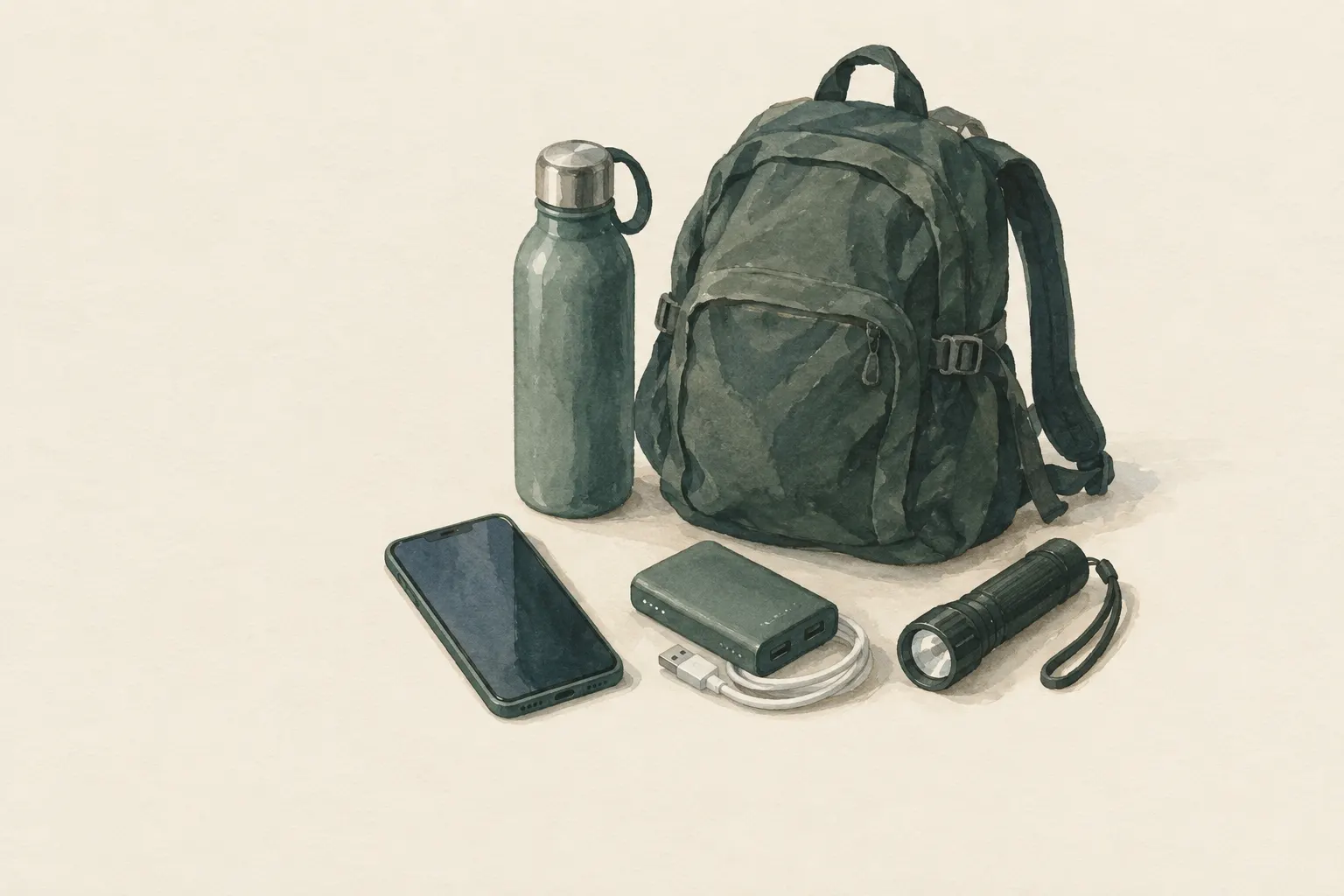
After the emergency call, your phone is the link to the rescuers. Keep it switched on, keep the line free and do not call other people, so that call-backs get through. Save battery: dim screen, no photos, no videos. In the cold a battery often lasts longer if you keep the phone warm close to your body.
If possible, stay at the place you described. If you have to leave it – for example because of rockfall, water or cold – try to inform the dispatch centre. Help the rescuers over the last stretch: bright clothing, a light, a whistle or, if it is safe, one person waiting at a highly visible spot.
Safety: what to watch out for
Your own safety comes first. Do not put yourself in danger to help – not at the edge of a drop, not in the water, not in a burning building, not unprotected on a road. A second casualty makes things harder for everyone. The call itself is often the most valuable thing you can do.
When in doubt, call early. Many people hesitate out of embarrassment, worry about costs or hope that things will get better on their own. But the sooner the dispatch centre knows, the more time rescuers have – especially before dark or when the weather is getting worse. The dispatch centre decides what help is needed.
112 can be called free of charge in all EU countries. Outside the EU other numbers often apply. Look up the local emergency number before every trip and save it in your phone and on paper.
When there is no signal
If the phone shows no signal, it is still worth trying: depending on the country and network, an emergency call may also go through another mobile network. Do not rely on it, though. Moving to a higher, open spot often helps – but only if you can do so without danger.
Some newer phones can send emergency messages via satellite. Whether that works with your device and in your destination country is something you need to check beforehand. Without a connection, signals without technology remain: whistle, light, mirror, bright colours. They do not replace an emergency call, but they can make you findable for people nearby and for search teams.
Step by step
Dial the emergency number
Dial the local emergency number (112 in the EU). Speak calmly and clearly and give your name.
- 1
Dial the emergency number
Dial the local emergency number (112 in the EU). Speak calmly and clearly and give your name.
- 2
Where?
Give the location as precisely as possible: address or trail, summit, hut, signpost, landmarks. If possible read out coordinates from phone or GPS and state the format (e.g. decimal degrees).
- 3
What happened, how many people?
Briefly describe the event, the number of people affected and visible injuries or hazards (fall, fire, water, weather).
- 4
Wait for questions
Answer the dispatcher's questions and follow their instructions. Hang up only when the dispatcher ends the call.
- 5
Stay reachable
Keep the phone on, do not use it for other calls, conserve the battery. If you must leave the location, inform the dispatch centre if possible.
- 6
Make yourself noticeable
Guide rescuers: bright clothing, light, whistle; in the field send one person to a highly visible spot if that is safe.
Common mistakes
- Giving the location vaguely or not at all
- Hanging up too early
- Draining the battery with calls or photos after the emergency call
- Calling too late out of embarrassment or worry about costs
- Passing on coordinates without stating the format
Quick view
Materials
Mobile phone
The battery drains quickly in cold and with continuous screen and GPS use.
Do not plan on it as your only means of navigation or emergency calls.
Power bank
Charge fully before the trip.
Do not use damaged or swollen batteries (fire risk).
Suitable for
- Accidents, injuries, acute illness
- Lost or stranded people in danger
- Fires and natural events
Not suitable for
- General enquiries without an emergency – use authority hotlines or information sources for that
Prerequisites
- A phone with charge and preferably signal
- Knowledge of the local emergency number
Safety
- Do not hang up first – the dispatcher ends the call. Afterwards keep the phone switched on and the line free so call-backs get through.
- Your own safety first: do not enter danger zones (fall terrain, water, fire, traffic) yourself to help.
- 112 can be reached free of charge in all EU member states. Outside the EU other numbers apply – look up the local emergency number before travelling.
How it works
The dispatch centre needs the information to send suitable help to the right place within a short time. The location matters most: without it, no one can come. Many dispatchers guide the call with questions – so listen and answer rather than telling everything at once.
Advantages
- Fastest route to professional help
- One number across the EU
- The dispatcher can give guidance by phone
Disadvantages
- Depends on network and battery
- Language barriers possible
- Vague locations delay help
Deep knowledge
Background
According to the European Commission, 112 is the single emergency number in all EU member states and can be called free of charge; many countries keep national numbers alongside it. In Germany, call handling is often taught with the 'W questions' (Where, What, How many, Which injuries, Wait).
In the mountains and remote areas, giving a precise location is the biggest challenge. Coordinates from the phone and knowing the map and your route plan help shorten the search.
Variants
- No or weak signal
- Look for a higher, open spot if that is safe. Depending on the country and network, emergency calls may also route via other mobile networks; do not rely on it, though. Some phones support emergency messaging via satellite – check availability beforehand.
- Automatic location transmission
- In many countries smartphones automatically send their location to the dispatch centre during an emergency call (e.g. Advanced Mobile Location). This is helpful but does not replace stating your location yourself.
Common mistakes
- Giving the location vaguely or not at all
- Hanging up too early
- Draining the battery with calls or photos after the emergency call
- Calling too late out of embarrassment or worry about costs
- Passing on coordinates without stating the format
Limits and risks
- No statement on network coverage or satellite services of specific devices and countries
- Emergency numbers outside the EU differ
Material alternatives
Derived from material properties: a substitute must have all relevant properties. Observe the notes on the substitute.
- Mobile phone
- Headlamp / flashlight, Battery lantern / LED light
Results come exclusively from structured entries. No improvised instructions are generated.
Sources
European Commission: 112 – the European emergency number
112 as the EU-wide, free emergency number
Bundesamt für Bevölkerungsschutz und Katastrophenhilfe (BBK), Deutschland: Ratgeber für Notfallvorsorge und richtiges Handeln in Notsituationen
Guidance on making an emergency call correctly
Bundesministerium für Finanzen – Amtshelfer oesterreich.gv.at: Notrufnummern (oesterreich.gv.at)
Emergency numbers and call basics in Austria