When the power comes back
The end of a power outage brings its own risks: power surges, forgotten hotplates and irons, thawed food, heating that does not restart. If you switch devices back on gradually, check food and restock supplies, you close the outage safely.
- About 30–60 minutes
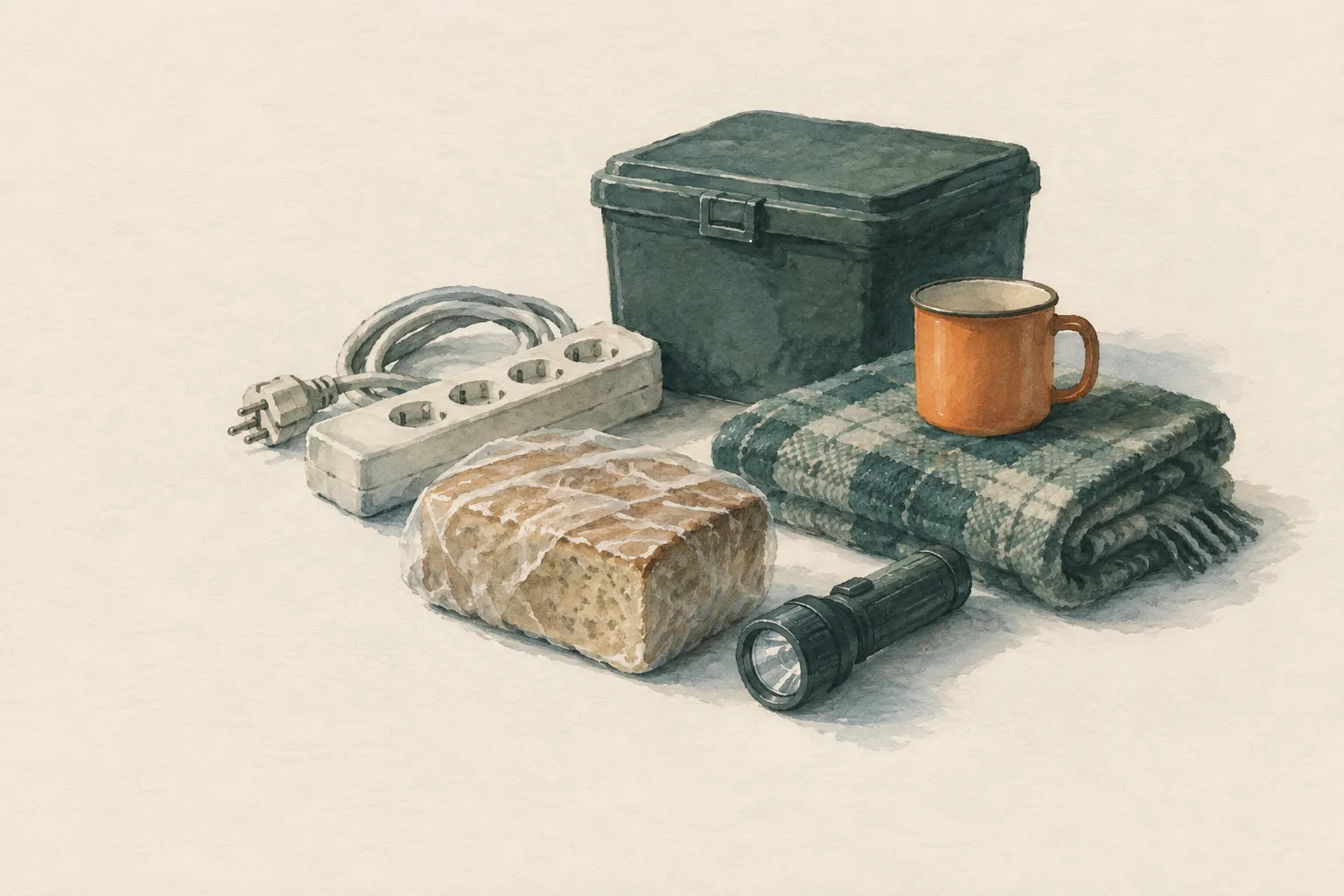
Explained simply
When the lights come back on after a power outage, the relief is great. But this is exactly the moment to pay attention for a little while. Perhaps the hotplate was still switched on when the power went – and now it gets hot again with nobody standing next to it. Or a candle is still burning even though nobody is watching it any more.
Also, when the power returns, many devices start up at the same time. It is a bit like all the children trying to get through one door at once: things can jolt. That is why you plug sensitive devices back in only one by one.
Very important: if water has got into the home, for example during a flood, do not switch anything on. A qualified electrician checks it first.
How it works
When the grid is switched back on, power flows at the same time in many households into fridges, heating, pumps and every device that was still switched on. Short voltage fluctuations can also occur when the power is restored. Sensitive electronics can be damaged by this. Ready.gov therefore advises unplugging appliances during the outage and reconnecting them gradually after the power returns.
At the same time, hazards have built up during the outage: heating appliances that were on when the power failed, candles still burning, food that has warmed up, and supplies that have been used up. The end of the outage is the moment to work through this list calmly.
What really matters
Hazards first: check whether the cooker, iron, fan heater or other heating appliances are still switched on, and put out candles as soon as the light is back. A tip for the future: note before or during an outage which devices you switched off or unplugged. Then you know exactly what to reconnect later.
Then reconnect step by step: first the fridge, freezer and heating, then the other devices one by one, and sensitive electronics such as computers or televisions last. If the power comes and goes several times, leave sensitive devices unplugged until the supply is stable.
Next, check the heating: does it start again? Some systems need a restart according to the manufacturer. Also watch for instructions from the water utility, for example whether tap water must temporarily be boiled. Reset alarm clocks, timers, the alarm system and the router, and check medical devices according to the manufacturer's instructions.
Safety: what to watch out for
After a flood or water ingress, do not switch on circuit breakers and do not use wet appliances. Water and electricity together can cause fatal electric shocks and fires. A qualified electrician checks the installation and appliances before anything is switched on. After an evacuation, return only when the authorities have cleared the area.
If there is a burning smell, you see sparks or a breaker trips when switching back on: unplug the device, leave the breaker off and call a professional. Work on electrical installations is not for laypeople. In case of fire: get out, close the doors and call the emergency number (112 in the EU).
If you smell gas or the gas boiler shows an error, do not operate any switches, leave the building and call the gas emergency service or the emergency number from outside.
Food and supplies
Read the thermometers in the fridge and freezer and estimate how long the outage lasted. Then decide according to the food-safety rules what stays and what is thrown away. Smell and appearance are not a test – when in doubt, throw it out.
Afterwards, restock your supplies: charge power banks and batteries, replace used batteries, water and food. Write down what was missing. That is the most valuable lesson from every outage, because next time you will be better prepared at exactly that point.
Good to know
Ready.gov recommends leaving a single lamp switched on during an outage. That way you notice immediately when the power returns, without every device starting up at once.
The end of an outage is a good moment for a short debrief in the household, including with the children: what worked well? What was missing? Who in the neighbourhood needed help? This turns a tiring experience into a step towards greater safety.
Step by step
Hazards first
Check whether the cooker, iron, fan heater or other heating appliances are still switched on. Put out candles once the light is back.
- 1
Hazards first
Check whether the cooker, iron, fan heater or other heating appliances are still switched on. Put out candles once the light is back.
- 2
Reconnect devices gradually
First fridge, freezer and heating, then other devices one by one. Plug in sensitive electronics last.
- 3
Check heating and water
Does the heating come back on? Some systems need a reset according to the manufacturer. In case of a fault, gas smell or error message, call a qualified technician or the gas emergency service. Follow the water utility's instructions, for example whether tap water has to be boiled.
- 4
Assess food
Read the thermometers and estimate how long the outage lasted. Decide according to food-safety rules what stays and what is thrown away.
- 5
Reset clocks, alarms and devices
Check alarm clocks, timers, alarm systems and routers. Check medical devices according to the manufacturer's instructions.
- 6
Restock supplies
Charge power banks and batteries, replace used batteries, water and food. Note what was missing – that is the most valuable lesson from the outage.
Common mistakes
- Switching all devices back on at the same time
- Switching on wet appliances or installations
- Continuing to use food without checking
- Forgetting burning candles once the light is back
- Not restocking supplies
Quick view
Materials
Fridge and freezer thermometer
Headlamp / flashlight
Suitable for
- Every end of a longer power outage
- Returning after an evacuation (only when cleared)
Not suitable for
- Appliances or installations that have got wet – a qualified electrician checks these before they are switched on
Prerequisites
- Knowing where the breaker panel and main switch are
- A list of the devices that were switched off before the outage
Safety
- Burning smell, sparks or tripped breakers when switching back on: unplug the device, leave the breaker off, call a professional. In case of fire: get out and call the local emergency number (112 in the EU).
- Use food from the fridge and freezer only after checking the temperature; when in doubt, throw it out.
How it works
When the power returns, many loads switch on at the same time. Ready.gov therefore advises unplugging appliances during the outage and reconnecting them gradually after the power returns to avoid damage from surges. At the same time hazards have built up during the outage – heating appliances left switched on, warm food, used-up supplies – which you now work through systematically.
Advantages
- Prevents consequential damage and fires
- Reveals gaps in preparedness
Disadvantages
- Takes time again after a tiring outage
Deep knowledge
Background
Ready.gov recommends unplugging appliances during an outage, leaving one lamp on to notice when the power returns, and checking food afterwards. The USDA gives rules for assessing refrigerated and frozen food after an outage.
The end of an outage is a good moment for a short debrief in the household: what worked, what was missing, who needed help?
Variants
- Repeated flickering
- If the power comes and goes several times, leave sensitive devices unplugged until the supply is stable.
Common mistakes
- Switching all devices back on at the same time
- Switching on wet appliances or installations
- Continuing to use food without checking
- Forgetting burning candles once the light is back
- Not restocking supplies
Limits and risks
- No guidance for work on electrical installations
- No manufacturer-specific reset instructions
Material alternatives
Derived from material properties: a substitute must have all relevant properties. Observe the notes on the substitute.
- Headlamp / flashlight
- Mobile phone (The battery drains quickly in cold and with continuous screen and GPS use.), Battery lantern / LED light
Results come exclusively from structured entries. No improvised instructions are generated.
Sources
Ready.gov – U.S. Federal Emergency Management Agency (FEMA): Power Outages
Unplugging appliances and reconnecting gradually after the power returns
United States Department of Agriculture – Food Safety and Inspection Service (USDA FSIS): Keeping Food Safe During an Emergency
Assessing food after an outage