Getting the freezer and fridge through an outage
How long frozen food lasts is decided mainly before and in the first hours of an outage: a full freezer stays cold longer than a half-empty one, and every door opening costs cold. If you fill gaps with frozen water bottles, use thermometers and have a plan, you save more food.
- Preparation in passing; a few minutes during the outage
Explained simply
During a power outage a freezer is like a big ice pack. The frozen food inside stores cold and keeps itself cold. Air, by contrast, stores hardly any cold. That is why a full freezer stays cold much longer than a half-empty one.
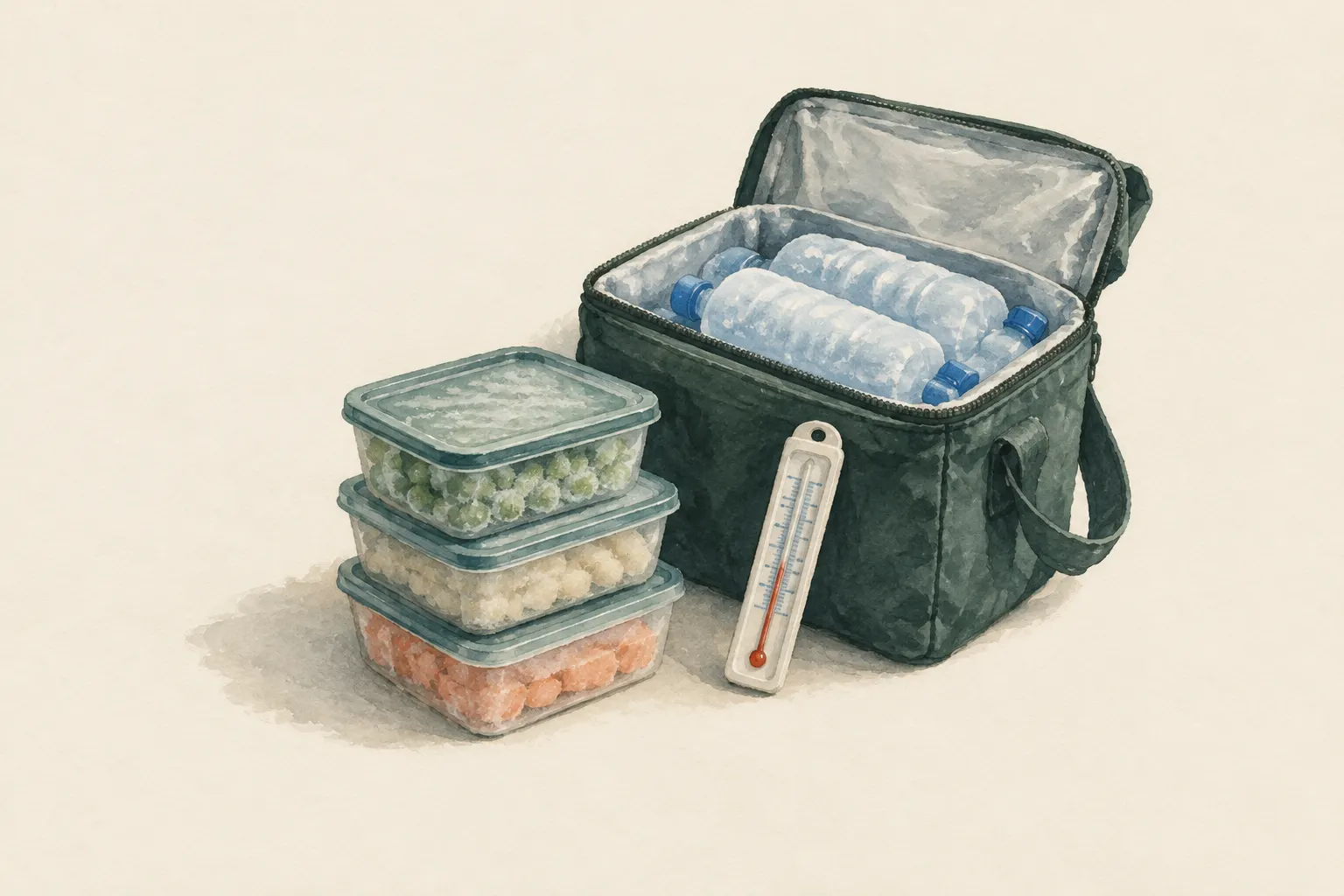
You can do something beforehand: fill empty compartments with water bottles that freeze along with everything else. During an outage they work like extra blocks of ice. And when the power is gone, one thing matters most: keep the lid closed! Every opening lets cold escape.
When the power is back, the thermometer decides what you can still eat – not your nose. When in doubt, throw the food away.
How it works
For frozen food to thaw, heat must get in from outside through the insulated walls and then melt the ice. Melting ice in particular “swallows” a lot of heat without the temperature rising – that is why an ice cube in a drink stays at zero degrees for a long time. So the more frozen mass there is in the freezer, the longer it takes for everything to warm up.
Empty compartments are full of air. This air is immediately swapped for warm room air when you open the door and hardly helps with cooling. Frozen water bottles fill such gaps with “cold storage”. The US food safety authority USDA gives as a guide value that a full, closed freezer holds its temperature for about 48 hours, a half-full one for about 24 hours and a closed fridge for about 4 hours. Actual times depend on the appliance, room temperature and load.
What really matters
Most of it is decided before the outage. Fill empty compartments with water bottles – but not to the brim, because water expands when it freezes and can burst the bottle. Store frozen food packed together with raw meat at the bottom so meltwater does not reach anything else. A contents list on the door saves long searching with the door open.
During the outage, doors and lids stay closed. Eat food from the pantry and the fridge first, not from the freezer. If it is clear that the outage will last longer, move perishable fridge items such as milk, meat and leftovers into a cool box with frozen bottles – deliberately and quickly.
Note the time when the power went out and read the thermometers at the end. With these two pieces of information you decide, according to the food-safety rules, what stays and what is thrown away.
Safety: what to watch out for
You cannot reliably recognise spoiled food by smell or appearance, and heating does not always make it safe. Never refreeze thawed food without checking it. When in doubt, throw it out.
A blanket over the freezer can help keep warmth out. But vents and the area around the compressor must stay clear, and the blanket comes off as soon as the power is back – otherwise the appliance can overheat.
Some people cool with dry ice. Dry ice is frozen carbon dioxide and extremely cold: never touch it with bare hands, use it only in well-ventilated rooms and never store it in airtight containers, because gas builds up there. If you do not know the hazards, better leave it.
Typical mistakes and misunderstandings
The classic is constantly checking whether everything is still frozen. Every bit of curiosity costs cold. A thermometer you can read from outside, or that you check just once at the end, is the better solution.
Another misconception: “In winter I'll put everything on the balcony or in the snow.” The sun can thaw food, temperatures vary between day and night, and animals can get at it. So outdoors is not a reliable freezer.
Good to know
The frozen water bottles are useful twice: first they hold cold, later you can use them as cooling elements in a cool box or as utility water, for example for washing hands or flushing the toilet. For drinking, only use water that was bottled as drinking water from the start and stored cleanly.
For planned shutdowns, for example for grid works, you can prepare specifically: freeze bottles beforehand and have a cool box ready for the most important fridge items. How to assess food after the outage is described in the entry on food safety during power outages.
Step by step
Beforehand: fill gaps
Fill empty compartments in the freezer with water bottles (not filled to the brim) or ice packs. They hold cold during an outage and later also serve as cooling elements or utility water.
- 1
Beforehand: fill gaps
Fill empty compartments in the freezer with water bottles (not filled to the brim) or ice packs. They hold cold during an outage and later also serve as cooling elements or utility water.
- 2
Beforehand: order
Store frozen food packed together with raw meat at the bottom so that meltwater does not reach anything else. A contents list on the door saves long searching with the door open.
- 3
During the outage: keep it shut
Keep doors and lids closed. Use food from the pantry and the fridge first, not from the freezer.
- 4
Relieve the fridge
If it is clear that the outage will last longer, move perishable food (milk, meat, leftovers) into a cool box with frozen bottles – deliberately and quickly, not by constant opening.
- 5
Insulate outside – with care
A blanket over the freezer can help; vents and the compressor area stay clear, and the blanket comes off as soon as the power is back.
- 6
Record the temperature
Note the time the outage began and read the thermometers at the end. Then decide about the food according to the rules in the food-safety entry.
Common mistakes
- Checking again and again whether everything is still frozen
- Running the freezer half empty
- Covering the vents and forgetting about it
- Refreezing thawed food without checking
- Not noting the time of the outage
Quick view
Materials
Fridge and freezer thermometer
One each in fridge and freezer
Ice packs
Or frozen water bottles
Do not fill water bottles to the brim for freezing – water expands as it freezes.
Insulated cool box
Keeps cold only for a limited time; without ice packs or ice it is not a fridge.
Wool blanket / duvet
Only lay over the outside, keep vents clear
Keep away from candles, stoves and heaters.
Suitable for
- Outages lasting hours to a few days
- Households with a larger freezer stock
Not suitable for
- Food that has already been too warm for too long – the food-safety rules then apply
- Cooling with dry ice without knowing the hazards
Prerequisites
- Thermometer in the appliance
- A rough overview of the contents
Safety
- Never touch dry ice with bare hands and use it only in well-ventilated rooms; it gives off carbon dioxide. Do not store it in airtight containers.
- Do not simply put food in the snow or on the balcony in winter: sun can thaw it, temperatures fluctuate and animals can get at it.
How it works
During an outage a freezer is a cold battery: frozen mass stores cold, air hardly does. The fuller and more closed the appliance, the more slowly it warms up. The US food safety agency USDA gives as a guide value that a full, closed freezer holds its temperature for about 48 hours, a half-full one for about 24 hours.
Advantages
- Costs nothing but space
- Often saves the whole freezer stock in short outages
- Frozen bottles are extra utility water
Disadvantages
- Helps only to a limited extent in very long outages
- Less space for food
Deep knowledge
Background
The USDA guide values (closed fridge about 4 hours, full freezer about 48, half-full about 24 hours) are reference points for closed appliances. Actual times depend on the appliance, room temperature and load – hence the thermometer.
What happens to food after the outage is described in the entry on food safety during power outages; this entry only covers extending the cooling time.
Variants
- Cool-box chain
- For planned shutdowns, collect frozen bottles beforehand and prepare a cool box for the most important fridge items.
Common mistakes
- Checking again and again whether everything is still frozen
- Running the freezer half empty
- Covering the vents and forgetting about it
- Refreezing thawed food without checking
- Not noting the time of the outage
Limits and risks
- No guarantee of particular holding times
- No food assessment – see the food-safety entry
Material alternatives
Derived from material properties: a substitute must have all relevant properties. Observe the notes on the substitute.
- Insulated cool box
- Sleeping pad, Dry leaves, grass or conifer boughs (Collect only where allowed; no protected plants. Check for ticks and insects.), Backpack, Dry spare clothing (Carry it in waterproof packaging – wet clothing barely insulates.), Wool blanket / duvet (Keep away from candles, stoves and heaters.), Sleeping bag (Do not store compressed long-term; do not pack away damp.), Newspaper and cardboard (Flammable – keep away from candles, stoves, heaters and embers.), Insulated cooking box (hay box, thermal cooker) (Never put open flame or embers inside – only the hot, closed pot.)
- Wool blanket / duvet
- Sleeping pad, Dry leaves, grass or conifer boughs (Collect only where allowed; no protected plants. Check for ticks and insects.), Backpack, Dry spare clothing (Carry it in waterproof packaging – wet clothing barely insulates.), Insulated cool box (Keeps cold only for a limited time; without ice packs or ice it is not a fridge.), Sleeping bag (Do not store compressed long-term; do not pack away damp.), Newspaper and cardboard (Flammable – keep away from candles, stoves, heaters and embers.), Insulated cooking box (hay box, thermal cooker) (Never put open flame or embers inside – only the hot, closed pot.)
Results come exclusively from structured entries. No improvised instructions are generated.
Sources
United States Department of Agriculture – Food Safety and Inspection Service (USDA FSIS): Keeping Food Safe During an Emergency
Holding times of closed appliances, keeping doors shut, thermometers, dry ice, not storing food in snow
Ready.gov – U.S. Federal Emergency Management Agency (FEMA): Power Outages
Keeping fridge and freezer closed