Household repairs: what you can do yourself – and what you cannot
Doing small repairs yourself saves time and keeps a household working during a crisis: a blocked drain, a loose screw, a draughty window, a torn strap. Work on gas, electrical wiring, heating systems, flues and load-bearing parts of a building, on the other hand, belongs in professional hands – even in an emergency. The most important part of self-help is knowing this boundary.
- 5 minutes to read; assemble a toolbox once
Explained simply
Some things in the home you can repair well yourself: tightening a loose screw, clearing a blocked drain with a plunger or patching a tear in a tarp. If something goes wrong, it is annoying – but not dangerous.
With other things it is completely different: gas pipes, electrical cables in the wall, the heating system or the roof after a storm. A small mistake here can cause a fire, an electric shock or poisoning – sometimes only hours or days later, when nobody is thinking about it any more. That is why such work is done only by trained professionals, even in an emergency.
The rule of thumb is: what decides is not “How hard is it?” but “What happens if I make a mistake?”. If the answer is “Someone could get hurt”, you get help. Your part is then to make the area safe, keep your distance and call professionals.
How it works: the consequences rule
Whether a repair is suitable for a layperson depends mainly on how bad a mistake would be and whether it would be noticed. A crooked hook is spotted immediately and does little harm. A badly made gas connection, on the other hand, can let gas escape unnoticed, and a wrongly connected cable can slowly heat up and start a fire only days later.
On top of that, with gas, electricity, heating and flues the dangers are invisible. You cannot see electricity, and carbon monoxide from a faulty heater or a leaking flue pipe has no colour and no smell. Anyone working “just temporarily” here can put themselves and others in mortal danger without noticing.
That is why much of this work is legally reserved for qualified contractors in many countries. Exactly where the line runs differs by country and tenancy agreement – check local rules. The rule of thumb stays the same everywhere: with gas, electricity behind covers, pressurised heating and hot-water systems, chimneys and load-bearing parts, self-help means not repairing but making safe and getting help.
What you can do yourself
Typical layperson tasks include: clearing a drain with a plunger, tightening screws on furniture, handles and fittings, applying draught strip to draughty windows, changing bulbs (lamp off, mind the switch and circuit), catching a drip in a bucket, securing a tarp against water ingress – from the ground, not the roof.
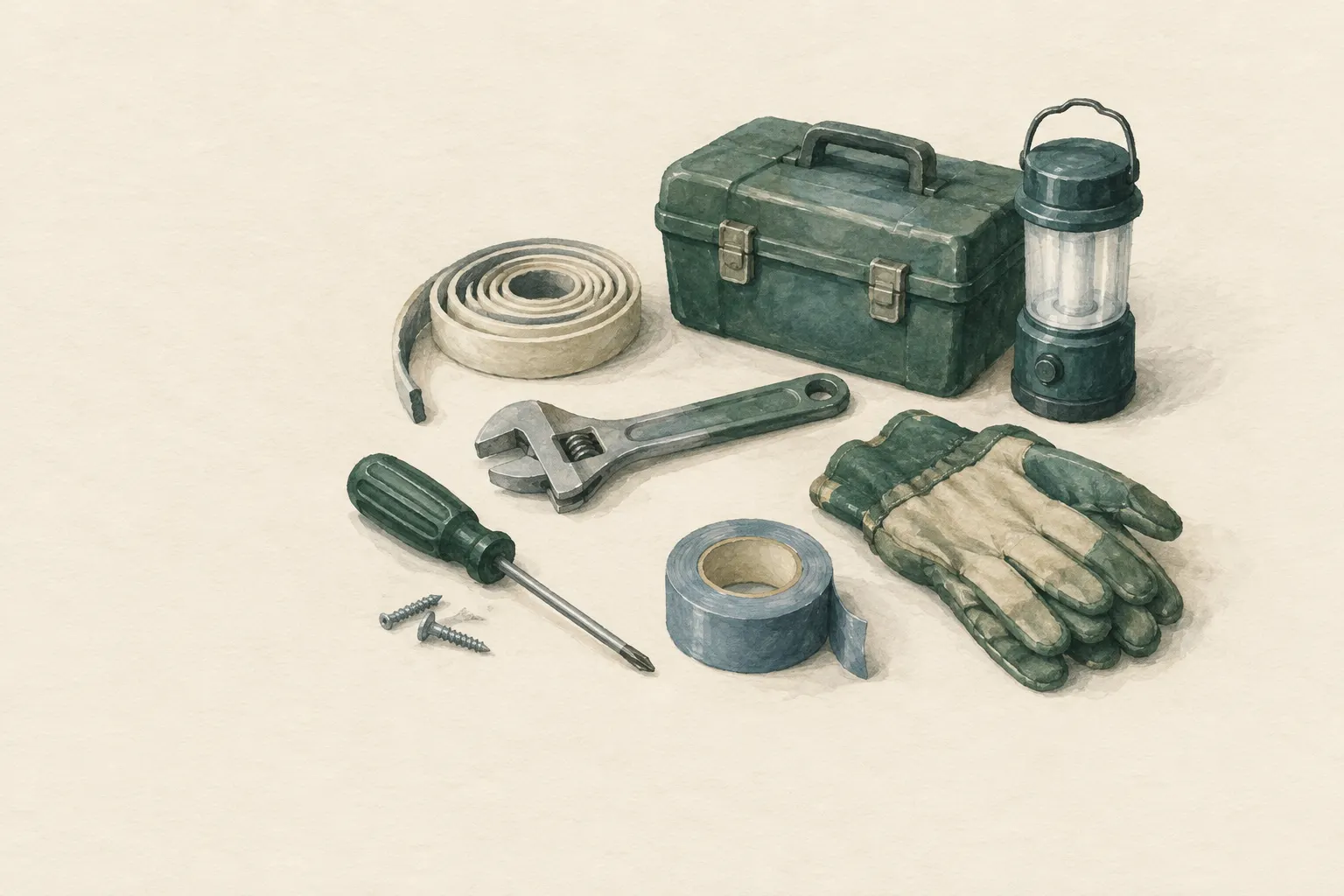
A small toolbox is usually enough for this: screwdrivers, pliers, tape measure, hammer, tape, torch, work gloves and safety glasses. Add the phone numbers of the landlord, building management, utilities and emergency services in a place everyone knows.
Shutting things off is also part of self-help: closing the main water valve after a burst pipe, switching off a breaker if you are standing dry and can reach it safely, securing a damaged area with tape or furniture so nobody walks in. That is not repairing – but it often prevents most of the damage.
What belongs in professional hands
Gas: gas appliances, gas meters and gas pipes. If you smell gas, leave the building without operating any switches first and call the gas emergency service or the local emergency number (112 in the EU) from outside. Only the utility or a qualified professional turns gas back on once it has been shut off.
Electricity: sockets, switches, the inside of the breaker panel and any wiring. Damaged cables are not patched with tape and kept in use; the appliance is unplugged and replaced or checked. Boilers, water heaters, chimneys and flue pipes also belong in professional hands – and you do not open a faulty heater yourself.
Buildings: after earthquakes, storms, floods or fires, walls, ceilings and roofs can be weakened even if you cannot see it. Only enter damaged buildings once authorities or professionals have cleared them, and do not climb onto the roof after a storm without it being checked.
Safety: what to watch out for
Even simple jobs carry risks. Ladders stand on firm, level ground; someone should be nearby, and you do not lean far out to the side. When drilling, sanding or hammering, safety glasses protect your eyes. Always cut away from your body with knives and box cutters.
In older buildings, building materials can contain harmful substances, such as asbestos in old boards, putties or floor coverings. Do not drill, sand or break such materials if you do not know for sure what they are made of – this can release dangerous dust. When in doubt, ask professionals.
After any job, watch for anything unusual: a smell of gas or melted plastic, a warm plug, a flickering light. Such signs are a reason to switch off or unplug the appliance and get help – not to carry on.
Typical situations in a crisis
In a widespread crisis, tradespeople are scarce and the wait can take days. That is exactly when the temptation is greatest to “quickly rig something up” yourself. But in that very situation a fire or electrical accident would be especially bad, because the fire service and hospitals are also under heavy strain. Patience here is a safety measure.
What you can do instead: close off affected areas, have the supply to the affected part shut off or shut it off yourself where that is permitted and safe, catch water, cover windows temporarily, photograph the damage and inform the landlord, insurer and a contractor. The neighbourhood often helps too: perhaps someone knows a firm that still has appointments free.
An example: after a storm, a power line is hanging down or a branch is lying on it. Keep your distance, warn others and call the network operator or the fire service. A fallen line must always be treated as dangerous, even if it is lying still.
Quick view
Materials
Headlamp / flashlight
Suitable for
- Small everyday maintenance
- Temporary securing after damage until professionals arrive
Not suitable for
- Gas lines, gas appliances, flues
- Electrical wiring behind sockets and switches
- Pressurised heating and hot-water systems
- Load-bearing walls, roofs, structure after an earthquake or storm
Prerequisites
- Basic tools (screwdrivers, pliers, tape measure, tape)
- Phone numbers of landlord, utilities and emergency services
Safety
- When working with ladders, knives and tools: a stable ladder, a second person nearby, safety glasses when drilling or grinding.
How it works
Whether a repair is suitable for a layperson depends not on how difficult it is but on the consequences of a mistake. A badly repaired shutter strap is annoying; a faulty gas or electrical connection can cause fire, explosion, carbon monoxide poisoning or electric shock – often delayed and unnoticed. For such systems self-help means: make safe, have it shut off, get help.
Advantages
- Saves time and money on small damage
- Maintains independence in a crisis
- A clear boundary avoids dangerous improvisation
Disadvantages
- Professionals are often hard to reach in a crisis
- Boundaries differ by country and tenancy agreement
Deep knowledge
Background
In its guide “Are You Ready?”, FEMA stresses that gas should only be turned back on by professionals after being shut off, and that occupants should leave the house if they smell gas. Similarly clear rules apply in many countries to electrical wiring, which may be legally reserved for licensed contractors.
In a widespread crisis tradespeople are scarce. That is exactly when it matters not to build dangerous makeshift fixes out of impatience, but to close off affected areas and wait for help.
Variants
- Typical layperson tasks
- Clearing a drain with a plunger, tightening screws and fittings, applying draught strip to windows, changing bulbs (lamp off, mind the circuit), securing tarps against water ingress – from the ground, not the roof.
- Typical professional tasks
- Gas appliances, gas meters and pipes; sockets, switches, breaker panel and wiring; boilers and water heaters; chimneys and flue pipes; structural assessment after damage.
Common mistakes
- Working on gas or power “just temporarily” during an emergency
- Patching damaged cables with tape and continuing to use them
- Opening faulty heaters yourself
- Climbing onto the roof after a storm without it being checked
Limits and risks
- No repair instructions for individual appliances
- Legal rules for electrical and gas work differ by country – check local rules
Material alternatives
Derived from material properties: a substitute must have all relevant properties. Observe the notes on the substitute.
- Headlamp / flashlight
- Mobile phone (The battery drains quickly in cold and with continuous screen and GPS use.), Battery lantern / LED light
Results come exclusively from structured entries. No improvised instructions are generated.
Sources
U.S. Federal Emergency Management Agency (FEMA): Are You Ready? An In-Depth Guide to Citizen Preparedness
Gas only turned back on by professionals; leave the house if gas is smelled