Planning backup heating – safe rather than improvised
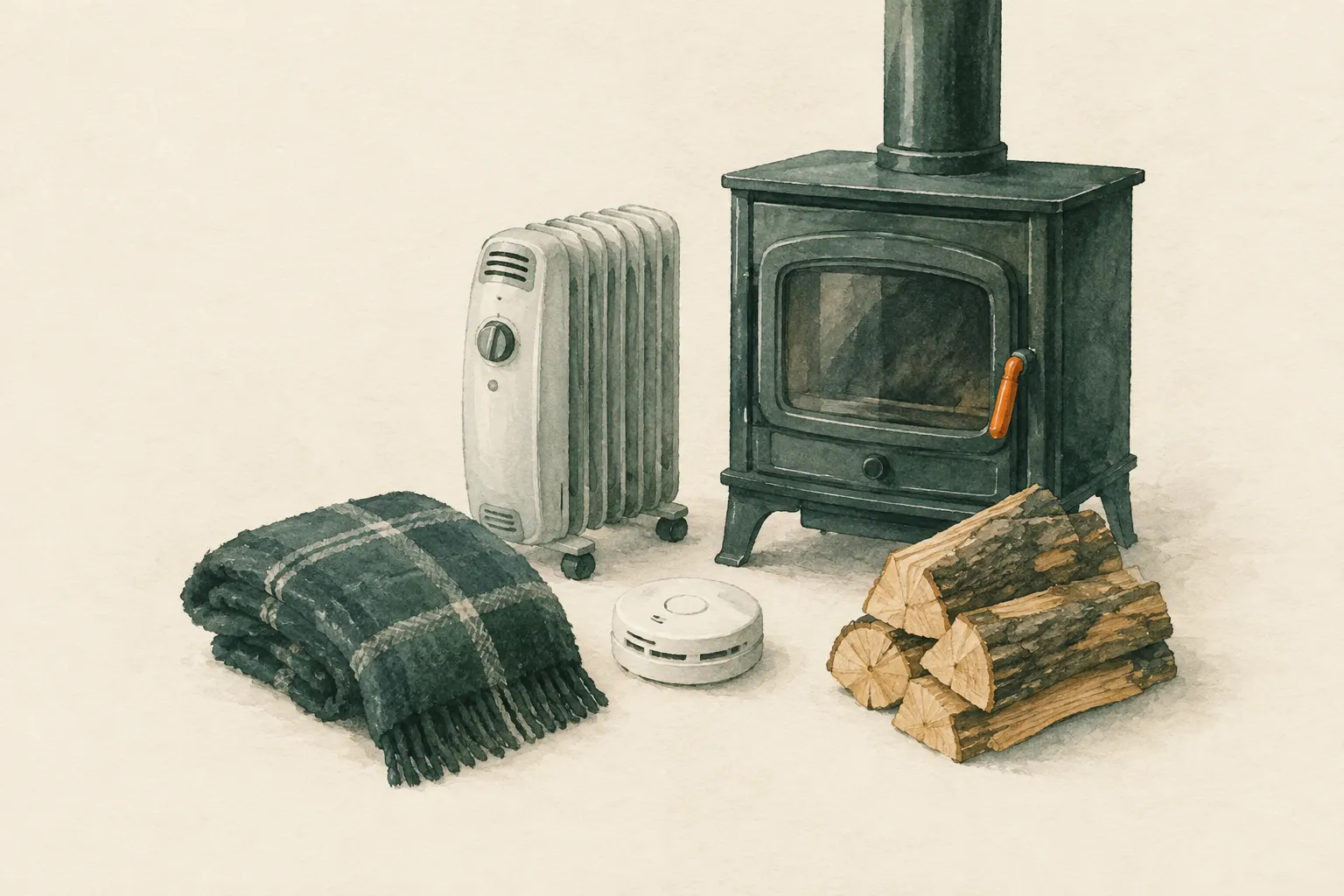
Anyone preparing for a long heating failure plans beforehand: which heat source is approved for indoor use, professionally installed and inspected? Wood stoves need an inspected chimney, heaters need a carbon monoxide alarm and clearance from flammable materials. Grills, camping stoves, patio heaters and generators never belong indoors.
- Several hours of planning, installation by a professional
Explained simply
Imagine the heating fails for several days in winter. It is tempting to light anything that gives off heat – the barbecue from the balcony or the camping stove. But that is exactly what is life-threatening. Everything that burns makes not only heat but also exhaust gases. One of them is carbon monoxide, CO for short. You cannot see it, smell it or taste it – and even a little of it can make a person pass out.
That is why backup heating is planned before it gets cold. Only appliances that are expressly made for indoor use may produce heat inside. A wood stove needs a chimney that has been checked by professionals – the chimney is like an exhaust pipe that carries the fumes safely outside. And every home should have a carbon monoxide alarm: a small device that beeps loudly when CO builds up.
The most important rule: grills, charcoal, camping stoves, patio heaters and generators are outdoor appliances. They never go into a home, cellar, garage or tent. And the simplest things often work best: keep one room warm, wear thick clothing, use blankets and sleeping bags.
How it works
Every combustion – whether wood, gas, paraffin or charcoal – needs oxygen and produces exhaust gases. When burning is complete, it mainly produces carbon dioxide and water vapour. If air is lacking, the fuel is damp or the appliance is dirty, more carbon monoxide is produced. When breathed in, the gas enters the blood and pushes out the oxygen there, because it binds much more firmly to the red blood cells. The body then suffocates from the inside, so to speak, even though you are breathing normally.
Heating with fire is only safe if the exhaust is reliably led outside – through an inspected chimney or an approved flue – and if the appliance gets enough combustion air. That is why stoves and gas appliances are not DIY projects: connection, clearance from flammable materials and air supply are planned and checked by professionals.
A second, often overlooked point: many modern central heating systems need electricity for the pump, controls and ignition. If the power goes, the heating goes with it, even if there is still gas, oil or pellets. Knowing this lets you talk to a professional about solutions in good time.
Safety: what to watch out for
Carbon monoxide poisoning often feels like flu at first: headache, dizziness, nausea, tiredness, confusion. An important warning sign is when several people in the same room – or pets – have such symptoms at the same time, and when they get better outside. Then get everyone outside immediately, do not go back for anything, and call the local emergency number (112 in the EU).
A carbon monoxide alarm is the only reliable warning, because your nose notices nothing. It belongs in rooms with stoves or fireplaces and near sleeping areas. A smoke alarm does not replace it – it detects smoke, not CO. Test alarms regularly and note the replacement date given by the manufacturer, because sensors age too.
If you smell gas: do not operate light switches or doorbells, no flames, open windows, leave the building and call the emergency service from outside. Electric heaters need clearance from curtains, beds and furniture, must not be covered and must not be run through multi-socket adapters or cable reels – they draw a lot of current and cables can get hot.
What really matters
Good planning starts with an honest review: how do I heat, and does it work without electricity? Is there a chimney connection that may be used? Has the stove been approved, and is the chimney regularly inspected and swept? If anything is unclear, ask the heating business or the responsible chimney sweep instead of guessing.
Which appliances are allowed indoors varies by region. This concerns, for example, gas or paraffin heaters without a flue. So: read the manufacturer's information and check local rules. An appliance marked “for outdoor use” stays outdoors – even if it is supposed to be “just for a moment”.
Fuel is part of safety too. Firewood is stored dry and away from the stove. Liquid fuels go only into approved containers and not into living areas, as locally permitted. Substitute fuels or accelerants are off-limits.
When you have to manage without backup heating
Not every home can have a stove, and that is fine. Passive measures hold on to a surprising amount of heat and carry no risk at all. Choose the smallest possible room as a warm room, ideally on the sunny side, close the doors to unused rooms and seal draughts without closing vents that belong to stoves or fireplaces.
Your body itself is a heat source. Several layers of clothing, a hat, warm socks, warm drinks from a flask and a sleeping bag in bed hold that heat in. Close curtains and blinds at night and let the sun in during the day. Airing briefly several times a day is still important.
If the home becomes dangerously cold – especially for babies, older or ill people – it is wise to use outside help: neighbours, family or warming centres that authorities often set up in such situations. Follow official information on the radio or official channels.
Typical mistakes – and why they happen
The most dangerous mistakes come from cold and desperation: a charcoal grill is “only glowing now”, a generator is “only in the garage”, a gas stove is meant to “warm the kitchen for a moment”. Glowing charcoal in particular produces a lot of carbon monoxide, and from garages the gas spreads into adjoining rooms. The principle is simple and has no exceptions: outdoor combustion appliances stay outdoors, away from windows, doors and vents.
Another common mistake is a wood stove that has not been inspected for years. Soot and tar in the chimney can catch fire, and a blocked flue pushes exhaust back into the room. That is why inspection and sweeping are part of the plan, just like a working CO alarm. If you plan beforehand, you do not have to improvise in an emergency.
Step by step
Clarify dependencies
Find out whether the heating works without electricity. If not, discuss options with a professional instead of improvising.
- 1
Clarify dependencies
Find out whether the heating works without electricity. If not, discuss options with a professional instead of improvising.
- 2
Approved heat source
Use only appliances approved for indoor use. A wood stove must be professionally connected and the chimney regularly inspected and swept.
- 3
Install alarms
Carbon monoxide alarms in rooms with fireplaces or stoves and in sleeping areas, smoke alarms according to local requirements; test regularly.
- 4
Store fuel
Store firewood dry and away from the stove; liquid fuels only in approved containers outside living areas, as locally permitted.
- 5
Passive measures
Designate one room as a warm room, seal windows, keep warm clothing, blankets and sleeping bags ready – they work without any risk.
Common mistakes
- Grill or gas stove for heating indoors
- Generator in the garage
- Stove without chimney inspection
- Fan heater on a cable reel
Quick view
Materials
Carbon monoxide alarm
Does not replace the rule never to run combustion devices indoors. Choose battery-powered or with battery backup.
Smoke alarm
Test regularly; never take the battery out for other uses.
Wool blanket / duvet
Keep away from candles, stoves and heaters.
Household fire extinguisher
Only for small, starting fires; observe the fire class and service interval stated by the manufacturer.
Suitable for
- Owners and tenants in cold regions
- Households with people sensitive to cold
- Planning before winter
Not suitable for
- Self-installation of stoves, flues or gas appliances
- An acute emergency without a prepared heat source – then: keep one room warm, dress warmly, use outside help
Prerequisites
- An overview of your own heating and its dependence on electricity
- Willingness to involve professionals
Safety
- Do not run electric heaters through multi-socket adapters or cable reels, do not cover them and keep them clear of curtains, beds and furniture.
- Which appliances are allowed indoors (e.g. unvented gas or paraffin heaters) differs by region – check local rules and manufacturer information.
How it works
Every combustion consumes oxygen and produces exhaust gases, including carbon monoxide. It is only safe if the exhaust is reliably led outside – through an inspected chimney or an approved flue. Many modern central heating systems also need electricity for the pump and controls and fail along with the power.
Advantages
- Warmth during a long outage
- Less risk than improvising
Disadvantages
- Costs for appliance, installation and inspection
- Not possible in every home
Deep knowledge
Background
The CDC warns never to use generators, grills, camping stoves or other gasoline, propane or charcoal devices indoors and recommends battery-operated carbon monoxide alarms. For winter weather, Ready.gov recommends operating heaters safely and having fireplaces inspected.
This entry complements "When the heating fails" with advance planning.
Common mistakes
- Grill or gas stove for heating indoors
- Generator in the garage
- Stove without chimney inspection
- Fan heater on a cable reel
Limits and risks
- No appliance recommendations
- No installation instructions
- Legal requirements not described in detail
Material alternatives
Derived from material properties: a substitute must have all relevant properties. Observe the notes on the substitute.
- Wool blanket / duvet
- Sleeping pad, Dry leaves, grass or conifer boughs (Collect only where allowed; no protected plants. Check for ticks and insects.), Backpack, Dry spare clothing (Carry it in waterproof packaging – wet clothing barely insulates.), Insulated cool box (Keeps cold only for a limited time; without ice packs or ice it is not a fridge.), Sleeping bag (Do not store compressed long-term; do not pack away damp.), Newspaper and cardboard (Flammable – keep away from candles, stoves, heaters and embers.), Insulated cooking box (hay box, thermal cooker) (Never put open flame or embers inside – only the hot, closed pot.)
Results come exclusively from structured entries. No improvised instructions are generated.
Sources
Centers for Disease Control and Prevention: Carbon Monoxide Poisoning – Prevention guidance
No combustion devices indoors, CO alarms
Ready.gov – U.S. Federal Emergency Management Agency (FEMA): Winter Weather
Operating heaters safely in winter weather
World Health Organization, Regional Office for Europe (2010): WHO guidelines for indoor air quality: selected pollutants (carbon monoxide chapter)
Health hazard of indoor carbon monoxide