Improvising insulation from everyday items
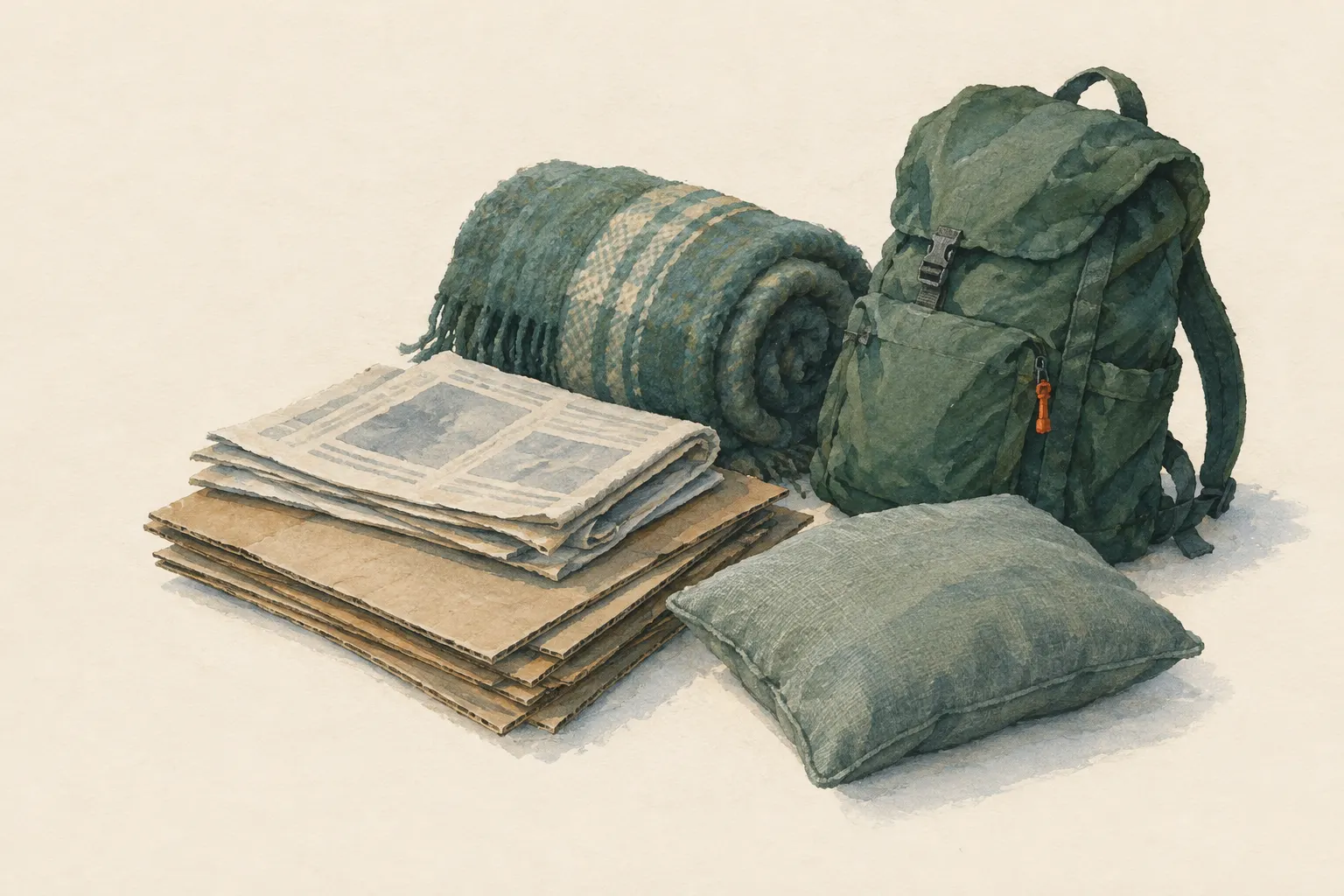
When a sleeping pad or warm clothing is missing, cardboard, newspaper, cushions, blankets, backpacks or dry leaves also insulate. What matters is trapped, still air – and that everything stays dry. Insulation underneath has the biggest effect, because the ground draws away more heat by conduction than the air does.
- 10–30 minutes
Explained simply
Why does a down jacket keep you warm? Not because the feathers are warm themselves, but because a lot of air is trapped between them. Still air lets heat through only very slowly. You can use exactly this principle with almost anything: crumpled newspaper, cardboard, cushions, blankets, dry leaves. Anything that traps lots of small air pockets slows down heat loss.
The most important thing is insulation underneath. The cold ground draws heat from your body, like a cold stone you sit on. So first put several layers of cardboard, a bag or a thick layer of dry leaves under you – and only then cover yourself. And everything must stay dry, because wet material hardly keeps you warm any more.
Two safety rules: paper, cardboard and blankets catch fire easily – keep them well away from candles and heaters. And plastic sheeting never goes over the head or face. If someone is shivering hard, seems confused or very drowsy, call the emergency number (112 in the EU).
How it works
Your body loses heat in several ways: by conduction (direct contact with something colder, such as the ground), by convection (air or wind moving past and carrying heat away), by radiation and by evaporation of sweat or moisture. Insulation mainly works against conduction and convection. It creates a layer of still air between you and the cold.
Air conducts heat poorly – but only as long as it does not move. That is why a heap of crumpled paper is warmer than a flat sheet: the many folds hold the air in small pockets. Corrugated card, fillings, wool and leaves work the same way. Water, by contrast, conducts heat many times better than air. When material gets wet, water pushes out the air and the insulation almost completely collapses.
The ground is a special case. It is usually colder than the air, and it touches your body over a large area – with your whole weight. That squashes soft material and pushes the air out. So you need more and firmer layers under you than on top of you. A thick jacket over you helps little if you lie directly on cold concrete or wet earth.
What really matters
First underneath, then on top, then wind. Put several layers of cardboard, sofa cushions, an empty bag or a backpack under your hips and shoulders – that is where your weight presses hardest. Outdoors a thick layer of dry leaves can help. Thicker is better, because compressed material insulates less.
On damp ground the plastic sheet goes under the insulation, not on top of it. That keeps moisture from the ground out. If the sheet lies directly on you instead, moisture from your body collects underneath it, and clothing and insulation get wet from the inside. You can stuff crumpled newspaper or dry leaves between two layers of clothing, especially around the torso and thighs.
The head and neck lose noticeable heat because they have a good blood supply and often stay uncovered. A hat, scarf or cloth helps immediately. And then the wind: get behind a wall, a vehicle or into a doorway. An emergency blanket or tarp wrapped around the outside of your insulating layers keeps out the wind that would otherwise blow the warm air out of your layers.
Typical situations
An unplanned night outdoors because the route took longer than expected: here the backpack, emptied out, is a good mat for your legs or hips. Sitting on the pack is often warmer than lying on the ground, because less of your body touches the ground.
At home when the heating fails: stay together in one room, as small as possible. Seal windows with blankets or cardboard, sleep on sofa cushions rather than the floor and wear several layers of clothing. No barbecues, gas stoves or improvised heaters indoors – not even “just for a moment”.
When waiting at a station, in a car or in an emergency shelter: cardboard can be found almost everywhere and makes a surprisingly good mat. A newspaper between jumper and jacket makes a noticeable difference.
Safety: what to watch out for
Hypothermia creeps up on you. The first signs are intense shivering, clumsiness and a bad mood; later, confusion and drowsiness follow, and the shivering may even stop. If you notice such signs in yourself or others, call the local emergency number (112 in the EU), protect the person from further cold, wind and wet, and insulate them from the ground. Improvised insulation is no substitute for medical help.
Almost all improvised insulation materials are flammable: paper, cardboard, leaves, blankets, cushions. Keep them well away from candles, stoves, radiant heaters and embers. Never run fuel-burning heaters, barbecues or gas stoves indoors, in tents or in vehicles – they produce carbon monoxide, an invisible, odourless gas that can be fatal.
Plastic sheeting and bin bags must never be pulled over the head or face – there is a risk of suffocation. Do not leave children alone with them.
Good to know
The principles come from emergency medicine: specialist guidelines on hypothermia stress insulating people from the ground, protecting them from wind and wet and using a vapour barrier. These rules apply whether you have an expensive sleeping pad or a pile of cardboard.
A common myth is that you lose heat mainly “through your head”. In fact every uncovered part of the body loses heat; the head only stands out because it is often the only part left bare. A hat is always worth it all the same.
Exactly how well a particular material insulates is hard to say without measuring. As a rule of thumb: dry, loose, thick – and more underneath than on top.
Step by step
Underneath first
Put several layers of cardboard, an empty bag, cushions or a thick layer of dry leaves under you. Thicker is better – compressed material insulates less.
- 1
Underneath first
Put several layers of cardboard, an empty bag, cushions or a thick layer of dry leaves under you. Thicker is better – compressed material insulates less.
- 2
Keep moisture out
On damp ground put a plastic sheet under the insulation, not on top – otherwise condensation collects against the body.
- 3
Fill out clothing
Stuff crumpled newspaper or dry leaves between two layers of clothing, especially around the torso and thighs.
- 4
Protect head and neck
A hat, scarf or cloth noticeably reduce heat loss at the head and neck.
- 5
Block the wind
Get behind a wall, a vehicle or into a doorway; wrap an emergency blanket or tarp as a wind barrier around the outside of the insulating layers.
Common mistakes
- Only covering on top while lying on cold ground
- Using wet material
- Plastic directly against the skin
- Putting insulating material next to a candle or radiant heater
Quick view
Materials
Newspaper and cardboard
Flammable – keep away from candles, stoves, heaters and embers.
Loses almost all insulation when wet.
Wool blanket / duvet
Keep away from candles, stoves and heaters.
Backpack
Empty, under legs or hips
Plastic sheet / large bin bag
As a moisture barrier underneath
Tears easily; never pull over the head (suffocation risk).
Do not use for drinking water unless food-grade.
Emergency blanket
Tears easily once punctured; short-term shelter only.
Conductive – keep away from power lines.
Suitable for
- An unplanned night outdoors
- A home without heating
- Waiting at a station, car or emergency shelter
Not suitable for
- A substitute for medical help in hypothermia
- Proximity to naked flames or heaters
Prerequisites
- Dry materials
- A basic understanding of heat loss
Safety
- Never pull plastic over the face or head (suffocation risk) and do not leave children unattended with it.
How it works
Still air conducts heat poorly. Almost any loose, dry material that traps many small air pockets – crumpled paper, corrugated board, leaves, fillings – therefore slows heat loss. Water displaces the air and conducts heat much better, so wet material loses almost all effect. The ground is usually colder than the air and touches the body over a large area, so insulate underneath first.
Advantages
- Materials available almost everywhere
- Immediately effective
- No energy needed
Disadvantages
- Bulky
- Barely works when wet
- Flammable
Deep knowledge
Background
The Wilderness Medical Society guideline on hypothermia stresses insulating affected people from the ground, protecting them from wind and wet and using a vapour barrier. These principles also apply to improvised materials.
FM 3-05.70 also describes insulation made from dry natural materials. Improvised insulation does not replace suitable equipment, but it can make the time until rescue or until morning considerably safer.
Variants
- At home when the heating fails
- Share one room, seal windows with blankets or cardboard, sleep on sofa cushions rather than the floor, wear several layers of clothing.
Common mistakes
- Only covering on top while lying on cold ground
- Using wet material
- Plastic directly against the skin
- Putting insulating material next to a candle or radiant heater
Limits and risks
- No treatment instructions for hypothermia
- No figures on the insulation values of individual materials
Material alternatives
Derived from material properties: a substitute must have all relevant properties. Observe the notes on the substitute.
- Newspaper and cardboard
- Sleeping pad, Dry leaves, grass or conifer boughs (Collect only where allowed; no protected plants. Check for ticks and insects.), Backpack, Dry spare clothing (Carry it in waterproof packaging – wet clothing barely insulates.), Wool blanket / duvet (Keep away from candles, stoves and heaters.), Insulated cool box (Keeps cold only for a limited time; without ice packs or ice it is not a fridge.), Sleeping bag (Do not store compressed long-term; do not pack away damp.), Insulated cooking box (hay box, thermal cooker) (Never put open flame or embers inside – only the hot, closed pot.)
- Wool blanket / duvet
- Sleeping pad, Dry leaves, grass or conifer boughs (Collect only where allowed; no protected plants. Check for ticks and insects.), Backpack, Dry spare clothing (Carry it in waterproof packaging – wet clothing barely insulates.), Insulated cool box (Keeps cold only for a limited time; without ice packs or ice it is not a fridge.), Sleeping bag (Do not store compressed long-term; do not pack away damp.), Newspaper and cardboard (Flammable – keep away from candles, stoves, heaters and embers.), Insulated cooking box (hay box, thermal cooker) (Never put open flame or embers inside – only the hot, closed pot.)
- Backpack
- Sleeping pad, Dry leaves, grass or conifer boughs (Collect only where allowed; no protected plants. Check for ticks and insects.), Dry spare clothing (Carry it in waterproof packaging – wet clothing barely insulates.), Wool blanket / duvet (Keep away from candles, stoves and heaters.), Insulated cool box (Keeps cold only for a limited time; without ice packs or ice it is not a fridge.), Sleeping bag (Do not store compressed long-term; do not pack away damp.), Newspaper and cardboard (Flammable – keep away from candles, stoves, heaters and embers.), Insulated cooking box (hay box, thermal cooker) (Never put open flame or embers inside – only the hot, closed pot.)
- Plastic sheet / large bin bag
- Tarp, Emergency blanket (Tears easily once punctured; short-term shelter only.), Document folder (waterproof) (Store securely – contains sensitive personal data.), Rain poncho (When used as a shelter, it no longer protects your body from rain.), Bivy bag (Never fully close off the face.), Tent (Do not cook or heat inside the tent (fire and carbon monoxide danger).), Heavy-duty bin bag (large) (Suffocation risk: never pull plastic bags over the head or face and keep them away from small children.), Group shelter bag (Airtight – ventilate regularly.)
Results come exclusively from structured entries. No improvised instructions are generated.
Sources
Wilderness & Environmental Medicine (Wilderness Medical Society) (2019): Wilderness Medical Society Clinical Practice Guidelines for the Out-of-Hospital Evaluation and Treatment of Accidental Hypothermia: 2019 Update
Insulation from the ground, protection from wind and wet, vapour barrier
Headquarters, Department of the Army (USA) (2002): FM 3-05.70 Survival
Insulation from dry natural materials