Security in the dark: home, light and a watchful neighbourhood
In a power outage streets are dark, alarm systems and cameras may not work and electric locks behave differently. Closed doors and windows, battery or solar outdoor light, arrangements with neighbours and reporting anything suspicious to the police increase safety – without intervening yourself.
- Preparation: 1 hour
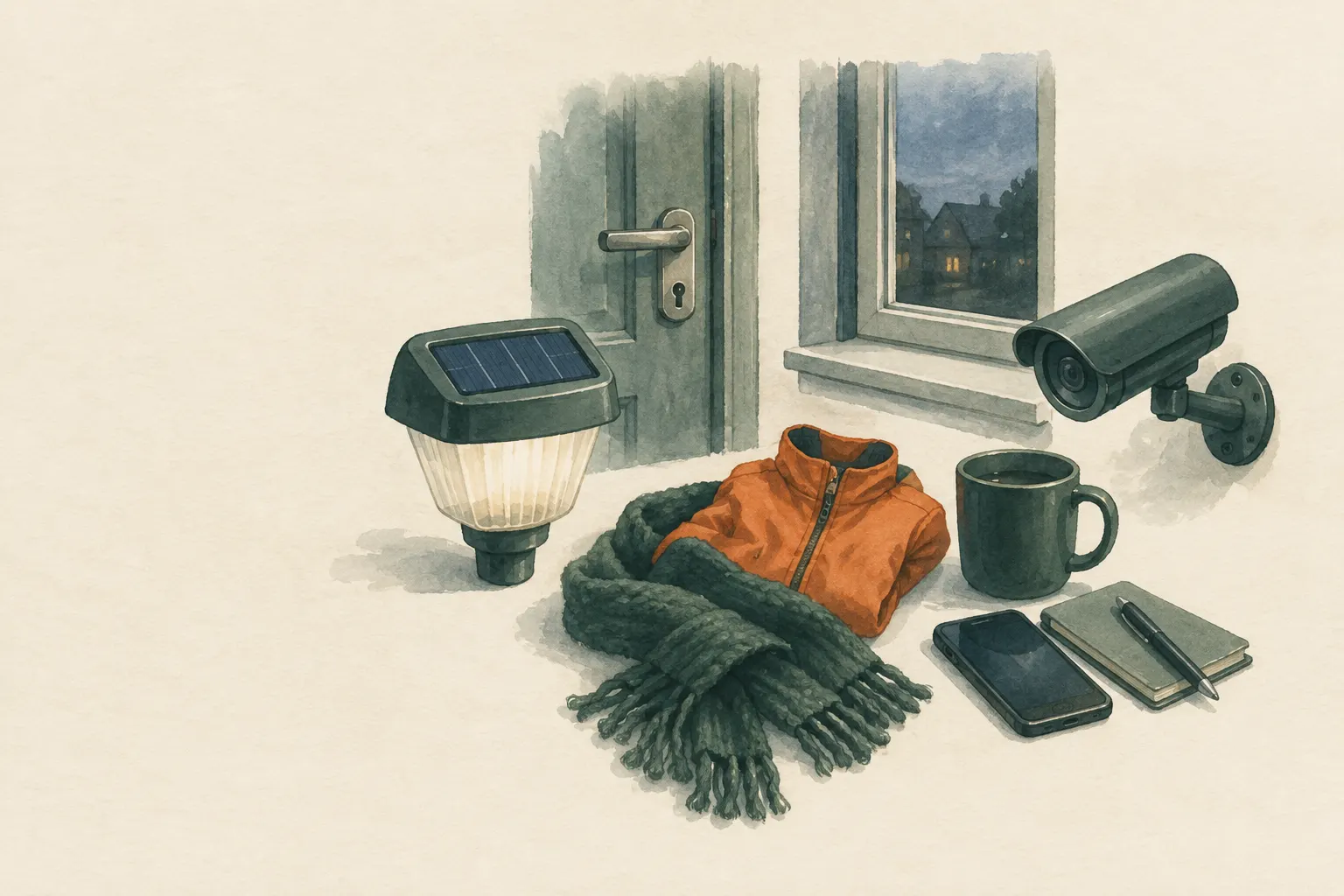
Explained simply
During a power outage it gets really dark outside: streetlights go out, windows are black, and some alarm systems or cameras may stop working. Darkness makes it easier to trip – and it can also attract people who want to steal something.
You can do a lot without putting yourself in danger: close doors and windows, light the entrance with battery or solar lamps and look out for one another with your neighbours. If you notice something suspicious, remember it and report it to the police.
Very important: never approach or follow suspicious people yourself. And never lock yourself in so that you cannot get out quickly in a fire.
How it works
Opportunity and darkness favour burglary and accidents. An open cellar window, an unlocked garage door or visible valuables are opportunities. Dark paths and stairs are sources of accidents. Security therefore comes from three building blocks: reducing opportunities, increasing attention and passing observations on to the responsible authorities.
Much security technology needs power. Alarm systems, video doorbells and electric locks often have a battery, but not always, and it lasts for different lengths of time. Some electric locks stay locked without power, others open. The manual or the installer will tell you how yours behaves – and you should know that before it gets dark.
What really matters
Find out beforehand whether the alarm system, video doorbell and electric locks have a battery and how long it lasts, and keep a mechanical key ready. Do not assume the alarm will simply keep running.
During the outage, reduce opportunities: close doors and windows, do not leave cellar windows or garages open, keep valuables out of sight and close shutters as needed. Solar or battery lights at the entrance and along the path help orientation and make the house look lived-in. Use a headlamp for trips outside.
The neighbourhood is your best protection. Exchange phone numbers, let each other know when someone is away and look out for one another. If you notice something, note factually what you saw – time, place, people, vehicles – and report it. Spreading rumours, on the other hand, helps nobody.
Safety: what to watch out for
Never confront or follow suspicious people yourself. Keep your distance, observe, remember what you see and inform the police via the local police number or, in danger, the emergency number (112 in the EU). Vigilantism, confrontational patrols or carrying weapons are dangerous and often unlawful. In large incidents the police may respond with a delay – even then, intervening remains their job.
Lock doors, yes, but keep escape routes open: the key is at hand inside, and no furniture stands in front of the doors. In a fire you must be able to get out quickly.
No open flames as outdoor lighting or as a deterrent – candles, torches or fire bowls in front of the house are a fire hazard.
Out in the dark
When the power fails, traffic lights and streetlights go out too. Drivers see pedestrians less well, and junctions become confusing. So cross roads with extra care, wear light-coloured clothing or something reflective, and always take a light.
Where possible, do not go out alone. Prefer to run errands in daylight, and tell someone where you are going and when you plan to be back.
Good to know
Ready.gov and the BBK recommend torches instead of candles and stress how important neighbourly help is in emergencies. An attentive neighbourhood where people know each other is often more effective than any technology.
This advice does not replace advice from the police. Many police forces offer free burglary prevention advice – a good opportunity to also ask how your own security technology behaves in a power outage.
Step by step
Check the technology
Check with the installer or manual whether the alarm, video doorbell and electric locks have a battery and how long it lasts. Keep a mechanical key ready.
- 1
Check the technology
Check with the installer or manual whether the alarm, video doorbell and electric locks have a battery and how long it lasts. Keep a mechanical key ready.
- 2
Reduce opportunities
Close doors and windows, do not leave basement windows or garages open, keep valuables out of sight. Close shutters as needed, keep the escape route clear.
- 3
Light without flame
Solar or battery lights at the entrance and path help orientation. Headlamp for trips outside.
- 4
Neighbourhood
Exchange phone numbers with neighbours, tell each other about absences and look out for each other. Note and report anything unusual factually; do not spread rumours.
- 5
Out in the dark
Where possible do not go out alone, and only with a light; traffic lights fail – cross with extra care as a pedestrian.
Common mistakes
- Candles or torches in front of the house
- Barricading escape routes
- Approaching or following suspicious people yourself
- Assuming the alarm keeps running
Quick view
Materials
Headlamp / flashlight
Battery lantern / LED light
Spare batteries
Store cool and dry, observe the expiry date; keep button cells out of children's reach.
Suitable for
- Longer outages in residential areas
- People living alone
- Homes with electric locks or alarm systems
Not suitable for
- Vigilantism, confrontational patrols or carrying weapons – this is dangerous and often unlawful
Prerequisites
- Contact with a few neighbours
- Knowing how alarm system and locks behave without power
Safety
- Lock doors but keep escape routes open: key at hand inside, no furniture in front of doors. In a fire you must be able to get out quickly.
- No open flames as outdoor lighting or deterrent – fire risk.
How it works
Opportunity and darkness favour burglary and accidents. Reducing opportunities (locked doors, light), increasing attention (neighbours who know each other) and passing observations to the responsible authorities improves safety without putting yourself at risk.
Advantages
- More safety without risk to helpers
- Strengthens neighbourhood cohesion
Disadvantages
- Requires arrangements and trust
- Police may respond with delay in large incidents
Deep knowledge
Background
Ready.gov and the BBK recommend torches instead of candles and stress the importance of neighbourly help in emergencies.
This advice does not replace advice from the police. Many police forces offer free burglary prevention advice.
Common mistakes
- Candles or torches in front of the house
- Barricading escape routes
- Approaching or following suspicious people yourself
- Assuming the alarm keeps running
Limits and risks
- No legal advice
- No assessment of security technology
Material alternatives
Derived from material properties: a substitute must have all relevant properties. Observe the notes on the substitute.
- Headlamp / flashlight
- Mobile phone (The battery drains quickly in cold and with continuous screen and GPS use.), Battery lantern / LED light
- Battery lantern / LED light
- Headlamp / flashlight, Mobile phone (The battery drains quickly in cold and with continuous screen and GPS use.)
Results come exclusively from structured entries. No improvised instructions are generated.
Sources
Ready.gov – U.S. Federal Emergency Management Agency (FEMA): Power Outages
Flashlights instead of candles
Bundesamt für Bevölkerungsschutz und Katastrophenhilfe (BBK), Deutschland: Ratgeber für Notfallvorsorge und richtiges Handeln in Notsituationen
Neighbourly help in emergencies