Signalling for help from a house or flat (e.g. in a flood)
If you are stuck in a building during a flood, storm or after an incident and the phone does not get through, you can make yourself noticed from a window, balcony or – only if necessary – the roof: bright cloth, large lettering, light at night, a whistle. The key is not to endanger yourself in doing so.
- A few minutes to prepare
Explained simply
In a flood it can happen that your house is surrounded by water and you cannot get out. If the phone does not get through, you have to show helpers that someone in this house needs help. You can do this with things almost everyone has at home: a bright bedsheet, a thick marker, a torch and a whistle.
Imagine flying in a helicopter over a town full of water. Many houses look the same. But a big white sheet with ‘SOS’ hanging from a window stands out at once – especially if someone is waving it.
Very important: never go into floodwater to fetch help. The water can sweep you away, and there can be debris and electricity in it. Stay on the highest floor, but not in a closed attic without a way out.
How it works
Rescuers in a disaster area deliberately look for signs of people. They travel by boat through flooded streets, go on foot or fly in helicopters. What catches their eye is anything that does not fit the scene: large bright surfaces, lettering, movement and, at night, light.
Three things make a signal visible: size, contrast and movement. A large cloth is better than a small one. Light on a dark background or the other way round is better than similar colours. And a cloth that is moved draws the eye much more strongly than one that just hangs. These are the same rules as for ground signals in the wild.
At night during floods or storms, street lighting often fails. Then any light in a window stands out, and a flashing light even more. Even a small torch or phone light can be seen from a long way off.
What really matters
Always try the emergency call first. If it does not get through, send a message to trusted contacts with your address and the number of people with you. This helps rescuers plan how many places they need in the boat.
Choose a spot on the highest floor you can reach with a window or balcony facing the street or the water – where boats and vehicles pass by. Hang a bright bedsheet or large towel outside and, if possible, write ‘SOS’ or ‘HELP’ in large letters and the number of people on it. Fix it well so that wind and rain do not tear it away.
As soon as a boat, vehicle or helicopter comes into view, move: wave clearly with the cloth or with both arms and blow your whistle. At night, flash a torch or phone light at intervals. Save battery while doing so, because the wait can be long.
Safety: what to watch out for
Never walk through floodwater or swim in it to fetch help. Even shallow, flowing water can knock a person over. Debris floats in the water, manhole covers may be missing, and electricity from damaged lines can make the water deadly.
With rising water, do not retreat into a closed attic with no way out. If the water keeps rising, you are trapped there. Official flood guidance says: go to the highest floor, and onto the roof only if it is really necessary – then signal for help from there.
When signalling, do not lean far out of the window, and hold on to children. On roofs, especially steep or wet ones, there is a risk of falling; find a secure hold there. Keep away from power lines. If there is a fire in the building, none of this applies: follow the instructions of the fire service and dispatcher.
Gear and materials
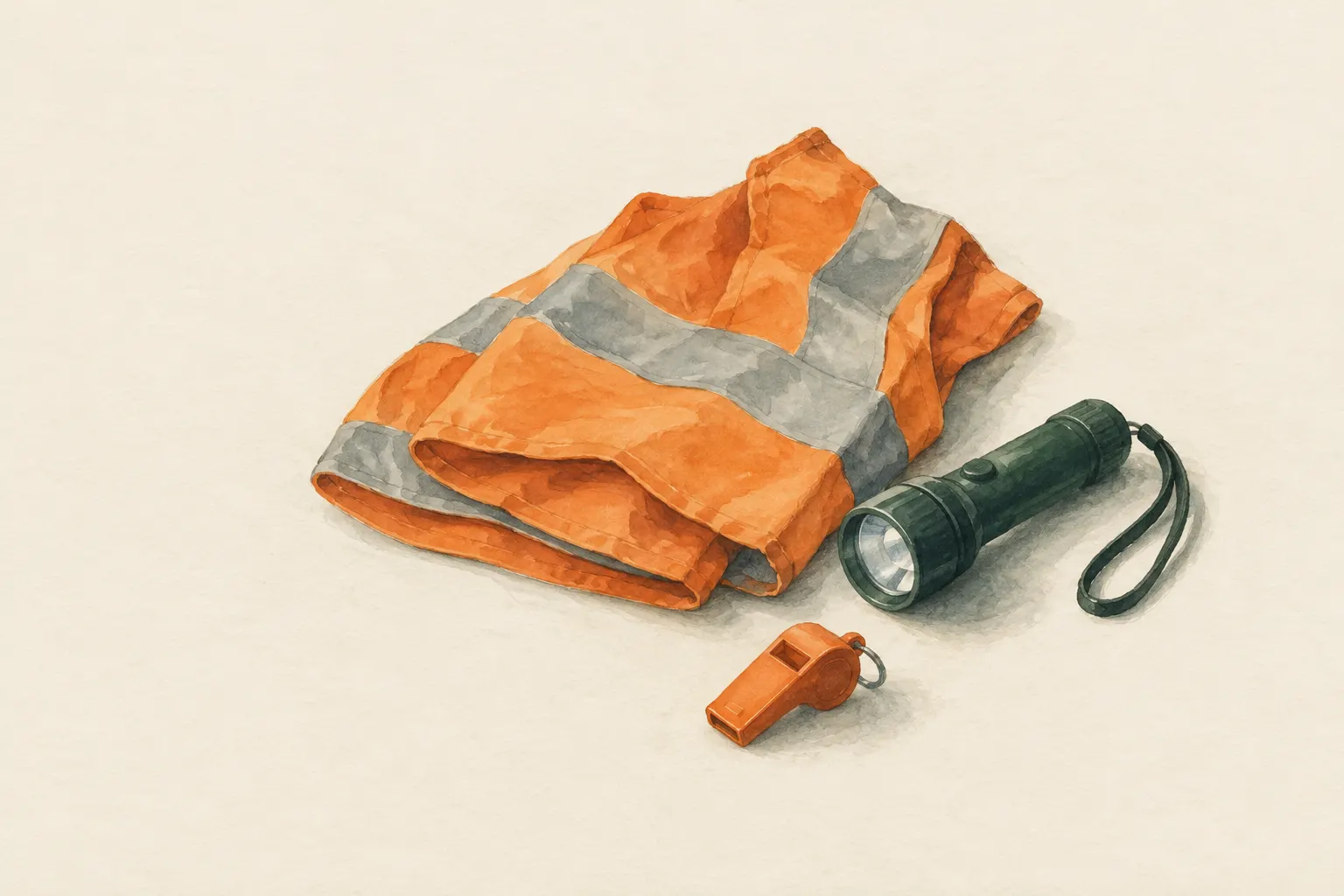
You do not need special gear. Bright bedsheets, white or colourful towels, tablecloths or a rescue blanket work well. For lettering use a thick marker, paint or tape, or lay dark clothing as letters on a bright cloth.
A whistle, a torch with spare batteries and a charged phone should always be within reach at home, for example in your emergency bag. In flood-prone areas it is worth moving these things to an upper floor in advance.
Some communities have systems with which households show ‘all OK’ or ‘help needed’ after a disaster, for example coloured cards in the window. Only use such a sign if it is known and agreed locally; otherwise it can be misunderstood.
After the rescue
Once everyone has left the building, take the signal down or cross it out clearly, if this can be done safely. A forgotten ‘SOS’ sheet can lead rescuers back to an empty house later while people elsewhere are waiting.
For the same reason: only hang out help signs when help is really needed. In a disaster, boats and helicopters are scarce. Every unnecessary trip costs time that others need.
Tell the rescuers if other people or pets might still be stuck in neighbouring houses. You may have seen things they do not know.
Step by step
Try the emergency call
Call the emergency number; if that is not possible, send a message to trusted contacts with the address and number of people.
- 1
Try the emergency call
Call the emergency number; if that is not possible, send a message to trusted contacts with the address and number of people.
- 2
Choose a safe, visible spot
The highest floor you can reach with a window or balcony facing the street or the water.
- 3
Hang out a bright cloth
Hang a sheet or cloth out of the window; if possible write 'SOS' or 'HELP' in large letters and the number of people on it.
- 4
Move when in sight
When a boat, vehicle or helicopter comes into view, wave clearly with the cloth or your arms and blow your whistle.
- 5
Light at night
Flash a torch or phone light at intervals – save the battery.
Common mistakes
- Entering the water to fetch help
- Retreating into an attic with no exit
- Draining the battery with constant light
- Forgetting to remove the signal after everyone has left the building
Quick view
Materials
Signal whistle
Carry within easy reach, not deep in the pack.
Do not blow right next to other people's ears.
Headlamp / flashlight
Signal panel (fluorescent)
Or a bright bedsheet, towel
Weigh down or hold firmly in wind, especially near landing helicopters.
Suitable for
- Floods when the building is cut off
- Cut off after a storm or landslide
- Network failure in an acute emergency
Not suitable for
- Fire in the building – follow fire service and dispatcher instructions
- Steep, wet roofs without a hold
Prerequisites
- A safe spot on the highest floor you can reach
Safety
- When signalling from a window or the roof, do not lean far out; hold on to children. Keep away from power lines.
How it works
Rescuers in disaster areas look for signs of people. Large, high-contrast, moving signals on the outside of a building stand out from the street, from boats and from the air. At night, any flashing light stands out because street lighting often fails.
Advantages
- Possible with household items
- Visible from the ground, water and air
Disadvantages
- Depends on someone passing by
- Hard to secure in wind and rain
Deep knowledge
Background
Official flood guidance advises people in a cut-off building to go to the highest floor, not into a closed attic, and to signal for help from the roof only if it is necessary to go there.
The principles are the same as for ground signals in the wild: size, contrast and movement.
Variants
- 'All OK' sign
- Some communities agree signs with which households report 'OK' or 'help needed' after a disaster. Use only if such a system is known locally.
Common mistakes
- Entering the water to fetch help
- Retreating into an attic with no exit
- Draining the battery with constant light
- Forgetting to remove the signal after everyone has left the building
Limits and risks
- No guidance for fires
- No evacuation guidance
Material alternatives
Derived from material properties: a substitute must have all relevant properties. Observe the notes on the substitute.
- Headlamp / flashlight
- Mobile phone (The battery drains quickly in cold and with continuous screen and GPS use.), Battery lantern / LED light
Results come exclusively from structured entries. No improvised instructions are generated.
Sources
Ready.gov – U.S. Federal Emergency Management Agency (FEMA): Floods
Highest floor, no closed attic, roof only if necessary and signal for help there; do not walk through floodwater
Headquarters, Department of the Army (USA) (2002): FM 3-05.70 Survival
Contrast, size and movement in visual signals
European Commission: 112 – the European emergency number
Europe-wide emergency number 112