Trapped or buried under debris: making yourself known
If you are trapped after an earthquake, collapse or storm, save your strength and air and signal so that helpers can locate you: a message or call if possible, otherwise steady tapping on pipes or walls or a whistle – shout only when helpers are close.
- Repeat at intervals until help arrives
Explained simply
When a building collapses after an earthquake or storm, people can be trapped under the debris. Helpers then search by listening for sounds. Shouting loudly seems like the best idea, but it is tiring, you breathe in dust doing it, and the voice carries poorly through walls and rubble.
Tapping is better: with a hard object you knock steadily on a pipe, a beam or a wall. Sound travels through solid material much better than through air – just as you can hear someone knocking on a heating pipe in a completely different room. Three knocks, pause, three knocks again. A whistle is good too, because it is loud and takes little effort.
Only shout when you hear helpers very close by. And very important: no lighter, no matches, no candle – gas may have leaked. If your phone works, call the emergency number (112 in the EU) or message someone exactly where you are.
How it works
Sound is a vibration. In air it quickly loses strength, especially when there are many obstacles in between, such as rubble, furniture and pieces of wall. In solid materials like metal, concrete or wood, sound is passed on well. A pipe or steel beam can therefore carry a knock a long way through a building, to places where helpers are listening.
The rhythm matters. A single crack could come from shifting rubble. A steady, repeated pattern such as three knocks, pause, three knocks sounds clearly like a person. The same goes for whistles: three blasts at intervals are a widely used distress signal.
Rescue teams at incident sites often work with quiet periods. Machines are switched off, everyone is silent, and the helpers listen specifically for tapping and calls. If you keep tapping at intervals, you have a good chance of being heard during such a quiet period.
What really matters
If your phone still works, that is the fastest route: call the emergency number or send a message to trusted contacts. Describe your location as precisely as possible: which building, which floor, which room, how many people are with you. A message sometimes gets through when a call fails because the network is overloaded.
Save your strength and air. Breathe calmly, move as little as possible and do not pull at debris without control, because the rubble can shift. Cover your mouth and nose with cloth, for example a sleeve or scarf, so that you breathe in less dust.
Do not tap non-stop, but at intervals. That way you last longer and can listen in the pauses for an answer. If you have a torch and gaps lead to the outside, you can switch it on in short bursts – a constant light drains the battery.
Safety: what to watch out for
After earthquakes and collapses, gas pipes may be damaged. Gas can collect in voids, and even a small spark or flame can ignite it. So never use matches, lighters or candles for light. A torch or phone light are the safe light sources.
If there is fire or smoke reaching you, something else applies: call the emergency number as fast as possible and follow the dispatcher's instructions. The method described here is meant for situations in which you wait safely until help reaches you.
This entry does not explain how to free yourself or pull others out of debris. That is dangerous and a job for trained rescuers. With injuries: stay calm, call the emergency number and follow the dispatcher's instructions.
Gear and preparation
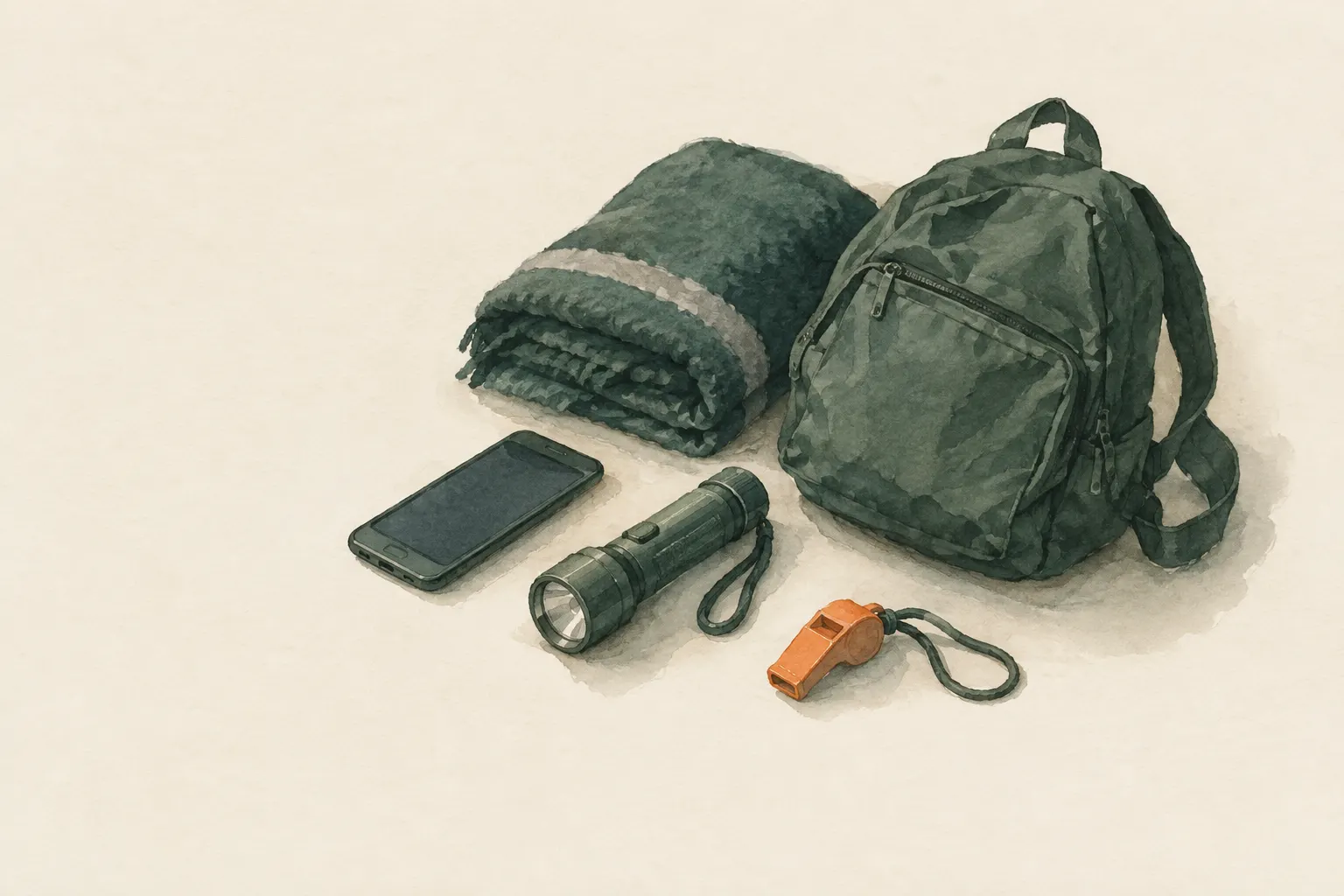
A small signal whistle is the most effective tool for this situation. It is loud, takes hardly any effort, needs no power and fits on a key ring or in an emergency bag. Official guidance for earthquake areas specifically recommends having a whistle within reach.
Anything hard works for tapping: a key, a stone, a piece of metal, a shoe with a hard sole. Ideally tap on metal, such as a heating or water pipe, because metal conducts sound particularly well. If there is no pipe, use a wall or a beam.
If you live in or travel to an earthquake area, you can keep a whistle and a small torch next to your bed. It costs little and is right at hand in an emergency.
Good to know
Many people think they have to scream as loudly as possible to be found. Official preparedness guidance advises exactly the opposite: shout only when helpers are close, and until then tap or whistle. Shouting uses a lot of energy, dries out your throat and makes you breathe in dust.
Waiting can take a long time, and that is hard. It helps to give yourself a rhythm: tap, listen, rest, tap again. When you hear voices, machines or dogs, that is the moment to get louder and shout.
In the noise of a large incident site, tapping can also be missed. That is why patience matters: do not give up, but carry on at intervals – especially when it suddenly goes quiet.
Step by step
Emergency call or message
If the phone works: call the emergency number or send a message to trusted contacts with your location as precisely as possible (building, floor, room).
- 1
Emergency call or message
If the phone works: call the emergency number or send a message to trusted contacts with your location as precisely as possible (building, floor, room).
- 2
Protect yourself
Cover your mouth and nose, breathe calmly, avoid unnecessary movement.
- 3
Tap
Tap steadily with a hard object on a pipe, beam or wall, for example three knocks, pause, repeat.
- 4
Whistle
If you have one, give three blasts at intervals.
- 5
Shout only when close
When you hear helpers, shout and answer. Otherwise save your strength and keep tapping at intervals.
Common mistakes
- Shouting continuously and exhausting yourself
- Using a naked flame for light
- Draining the battery with constant light
- Pulling at debris without control
Quick view
Materials
Signal whistle
On a key ring or in the emergency bag
Carry within easy reach, not deep in the pack.
Do not blow right next to other people's ears.
Mobile phone
The battery drains quickly in cold and with continuous screen and GPS use.
Do not plan on it as your only means of navigation or emergency calls.
Suitable for
- Trapped under debris
- Stuck in a damaged building
- Shut in a room with no exit
Not suitable for
- Fire or smoke – then call emergency services as quickly as possible and follow the dispatcher's instructions
Prerequisites
- None – but a whistle within reach improves the chances
Safety
- Cover your mouth and nose with cloth to avoid breathing in dust. Move as little as possible so as not to shift debris.
How it works
Shouting costs energy and makes you breathe in dust, and the voice carries poorly through debris. Tapping on pipes, beams or walls transmits sound through solid materials, and a whistle is louder than the voice for little effort. A steady, repeated rhythm distinguishes a signal from random noise.
Advantages
- Saves energy and air
- Sound through solid materials carries well
- Possible without equipment
Disadvantages
- Easily missed in the noise of an incident site
- Tiring over long periods
Deep knowledge
Background
Official earthquake preparedness guidance advises trapped people to send a message, tap on pipes or walls or use a whistle instead of shouting, and to protect their mouth and nose from dust.
Rescue teams at incident sites often work with quiet periods in which they listen specifically for tapping and calls.
Variants
- Light in voids
- Switch a torch on in short bursts if gaps lead outside – save the battery.
Common mistakes
- Shouting continuously and exhausting yourself
- Using a naked flame for light
- Draining the battery with constant light
- Pulling at debris without control
Limits and risks
- No guidance on freeing yourself or rescuing others
- No medical guidance
Material alternatives
Derived from material properties: a substitute must have all relevant properties. Observe the notes on the substitute.
- Mobile phone
- Headlamp / flashlight, Battery lantern / LED light
Results come exclusively from structured entries. No improvised instructions are generated.
Sources
Ready.gov – U.S. Federal Emergency Management Agency (FEMA): Earthquakes
If trapped: message, tapping, whistle instead of shouting, dust protection
U.S. Federal Emergency Management Agency (FEMA): Are You Ready? An In-Depth Guide to Citizen Preparedness
Actions after an earthquake, no naked flames because of gas
European Commission: 112 – the European emergency number
Europe-wide emergency number 112