Responding to searchers: answer, stay put, be visible
When you are being searched for, search teams often call your name, blow whistles or shine lights. Answer with a whistle, shouting or light, stay in a highly visible spot and do not chase sounds you cannot place reliably. Children should know: searchers are helpers, nobody is angry – do not hide.
- Until found, with breaks
Explained simply
When someone is missing, search teams set out. They call the person's name loudly, blow whistles and shine lamps into the forest. Then they listen: does anyone answer? Your job is simple: answer, stay in one place and be easy to see.
A whistle is your best friend here. It is much louder than your voice and does not tire you out. Three blasts, then a pause to listen, then three blasts again. At night you can shine a lamp when you see or hear searchers.
Do not run after the sounds. In a forest a call often sounds as if it comes from somewhere else, and you might move away instead of closer. And very important for children: the searchers are helpers. Nobody is angry with you. Do not hide, even if they are strangers.
How a search works
Search teams work through an area systematically, section by section. They call, blow whistles and then deliberately pause to listen for answers. Some searches are supported by dogs, drones or helicopters. The calmer, more visible and more audible the missing person is, the faster they are found.
A person who stays in one place is much easier to find than one who moves. Someone wandering around may stray into a section that has just been searched, or into dangerous terrain. Staying put is therefore usually the best support you can give the searchers.
Whistle and light carry further than the voice and cost less energy. Three signals in a row are widely recognised as a distress signal. But the most important thing is to answer at all – even a single shout or blast is better than silence.
What really matters
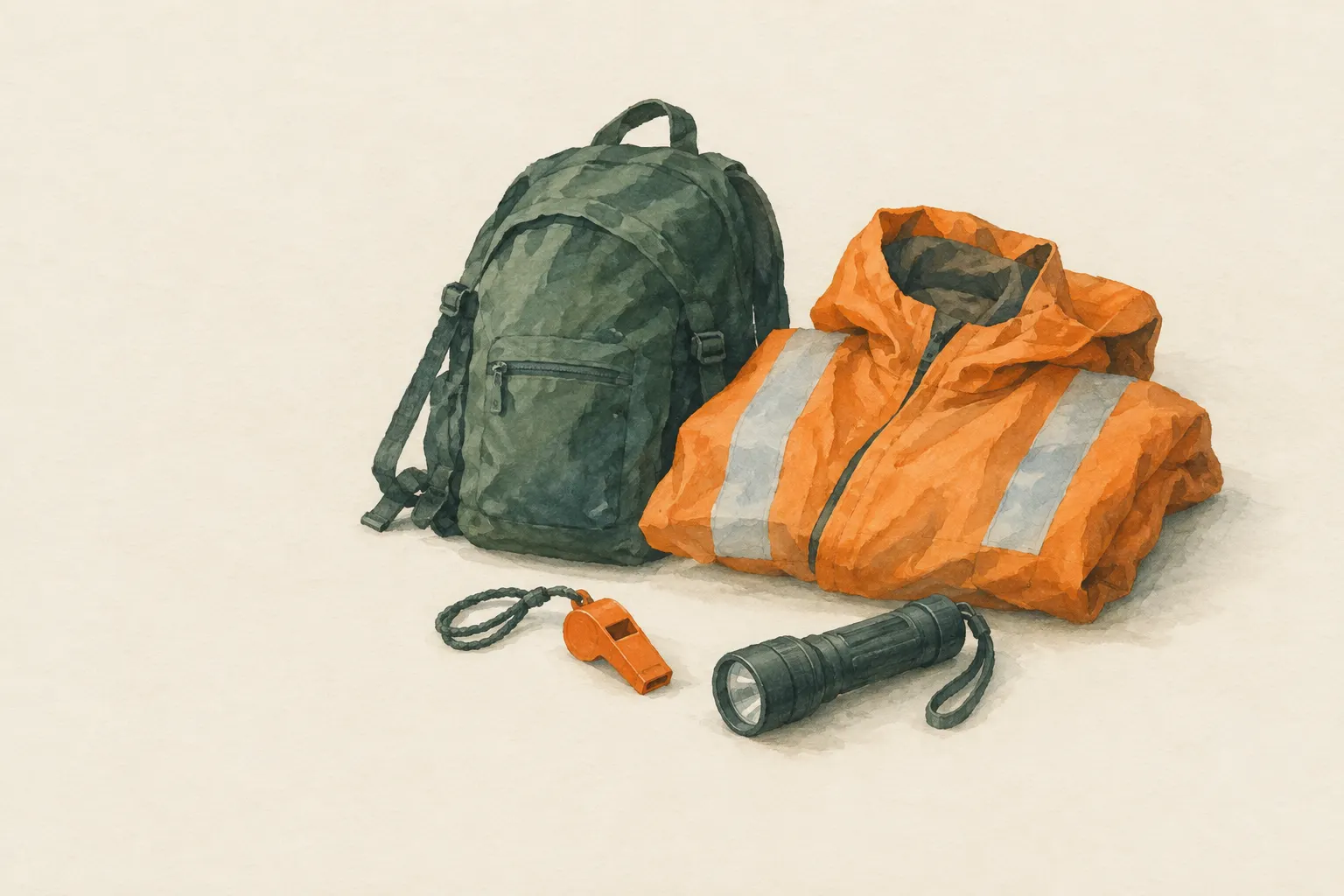
As soon as you realise you are lost: stop and stay in a safe place, ideally at the edge of a clearing or on a path where you can be seen from several sides. Lay out bright clothing, a cloth or a colourful pack. Keep a lamp ready at night.
Signal at intervals: three blasts, pause, listen, repeat. Do not signal non-stop, or you will not hear the answers and will wear yourself out. The whistle belongs around your neck or in a jacket pocket, not deep in your pack.
When you hear calls, whistles or engines or see light, answer at once and keep signalling until the searchers reach you. Do not leave your spot to go towards them if you cannot place the direction reliably. In forests and valleys, sounds bounce off slopes and mislead you about where they come from.
Safety: what to watch out for
Staying put is only right if the place is safe. If there is a risk of rockfall, water is rising or you are exposed to the cold without any shelter, first move to a safe spot nearby. Then settle there and keep signalling.
Waiting makes you cold. Keep warm, do not sit directly on cold ground, put on every layer and find shelter from the wind. Prepare your signals so that you can give them from your sheltered spot without having to go back out into wind and rain again and again.
If you have signal, call the local emergency number (112 in the EU) first. If you are in contact with the dispatcher, follow their instructions. They may, for example, ask you to switch on your light when a helicopter approaches, or to wait at a particular place.
Practising with children
Children who are lost sometimes hide from searchers. They are afraid of getting into trouble, feel embarrassed or have learned not to talk to strangers. That is why it is so important to talk to them about it beforehand.
Programmes for children, such as ‘Hug-a-Tree’, practise exactly this behaviour: if you get lost, stay by a tree, blow your whistle and answer when someone calls. Tell your child clearly that they may answer people in rescue clothing, firefighters or police even if they do not know them, and that nobody will scold them.
Give your child their own whistle and practise together, for example as a game in the forest or park: who finds whom if one stays put and whistles? A child who has experienced this once is more likely to know what to do in a real emergency.
Good to know
For a search to happen at all, someone must know where you are going and when you meant to be back. That is why a trip plan left with a reliable contact belongs to every outing into remote areas.
Waiting is psychologically hard. After a while many people feel a strong urge to set off after all. It helps to give yourself small tasks: improve your spot, lay out signals, whistle and listen at fixed intervals. That way you stay calm and able to act.
Survival and scouting handbooks consistently give lost people the same advice: stay put, signal and answer calls. This entry explains how to behave as the person being searched for; organising a search is the job of the rescue services.
Step by step
Stay put
As soon as you realise you are lost: stay in a safe place, ideally at the edge of a clearing or on a path.
- 1
Stay put
As soon as you realise you are lost: stay in a safe place, ideally at the edge of a clearing or on a path.
- 2
Make yourself visible
Lay out bright clothing or cloth, keep a light ready at night.
- 3
Signal at intervals
Three whistle blasts, pause, repeat. Listen in between.
- 4
Answer
If you hear calls or whistles or see lights: answer at once and keep signalling until the searchers reach you.
- 5
Practise with children beforehand
Teach children: if you get lost, stay by a tree, blow your whistle and answer when someone calls – including strangers in rescue clothing.
Common mistakes
- Running after sounds
- Hiding out of embarrassment or fear
- Whistle in the pack instead of to hand
- Signalling continuously without listening
- Changing location several times
Quick view
Materials
Signal whistle
Carry within easy reach, not deep in the pack.
Do not blow right next to other people's ears.
Headlamp / flashlight
Signal panel (fluorescent)
Weigh down or hold firmly in wind, especially near landing helicopters.
Suitable for
- Lost in forest or mountains
- Separated from the group
- Children who have wandered off
Not suitable for
- Immediate danger at your spot (rockfall, flooding, cold without shelter) – then first move to a safe place nearby
Prerequisites
- Discussed in advance, especially with children
Safety
- Moving around makes you harder to find and more likely to end up in dangerous terrain. It is usually better to stay in a safe, visible place, keep warm and signal.
How it works
Search teams work through areas systematically and listen for answers. A person who is stationary, highly visible and audible is far easier to find than one who keeps moving. Whistle and light carry further than the voice and cost less energy.
Advantages
- Increases the chance of being found quickly
- Saves energy
- Simple, even for children
Disadvantages
- Waiting is psychologically hard
- Depends on someone searching – leave a trip plan
Deep knowledge
Background
Survival and scouting handbooks advise lost people to stay where they are and attract attention with signals. There are dedicated programmes for children (e.g. 'Hug-a-Tree') that practise exactly this behaviour: stay by a tree and answer.
For a search to happen at all, someone must know where you are going – which is why the trip plan belongs to this.
Variants
- With phone contact
- If you are in contact with the dispatcher, follow their instructions – they may, for example, ask you to switch on a light when a helicopter approaches.
Common mistakes
- Running after sounds
- Hiding out of embarrassment or fear
- Whistle in the pack instead of to hand
- Signalling continuously without listening
- Changing location several times
Limits and risks
- No guidance on organising a search
- No first aid instructions
Material alternatives
Derived from material properties: a substitute must have all relevant properties. Observe the notes on the substitute.
- Headlamp / flashlight
- Mobile phone (The battery drains quickly in cold and with continuous screen and GPS use.), Battery lantern / LED light
Results come exclusively from structured entries. No improvised instructions are generated.
Sources
Headquarters, Department of the Army (USA) (2002): FM 3-05.70 Survival
Signalling and behaviour while waiting for rescue
Boy Scouts of America: Scouts BSA Handbook
What to do when lost: stay put and signal
European Commission: 112 – the European emergency number
Europe-wide emergency number 112