Simple water storage at home
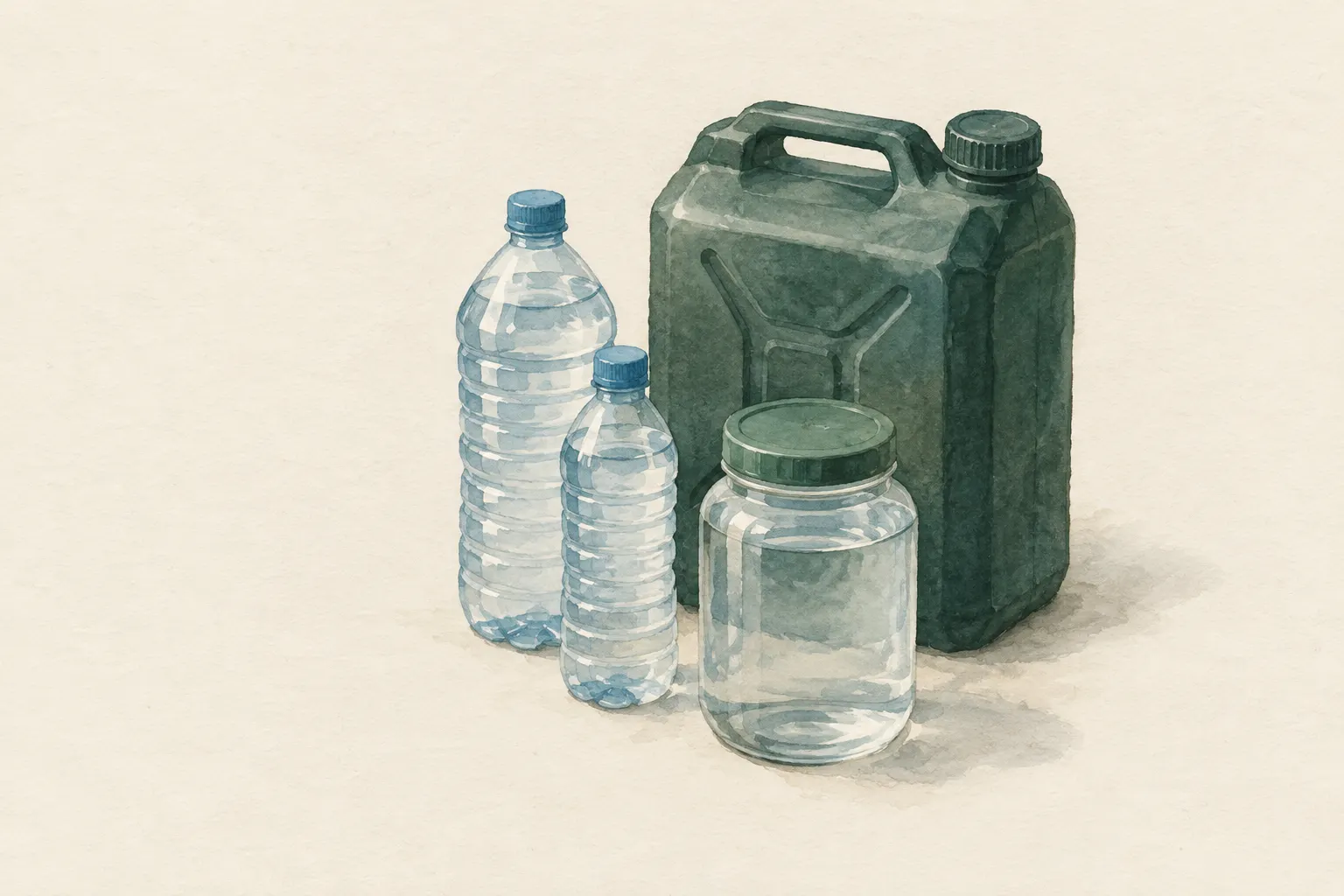
A water stock is the foundation of household preparedness: without water even the best food stocks are hard to use. The simplest option is bought, sealed bottled water that is used and replaced according to its best-before date. If you fill your own, you need clean, food-grade containers, a date and a fixed rotation schedule.
- 1 hour once; then checks at fixed intervals
Explained simply
Almost nothing works without water: drinking, cooking, washing hands, brushing teeth. If water suddenly stops coming out of the tap – after a storm or during a long power cut, for example – a stock at home is like a life ring. The simplest option is bought bottled water. It is cleanly sealed and has a date showing until when it should be drunk.
You can also fill tap water yourself. Then cleanliness is what matters most: a container meant only for food, freshly washed, clean hands, the lid closed tightly and a date on it. After a few months the water is replaced – just as you check the date on food in the fridge.
The most important rule: never use a can or bottle that once held petrol, cleaning products or other chemicals. Something always stays behind, even if you cannot see or smell it.
How it works
Tap water from the public supply is clean when you fill it. Whether it stays that way depends mainly on two things: whether germs get in during filling and withdrawal, and whether the container is suitable. Months on the shelf are less of a problem than a dirty bottle neck, a finger on the inside of the lid or a can that once held something else.
Light and warmth encourage the growth of algae and germs, especially in translucent containers. Plastic can also absorb odours from its surroundings – water stored next to paint, solvents or petrol will eventually taste of them. That is why a stock belongs in a cool, dark place with no chemicals nearby.
Bought, sealed water is the most reliable because it was filled cleanly in industrial conditions and tightly closed. It carries a best-before date; you use it in daily life before then and buy new. That keeps the stock fresh without anything having to be thrown away.
What really matters
The amount follows your authority. Germany's BBK gives around two litres per person per day for emergency preparedness, Ready.gov in the US one gallon (about 3.8 litres) per person per day including sanitation. Example calculation: four people times two litres times five days makes 40 litres. Children, sick people, pets and hot weather need extra reserves – and do not forget water for cooking pasta or rice.
For your own containers: food-grade, with a tight screw cap and easy to clean. Milk and juice bottles are poorly suited because residues stay in crevices. Wash the container with hot water and washing-up liquid, rinse thoroughly, wash your hands and do not touch the inside of the lid or opening. Then fill to the brim with tap water, close tightly and note the date.
You replace self-filled water at fixed intervals; Ready.gov gives six months for this. A fixed date helps, such as when the clocks change in spring and autumn. The old water is not wasted: it can be used for watering plants, cleaning or flushing the toilet.
Safety: what to watch out for
Containers that ever held fuel, chemicals or cleaning products are off-limits for drinking water. Residues cannot be reliably removed, and some substances are harmful even in small amounts. A can once designated for water should never be used for anything else either – ideally label it “Drinking water only”.
If it is unclear whether stored water is still fine – the container is damaged, the water smells or is cloudy, or nobody knows how old it is – do not simply drink it. Either treat it before drinking (the “Water” world explains how) or use it only for flushing and cleaning. Also watch for official advice: if the tap water itself is contaminated, the authorities will say what to do.
Think about weight: one litre of water weighs about one kilogram. A full 20-litre can is therefore heavy and belongs on the floor or a sturdy low shelf, not up high. That way nothing tips over and nobody has to lift heavy containers above head height.
Typical situations
If a disruption is announced – a severe-weather warning or a planned interruption of the water supply – you can also fill clean pots, bottles and jugs shortly beforehand. The bathtub can be filled as a reserve for flushing the toilet. Bathtub water is not drinking water, however, because the tub is not clean enough for that.
In high-rise buildings, electric pumps often push water up to the higher floors. If the power fails, the water can stop there even though the mains still work. For people on upper floors a stock is therefore especially useful – also because water cannot easily be carried upstairs in an emergency.
If you are short on space, you can split the stock: a few packs of bottles under the bed, in a cupboard, in the basement. What matters is that every spot is cool and dark and that you keep track. A small list with place and date on the inside of a cupboard door helps with that.
Good to know
Authorities recommend a water stock because it is available immediately, independent of power, pumps and pipes – without any treatment. It is the simplest and cheapest form of preparedness there is. The exact quantities can change, so it is worth checking the current version of your authority's guidance.
This entry only covers storing water that is already safe to drink. Water from a rain barrel, stream or well must be treated before drinking; filtering alone is not enough for that. Chemical agents for long-term preservation are deliberately not described here.
A good stock is alive: it is used, replaced and checked. If you drink your bottled water in daily life anyway and always buy a new pack before the last one is opened, you always have a fresh stock without much effort.
Step by step
Decide the amount
Follow your authority: Germany's BBK gives around two litres per person per day for emergency preparedness, Ready.gov one gallon (about 3.8 litres) per person per day including sanitation. Plan reserves for children, sick people, pets and hot weather.
- 1
Decide the amount
Follow your authority: Germany's BBK gives around two litres per person per day for emergency preparedness, Ready.gov one gallon (about 3.8 litres) per person per day including sanitation. Plan reserves for children, sick people, pets and hot weather.
- 2
Prefer sealed bottled water
Bought water in its original packaging is simplest. Store it dark and cool and use it in daily life before the best-before date, then replace it.
- 3
Prepare your own containers cleanly
Use only food-grade containers with a tight closure. Clean with washing-up liquid and hot water and rinse well. Wash your hands and do not touch the inside of lid or opening.
- 4
Fill with tap water and label
Fill to the top with drinking water from the public supply, close tightly and note the fill date.
- 5
Store correctly
Cool, dark, not next to chemicals, fuel, paint or cleaning products – plastic can absorb odours. Not in direct sun or next to the heating.
- 6
Rotate regularly
Replace self-filled water at fixed intervals; Ready.gov gives six months for this. Choose a fixed date, such as when the clocks change.
Common mistakes
- Using old fuel or detergent containers
- Storing containers without a date
- Keeping the stock next to paint or solvents
- Planning only for drinking and forgetting hygiene
- Touching the opening with unwashed hands
Quick view
Materials
Food-grade water container
Food-grade only and never used for anything else
Only use containers that never held chemicals or fuel.
PET bottle (clear, max. 2 litres)
Bought bottled water is the simplest option
Do not heat or place in a fire.
Labels and waterproof marker
Note the fill date
Suitable for
- Every household
- Regions with flood, storm or earthquake risk
- High-rise buildings where pumps fail in a power outage
Not suitable for
- Containers that ever held chemicals, fuel or cleaning products
- Milk or juice cartons and bottles that are hard to clean
Prerequisites
- A cool, dark storage place with no chemicals nearby
- Your own authority's guidance on quantity
Safety
- If it is unclear whether stored water is still sound (damaged container, smell, cloudiness, unknown age), treat it before drinking or use it for flushing and cleaning.
- Water is heavy: one litre weighs about one kilogram. Store large containers near the floor and check what shelves can carry.
How it works
Stored water stays drinkable if it is filled cleanly, sealed in a suitable container and protected from light, heat and odours. The critical part is not the months on the shelf but contamination during filling and withdrawal, and unsuitable containers. That is why bought, sealed water is the most reliable form.
Advantages
- Immediately available without treatment
- Low cost
- Independent of power and the network
Disadvantages
- Needs space and regular maintenance
- Heavy to transport
Deep knowledge
Background
Both the BBK and Ready.gov recommend a drinking-water stock as part of emergency preparedness and give guide values per person per day. Ready.gov also recommends bought water in its original packaging and gives a rotation interval for self-filled water.
Treating water that does not come from the tap is covered in the “Water” world. This entry only covers storing water that is already safe to drink.
Variants
- Shortly before an announced disruption
- With severe-weather warnings or announced interruptions, additionally fill clean pots and bottles and – for flushing water – the bathtub. Bathtub water is not drinking water.
Common mistakes
- Using old fuel or detergent containers
- Storing containers without a date
- Keeping the stock next to paint or solvents
- Planning only for drinking and forgetting hygiene
- Touching the opening with unwashed hands
Limits and risks
- No instructions for long-term preservation with chemicals
- Quantities come from authorities and may change – check the current version
Material alternatives
Derived from material properties: a substitute must have all relevant properties. Observe the notes on the substitute.
- Food-grade water container
- Single-wall stainless steel bottle (Heat only single-wall bottles without paint/plastic; remove the lid before heating.), Double-wall insulated bottle (Never heat directly.), PET bottle (clear, max. 2 litres) (Do not heat or place in a fire.), Airtight food-grade storage container (Fill only when clean and completely dry; never use containers that previously held chemicals.), Collapsible water container or bag (Protect from sharp objects.), Food-grade water bag (Use only for drinking water, never for chemicals or fuel.), Fermentation jar or crock (Use only food-grade containers of glass, food-safe glazed stoneware or food-grade plastic – no metal containers for acidic food.), Resealable food bags (Use only bags intended for food; do not use with boiling water unless the manufacturer explicitly allows it.)
Results come exclusively from structured entries. No improvised instructions are generated.
Sources
Bundesamt für Bevölkerungsschutz und Katastrophenhilfe (BBK), Deutschland: Ratgeber für Notfallvorsorge und richtiges Handeln in Notsituationen
Around two litres per person per day; stock as part of emergency preparedness
Ready.gov – U.S. Federal Emergency Management Agency (FEMA): Water (emergency water supply guidance)
One gallon per person per day; prefer bought water; replace self-filled water every six months