Water hygiene and cleaning containers
Water that has been treated safely is often contaminated again afterwards: by unwashed hands, dirty cups, drinking tubes and containers. Clean hands, separate vessels for raw and drinking water and regularly cleaned containers close this last gap.
- Handwashing 1 minute; cleaning a container about 10–20 minutes
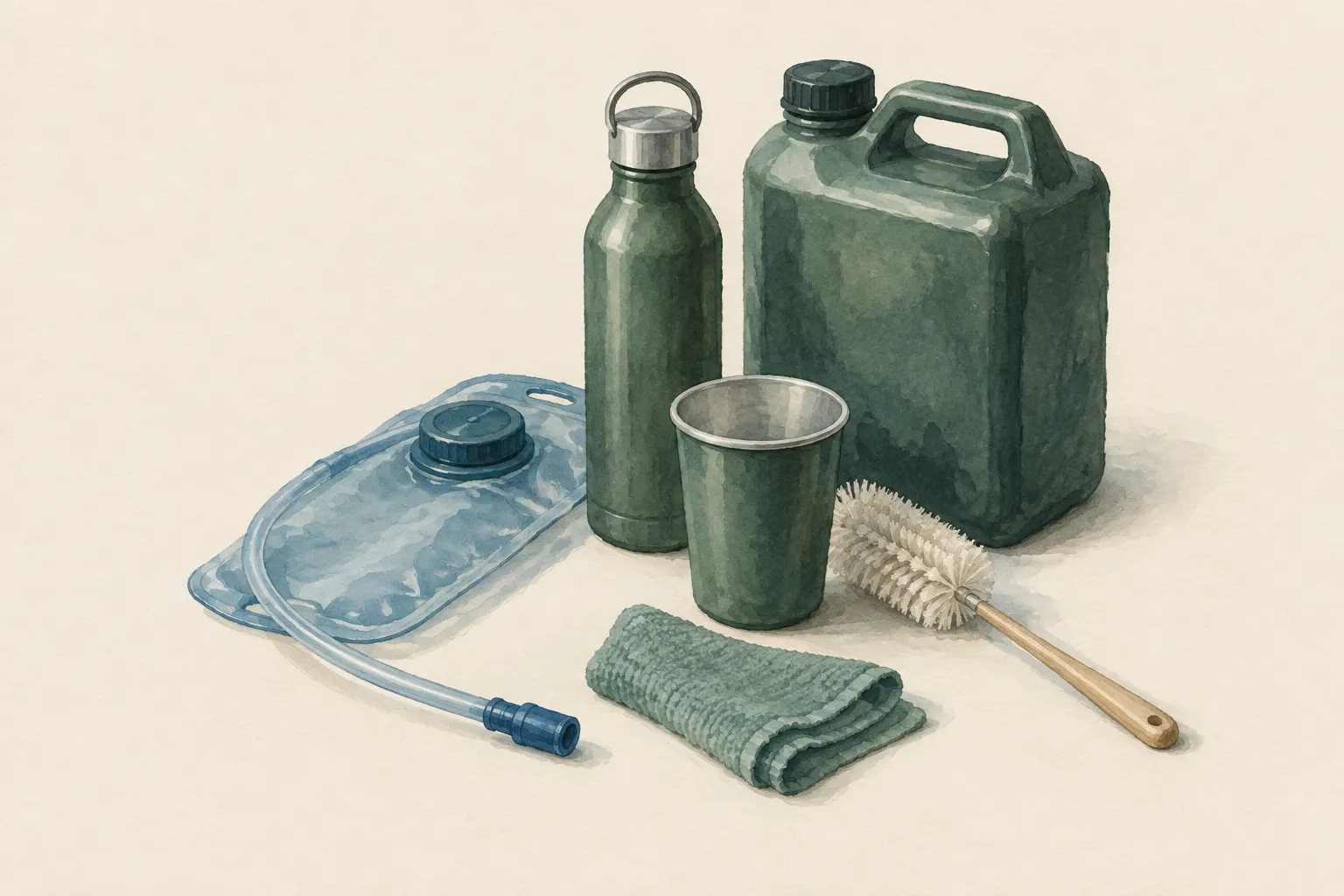
Explained simply
Imagine you have carefully boiled some water and then pour it into a bottle that feels slimy inside. All that effort was almost for nothing. Germs do not only come from the stream – they also come from dirty hands, cups and containers.
Over time, a thin slimy layer forms inside bottles, jerrycans and drinking tubes. It is called biofilm. Germs can hide in it like under a blanket. You can only get rid of this layer by scrubbing – rinsing alone is not enough.
Three simple rules help: wash your hands with soap before touching drinking water. Use one vessel only for dirty raw water and another only for drinking water. And clean containers regularly with soap and a brush, rinse them well and let them dry open.
How it works: the path of germs
Most pathogens that are transmitted through water come from human or animal faeces. They reach us not only through the water source but also via hands, surfaces, scoops and vessels. Experts therefore speak of a chain from the source to the mouth. The last link of that chain – how water is handled in camp or at home – is easily underestimated.
Biofilm is a thin layer of microorganisms that attach to damp surfaces and surround themselves with a slimy substance. This layer partly protects the germs from disinfectants. That is why a bleach solution works much less well in a dirty container than in one that was scrubbed first. So the order is: clean mechanically, rinse, and only then disinfect if needed.
Warmth and moisture encourage growth. A container that is closed while damp and stored somewhere warm gives germs ideal conditions. A dry, clean container, by contrast, is a poor place for most germs.
What really matters
Handwashing is the single most important measure. Soap loosens grease and dirt to which germs cling and washes them away. When water is scarce, it is enough to lather your hands with a little water, rub thoroughly and rinse with a small stream – ideally with a second person pouring from a bottle.
Keep raw and drinking water visibly separate. Mark containers, for example with tape or paint: one vessel only for scooping from the stream, one only for treated water. Never dip a cup into the drinking-water supply, because your fingers go in with the cup. Containers with a tap are useful here, because nobody has to reach into the water.
When cleaning, some places are often forgotten: lid threads, seals, taps, mouthpieces and drinking tubes. That is exactly where slime builds up first. A small bottle brush and a thin tube brush make the difference.
Safety: what to watch out for
Bleach is a strong substance and must be used carefully. Never mix it with other cleaners, especially those containing acids or ammonia – toxic gases can form. Use only unscented bleach without additives. Because bleach products differ in strength, this atlas gives no amounts of its own: follow the concentration and time figures of a public-health authority and rinse afterwards with safe water.
Containers that ever held fuel, oil, chemicals or cleaners are off-limits for drinking water – even after thorough washing. Residues of such substances can penetrate plastic and later pass into the water. Use only food-grade containers.
And: clean containers do not replace treatment. Hygiene protects water that is already safe. Raw water from a stream or lake must still be disinfected first.
Typical situations
In a group camp, hygiene is especially important because a diarrhoeal illness can spread quickly from person to person. Tried and tested: a fixed place for handwashing, a shared drinking-water container with a tap, and the rule that nobody reaches into the supply with their own cup or hands.
On the move with little water, it is often enough to shake bottles vigorously with a little treated water and keep mouthpieces clean. You catch up on thorough cleaning with soap and a brush at the next opportunity. After the trip, let hydration bladders and tubes dry open, ideally hanging up.
At home when the water supply is disrupted, the same principle applies: store supplies in clean, closed containers, wash your hands when filling and clean containers before refilling them. If the authorities issue a boil-water notice, that also applies to the water used to rinse drinking vessels.
How to practise it
After your next trip, go through all your drinking gear once: bottles, bladder, tube, mouthpiece, jerrycan. Take everything apart as far as possible and look inside with a torch. Slimy spots, dark rims or a musty smell show you where biofilm sits.
Then clean everything with warm water, washing-up liquid and a brush, rinse several times until no more foam comes out, and let everything dry upside down and open. Close the containers only once they are completely dry. This builds a routine that you can later carry out quickly outdoors as well.
Step by step
Wash hands
Wash your hands with soap before filling treated water, preparing food or handling drinking vessels – and always after using the toilet. When water is scarce, lather with a little water and rinse with a small stream.
- 1
Wash hands
Wash your hands with soap before filling treated water, preparing food or handling drinking vessels – and always after using the toilet. When water is scarce, lather with a little water and rinse with a small stream.
- 2
Separate raw and drinking water
Use separate, clearly marked vessels for raw and treated water. Never dip raw-water scoops into the drinking-water supply.
- 3
Clean containers mechanically
Wash containers with warm water and soap or detergent and scrub the inner walls, lids, threads and taps with a brush. Remove all slime and deposits.
- 4
Rinse thoroughly
Rinse several times with safe water until no soap residue remains.
- 5
Disinfect if needed
After contamination, after long storage or before first use, containers can be disinfected with a diluted bleach solution. Use only the concentration and time figures given by a public-health authority, and rinse afterwards with safe water.
Never mix bleach with other cleaners.
- 6
Dry and store closed
Let containers dry open and upside down in a clean place, then close them. Let hydration bladders and tubes dry open if possible.
Common mistakes
- Only rinsing instead of scrubbing
- Forgetting drinking tubes, mouthpieces and lid threads
- Scooping from the supply with a cup
- Using scented bleach or bleach with additives
- Mixing bleach with other cleaners
- Closing containers while damp and storing them warm
Quick view
Materials
Food-grade water container
Only use containers that never held chemicals or fuel.
PET bottle (clear, max. 2 litres)
Do not heat or place in a fire.
Unscented household bleach (sodium hypochlorite)
Unscented only, and only following official instructions for disinfecting containers
Only unscented, without additives, with known concentration.
Dose depends on concentration – use only following official public-health instructions.
Never mix with other cleaners.
Soap / detergent
For hands and for washing out containers
Rinse drinking-water containers thoroughly after cleaning.
Suitable for
- Camps with several people
- Households when the water supply is disrupted
- Multi-day trips with hydration bladders or jerrycans
Not suitable for
- Containers that held chemicals, fuel, oil or cleaners – they cannot be cleaned safely
- Replacing the actual treatment of the water
Prerequisites
- Safe water for rinsing
- Soap or detergent
Safety
- Hands and vessels that have touched raw water can immediately recontaminate treated water. Keep raw and drinking water strictly separate.
How it works
Most pathogens in water come from faeces and spread via hands, surfaces and vessels. Biofilm – a slimy layer in containers, tubes and lids – shelters microbes and can only be removed mechanically. So the rule is: first clean mechanically with soap, then rinse, and if needed disinfect following official instructions.
Advantages
- Protects the benefit of every treatment
- Little effort
- Reduces the risk of diarrhoeal illness in groups
Disadvantages
- Uses some safe water
- Requires discipline from everyone in the group
Deep knowledge
Background
WHO describes drinking-water safety as a chain of barriers from the source to the drinking vessel. The last barrier – hygienic handling of water in the household or camp – is easily underestimated but decisive: water that has been treated safely can be recontaminated in a dirty jerrycan or by unwashed hands.
Public-health authorities such as the CDC give specific instructions for disinfecting containers with bleach solutions. Because bleach products differ in concentration, this entry deliberately gives no amounts of its own.
Variants
- Containers with a tap
- A tap prevents hands or cups from touching the supply. The tap itself must be cleaned regularly as well.
- On the move with little water
- On the move it is often enough to shake bottles vigorously with a little treated water and keep mouthpieces clean. Catch up on thorough cleaning at the next opportunity.
Common mistakes
- Only rinsing instead of scrubbing
- Forgetting drinking tubes, mouthpieces and lid threads
- Scooping from the supply with a cup
- Using scented bleach or bleach with additives
- Mixing bleach with other cleaners
- Closing containers while damp and storing them warm
Limits and risks
- Does not replace treating raw water
- No dosing figures of its own – official instructions apply
Material alternatives
Derived from material properties: a substitute must have all relevant properties. Observe the notes on the substitute.
- Food-grade water container
- Single-wall stainless steel bottle (Heat only single-wall bottles without paint/plastic; remove the lid before heating.), Double-wall insulated bottle (Never heat directly.), PET bottle (clear, max. 2 litres) (Do not heat or place in a fire.), Airtight food-grade storage container (Fill only when clean and completely dry; never use containers that previously held chemicals.), Collapsible water container or bag (Protect from sharp objects.), Food-grade water bag (Use only for drinking water, never for chemicals or fuel.), Fermentation jar or crock (Use only food-grade containers of glass, food-safe glazed stoneware or food-grade plastic – no metal containers for acidic food.), Resealable food bags (Use only bags intended for food; do not use with boiling water unless the manufacturer explicitly allows it.)
- Unscented household bleach (sodium hypochlorite)
- Chlorine tablets (NaDCC) for drinking water (Follow the manufacturer's dose and contact time.), Chlorine dioxide tablets or drops (Only approved drinking-water products; follow manufacturer instructions.), Iodine water purification tablets (Not in pregnancy, thyroid disease or iodine allergy without medical advice.)
Results come exclusively from structured entries. No improvised instructions are generated.
Sources
Centers for Disease Control and Prevention: Making Water Safe in an Emergency
Cleaning and disinfecting water containers; safe storage
World Health Organization (2022): Guidelines for drinking-water quality, fourth edition incorporating the first and second addenda
Safe household handling and storage as part of the multi-barrier approach