Using rainwater for garden and household
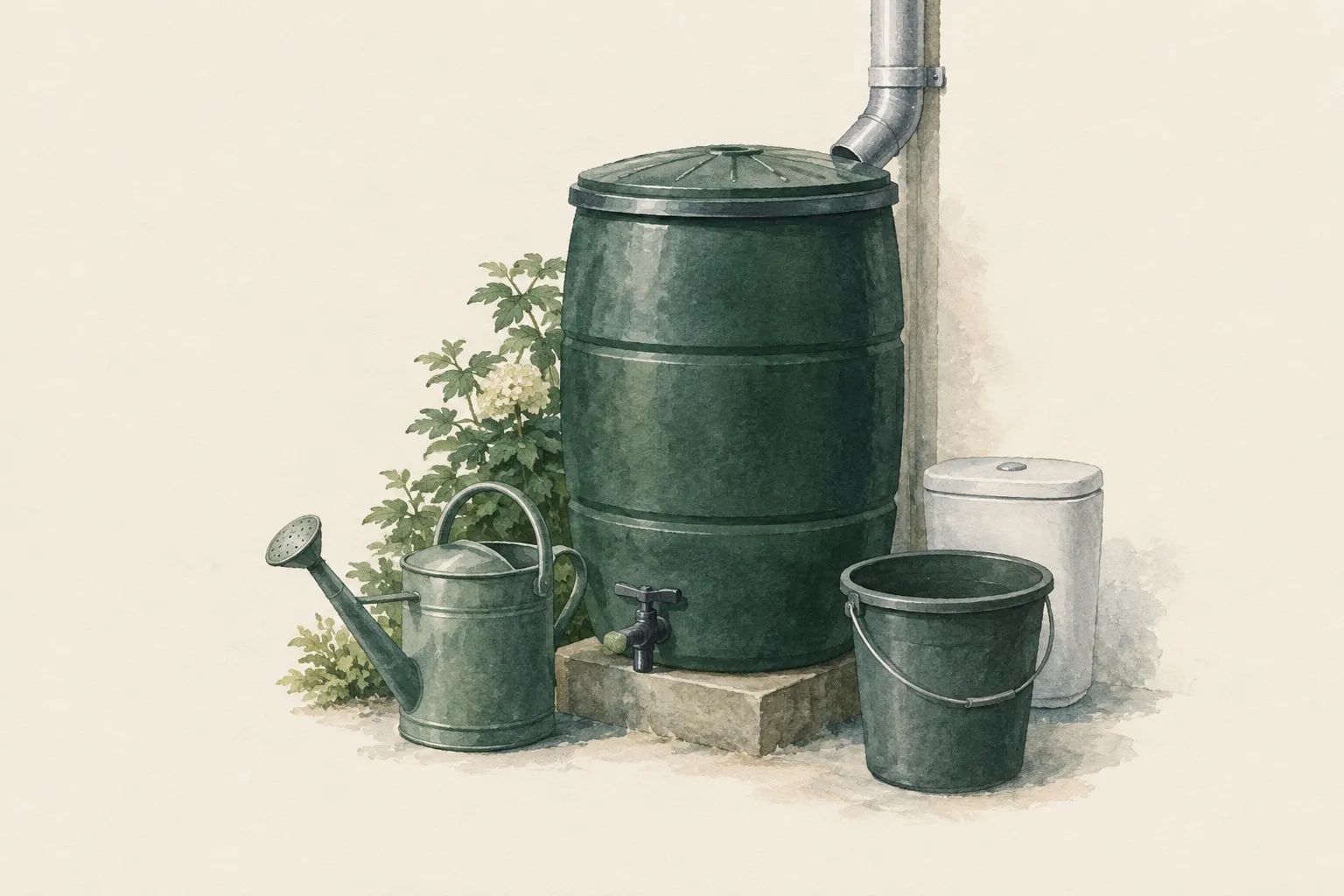
A covered rain barrel on the downpipe provides water for the garden and, in an emergency, water for flushing and cleaning. Rainwater from a roof, however, is not drinking water: it can contain bird droppings, dust and substances from the roofing material. If you want to drink it, it must be treated like any surface water.
- About 1–2 hours to set up; maintenance a few times a year
Explained simply
A house roof is like a giant funnel. When it rains, the water runs off the roof into the gutter and then down a pipe – the downpipe. If you put a rain barrel there, you catch part of it. You can use it to water flowers and vegetables, and in an emergency to flush the toilet or to clean.
But careful: rainwater from the barrel is not drinking water. Dust, leaves and bird droppings lie on the roof, and the water carries all of that along. So you do not drink it or brush your teeth with it – unless it has been properly treated first.
One more very important thing: a rain barrel always needs a firm lid. Small children can fall into an open barrel and drown in it, even in a little water. A good lid also keeps out mosquitoes, leaves and animals.
How it works
Even a medium-sized roof collects far more water in a heavy shower than a single barrel can hold. The water flows via the gutter into the downpipe. A rain diverter or downpipe connector sends part of it into the barrel. Good models automatically send the water back into the downpipe once the barrel is full – so nothing overflows and the water does not run down the house wall.
On its way over the roof and gutter, the water picks up dirt: dust, pollen, leaves, moss, bird droppings and substances from the roofing material. For plants that is no problem. Rainwater is low in lime and is tolerated well by many garden plants. For people, however, it can contain germs that cause diarrhoea and other illnesses.
When there is no running water, a full barrel is mainly non-drinking water: water for flushing, cleaning and watering. It relieves the drinking-water stock because you then do not have to use your clean water for the toilet. But it cannot replace the drinking-water stock.
What really matters
First check the rules: in rented property you need permission from the landlord or building management, and whether and how rainwater may be used can be regulated regionally – check local rules. Roofs made of unknown or contaminated material, such as old asbestos-cement or tar roofs, are not suitable for collecting.
The base must be level and able to carry the load, for example paving slabs. A full barrel weighs roughly as many kilograms as it holds litres – plus its own weight. A 200-litre barrel therefore weighs around 200 kilograms. If it stands crooked or the ground sinks, it can topple over. A small plinth also makes it easier to fill a watering can from the outlet tap.
Maintenance keeps the water usable: clear leaves from the gutter and strainer regularly, keep the lid closed and secure any openings with fine mesh. Before the first frost, empty or disconnect the barrel, because freezing water expands and can burst the barrel and tap.
Safety: what to watch out for
The biggest danger is an open or poorly covered barrel near small children. Children can lean in, lose their balance and fall in head first. The lid must therefore be closed firmly and child-safely – for example with catches or a strap. Pets and wild animals such as hedgehogs or birds can also drown in open containers.
You do not drink rainwater or use it to brush your teeth unless it has been treated. The “Water” world describes how water is treated. Important to know: boiling kills pathogens but does not remove pollutants from the roofing material. A simple filter alone never turns water into safe drinking water.
Standing water is a breeding site for mosquitoes. A tight lid and fine mesh on openings stop them from laying their eggs. Wash your hands after handling barrel water, especially before eating, and pour it onto the soil rather than directly over lettuce leaves you want to eat raw.
Typical situations
In summer the barrel is a supply of watering water. Many people water in the morning or evening with rainwater and so save tap water. Because barrel water is at the outside temperature, it is often gentler on plants than cold tap water.
If the water supply fails, you can flush the toilet with a bucket of rainwater: pour the water briskly into the bowl and the momentum carries the contents away. Note: if the sewage system is also disrupted, authorities may ask people not to flush – listen for announcements and radio reports.
Barrel water is also handy for cleaning, rinsing garden tools or putting out a garden fire pit. For washing dishes or washing hands before eating, it is better to use clean water.
Good to know
Using rainwater for the garden and toilet flushing is common in many regions. Larger systems routed into the house – such as cisterns with a pump for flushing – are often subject to technical rules. These are meant to prevent rainwater from getting into the drinking-water network. Such systems are planned and built by a qualified contractor.
A rain barrel is no substitute for a drinking-water stock, but it is a useful addition. The more non-drinking water you have, the longer your clean water lasts for what it is really needed for: drinking, cooking, hands and teeth.
If you have several barrels, you can connect them so that the second fills once the first is full. Before you do, check space and weight once more – water quickly becomes heavier than you think.
Step by step
Check the rules
In rented property, get permission. Whether and how rainwater may be used can be regulated regionally – check local rules.
- 1
Check the rules
In rented property, get permission. Whether and how rainwater may be used can be regulated regionally – check local rules.
- 2
Prepare the base
A level, load-bearing base (e.g. paving slabs). A full barrel weighs as many kilograms as it holds litres, plus its own weight.
- 3
Connect
Use a rain diverter or downpipe connector that sends water back into the downpipe when the barrel is full, so it does not overflow.
- 4
Cover
Close the lid tightly; secure any openings with fine mesh against mosquitoes, leaves and animals.
- 5
Maintain
Clear leaves from the gutter and strainer regularly. Before frost, empty or disconnect the barrel so it does not crack.
Common mistakes
- Drinking rainwater directly
- Leaving the barrel open
- Leaving the barrel full in winter
- No overflow – water runs down the house wall
Quick view
Materials
Rain barrel with lid
With a tight lid
Collected rainwater is not drinking water without treatment.
Keep it covered – open barrels are a drowning hazard for small children and a breeding site for mosquitoes.
Suitable for
- Garden watering
- Toilet flushing and cleaning water during a supply failure
- Regions with regular rainfall
Not suitable for
- Drinking water without treatment
- Roofs made of unknown or contaminated material (e.g. old asbestos-cement or tar roofs)
Prerequisites
- A downpipe or roof area you are allowed to use
- A stable, level base for the weight of the full barrel
Safety
- Do not drink rainwater from the barrel or use it to brush teeth without treatment. For treatment see the “Water” world.
- Standing water is a breeding site for mosquitoes. Cover the barrel and secure openings with fine mesh.
How it works
A roof collects large amounts of water with every rain that would otherwise flow unused into the sewer. A barrel on the downpipe stores part of it. Because the water runs over the roof and gutter, it picks up dirt and germs – the quality is fine for garden and flushing, but not for drinking.
Advantages
- Saves drinking water
- Reserve for flushing and cleaning
- Simple and cheap
Disadvantages
- Not drinking water without treatment
- Dependent on rain
- Needs space and frost protection
Deep knowledge
Background
Using rainwater for the garden and toilet flushing is common in many regions. Larger systems routed into the house are often subject to technical rules to prevent rainwater from entering the drinking-water network – such systems belong in professional hands.
In a crisis, a full rain barrel is mainly a reserve of non-drinking water. It relieves the drinking-water stock but does not replace it.
Variants
- Emergency: toilet flushing
- If the water supply fails, rainwater can be used with a bucket for flushing. However, if the sewage system fails, authorities may ask people not to flush – follow announcements.
Common mistakes
- Drinking rainwater directly
- Leaving the barrel open
- Leaving the barrel full in winter
- No overflow – water runs down the house wall
Limits and risks
- No instructions for in-house rainwater systems
- No statement on regional regulations – check local rules
Sources
–