Collecting rainwater
With a tarp, sheet or clean roof surface, a lot of water can be collected quickly during rain. Rainwater is usually low in particles but is contaminated by collecting surfaces, gutters and containers, so it must be treated.
- Set-up 10–20 minutes; yield depends on rainfall
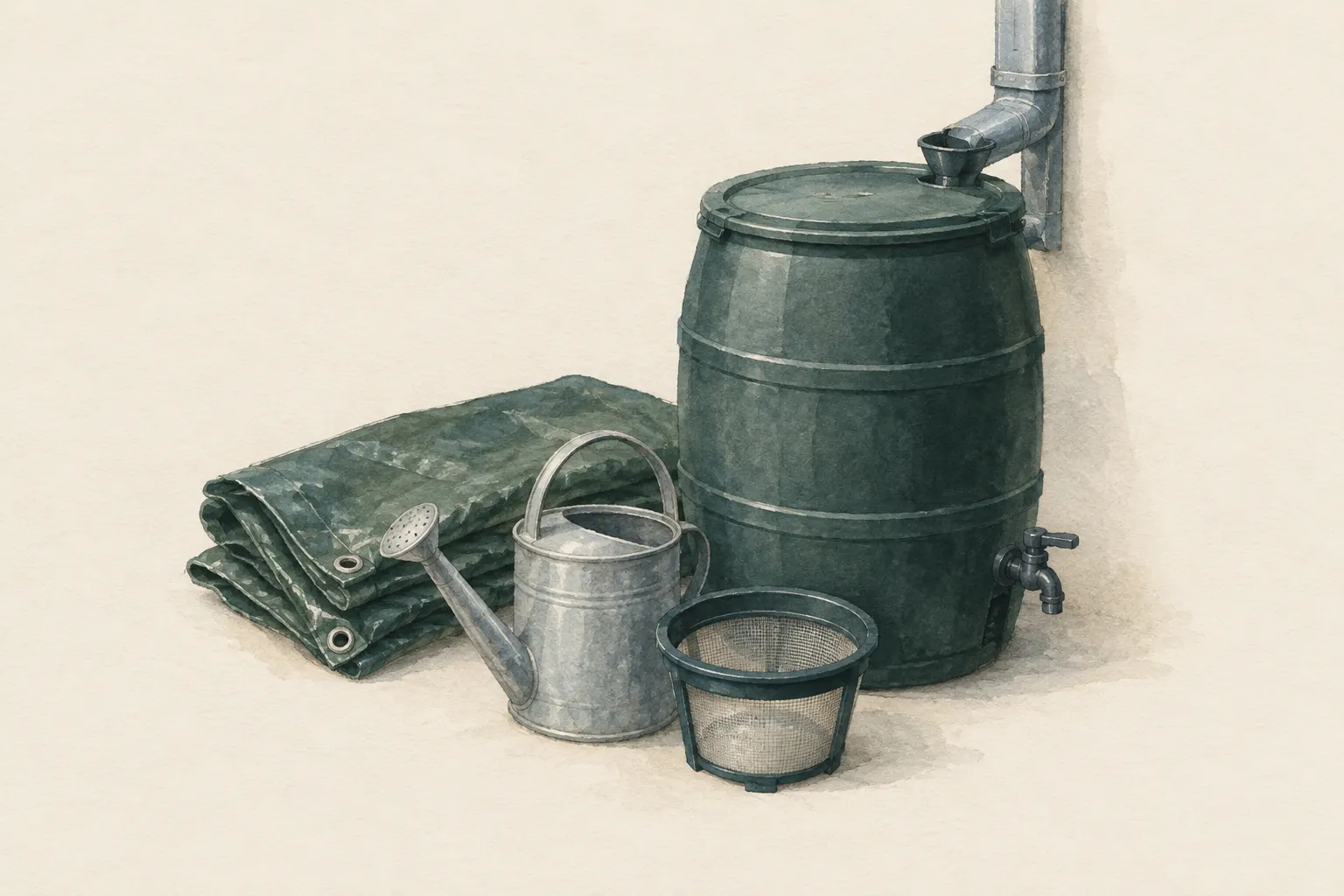
Explained simply
Rain simply falls from the sky – you just have to catch it. To do that, you rig a tarp or plastic sheet at an angle, like a funnel. The water runs to the lowest point and drips from there into a clean container. The bigger the surface, the more water you get.
Rainwater looks clean but is not germ-free. On the tarp or roof there is dust, leaves and bird droppings, and the rain washes all of that into your container. That is why you simply let the first minutes of rain run off – they wash the surface clean.
The most important point: you also make collected rainwater safe before drinking, for example by boiling it. And only use surfaces and containers that do not release anything poisonous – so no cans that once held petrol or cleaning products.
How it works
An inclined surface collects everything that falls on it and channels it to one point. The calculation is simple: one millimetre of rain means one litre of water per square metre of surface. A three-by-three-metre tarp therefore catches roughly 90 litres in theory from ten millimetres of rain – in practice a bit less, because water splashes, evaporates or clings to the surface.
For the water to flow where you want it, the surface needs a clear slope towards one corner or the centre. A stone in the middle of the tarp or a cord hanging from the lowest point into the container guides the stream. On roofs, the gutter and downpipe do this job.
Rain itself is comparatively clean, but it picks up dust and air pollutants as it falls. Most of the dirt, however, comes from the collecting surface, the gutters and the container. That is why the cleanliness of these parts decides how good your raw water is.
What really matters
The first minutes of rain wash dust, pollen, leaves and droppings off the surface – this water is the most contaminated. Let it run off before you put the container underneath, or rinse the surface with clean water beforehand. For roof systems there are so-called first-flush diverters that set the first water aside automatically.
A cloth over the inlet opening keeps out leaves, insects and coarse particles. Cover the container afterwards: open vessels attract mosquitoes, which lay eggs in them, and animals, leaves and dust get in. A container with a narrow neck and a lid is ideal.
Rig the tarp tight enough that no large pockets of water form that could tear it or pull out the anchors. In wind it pays to guy out the corners well and build the surface a little lower.
Suitable and unsuitable surfaces
The best improvised collecting surface is a clean, new tarp or plastic sheet. On buildings, uncoated metal or glazed tiles, for example, are suitable, provided the gutters are cleaned first. The smoother the surface, the less dirt sticks to it and the better the water runs off.
Unsuitable are roofs with tar felt, treated wood, lead flashing or unknown coatings – they can release pollutants that no simple treatment removes. Containers that once held chemicals, fuel or pesticides are also off-limits, even after thorough rinsing. Use only food-grade vessels.
In cities and industrial areas with heavy air pollution, rain picks up more pollutants. There, rainwater without further treatment is not a good drinking-water source; for flushing toilets or cleaning it can still be valuable.
Safety: what to watch out for
Collected rainwater is raw water. Disinfect it before drinking, for example by bringing it to a rolling boil or by chlorination following the manufacturer's instructions. A cloth screen at the inlet makes the water clearer, but not safe.
Standing water in open containers is a breeding ground for mosquitoes, which transmit diseases in some regions. So always cover containers, and rig tarps so that no puddles remain on them.
Do not set up the collector during a thunderstorm in exposed places, and keep away from tall isolated trees. Store full containers stably: water is heavy, and a toppling can could injure feet.
Typical situations
At home, rainwater can supplement stocks when the water supply fails – especially for hygiene and toilet flushing, so that the stored drinking water lasts longer. If you have a suitable roof, a downpipe can be diverted into a clean container at short notice.
On the move, for example in rainy regions or in the tropics, a tarp is often the most convenient water source: it delivers water right at camp, with no walk to the bank and no risk of falling. A tarp over camp can serve as rain shelter and water collector at the same time.
One variant is trunk runoff: a cloth wrapped around a tree trunk guides running rainwater into a container. This water contains a lot of organic material, is often discoloured and must first be clarified and then disinfected. In arid regions with rare rainfall, on the other hand, rain collecting is only a supplement you cannot rely on.
Step by step
Rig the surface
Rig the tarp or sheet so it slopes towards one corner or the centre. A small stone or a cord at the lowest point guides the water precisely.
- 1
Rig the surface
Rig the tarp or sheet so it slopes towards one corner or the centre. A small stone or a cord at the lowest point guides the water precisely.
- 2
Position the container
Place a clean, food-grade container under the outflow; a cloth at the inlet keeps out leaves and insects.
- 3
Discard the first flush
Let the first minutes of rain run off without collecting them, or rinse the surface with clean water beforehand.
- 4
Treat and cover
Cover the container and disinfect the water before drinking, for example by boiling or chlorination.
Common mistakes
- Assuming rainwater is germ-free
- Collecting the first, dirtiest runoff
- Leaving containers open – mosquitoes, animals and dirt get in
- Using unsuitable roofs or gutters
Quick view
Materials
Tarp
Or a clean plastic sheet
Plastic sheet / large bin bag
Tears easily; never pull over the head (suffocation risk).
Do not use for drinking water unless food-grade.
Food-grade water container
Food-grade collecting container
Only use containers that never held chemicals or fuel.
Paracord
For rigging
Not a climbing or safety rope.
Cotton cloth / T-shirt
As a coarse screen at the inlet
Removes coarse particles only – no disinfection.
Suitable for
- Rainy regions and the tropics
- Topping up stocks when the water supply fails
- Places without surface water
Not suitable for
- Arid regions with rare rainfall
- Roofs with tar felt, treated wood, lead flashing or unknown coatings
- Urban or industrial areas with heavy air pollution without further treatment
Prerequisites
- Clean, food-grade containers
- A way to disinfect afterwards
Safety
- Disinfect collected rainwater before drinking: bird droppings, dust and residues from the collecting surface get into the water.
How it works
A large, inclined surface channels precipitation to a low point and from there into a container. The amount depends on surface area and rainfall. The first minutes of rain wash dirt off the surface and are the most contaminated.
Advantages
- Often comparatively low in particles
- No terrain or accident risk at the water's edge
- Quickly set up with existing material
Disadvantages
- Depends on the weather
- Contamination from collecting surface and containers
- Large surfaces needed for meaningful amounts
Deep knowledge
Background
Rain itself is comparatively clean, but picks up dust and air pollutants as it falls, and droppings of birds and small animals on the collecting surface. WHO treats rainwater harvesting as a source of its own with typical risks that originate mainly from roof, gutter and storage.
In an emergency a clean, new tarp or sheet is the best improvised collecting surface. Containers that previously held chemicals or fuel are unsuitable – even after rinsing.
Variants
- Roof surface
- Suitable roofs (e.g. uncoated metal, glazed tiles) deliver large amounts via a diverted downpipe. Clean gutters first.
- Trunk runoff
- A cloth wrapped around a trunk guides running water into a container; the water carries a lot of organic material and must be clarified and disinfected.
Common mistakes
- Assuming rainwater is germ-free
- Collecting the first, dirtiest runoff
- Leaving containers open – mosquitoes, animals and dirt get in
- Using unsuitable roofs or gutters
Limits and risks
- Only works when it rains
- Does not replace disinfection
Material alternatives
Derived from material properties: a substitute must have all relevant properties. Observe the notes on the substitute.
- Tarp
- Plastic sheet / large bin bag (Tears easily; never pull over the head (suffocation risk).), Emergency blanket (Tears easily once punctured; short-term shelter only.), Document folder (waterproof) (Store securely – contains sensitive personal data.), Rain poncho (When used as a shelter, it no longer protects your body from rain.), Bivy bag (Never fully close off the face.), Tent (Do not cook or heat inside the tent (fire and carbon monoxide danger).), Heavy-duty bin bag (large) (Suffocation risk: never pull plastic bags over the head or face and keep them away from small children.), Group shelter bag (Airtight – ventilate regularly.)
- Plastic sheet / large bin bag
- Tarp, Emergency blanket (Tears easily once punctured; short-term shelter only.), Document folder (waterproof) (Store securely – contains sensitive personal data.), Rain poncho (When used as a shelter, it no longer protects your body from rain.), Bivy bag (Never fully close off the face.), Tent (Do not cook or heat inside the tent (fire and carbon monoxide danger).), Heavy-duty bin bag (large) (Suffocation risk: never pull plastic bags over the head or face and keep them away from small children.), Group shelter bag (Airtight – ventilate regularly.)
- Food-grade water container
- Single-wall stainless steel bottle (Heat only single-wall bottles without paint/plastic; remove the lid before heating.), Double-wall insulated bottle (Never heat directly.), PET bottle (clear, max. 2 litres) (Do not heat or place in a fire.), Airtight food-grade storage container (Fill only when clean and completely dry; never use containers that previously held chemicals.), Collapsible water container or bag (Protect from sharp objects.), Food-grade water bag (Use only for drinking water, never for chemicals or fuel.), Fermentation jar or crock (Use only food-grade containers of glass, food-safe glazed stoneware or food-grade plastic – no metal containers for acidic food.), Resealable food bags (Use only bags intended for food; do not use with boiling water unless the manufacturer explicitly allows it.)
- Paracord
- Rope (Never use unknown or damaged rope for life-safety purposes.)
Results come exclusively from structured entries. No improvised instructions are generated.
Sources
World Health Organization (2022): Guidelines for drinking-water quality, fourth edition incorporating the first and second addenda
Rainwater harvesting and typical sources of contamination
Headquarters, Department of the Army (USA) (2002): FM 3-05.70 Survival
Collecting precipitation as a water source